Showing posts with label Fossil Shark Teeth. Show all posts

Wednesday, March 6, 2019

Fossil Collecting in Florida - a Trip Report

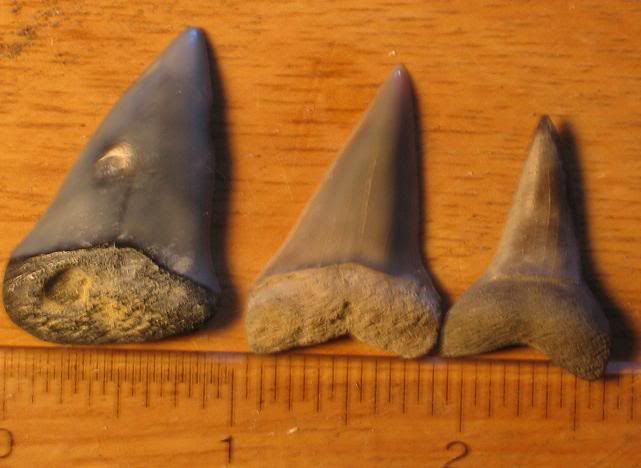
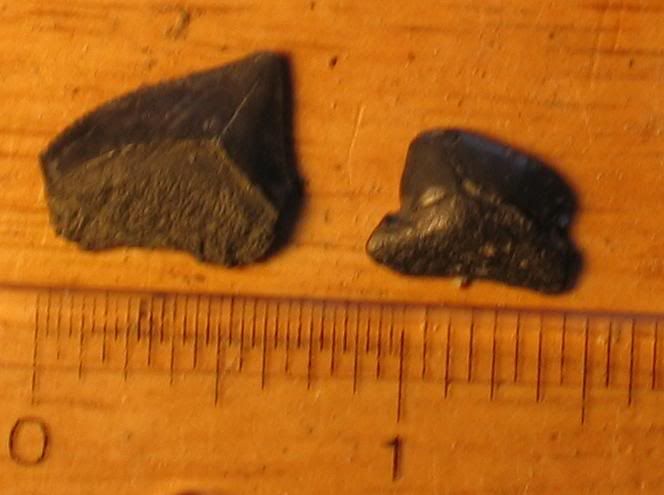
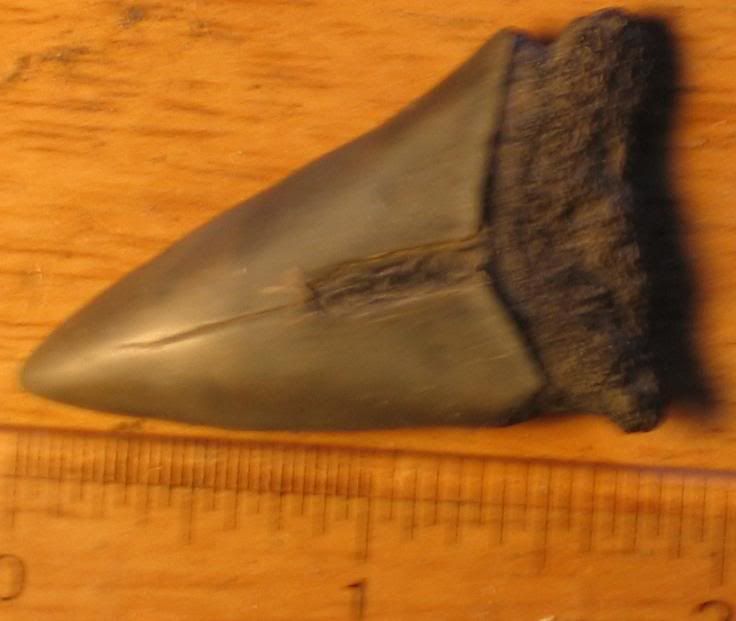
Our nice mako and juvenile meg two teeth on the right, along side Cris' meg (left)

When my wife and her friend planned a get together trip in Central Florida earlier this year, she asked if we wanted to turn it into a mini vacation.  Always with fossil collecting in mind, and knowing the rich bounty of fossils that Florida has to offer, my daughter, Riley, and I convinced her to give us a day to go fossil collecting.  This post depicts the planning and actual events of our fossiling experience.

But, where to start?  We know that there are tons of fossils in Florida, but, it's a big state, and all of it was submerged throughout various periods of geologic history.  Our interest this time focused shark teeth, with a chance at finding the prized megatooth, of the largest predatory sharks in recorded history, Carcharocles megalodon.  If you do some research, you can find the popular public place to collect, where you can beachcomb or sift for shark teeth.  But, it would involve a lot of driving and testing to locate spots, and that takes time, and we didn't have the luxury of time.

So, we figured that the best thing to do was to do what anglers do when they want to find a trophy fish, hire a guide.  So, we researched and found some guides that really interested us.  It didn't hurt that we also discovered that someone we "knew" (virtually) from our past experiences on The Fossil Forum and their once heralded chat room that turned out to be a guide.  We booked a trip with Fossil Voyages' PaleoCris and WILDKYLE (their YouTube and Instagram names).  Of course, we had some questions about what to bring, etc. and they answered all of our questions, making it easier to prepare.

Still, this was a February trip, and the trip that we booked called for wading in creeks while shoveling and sifting for fossils.  Our main concern was weather or not to bring waders or hip boots, or if we could we wet wade or not.  In February, we wondered if the water temps in Central Florida were too chilly to wade in.  As it turned out, not at all, this time.  The weather was in the mid-80s all week while we were there, and nighttime lows weren't low enough to chill the water, so wet wading was fine.  After all, why bring heavy waders and pay for another checked bag on the plane?  We were trying to keep our vacation as cheap as possible.  As for other needed equipment, really, all that we needed was ourselves, dressed to get dirty and wet, a change of clothing, sunscreen, bug spray, some snacks and water.  Cris and Kyle supplied all of the collecting equipment.

First, we met them at a public shopping area, and then followed them to one of their favorite spots to take their clients.  From our vehicles, it was a short hike to the creek, and not a long wade to the area to start our fossil search.

So, we started sifting and...well...did they put us on fossils?  You tell me.  On our first and third sifts of the day, we found a nice juvenile meg (short for megalodon) in near perfect condition, and a monster giant mako shark (Carcharodon plicatilis).  This shark is considered by most experts in the field as a direct ancestor to our modern great white shark, Carcharodon carcharias.  The only difference in their teeth are the lack of serrations on the extinct shark.  Other than that, the teeth in each position of the jaw are nearly identical in shape and form.  The colors on this tooth were striking.  In the pic at the top of this article, these two teeth are the smaller of the three teeth pictured.

So, the shoveling and sifting adventure started with a couple huge finds.  Man, I thought then that this would be easy and we'd be wading in meg teeth in no time!  Of course, it's never easy.  You have to work for it, and yes, even here.  Just like catching a monster bass on your first cast, many times you have to work your butt off to find good fish the rest of the day.  That was the case here too.  Now listen, I'm not complaining at all, because at the end of the day, our combined finds were quite amazing for such a short time collecting.  Just a note, we collected until I couldn't take it any more.  Our guide friends would have accommodated us longer and they certainly worked hard for us all day.

About our guides, let me say here that they are first class, nice, friendly and certainly fun, and both Riley and I really enjoyed their company.  But, they were also very knowledgeable, helping Riley and I identify our finds as needed.  We knew about the teeth IDs, but some of the other vertebrate fossils and artifacts required their assistance, and that was much appreciated.  Not only that, my aching back slowed my shoveling pace later in the day, and both Cris and Kyle helped us fill both our sifters.  We couldn't have asked for better guides.

I won't chronicle the rest of the events while collecting, because you can see pretty much what happened for yourself in the two videos that I'll link later in this post.  I highly recommend that you watch and "like" them both, and subscribe to both channels.  But the bottom line is that it was a productive day, and we had an absolute blast, and a pleasure meeting these two avid paleontologists.

In the following pics, I'll explain some of the finds.  Riley and I found most of these finds, but about 1/4 of them were thrown in that Cris and Kyle found, maybe more.  I couldn't remember exactly who found what for the most part.  Riley and I were a team, so anything that I say that I found, or Riley found, we actually found together.
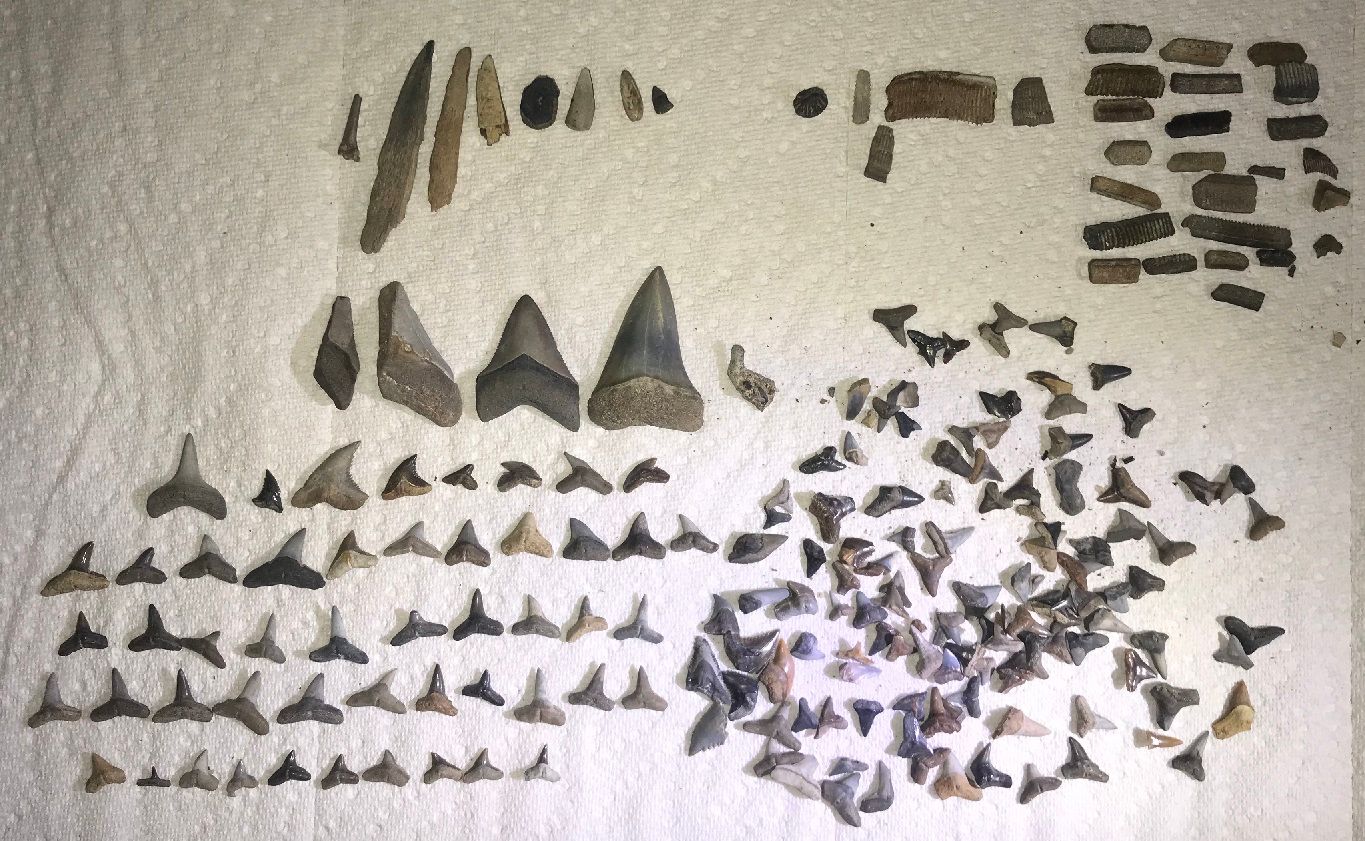
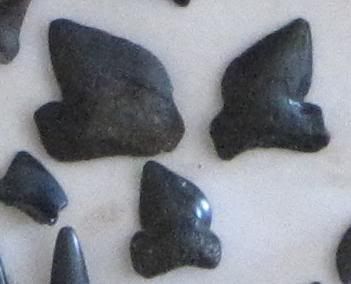
These are the shark teeth, stingray dental plate fragments, and fish fossils found on the day.  The largest complete tooth in the middle is the large giant mako that we found on the third sift, and the small meg to the left was found on the first sift of the day.  Above those teeth are the fish fossils, including three sections of  a sawfish rostrum, a catfish spine,  a barracuda tooth and some other fish teeth.  Below the mako tooth are various smaller shark teeth found during the day, including a smaller mako tooth found by Cris, some snaggletooth shark teeth (Hemipristis serra), tiger shark teeth, and below them lots of lemon and requiem shark teeth.
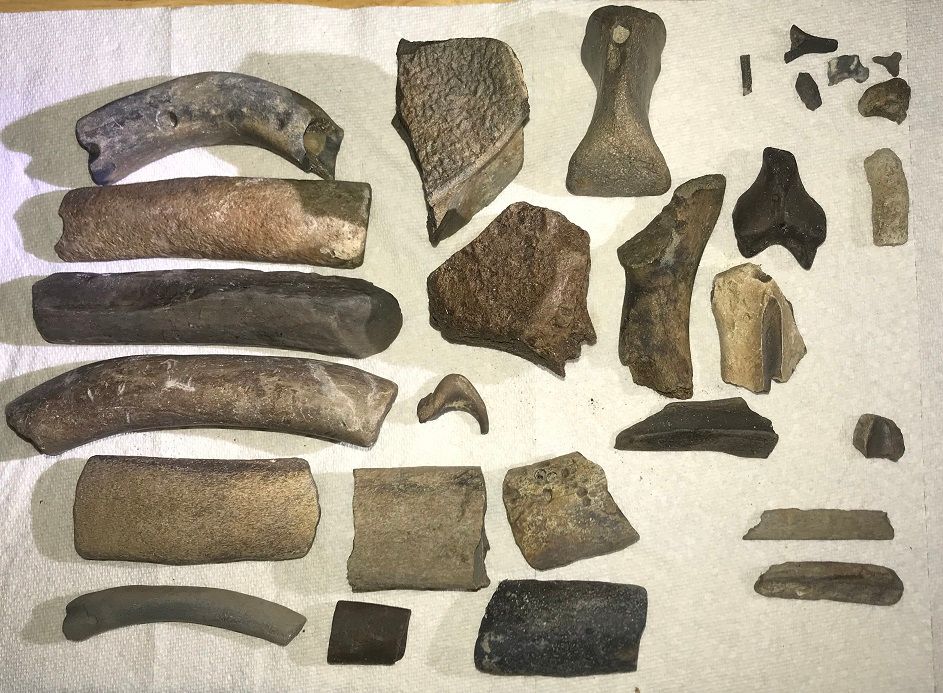
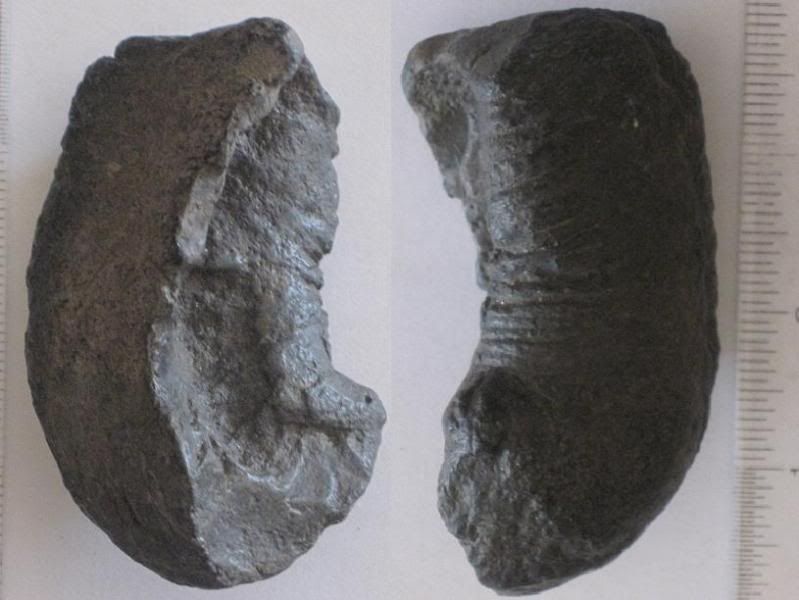
Most of these bones and vertebrae are dugong (Metaxytherium floridanum) bones.  The two bones below are dolphin, and the one above that may be a fragment of a Gomphothere tooth.  A Gomphothere is an extinct elephant like mammal.
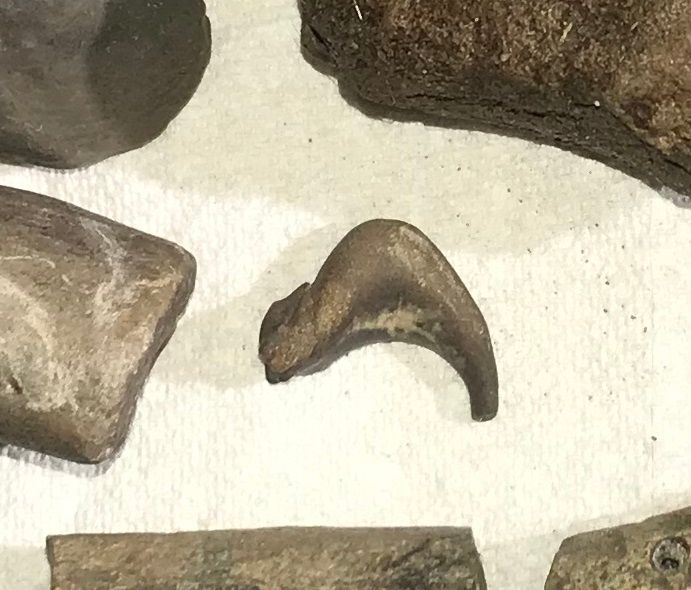
The bone in the center of the pic above is enlarged here.  It's a dugong ear bone, and apparently not very common.  Riley found this beauty in her sifter.
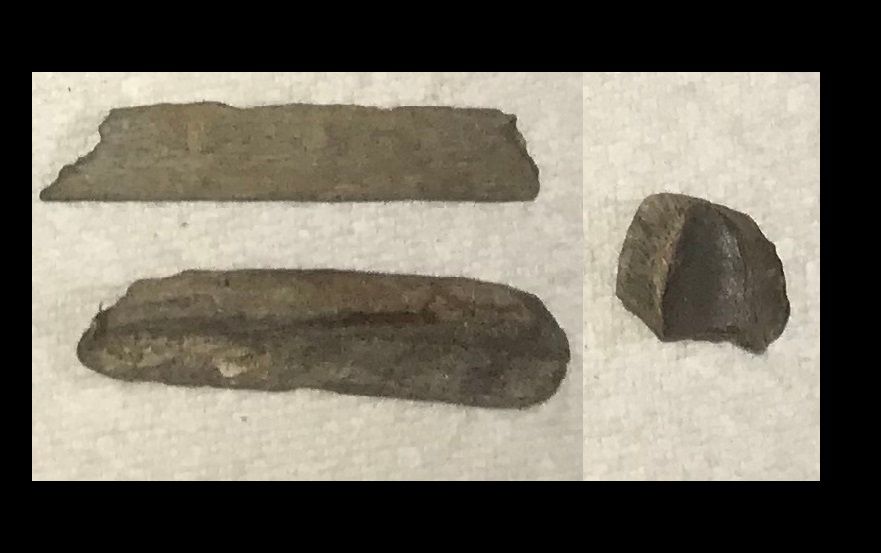
The two bones on the left are partial dolphin jaw bone fragments.  In person, you can easily see the slots that the teeth were placed.  This picture is not very clear.  The fossil to the right is the Gomphothere tooth fragment.
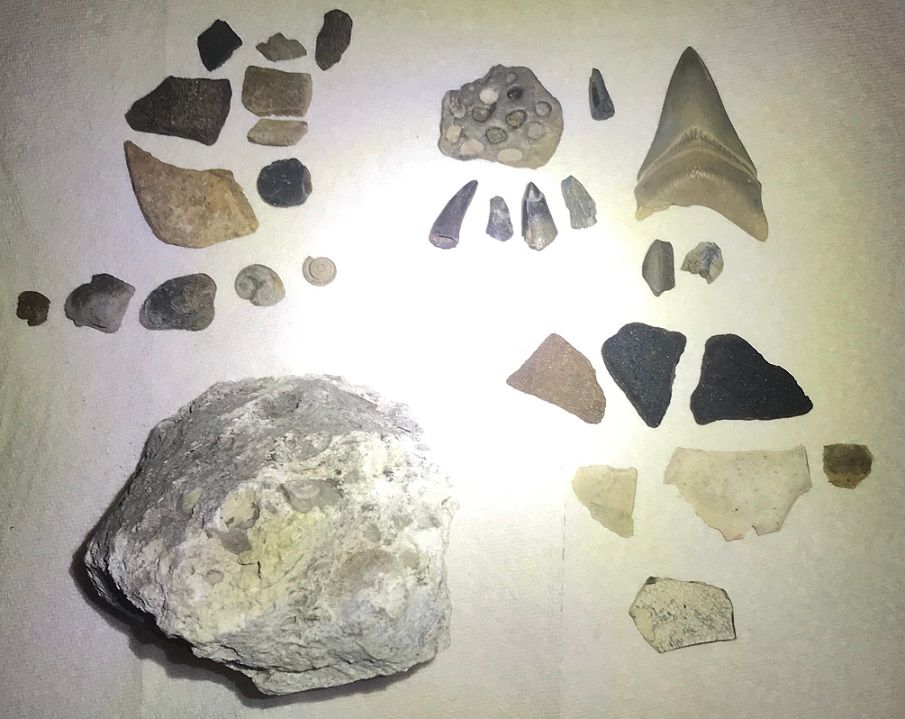
The fossils  in the upper left quarter of this picture are turtle shell fragments, and below that, some shells and internal molds of snails and clams.  The fossils in the upper right include the crocodile (Thecachampsa americana) scute that Cris found, and some croc teeth that Riley, Kyle and I found.  To the right of that is the meg tooth that Cris found.  The bottom half of the picture are the Native American artifacts that we found collectively, with the hammer stone to the left, some chert reject pieces (likely split when trying to manufacture points), and three pieces of pottery.  The bottom piece of pottery is old, but modern.  As both Cris and Kyle pointed out in the videos below, we were able to collect these artifacts because they were found on private property.  Incidentally, the hammer stone is a tool made from a chunk of dense limestone that is also packed with fossilized bivalves and other critters, so it's an artifact and fossil one one!
These fossils are from the late Miocene, about 8-9 million years old, and are from the Coosawhatchie Formation.

At the end of the day, I was exhausted from shoveling and sifting.  My back was in a ton of pain, and really reminded me of how out of shape I was.  We still had an hour and a half drive back to where we were staying, so, I was in a bit of a hurry to get out of there.

Cris and Kyle had some more work to do to close out their videos, so they did that while I cleaned up the fossils.  I accidentally scooped up Cris' meg into my container, not paying attention.  I didn't realize it until we returned from where we were staying.  I immediately texted Cris and apologized, and offered to ship it back to him, but he declined and told me to add it to our collection in our Florida riker mount.  I couldn't believe his generosity and humbly accepted his forgiveness.  I felt awful about the whole thing.  What the heck was I thinking?  Our entire collection is of stuff that we found, except for some stuff that we traded at the request of others that really wanted some of what we had.  Now, that isn't the case, and it troubles me.  I just hope it doesn't jeopardize our chances to book future trips.

Anyway, on to more good stuff for you guys to follow, the videos and YouTube Channels of both Cris and Kyle.  I hope you like them as much as I do.  They're fun, informative, and keep you hooked to the next one.  Please subscribe to their channels, and if you get a chance, contact them and book them.  I highly recommend it.  Please watch both videos, they each have some different stuff about our finds.  Also, please find and follow them on Facebook and Instagram.  You can contact them via Instagram to book a trip.

Cris' video:

Kyle's video:

Monday, September 3, 2012

The Shark Tooth Hunt (Set 3)

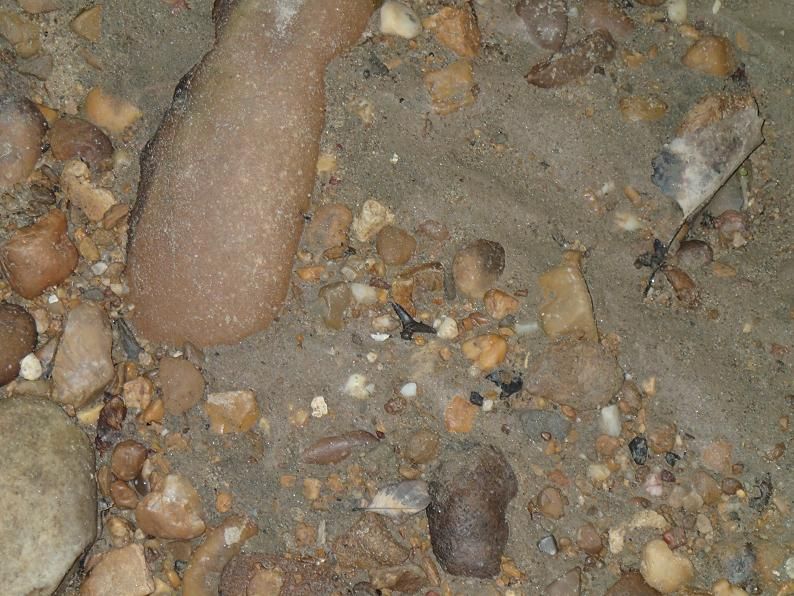
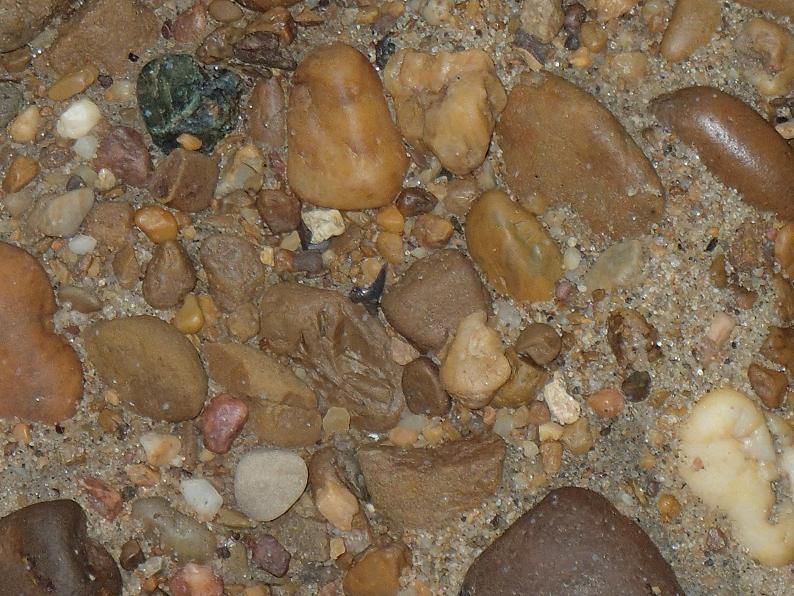
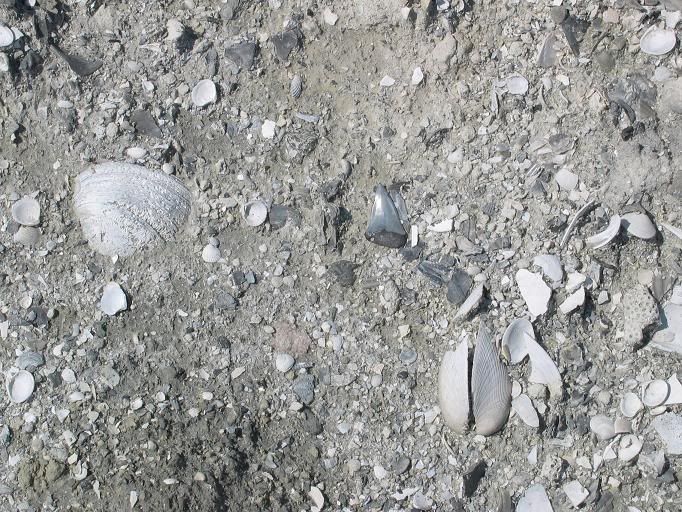
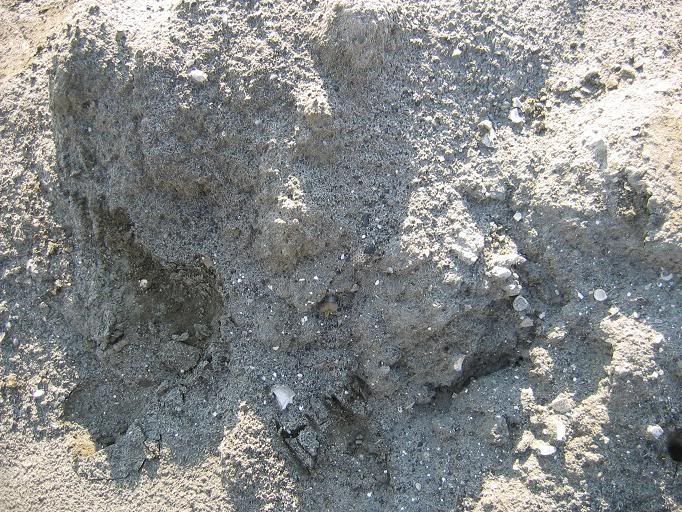
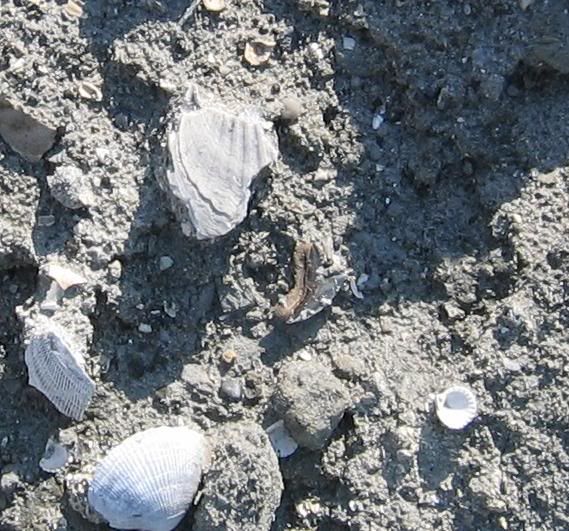
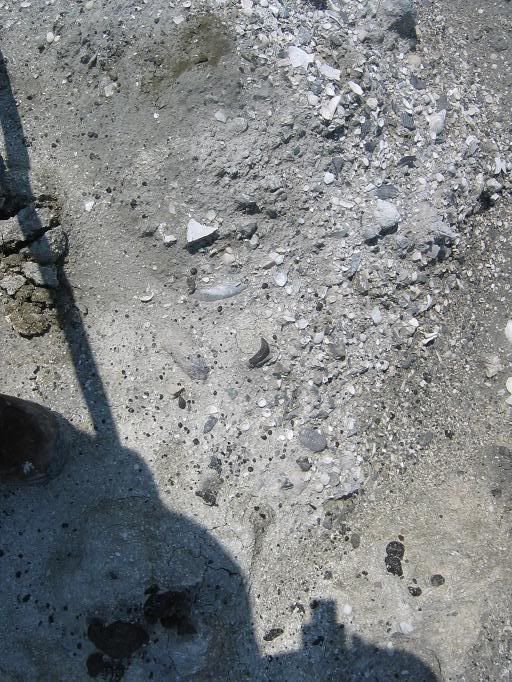
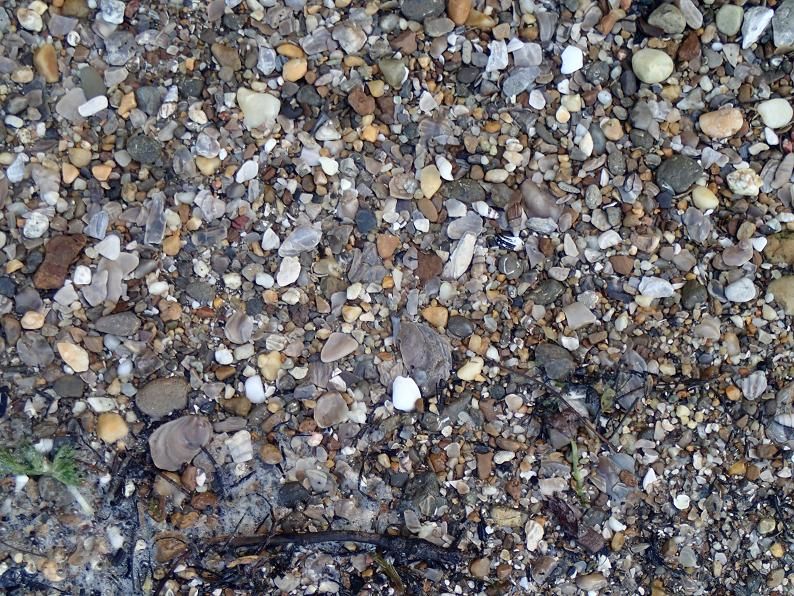
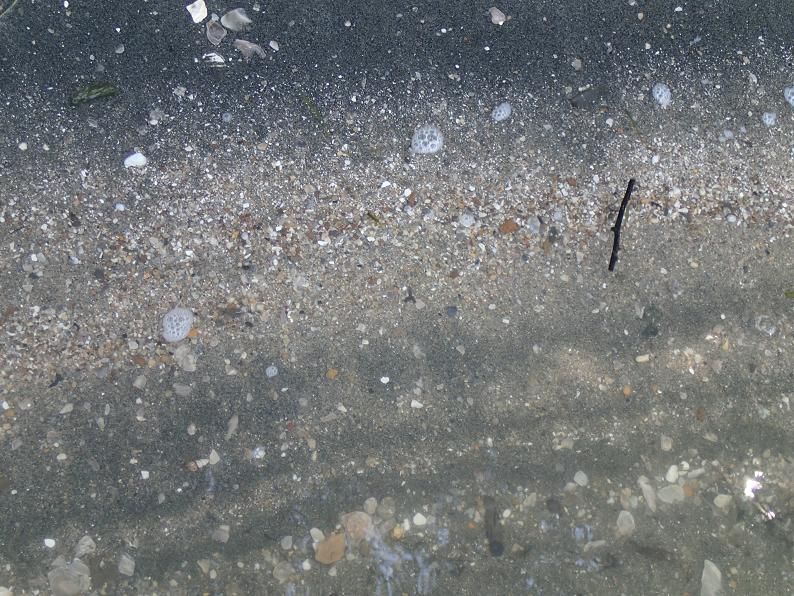
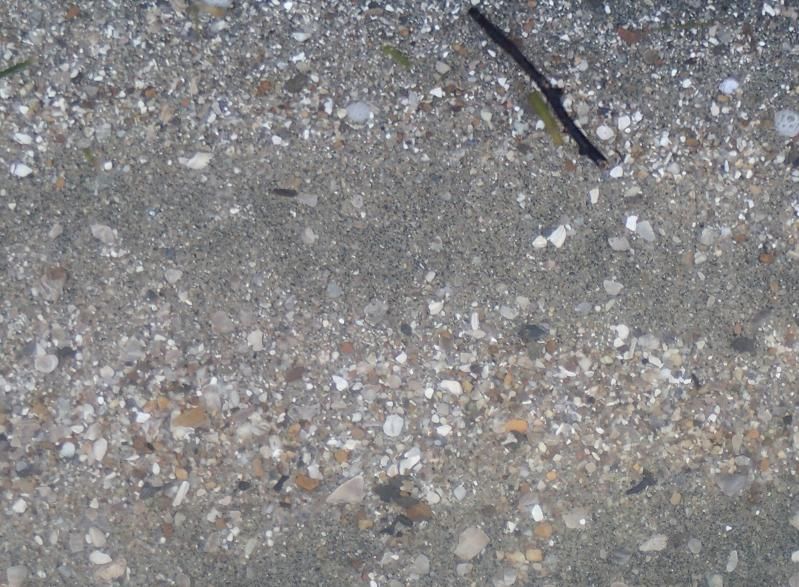
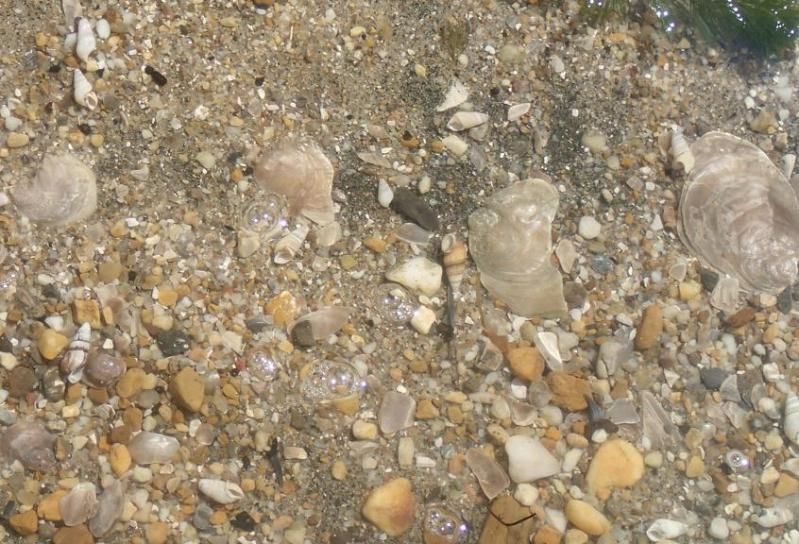
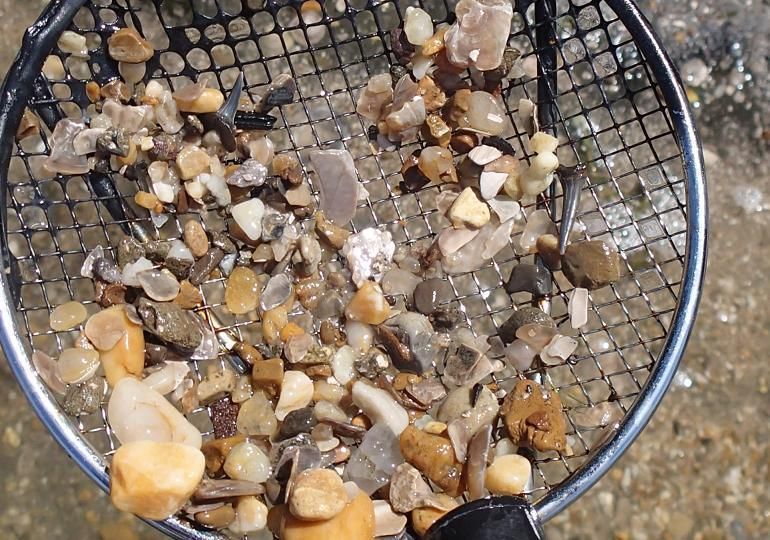
We'll continue our shark tooth hunt, eye spy style, with pictures 21 through 30.  To see the first twenty pictures, you'll have to go back and revisit my two prior posts, "The Shark Tooth Hunt (Set 1)" and "The Shark Tooth Hunt (Set 2)", where I posted ten pictures of in situ photographs of fossilized shark teeth.  These next ten pictures will be a mix of locations and background styles, but still should be a lot of fun.  Hope y'all enjoy them!

Picture 21
A different fossil this time...there's a fossilized Palaeocene crocodile tooth in this picture.   Click on the link below to find it.

Picture 22.
There are two teeth in this picture, one obvious fossilized Striatolamna sand tiger shark tooth, and a not so obvious partially hidden tooth.

Picture 23.
OK, well this isn't a fossil, but he's pretty well hidden, but his defensive posture gives him away.  Say hello to a Maryland blue crab!
Picture 24.
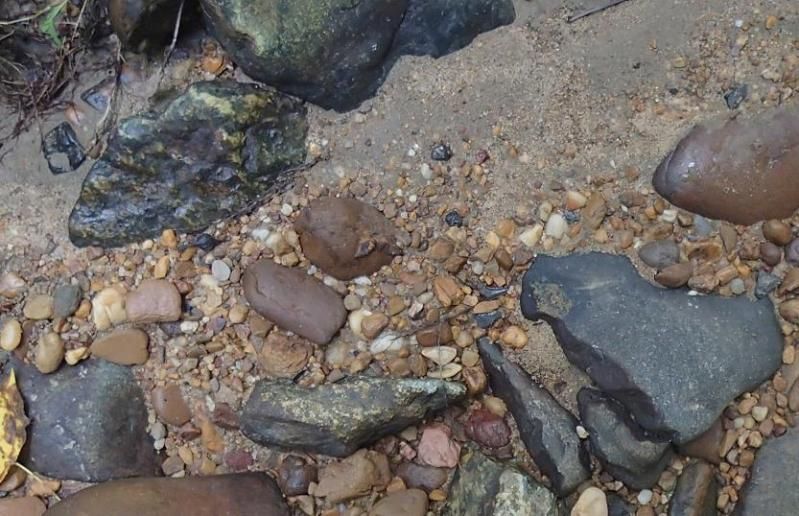
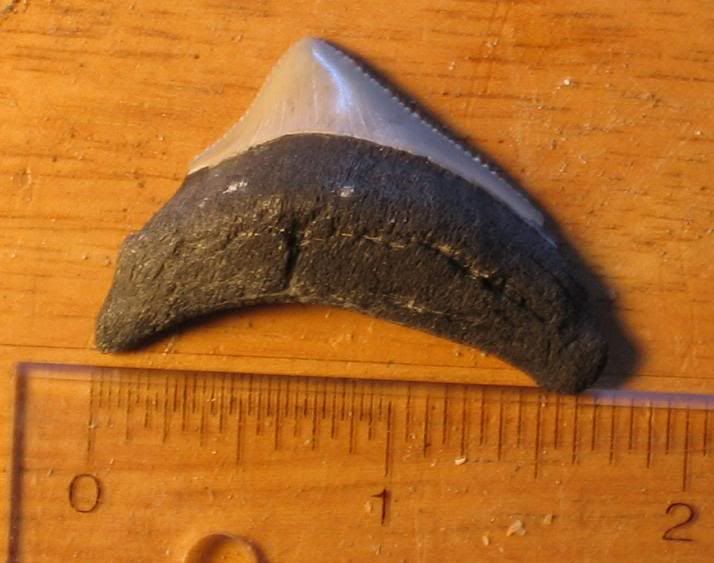
This tooth has a broken root, but was found at a different location.  I think that it's also Palaeocene based on some of the other fossils found in the creek along with a little research on the area.  I was prospecting a new spot that had potential, not knowing if I'd find shark teeth or not.  Here's the first one that I found here.  Can you spot it?
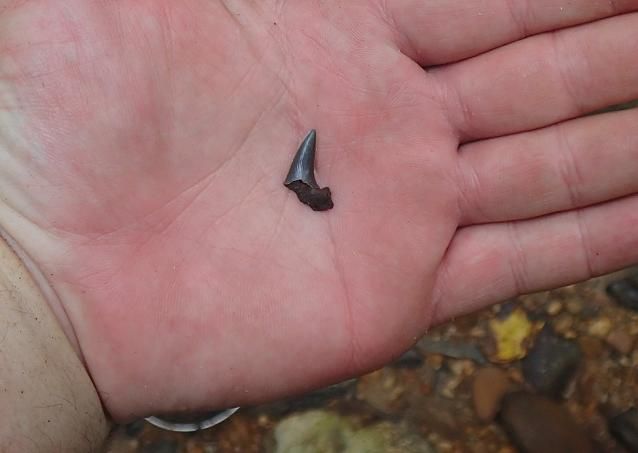
Here's a picture of the tooth...I'm not sure of the species yet, but I think it's another sand tiger shark lateral tooth.

Picture 25.

Here's another one from my new spot...it's a bit easier to see though.  Although the quality of the finds on this trip weren't that great or numerous, this spot has a lot of potential.

Picture 26.
Here's another easy one to find.  It seems easy here, but in real life this was much tougher to find.  Give credit to the camera!

Let's look for some stuff from the PCS mine in Aurora, North Carolina.  Currently, they don't allow collecting there, but a few years ago they did.  Let's hope that they open it up to collectors again some day soon.

These are some pretty large shark teeth and should be easy to find, right?  Well, let's see how you do finding the two on the left.
Picture 27.
Well, this is the easiest one of the bunch.  It's the left most tooth in the picture above of the three teeth.  This mako, Cosmopolitodus hastalis.  This shark was perhaps ancestor or close extinct cousin to today's great white shark.
Picture 28.
There's another Lee Creek mako in this picture.

Picture 29.
There's a Lee Creek Pliocene tiger shark in this picture, Galeocerdo cuvier.  

Picture 30, the last one of this post.
There's a Lee Creek megalodon in this picture.  It's a posterior tooth. 
It's not the huge meg that folks look for at the PCS mine in Aurora, NC.  But it's a good find., not very common at all.

During our virtual shark tooth hunting trips the past three posts, we visited Palaeocene and Pliocene locations and saw a variety of shark teeth.  I admit that it's quite a bit more difficult to pick the teeth out of these pictures than it could be in the field, but not much really.  My hope is that you had fun reading these and if you are a beginning collector, this might help to give you the "eye" for finding your own.  If y'all provide some positive feedback then perhaps I'll post more like this.

Saturday, September 1, 2012

The Shark Tooth Hunt (Set 2)

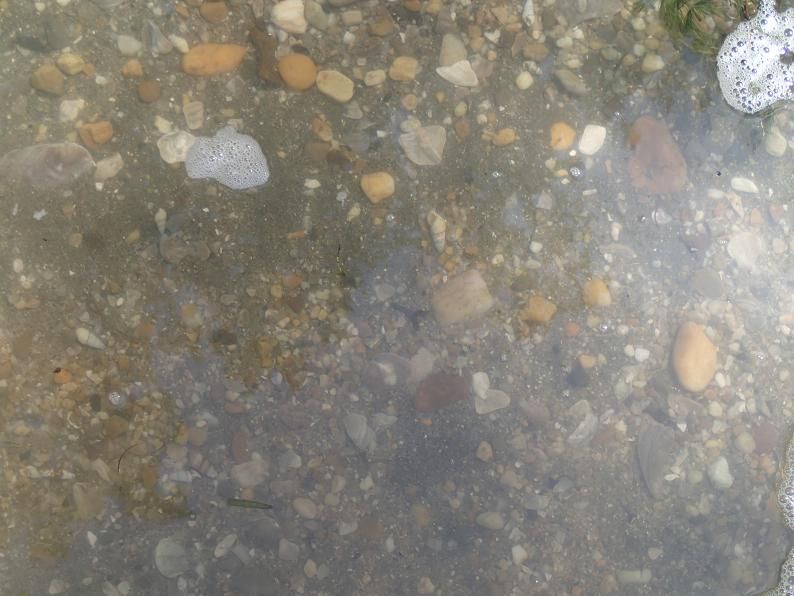
Well, if you missed it, "The Shark Tooth Hunt (Set 1)" of our shark tooth version of the "Eye Spy" game was my last post, where I posted ten pictures of in situ photographs of fossilized shark teeth.  As promised, I'm posting a set of ten more pictures where you can participate in a virtual shark tooth hunt right here on Fat Boy's Outdoors.  Have fun!

Picture 11.
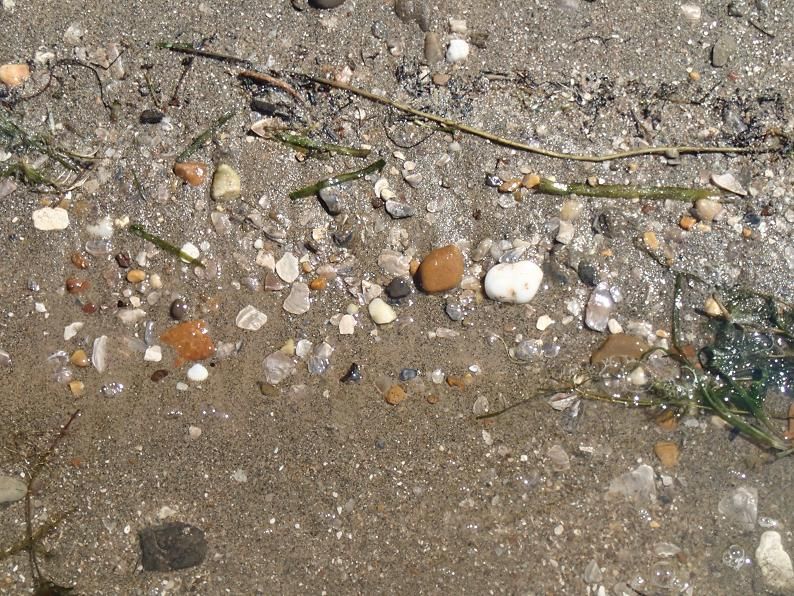
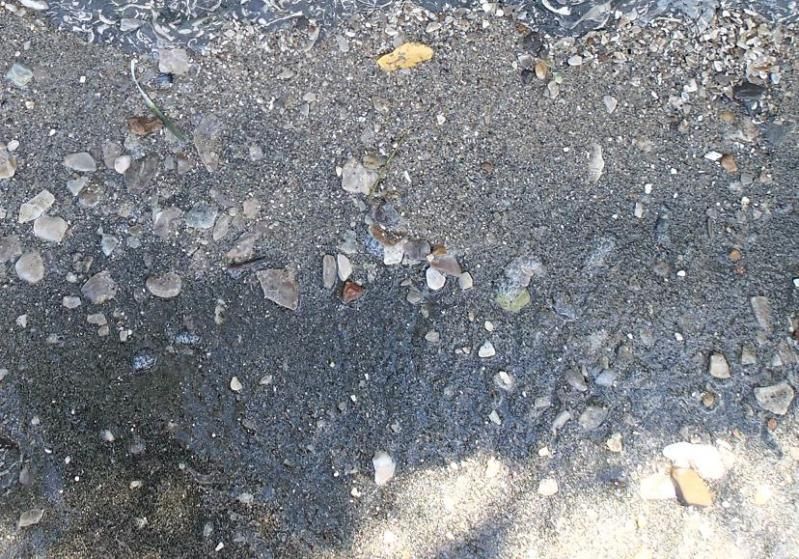
There are two shark teeth in this picture...see if you can find them.  The link below gives you the answer.

Picture 12.
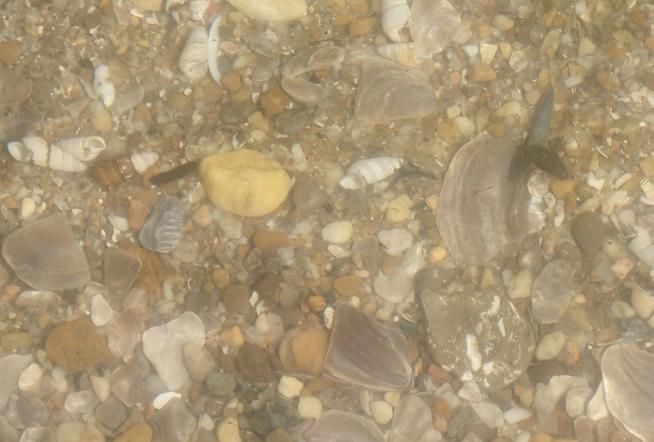
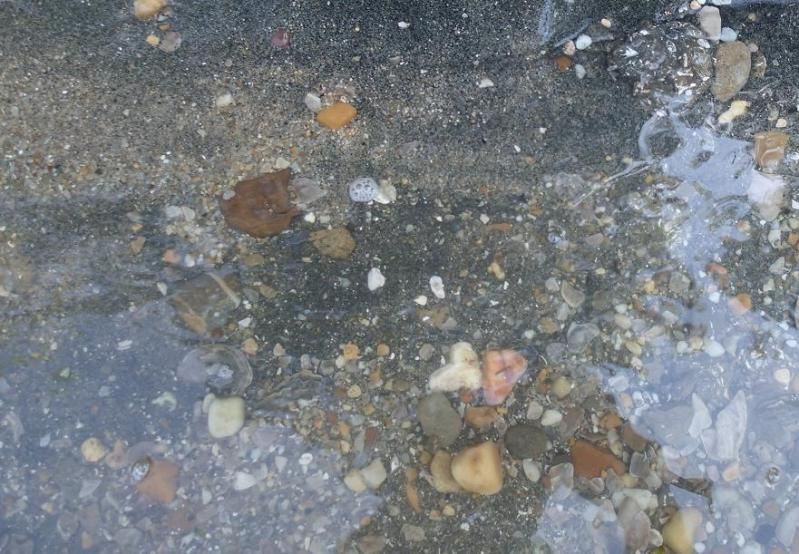
This one is tricky because of the distortion of the magnification of water along with the glare, but there are three teeth in this picture.

 Picture 13.
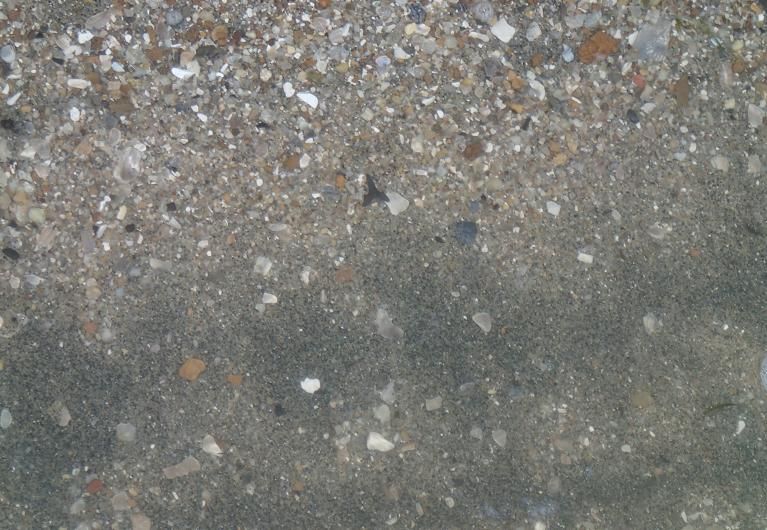
There are two teeth in this picture.

Picture 14.
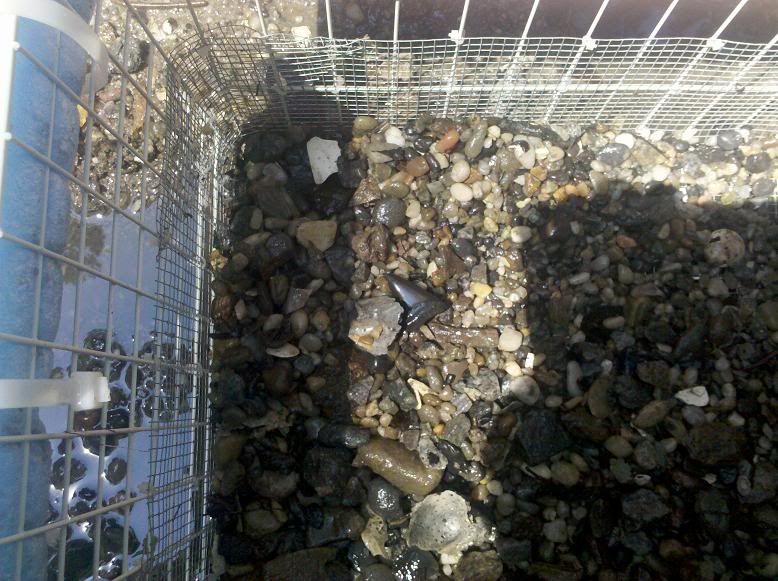
There's one tooth in this picture, partially buried.  Can you find it?

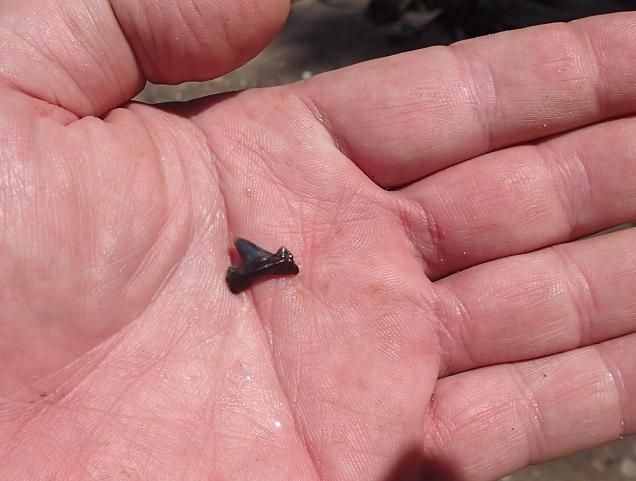
Here's the tooth after being found.  It's a Palaeocene sand tiger shark tooth, common at the loction that I collect.


Picture 15.
Here's another partially buried sand tiger shark tooth.

Picture 16.
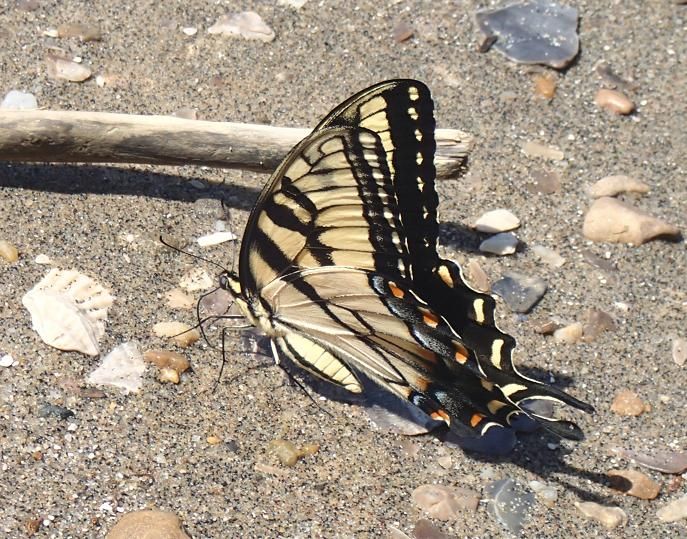
There's one tooth in this picture, but it's small and broken, only the blade.  I asked the butterfly to fly near a better tooth for the picture, but it didn't cooperate!

Picture 17.
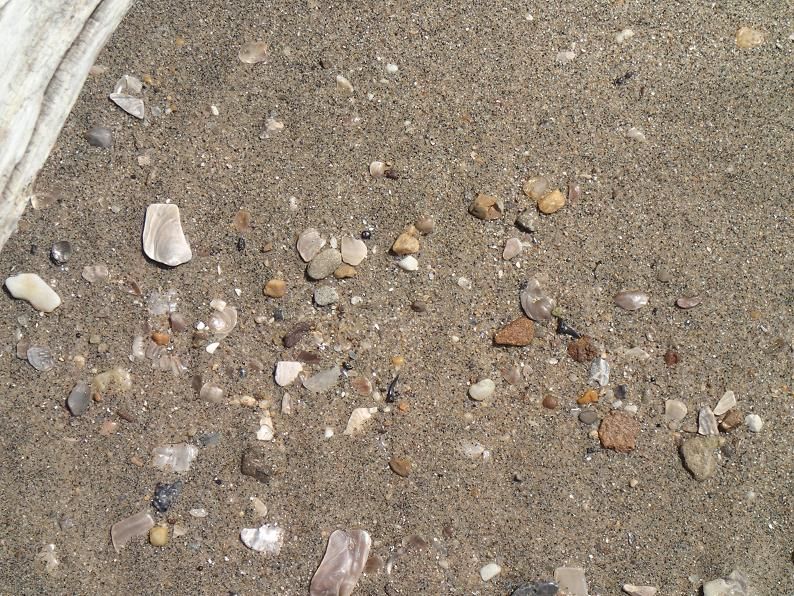
There are two shark teeth in this picture.

One of the teeth in picture number 17 was an interesting find, Cretalamna appendiculata...some palaeontologists consider this shark to be the ancestor to Otodus, Megalodon and the other mega tooth extinct great white sharks.
Picture 18.
There are two sand tiger shark teeth in this picture.

Picture 19.
Who would think that a washed up plastic drum would have fossilized shark teeth inside?  Well, there are two of them inside.  Can you find them?

The last one for today's post, picture 20.
I picked up two teeth in one scoop.   Even after picking them up, they're sometimes difficult to spot.

Well, that's all for today.  More to come in my next post, so please check back soon for more.  I hope that you had fun on today's hunt!

Thursday, August 30, 2012

The Shark Tooth Hunt (Set 1)

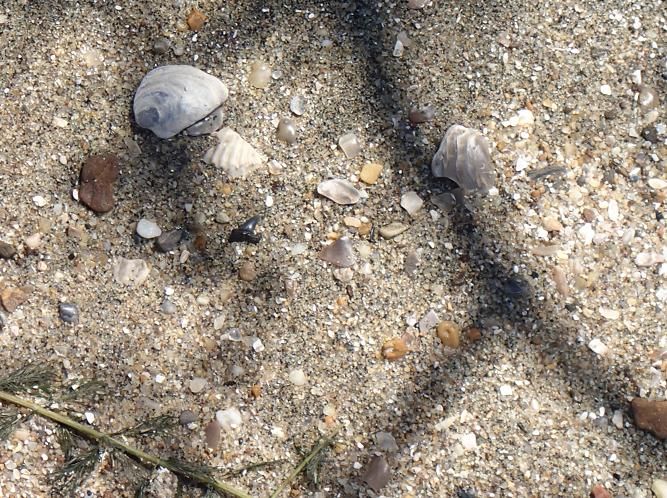
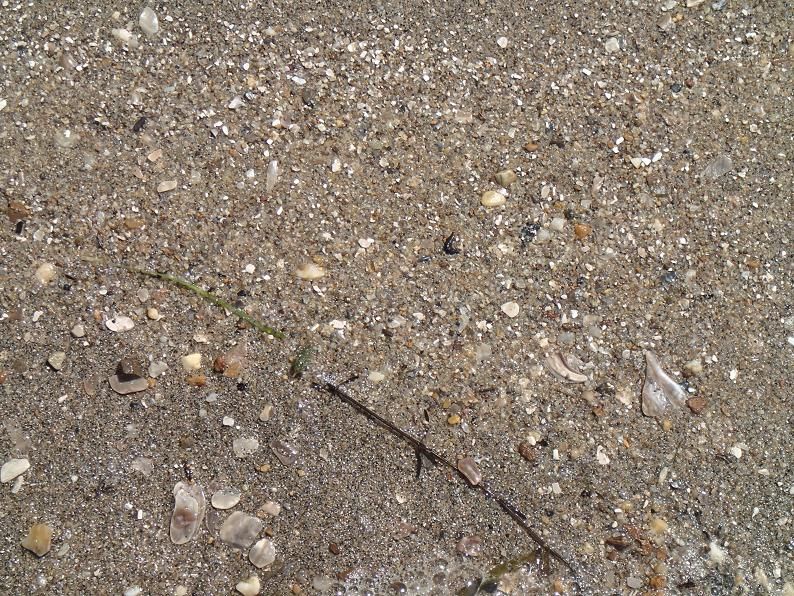
One of the things that my daughter thought was the most fun with my shark tooth blog posts involved finding the teeth hidden within the in situ photographs.  She said that it reminded her of some books that were her favorite as a youngster, books that I think were titled, "Eye Spy", or something like that.  We thought that it would be cool to come up with a few blog posts along a similar line.  So, without further ado, let's play...

The Shark Tooth Hunt! (Eye Spy style)


I'll post a series of in situ photos of shark teeth and other fossils, and you simply have to find them.  The answers will be in links immediately following each picture.  I'll post ten pictures per post like this.  So here's the first set.  I hope you enjoy them.

Picture 1.


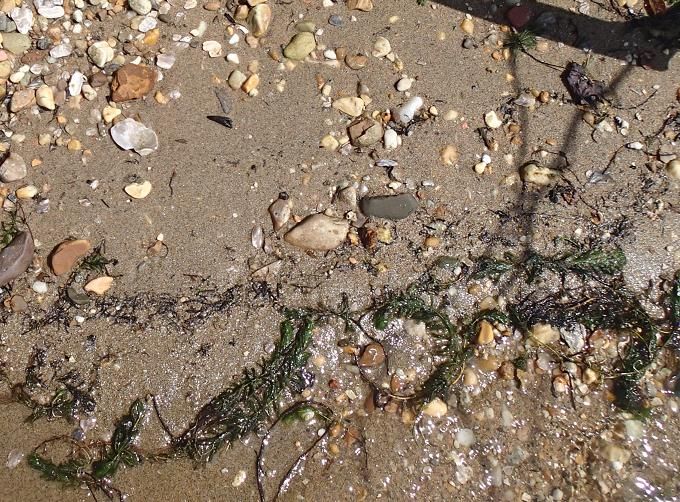
There's one sand tiger shark tooth in this picture...do you see it?  Click on the link below for the answer if you can't.
 

Picture 2.
Only one shark tooth in this picture too.  Again, click on the link below for the answer if you can't find it.

Picture 3.
There are three shark teeth in this one!

Picture 4.
One lone tooth in this one...

Picture 5.
Only one tooth in this picture also...

Need a hint?  It's partially buried.  Here's what the tooth looks like uncovered, and collected.


Picture 6.

Here's an easy one...a bigger tooth.

Picture 7.
There are two teeth in this picture.

Picture 8.
There are two shark teeth in this picture.

Picture 9.
This picture has three shark teeth.  Can you spot them all?

Here's the last one for today, picture 10.
Sometimes they're not so easy to spot after picking them up!  There are two in this picture.

 I hope that you had fun.  These pictures are a few that I took on my last trip this past weekend.  I didn't really find anything spectacular, but wanted to find some way to document it and share it with you in a fun way.  The fossilized shark teeth found on this trip were pretty much the same stuff that I always find, and not really spectacular or noteworthy.  But, they're fun to find in real life.  And I enjoy finding them in pictures too.  My biggest fear is that maybe I missed some myself!  If you find one that I didn't spot, feel free to point it out in a comment. 

I'll post ten more tomorrow night, so stay tuned!!!

Saturday, August 13, 2011

Quest for Great White Shark Teeth

Check the gravel bars visually for fossils, then try sifting the
deeper water for those that are not on the surface.
Don't ask me how I did it, but at the end of our family vacation, I convinced my wife to spend a day in North Carolina while my daughter and I hit a popular small stream in search of nice great white shark teeth to add to our collection.  The Atlantic Coastal Plain formations found along this particular creek include the Cretaceous formations known as the Black Creek and Pee Dee, the Yorktown formation and possibly the Eocene Castle Hayne formation, or at least some reworked material from it.  The term "reworked" means that fossil material that normally occurs in other formations became mixed in with the known formation of an area.  Weather and erosion usually contribute to this, but it could also occur as a result of the existance of life during the time of the formation of younger deposits.  An example would be something like some sort of animal excavating a burrow, perhaps a shrimp, where the burrow was deep enough that it extended from the substrate surface into an older underlying formation.  As the animal makes it's burrow, the material dredged from the burrow may contain older fossils and is pushed out of the burrow, being "reworked" out of the older formation and into the younger sedimentary deposits (or a future fossil formation).

It's no secret that it gets pretty hot in the Carolinas in the summer, but fortunately for us, the temperatures were normal for this time of year while back at home in Maryland we were experiencing higher than normal temperatures in the low hundreds with heat indices around 110 degrees F or higher.  Nevertheless, it was hot and humid in North Carolina yet we could take some comfort knowing that we'd be wading a small stream with a shady tree canopy overhead.

We brought two sifters, one with a half inch mesh and one with a quarter inch mesh, both home made ala Ditchweezil design.  Here's the link so that you can make your own sifter if you like this design:  http://www.blackriverfossils.org/Sifter/tabid/79/Default.aspx.  Obviously, the smaller mesh sized sifter will yield more fossils and shark teeth than the larger mesh sifter simply because the smaller fossils that would fall through the half inch mesh are trapped in the quarter inch mesh.  The advantage of the larger sifter is that you can cover a lot more larger material and not spend time picking out the smaller fossils.  Which one you use depends on what you are after, more fossils including smaller sized ones, or larger fossils only.

My finds for the day were mostly as a result of sifting, but I
did find one great white shark tooth with a broken root and
several smaller teeth on the gravel bank.
My daughter, meanwhile, spent the entire day surface collecting.  That is, simply walking around or sitting on the stream bed picking up fossils from the surface of the stream bottom or exposed gravel bars.  I did a little of that, but mostly put the work in by primarily sifting.  How effective were the techniques?  I'll let the next three pictures tell you, both techniques proved effective though.  During times when the water levels are higher or murkier, surface collecting may not be all that effective in some streams.  In this case, the stream was very low and clear, so that technique worked out just fine on this day.

I used the larger half inch mesh sifter for most of the time in search of the larger shark teeth.  You still sometimes get some smaller teeth that adhere to the gravel in your sifter, but most of the smaller ones fall through. 

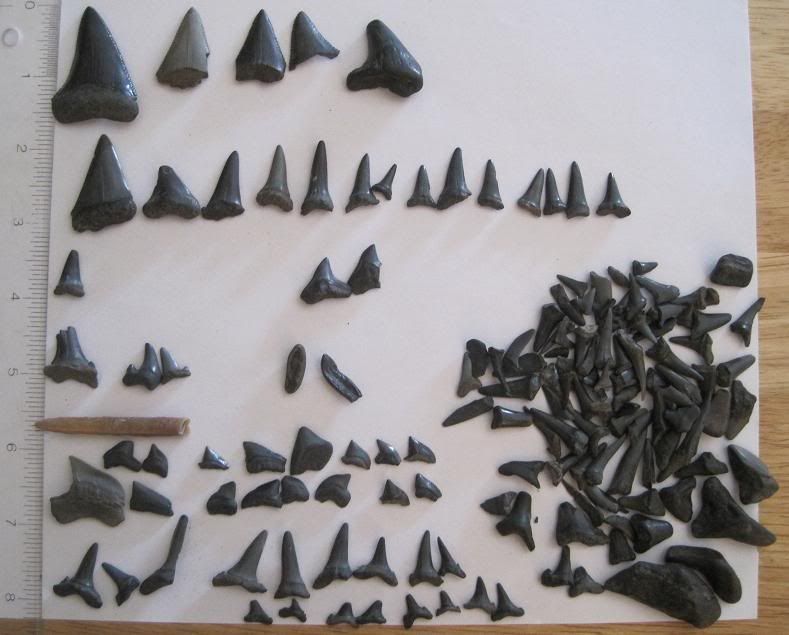
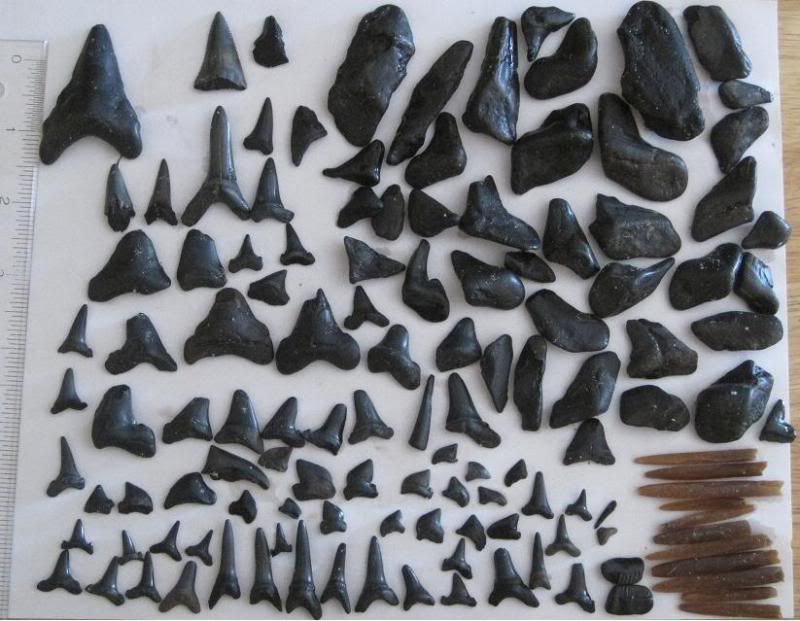
Here are my daugher's finds, including a two inch worn
megalodon tooth and a larger mako tooth, and many very
worn fragments of megalodon and other large sharks.
In this particular stream, you really have to be careful, watching out for broken glass and other sharp man made objects as you sort through your sifted material.  Basically, it's a very simple plan, find gravel in the stream, shovel it into your sifter, and then sift and sort through that material pulling out any fossils that you find.  In the picture above, you'll see that sharks teeth were common in the stream that we were collecting in.  In addition to shark teeth, you'll find belemnites from the Cretaceous period, which are fossilized internal skeletons of an extinct squid like creature.  You also have a chance to find other fossils from the Cretaceous, including mosasaur and plesiosaur teeth, crocodile teeth, and various types of fish teeth like the extinct saber toothed salmon, Enchodus, and an extinct pycnodont drum fish, probably Anomaeodus.

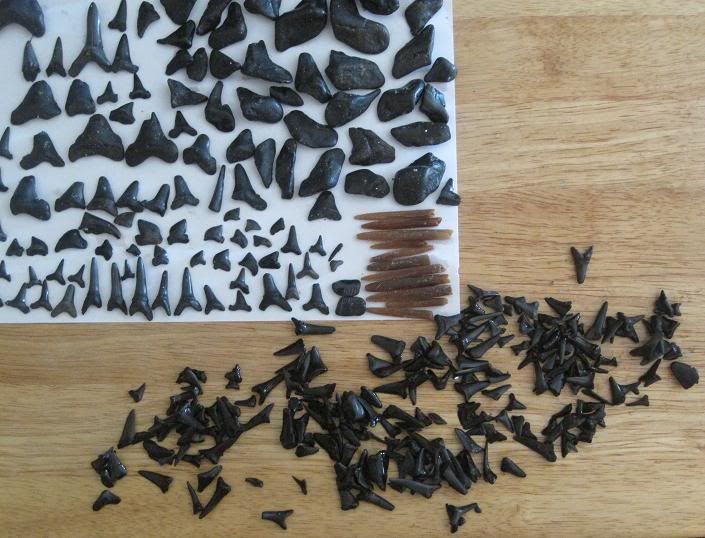
Meanwhile, while I'm worked my butt off shoveling, sifting, and sweating profusely, my daughter is walked around surface collecting along the gravel bars.  The water was low and clear from lack of rain apparently.  The two pictures to the right are her finds, much more than I found.  I probably walked around over much of that material not seeing them as fossils.  Duh.  So that's one reason she has twice as many fossils collected as I do, my poor eyesight and her perfect 20-20 vision or better.  The other reason is that the smaller teeth were probably dropping through my half inch screen.  Excuses, excuses, right?  She has an eye for this, a gift I'd say.  I always thought that I did, but I'm no where near the eagle eye that she is.  Anyway, you can see that she found a lot of material, including a two inch worn megalodon tooth, and lots of fragments of teeth from "megs" and other large sharks.  She also found a bunch of belemnites, the amber colored bullet shaped fossils shown on the lower right portion of the paper in both pictures.

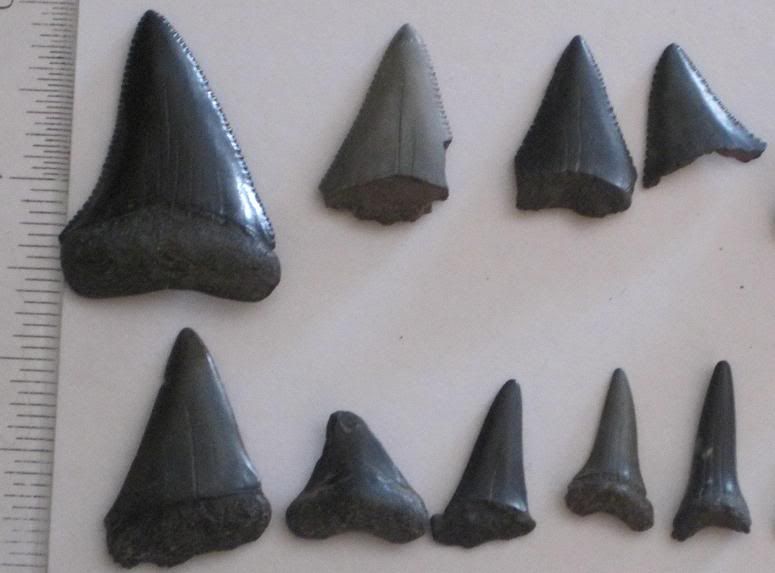
In the top row in this picture are teeth from the great white
shark, Carcharodon carcharias. The second row are extinct
mako shark teeth.  Notice the similarity of the top left row
great white tooth and the mako below it.  The mako below
is Cosmopolitodus hastalis, the extinct giant mako that many
scientists believe was the direct ancestor to our great white.
I have to say that I did find several nice teeth while surface collecting including a rootless great white blade stuck in the side of the creek bank.  But, again, most of my stuff came via the back breaking hard work of shoveling and sifting.  You never know from one sift to the next what you'll find, so every sift could be an adventure and yield a tooth of a lifetime.

I found several nice mako teeth and some worn meg and mako fragments while using the half inch mesh sifter.  I was hot, cranky, and soaked in sweat, and not finding the number of teeth that I had hoped for.  I picked likely spots, tried a few sifts, and if I didn't find anything worthwhile, moved on working my way along the stream.  My daughter trailed behind me picking up tooth after tooth.  So, being frustrated, I decided after a couple hours to switch to the quarter inch screen and start padding my fossil numbers with smaller teeth. 

My first sift with the quarter inch screen gave me a nice one.
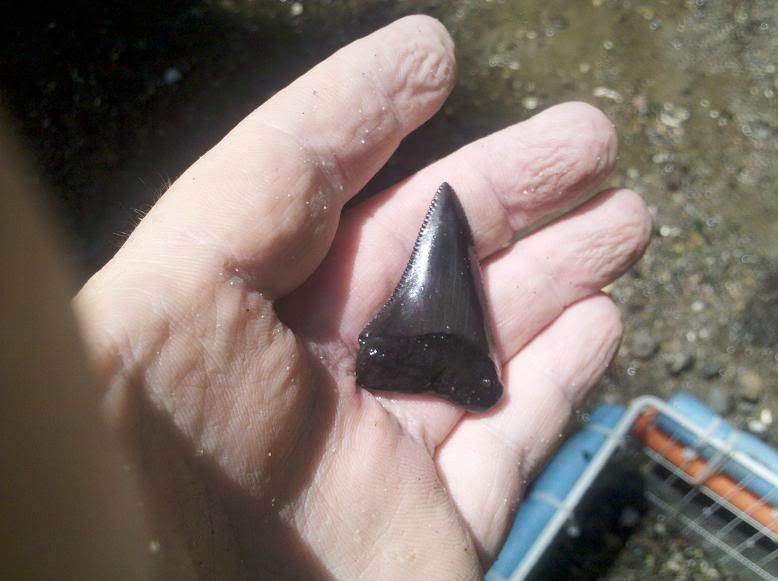
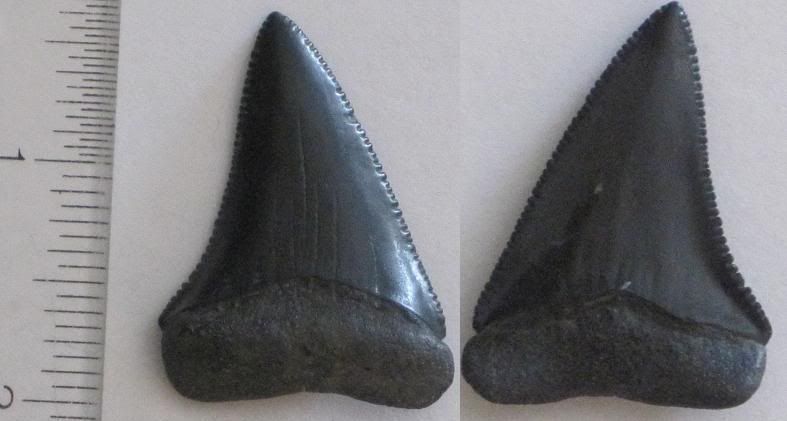
The very first sift presented me with my best great white shark tooth to date, a 1 3/4" perfect beauty of a tooth.  There are bigger nice teeth to be found here, but I haven't had that much luck doing it, so this tooth may not be much to some that collect here, but for me it made my trip.
The good thing about using the smaller sifter is that you'll find a lot more teeth, and the bigger ones will still be there.  The drawback is that there is so much material to pick through and so many teeth to pull out, that you spend a lot of time picking through each sift.  I actually felt that the added time spent looking through these sifts became a welcome break for my back and allowed me to slow the rate of sweating.  It was so humid that sweat was dripping off my eyebrows and onto my glasses, and my shirt was so soaked that I had nothing dry to wipe them with, hindering my poor old eyesight all the more.  It didn't help that there was absolutely no wind at all to help dry us out.
 
Carcharodon carcharias, great white shark
I really can't complain though, we had plenty of water with us and I was out collecting fossils with my daughter.  You can't beat that for quality time with your family.  My wife, however, isn't into it.  She was hanging out at the Hotel pool worshipping the sun.

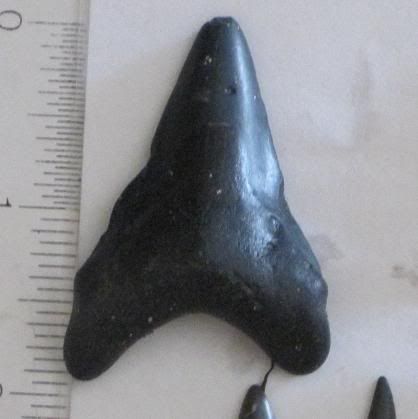
Here's a worn "meg" tooth that my daughter found, which
brought a smile to her face! 
Basically, the fossils that you'll find here from the Pliocene can be in really good shape, or very worn.  The great white shark teeth are the prize and probably the most sought after fossils here, but you have a chance to find some big megalodon teeth.  Many are very worn, but I know some folks that have found some very nice ones too.  In addition to the great whites and megs, you will find mako teeth, bull shark teeth, and once in a while you'll find the modern tiger shark, Galeocerdo curvier.  There are plenty of fossiled bone fragments from whales, porpoises, and other marine mammals from that time, and every now and then you'll find a fossilized land mammal tooth.

In addition to fossils, it's quite possible to find Native American artifacts.  On the two fossil forums that I frequent (check out my links), there are folks that have found some very nice artifacts too, including pottery, arrowheads or points, and spear points.  You may also find various other evidence of human activity as I mentioned before including old coins and bottles, but more than likely you'll encounter metal trash and broken glass, so care should be taken when sorting through your sifted material.  Gloves are a good idea, but I'll admit that I didn't have them with me the last time.

This is a whale inner ear bone, or tympanic bulla from GMR
from the Pliocene Yorktown formation.
You may also find fossils from two Cretaceous formations mixed in with the Pliocene material.  Those formations are the Black Creek group, and the Pee Dee formation.  You may encounter fossilized mosasaur teeth, plesiosaur teeth, crocodile teeth, and possibly other marine reptiles from that time, the age of the dinosaurs.  Shark teeth from the Cretaceous mostly include three species of extinct crow sharks, extinct sand tiger sharks, and an extinct goblin shark.  The crow shark species include Squalicorax kaupi, the most common crow shark, the larger Squalicorax pristodontus, and the less common weird looking Squalicorax bassani.  In addition to the teeth, you may find vertebra, bones, scutes, and broken turtle shells from the various marine vertebrates.  Invertebrate fossils include various oyster shells, clams, gastropods, and belemnites.  Personally, I like finding fossils from the Cretaceous because they are not common from my neck of the woods, so it's a treat for me to visit this creek and bring some material from that fascinating time home with me.  Perhaps that's a good reason to use the quarter inch sifter, because most of the teeth from that time are smaller and fall through the half inch mesh.
 
The three crow shark teeth in this picture are from one of
the less common ones, Squalicorax bassani.  I've found one
of these cool teeth in my life, and my daughter finds three
of them on this trip alone!
You may also find other fossils from other formations, perhaps from the Eocene or Miocene, that were most likely reworked, as mentioned earlier.  Some of the shark teeth that you may find include Carcharocles chubutensis, megalodon's direct ancestor, and Eocene ancestors, Carcharocles auriculatus and possibly Otodus obliquus.  Since many of these teeth are extremely worn, it's difficult to identify them because the identifiable characteristics, like cusplets and serrations, are mostly broken or worn away on these teeth.

Within the material that you're sifting, the fossils are found in what is known as "float" deposits.  Basically, these deposits consist of material eroded from the formation itself, and deposited along the stream bottom through time.  In other words, the material is no longer physically connected within the formation. So, it's really technically difficult to determine exactly what formation a particular fossil was from.  Another example of float deposits are beaches that contain fossils, like Myrtle Beach.  We know probably what formation the fossils are from simply because you can compare them to specimens of known fossil species that were discovered directly in the formations.  In many cases, the fossils that you're collecting are unique to a certain formation.

This was my third trip to this creek.  I've seen people post some amazing trip results from this place.  Although I have yet to have a day like that, each time I go I find something different that I've never found to add to my collection.  It's hard work but well worth it in my opinion.  You'll feel it at the end of the day, but at the same time you'll be satisfied with what you find.

What tools do you need for this type of fossil collecting?  For creeks like this, obviously this time my daughter didn't need much except her keen eyesight and the ability to bend over, pick up and check out potential fossils all day long.  But, for sifting, you can build a sifter like the one linked above, or fashion one out of a wood frame, and a shovel to fill your sifter with.  During hot weather, wet wading is OK, so wear clothing and shoes that are comfortable but you aren't worried about getting soiled.  I prefer wading boots with felt soles to give me foot protection, ankle support, and traction on potential slippery stream surfaces.  Other things you'd need during hot weather would be plenty of fluids, a back pack to carry your stuff in, a container for your fossils (and perhaps something to protect your better finds from being broken during transport), a change of clothes and a towel for when you're done, and probably most importantly, plenty of bug spray.  For cooler months of the year, it would be advisable to wear waders or hip boots.  Waders tend to give you more flexibility when navigating through deeper water.

I'm going to finish this post with a statement about some common sense and some pictures from my past trips to show you some of the other fossils that I've discussed earlier in this post.  When working streams like these for fossils, make sure that you're only digging into the float material on the stream bed or gravel bars.  Do not dig into the sides of the streams unless you have specific permission from the land owner to do so.  This causes unnecessary erosion and could result in our privileges being revoked and areas like these posted or such activities prohibited.  Don't think it can happen?  It sure can, as witnessed in Summerville, SC, where it's now illegal to walk streams in the city limit with any kind of tools for digging.  So please, use some common sense to protect our resources and ensure that future generations may enjoy collecting fossils and other artifacts from our local streams.

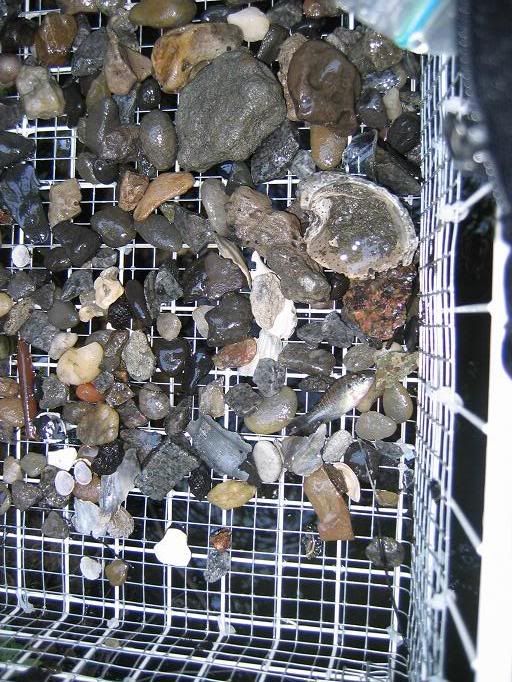
And for the anglers out there, how's this one?
I had one sift several years ago that resulted in
the catch of a bluegill sunfish!!!!!

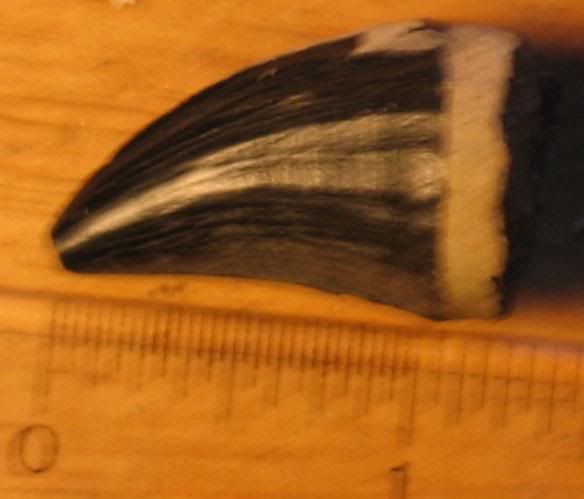
Mosasaur tooth from GMR that I found a few years ago.
Crow sharks, Squalicorax pristodontus (left) and Squalicorax bassani.
Cosmopolitodus hastalis, extinct giant mako shark that was
most likely the ancestor to the modern great white shark.

For more info on fossils, and to interact with other fossil collectors, please visit the following links:
http://www.thefossilforum.com/
http://www.blackriverfossils.org/
Make sure that you register, it's worth it!