Showing posts with label buzzbaits. Show all posts

Thursday, April 18, 2019

Remembering Some of My Biggest Bass

Last night, I was reflecting on some of the biggest bass that I've caught in my home state over the years, and thought that maybe it would be a good time to share some of these stories with you.  Since some of the stories may be long winded, so I'll do this over the course of several blog posts.  Some of the stories might not have been my biggest fish, but, they were big fish, and the stories are worth telling.  I hope that you enjoy them and, even better, learn something that may help you catch your personal best bass.

Unfortunately, some of these stories happened prior to the digital age, and I have no idea what I did with the pictures that I had, so you'll have to take it on good faith that the stories are true.  Yeah, I know what they say about fishing stories.  I do have witnesses though!!!   So, if I don't have a pic to share of that actual fish, I'll post a substitute picture of a nice fish, or pics related to how I caught the big one.

One day, if I'm lucky enough to find any of those prints, I'll make a copy of them and share them with you.  I had a major septic flood in my basement in 2012, and lost a bunch of stuff, so it's possible that many of the pics are gone forever.  I also have rolls of film that I've never developed, so maybe there are some pics on those rolls.  Some of you may ask, what is "film"?  Ha ha.  Some of these big bass were caught prior to the invention of affordable waterproof or digital cameras.  What can I say, I'm an old fart!

How do I...???
One hot summer evening, I was bank fishing with my buddy, Howard, his girlfriend at the time, and his black Labrador, Max, along a body of water next to a local river, and decided to drop down to fish the river.  The bank was steep and it was a struggle to climb down there.  

The river was deep, and the water was, what some of my friends today call, "big fish green".  "Big fish green" means that there is a slight amount of color in the water, enough sediment to make fish feel comfortable to be active, yet not too much that they can't see your lures, leaving the river with a greenish tint.  

There was a huge log that ran parallel to the river bank right in front of me.  In fact, I had to fish over this log, and, it sat at about waist high to me, so it wasn't easy.  There wasn't a lot of room to stand along the bank there, and just barely enough room to effectively cast.  Just a bit upriver from me, about twenty feet or so, was a rock ledge that stuck out from the river bank about twenty five yards and created a nice eddy where I figured that fish would lay in ambush of their prey.

Just a few days prior, I purchased my first baitcasting outfit.  I'm not really sure, but it may have been my first time fishing with it.  Back them, stores pretty much only sold affordable baitcasting reels that cranked on the left side, and being right handed, and growing up fishing with spinning tackle, I was used to cranking with my right hand.  So, I had to learn to switch hands after each cast, and learn to crank with my left hand.  Learning to cast and not backlash was difficult enough back then, prior to the invention of fancy magnets in reels that prevent the spool from spinning too fast, but, switching hands too?  Still, I started to get the hang of it.

I remember that I had a large chartreuse buzzbait tied on, a perfect choice for targeting big, aggressive largemouth bass in the slower waters during the hot summer, but not really a lure meant for tempting smallmouth bass the fast river water.  Also, most people generally pursued river smallies with smaller morsel sized baits over the bigger lures commonly used to chase largemouth bass.  But, being lazy, I didn't want to tie on a new lure.  And, I only intended to toss a couple casts.  Honestly, I didn't really think that I'd catch anything on it in the river, but, what the heck?

My buddy, Howard, and his girlfriend, happened to walk by and watch me cast from the path above me.  I think that Howard, already a baitcasting veteran, enjoyed watching me struggle to learn the ropes.  It must have been somewhat amusing and entertaining throughout the day, watching me learn the hard way, as I cursed while I picked out the many birds nests.  I forced myself to learn the hard way by leaving my spinning rigs at home.  So, even if I wanted to toss smaller smallmouth sized lures, I wouldn't for fear of getting more backlashes.

On the first cast, I lobbed the buzzbait upstream and across, and retrieved it past the tip of the rocks and through the eddy.  Just as the lure reached the bank right in front of me and the tree, the water erupted.  Water went everywhere, on my sunglasses, on my face, and on my shirt as the fish thrashed about in front of me.  It suprised the heck out of me!

I don't have any pictorial examples of big buzzbait smallmouth, but, this picture shows that big smallmouth will hit big baits, and big baits don't get much bigger than this musky sized bucktail.
Of course, I was extremely surprised and excited, and nearly forgot what I was supposed to do.  In situations like that, sometimes people say the silliest things.  I fought this fish as it went ballistic on me just over the stupid log, I yelled out a couple expletives that are too vulgar for this blog, followed by "How do I fight this thing?"  Howard, his girlfriend, and probably the dog too, were laughing hysterically at me.   I really did get confused, not used to reeling with my left hand, and fighting a fish with the rod in my right hand.
These days, I routinely toss small 1/8 oz. buzzbaits while targeting smallmouth bass like this decent fish.  The truth is that you definitely will get better summer time numbers of fish on these smaller buzzbaits.  But, big baits catch big fish, as the story told explains.  
To this day, Howard teases me about that fish.  Eventually, I figured it out, got the fish in, and hoisted it over the log.  It wasn't the biggest smallmouth bass that I've ever caught, but it was a nice one for our area, and was my biggest to date at that time.  I didn't have a tape measure or scale with me, but I'd guess that fish was a fat twenty inch smallie.  And, it was the first fish that I ever caught using a baitcasting outfit! 

The hanging down to my ankles fish...
It was a hot, muggy, dog day of a summer evening as Howard and I met each other in the parking lot after work.  Typically, back then, we'd scurry to our fishing spot after work and get as much time as possible in to fish.  But, on these hot, steamy nights, there was no hurry.  We arrived at our spot about an hour before dark so that we could fish the magic hour, and then fish well into the dark.  Usually, our timing was about right, and we'd catch fish right away.  During the dog days of a hot summer, the best bite is often at night as bass are mostly inactive during the heat of the day.

Frogs sang and chirped loudly.  They'd jump from our footsteps and into the water as we walked along the path along the bank.  Bugs were everywhere, and mosquitos constantly buzzed us as they searched for a chink in our bug spray armor.  To me, all these things meant is that it was buzzer time.  

Using baitcasting outfits were so productive for me throughout the years, whether they were specialized rigs for flipping, pitching or just plain chunkin' and windin'.  I found them to be very effective for using larger lures, the spinnerbaits and buzzbaits, for example, that produced so many big bass for me.  These lures are perfect for fishing around sunken timber, weeds, lily pads and logs.  

We bank fished most often at one of our favorite bodies of water.  Baitcasting rods teamed with heavier line not only allowed us to toss larger lures, but also improved our chances of retrieving lures that we snagged in the timber.  After all, if your not snagging now and then, you're not fishing in the right places.  But, we were young and lived on a tight budget, so, every lure that we could get back was a bonus.
As Howard shows you, summer night fishing with buzzbaits can be the ticket for big largemouth bass.
Both Howard and I worked our way down the bank, and picked up some nice fish here and there.  On this particular night, the fish were bigger on average than what we normally caught.  Howard already caught a pair of twenty inch largemouth that probably weighed about four pounds at their summer weight.  I had a pretty good evening as well, landing a few eighteen inch fish and several fifteen inchers.  Howard and I eventually drifted away from each other, out of sight in the dark, as we each tried to figure out where the next big bass lurked.  I lagged behind as he moved on, because I knew that I was at a really good spot.  

I had a good feeling about this one particular spot, so I worked it thoroughly.  There were several blowdowns, and I wanted to make sure that I covered every angle fishing them.  I just knew that there had to be a lunker there.  This spot was about forty yards long, so I worked each tree from many angles to optimize my chances that a big fish would find my lure.  I picked up a couple smaller fish, and it was late, about midnight, so I figured that I'd work my way back toward Howard, meet up with him, and we'd head home.  After all, we had to work the next day.
Oh, how I love fishing buzzers at night during the dog days of summer!
On the way back over that same forty yard stretch, I fished the one spot that I hadn't really covered, where there weren't any trees, but, rather, had tons of frogs.  That spot was simply casting parallel to the bank.  On my second cast, I worked the lure all the way to me, covering as much water as I could.  I couldn't see anything except for where the weeds and water met, because it was so dark.  I couldn't even see my lure from the end of the cast to but to only about ten feet away.  But, I could hear the buzzbait, making a squeaky sounding plopping sound as it chugged along.  I worked the lure as slow as possible, just fast enough to keep the lure at the surface.

As I fished with the rod tip low to the water, and about four feet of line left from the tip of my rod, the water exploded just feet away.  Honestly, it scared the poop out of me!  I literally jumped when it hit.  I could tell immediately that this was a special fish.  On my baitcasting rigs, I set the drag pretty tight so as to get the maximum hook set, and typically, I'd horse the fish in.  There was no horsing this one in.  It took line, even with my drag set as to not allow that to happen.  Finally, I got it near shore, and I climbed down the bank and grabbed the behemoth by the lower jaw.
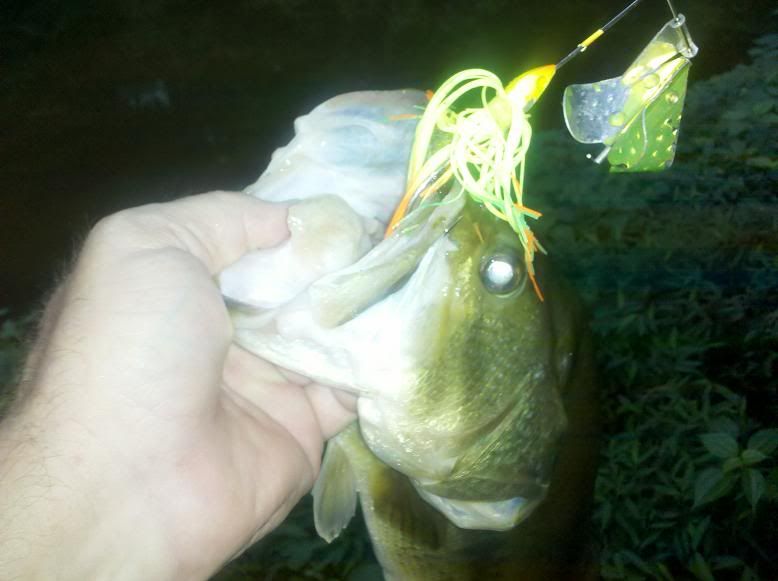
In the evening and at night during the dog days of summer, large buzzbaits, like this one, call in the hawgs.
As of that day, it was my biggest largemouth that I'd ever caught, for sure, and prior to that fish, I had caught dozens of five pound fish in my life.  This fish was bigger...unforgettable.  I was about two hundred yards away from Howard, and I wanted to show him this fish.  If this fish was so much bigger than most of the big fish that we catch there, that it was worth walking two hundred yards away to show my friend, and stop fishing, then you know it had to be a special fish! And that's what I did.  I walked down the path along the bank directly to him, carrying the fish at my side by the lower jaw.

When I reached Howard, he couldn't believe what he saw.  He said that, as I walked toward him, that he could see me holding the fish at my side, and the tail of the fish reached my ankle.  I'm 5'11" tall, as a reference for you, so it was a long bass.  He marveled at the fish as he proceeded to fit both of his fists into its massive mouth.  That amazed me!  The belly bulged on this fish, similar to the way my belly does now.  I was still shaking from the experience.  Neither of us had a camera, so, after a couple minutes of admiring the fish, I released it.
This was the buzzbait that I used to catch that huge fish, and many others since then.  I made this in-line buzzer by taking parts from other buzzbaits, bending my own wire shafts using a wire bending tool, and assembling the three components together with split rings.  This bait has caught me so many big fish.  The whole thing is about eight inches long.
Howard estimated that this bass would have been about twenty four inches long and weighed about seven pounds, give or take an inch or a few ounces.  It was truly one of the biggest largemouth bass that I've ever caught.  It would be a few years before I was able to equal that fish, but those are different stories for future blog posts.

OK, so that's all for today.  I'll post a few more on my next post.  Until then, I wish your all good fishing!


Tuesday, August 30, 2016

In, Under, and on Top of the River

After my last two blog posts about underwater photography and fishing buzzbaits, I couldn't wait to get out and try it all again in one trip.  What better a place to do that than our favorite summer wading spot?  My friend Rodger and I put in a full day of fishing and had a blast.  For me, it was all about the experience, not just numbers or the size of the fish (although bigger fish would have been more than welcome).
I love wade fishing the river in the summer.  We had gin clear water and bluebird skies to deal with, but the fish cooperated for us.  I had a great time.
The weather conditions weren't optimal for fishing, and as I later found out, not optimal for viewing certain species underwater either.  A cold front moved through the night before, and we had bluebird skies with a slight breeze, with air temperatures in the upper 80's.  That isn't a problem for wade fishing for smallmouth bass, but combine that with very low gin clear water, and it seemed that all of the fish were very spooky, including those that I wanted for my photo op.

I started off in the morning with a Heddon Baby Torpedo and after about thirty casts or so, decided to switch to a more finesse approach.  My buddy Rodger started out finesse fishing by tossing a small plastic worm and already had several fish under his belt by the time that I adapted.  Following his lead, I opted for the finesse approach and offered them the same four inch plastic worm, a lure that even skittish smallies will bite in our local river with such tough conditions.

My first spot fishing the worm was stacked with bass, so it didn't take long for my numbers to catch up.  At one point, I was able to catch them within a rods length of me and actually watch my worm bounce along the bottom and see the bass swim up and gobble it up.  The water was so clear that the fish would close in from about ten feet away on my lure!

It is amazing at how good their senses are.  As soon as the lure made the splash, their lateral line combined with keen eyesight allowed them to hone in for the attack from quite a distance away.

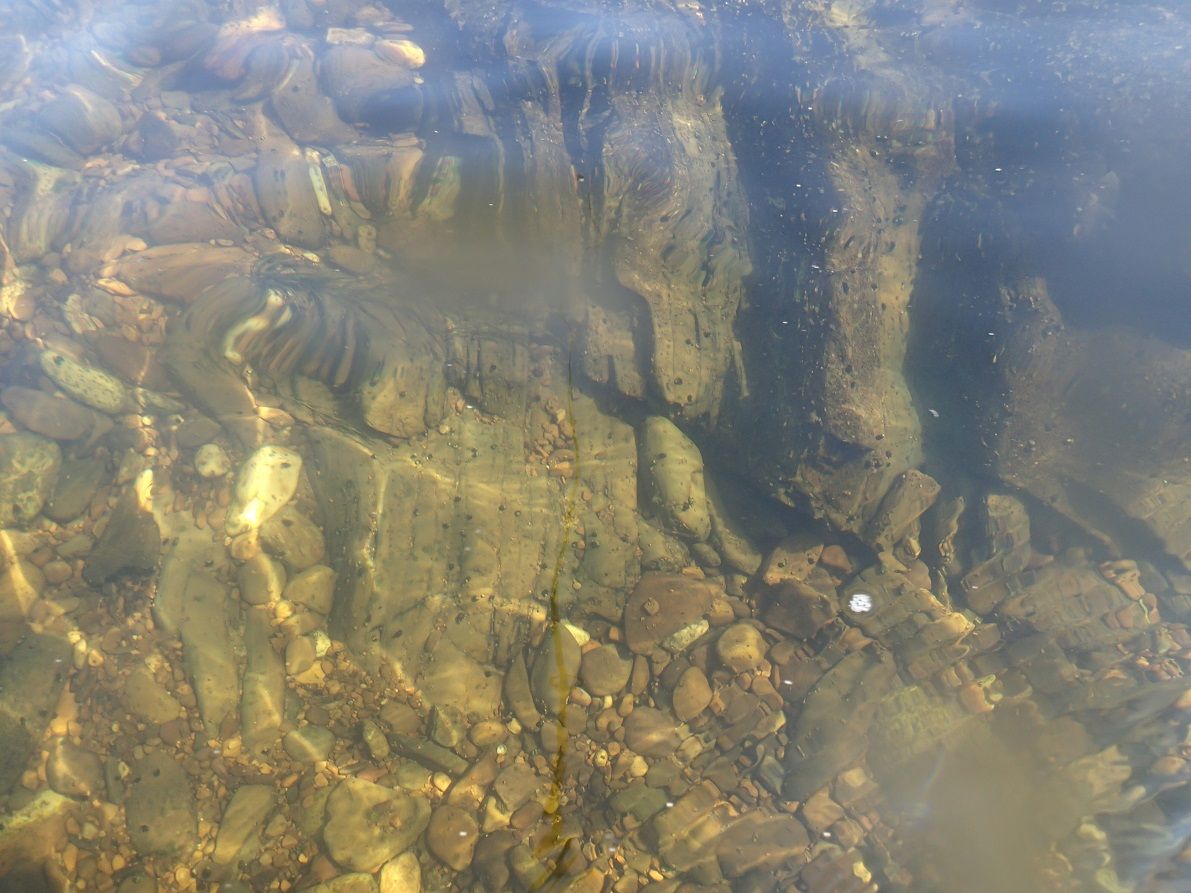
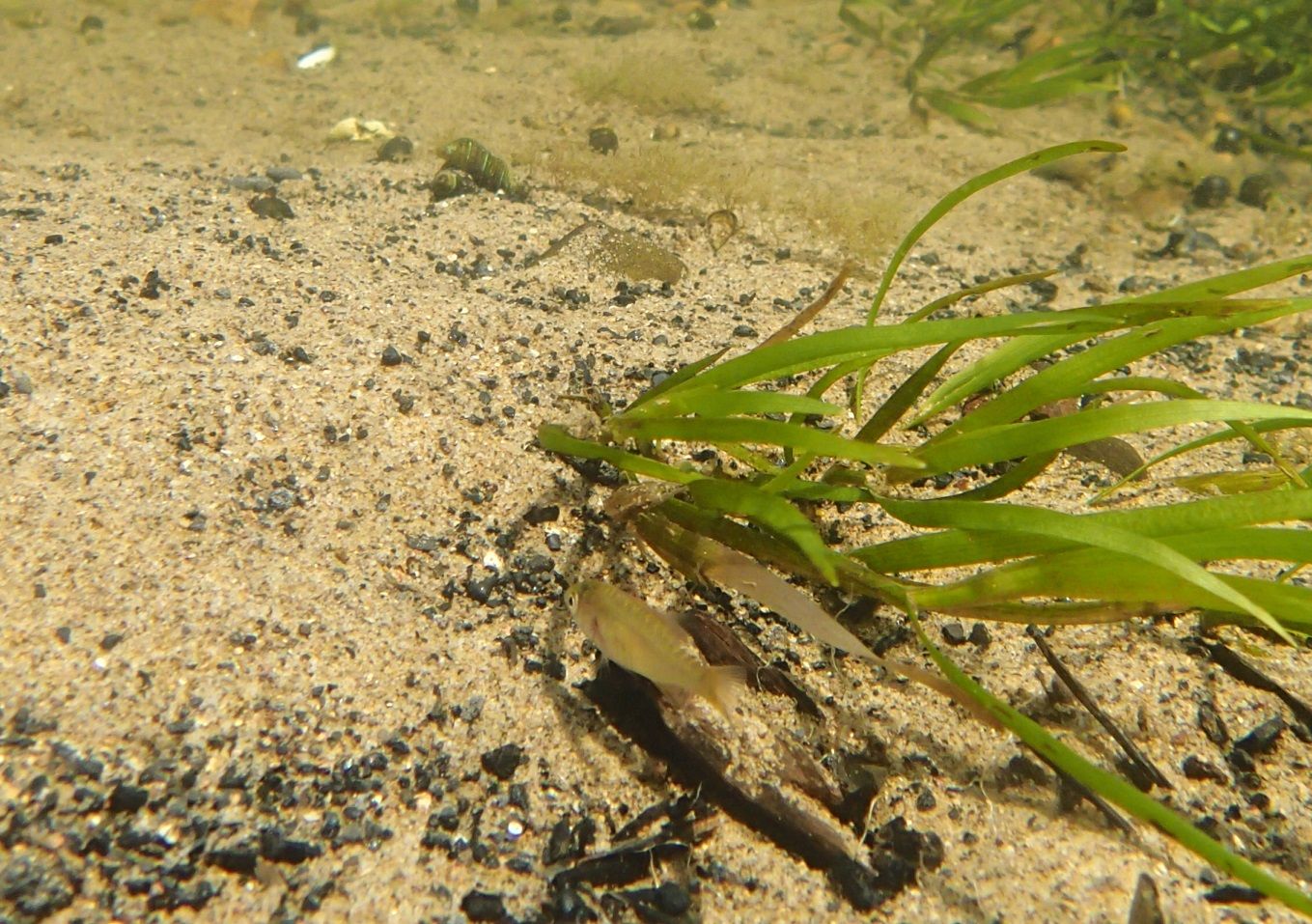
The river bottom, picture taken underwater from about waist deep.  The water was gin clear.
Here is the same spot with the picture taken above my waist with the camera out of the water.  Notice how clear the water is.  The only blur coming from water drops on my camera lens.
After catching a dozen or so bass, I started my underwater explorations, searching for good pictures of darters, minnows and anything else of interest.  However, even the little fish were spooky, and it was difficult getting close to the ones that I could find much less getting a good picture without scaring them away.  I did manage to get some pretty cool photos though.

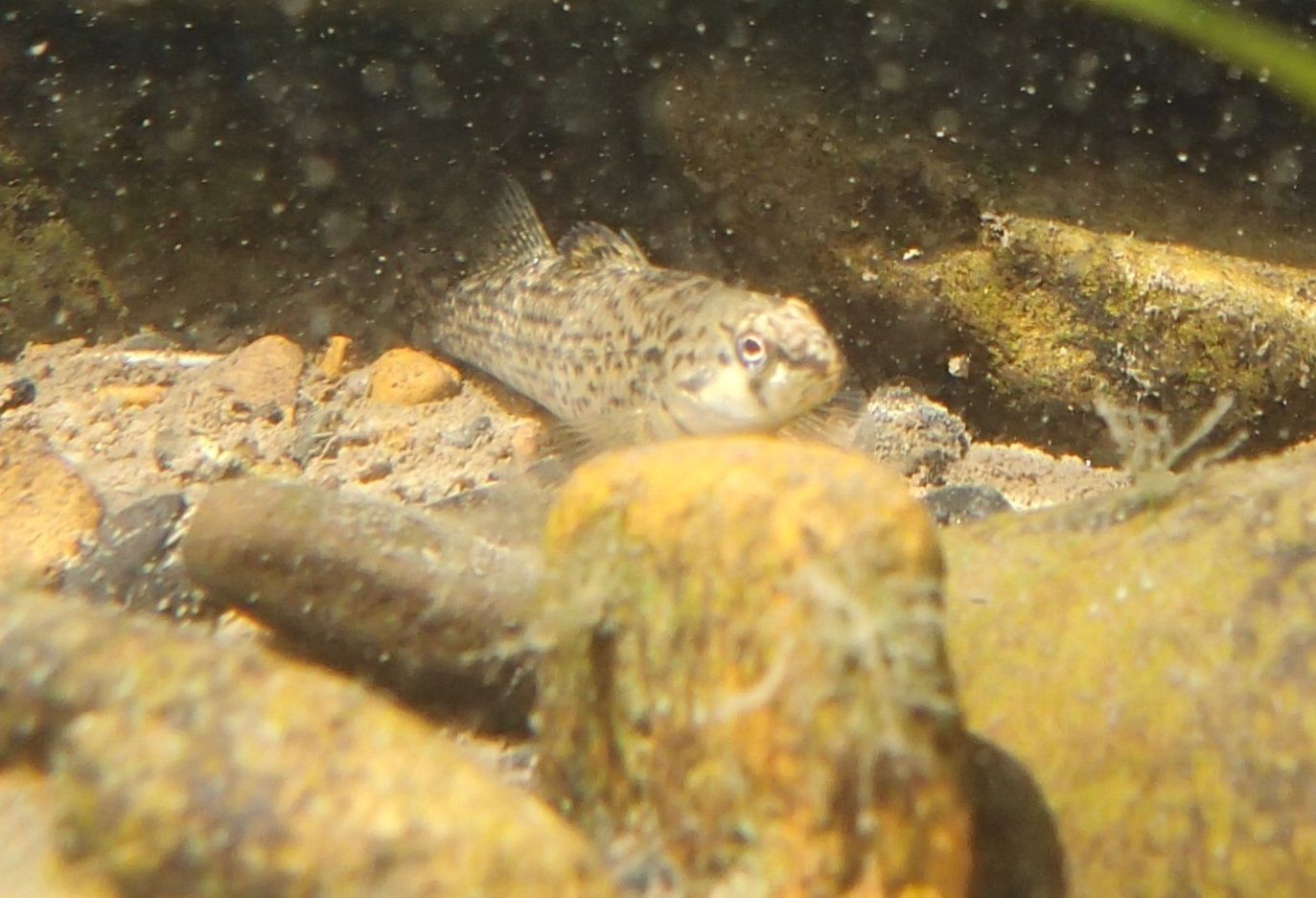
This darter posed for me briefly before I spooked it.  I'm not sure what kind of darter this is.
Edit:  This is a female rainbow darter, Etheostoma caeruleum.
Here's a closer look at the darter from above.  I can't identify it from this picture.  Greenside, tessellated, and rainbow darters live in this watershed.  What do you think?  Edit:  Since identified as a female rainbow darter, Etheostoma caeruleum.
Here's a closeup of a greenside darter from yesterday's trip.
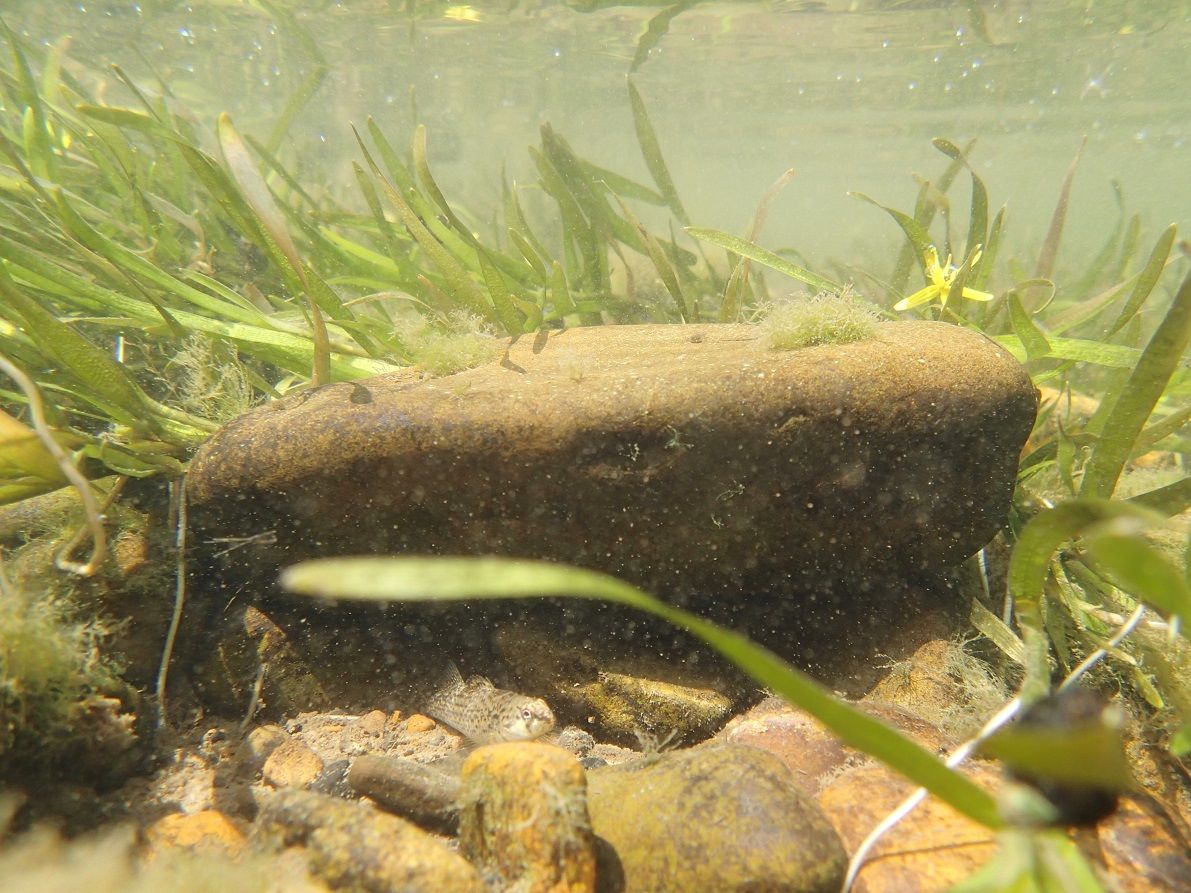
I think this picture is cool in many ways.  I love the surface reflection of the bottom on the waters surface.  the minnows feeding in the foreground are cool, but notice the predator in the background?  This 7 inch largemouth bass would dart in to attack the minnows every now and then.  There were a couple redbreast sunfish hanging out with it waiting to gobble up any morsels leftover from a successful attack.
I was able to snap a picture of this juvenile redbreast sunnie holding in the current, waiting for the current to deliver a tasty meal.
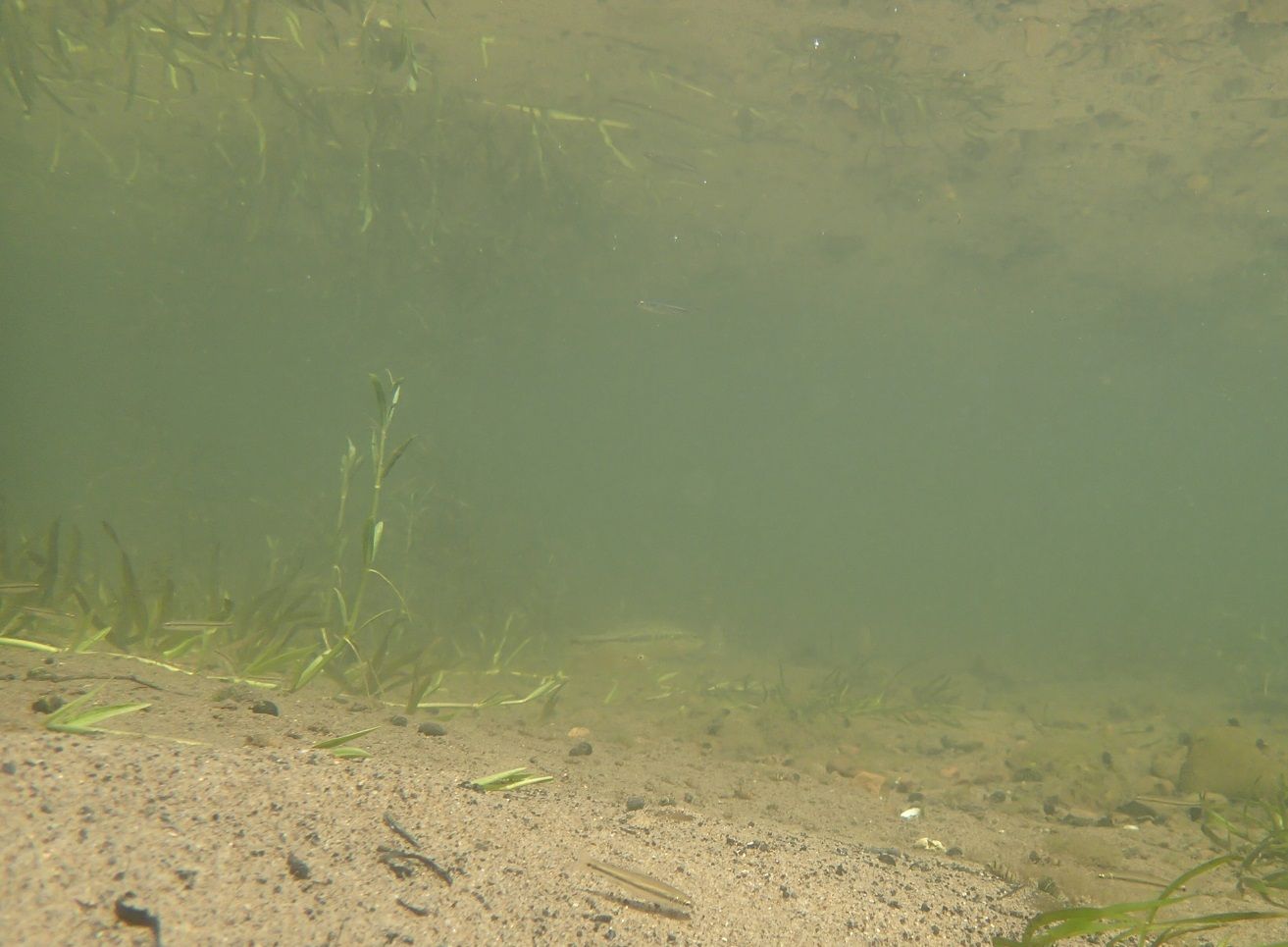
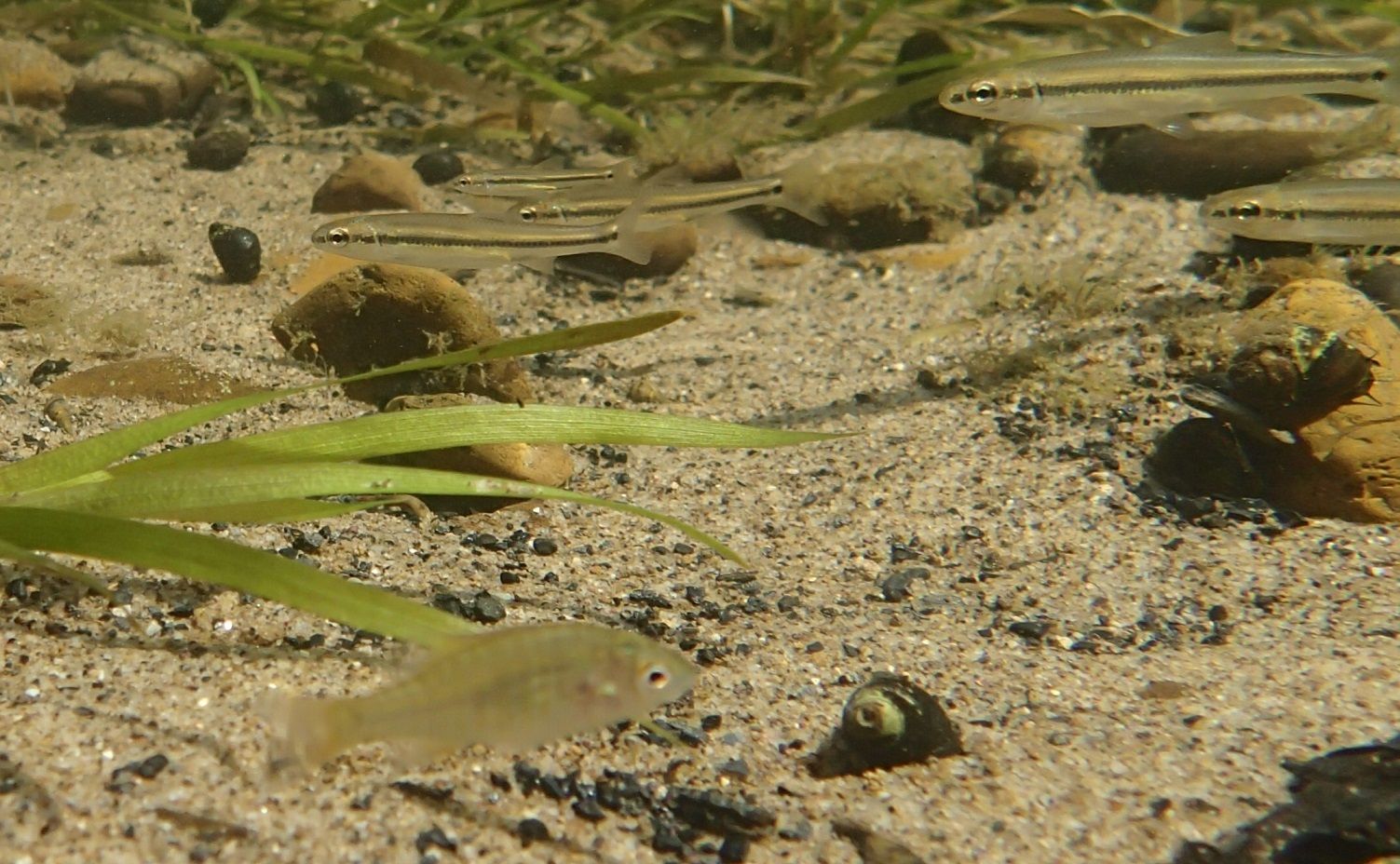
As the same sunfish turned down river, a school of minnows moved in to feed.  I'm not sure of the ID of these minnows.  Anyone know?
OK, changing gears again back to fishing - both Rodger and I caught a bunch of average sized smallies and took a lunch break at a local Mom and Pop joint, where we ate delicious but inexpensive food washed down with some cold beverages.  The atmosphere sports game mounts of all kinds, sporting memorabilia, and other things local to the area.  After eating and relaxing, it was tempting just to stay and watch football or racing, but we persevered through that laziness, mustered up some energy and headed back to our spot for the evening bite.

While the sun was still up high, Rodger and I found some worthy holes down river and let the plastic worm do its thing, tempting bass to bite consistently.  The problem was that the river was so low, that finding spots deep enough to hold fish was tough.  They weren't normally where you'd find them.  But, when you found a good hole, the fish were stacked in there.  When wading, it takes time to find those holes, not like in a boat when you can run and gun to them.  It takes time for old farts like us to wade from one spot to another.  I tried topwater off and on with only a couple slurping hits, but no fish hanging on.  While the sun was high, the plastic worm was the ticket for the majority of the time.
Here's Rodger with a willing smallmouth that inhaled his plastic worm.  Underwater photography is great, but remember to do what I didn't do, wipe off the water from the lens before taking a picture of your friend with a fish!
After searching for those productive holes while wading down river, we realized that we'd better start heading back as the sun edged over the adjacent Western hill so we could find our way back.  Of course, when you head back, you have to wade and fish your way back, stopping when the fish dictate.

Wading up against the current takes time, and on that day, it proved to be taxing on my old aching legs.  For some reason, the fish stopped biting my plastic worm.  Either Rodger and I sore-mouthed the fish in those productive holes or the fish wanted something else.  I decided to make things easier on my bones by wading to the other side of the river to very shallow ankle deep water and wade back.  I tied on a buzzbait to cover more water and maybe catch a few fish along the way.

While working that ankle deep water with the buzzer, I had a hit and a fish on briefly, but it spit the hook.  I thought that was encourage, so I kept casting.  A few casts later, as the lure hit the water, I saw a wake heading from about twenty feet away toward my bait and became very excited.  The fish nailed my buzzbait and took off.  I thought it might be a big fish, but after I turned it, I realized that the fish was a little bigger than the average for the day, but not by much.  It wasn't the size of the fish that got me fired up, but how far it came to hit my lure.  Prior to that, I can't recall a bass charging in from that far away!  It was an exciting moment though and I realized that the topwater bite was on, finally.
Here's a picture of the bass that made the wake in shallow water, charging from about twenty feet away to attack the buzzbait.
I managed to catch seven more bass on the buzzbait as we headed back to our take out spot, finishing with 41 bass for the day.  I fished about 70 percent of the time, with the rest of the time spent trying to get some decent underwater photos.  But, that's pretty productive anyway!  Rodger finished with 50 plus bass along with a few big sunfish.

All in all, we had a really fun day.  Even though it wasn't the topwater bite that I've been craving, I was able to accomplish two things with this trip, some topwater action and getting a few good underwater photographs.  I can't wait to do it again.  Good fishing, cool underwater wildlife to observe, good cheap food and drink, and sharing it with a good friend.  That makes for a memorable day!

Monday, August 22, 2016

I'm a Buzzin' for Smallies!

The dog days of summer bring out some of the best topwater bites for smallmouth bass.  All topwater lures can be productive at one time or another, but when the fish are aggressive, buzzers or prop baits are tough to beat and a heap of fun to fish.  Why?  They create a disturbance that aggressive bass can't resist and they cover a lot of water.  That's a formula for some pretty good numbers, wouldn't you agree?  Not only that, they're big fish baits too.
Mid summer river conditions like this just scream topwater to me, and my go to topwater baits are either a buzzbait or prop bait.
It doesn't matter to me if I'm fishing from my boat or wading, because when the fish are on this type of bite, it's quite exciting.  If I start off fishing low light conditions, I'll opt for a topwater lure of some sort, and for me, I like to cover water quickly, so it's either a buzzbait or a prop bait to get those aggressive biters that are a little less wary at that time.  Normally during mid-day, I'll work soft plastics, but, if I see signs of bass feeding on the surface or chasing minnows in the shallows, then I'll break out my topwater lures and give them a go.  Hungry summer bass may be aggressive even in the mid day heat.
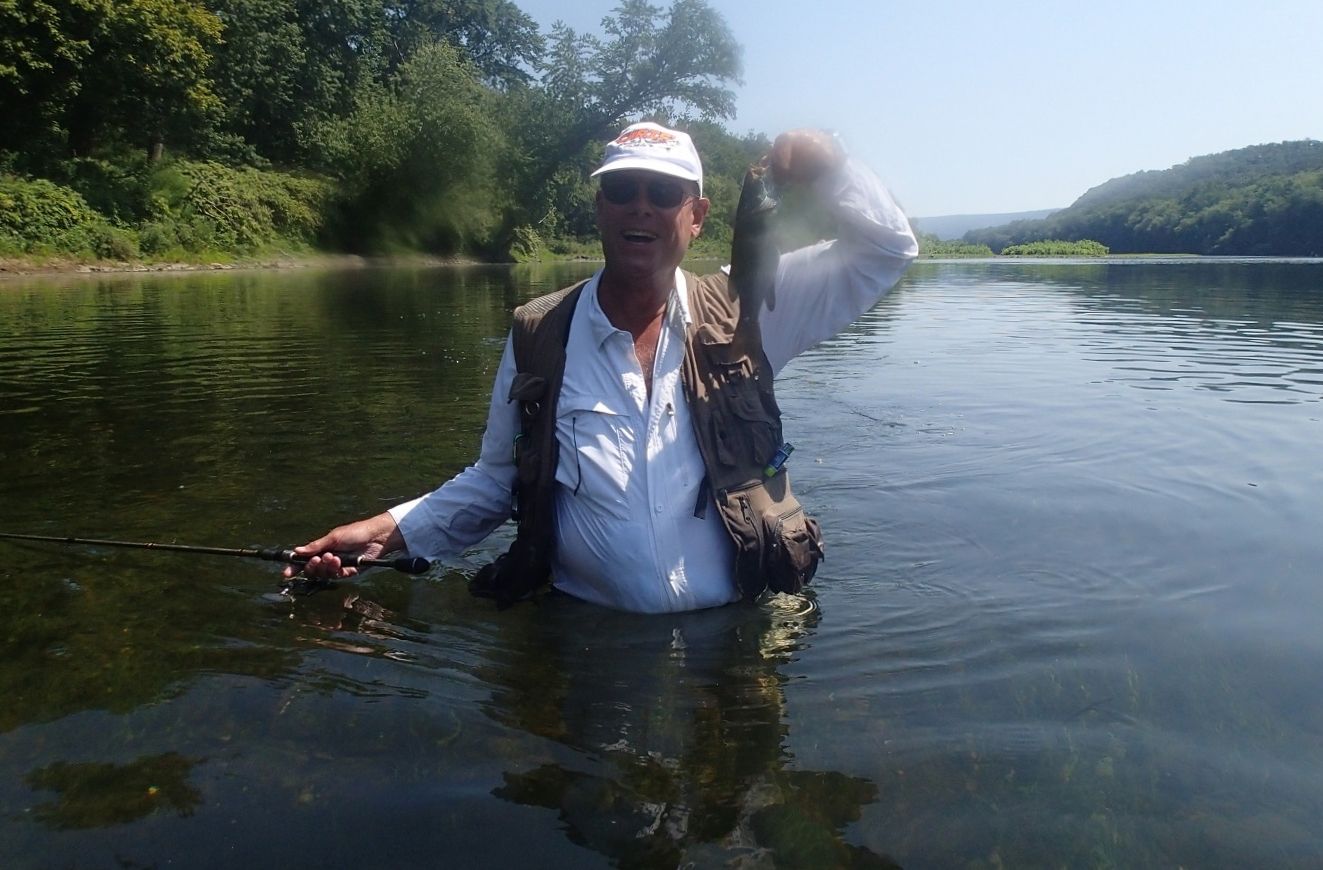
My buddy Howard and I with a double, both caught on buzzbaits.  Nice size bass like these are so much fun when they crush topwater lures.
I find that both buzzbaits and prop baits are equally effective for provoking strikes, but river conditions and the mood of the fish dictate which one I'll pick.  If weed growth is abundant, then the buzzbait is a bit more effective because you can fish right through most weeds and draw strikes without getting the lure fouled.  I'd rather spend more time with my lure in the strike zone than having it out of the water cleaning it off.  Prop baits are weed collectors.
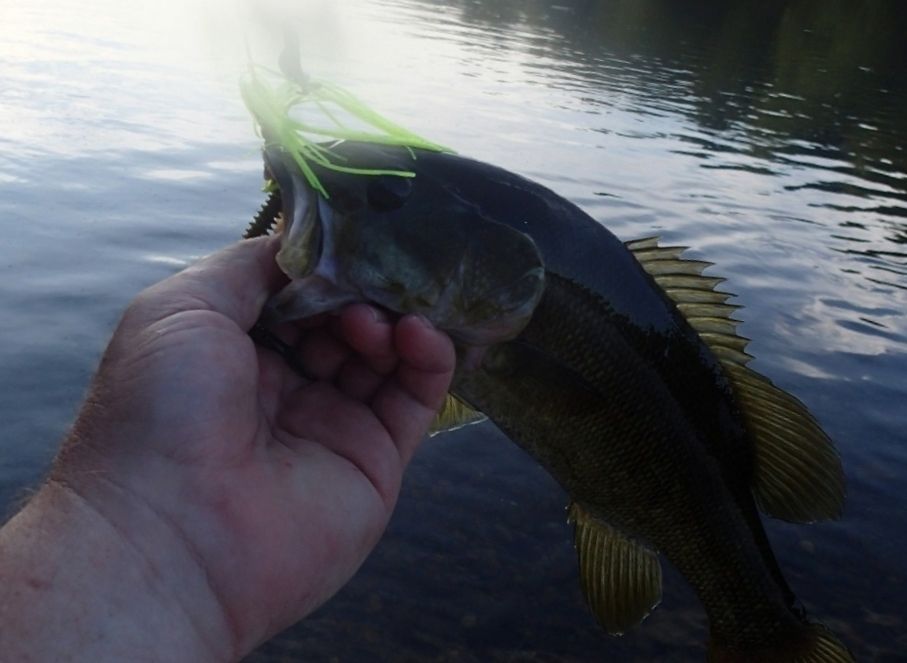
This chunky river smallie attacked my buzzbait!
However, if the water is up and the weeds are submerged, or perhaps, like in certain years, weeds aren't as abundant, prop baits seem to result in a better hook up ratio.  I don't think fish key on either lure over the other very often, but there are times when they slurp rather than crush the lure, and the prop baits work better in that situation, it seems, at least for me.

My go to buzzbaits for smallies are the 1/8 ounce Strike King or a similar buzzbait.  I beef them up by adding an old 4" ringworm as a trailer as it seems to trigger larger bass to strike than without the trailer.  When it comes to color choice, many folks local to me go with white, especially this time of year to match the white miller mayfly hatch.  That works great for them, but oddly, my first choice is an all chartreuse buzzbait.  My thought is that it imitates frogs, I guess, and chartreuse catches their attention (no pun intended), at least for me.  I will try larger buzzbaits too, especially if they're super aggressive.  Bigger baits often lead to huge smallies.  I always carry the larger buzzers in the boat, but don't carry them when I'm wading because I don't have that beefy tackle with me, and I like to keep my vest from being too full!
The 1/8 ounce Strike King chartreuse buzzbait with a ringworm trailer...deadly on summer bronze.
My favorite prop baits are the Heddon Baby or Tiny Torpedo.  I like the larger "Baby" size when the fish are really aggressive, and when they're in that slurping mood, I go to the "Tiny" version.  I like flash in my lure, so the "G Finish" is my favorite color.  My next choice would be any color with a white belly.  I'm not sure the fish care all that much about the color.  Just make sure that you tune the lure (by bending the propeller arms if need be) to make sure that the propeller spins freely in the current.  Keep an eye on it to free it from algae or weeds that you might pick up unknowingly.

For the buzzer, the key is to start your retrieve right at or just prior to the lure hitting the water on your cast.  This is to get the prop going as soon as possible and keep the lure on top of the water.  After that, I find it more productive to reel the lure as slow as possible so that the prop still gurgles on the surface (barely) without the lure sinking.  I seem to get more hits that way than buzzing it fast.  But, let the fish tell you, because there are days when all rules are thrown out the window.
Fish a buzzer during a summer evening and catch aggressive smallmouth bass, one after another!
With prop baits, it's the same type of thing, to retrieve just slow enough to keep propeller spinning, but not burn the bait too fast, especially when the fish are in that slurping mode.  One difference though is that with prop baits, they float, so you don't need to reel them in right away.  You can let them sit a bit, and you may find that some fish will hit it after the rings from the splash settle down, or when the river current starts spinning the propeller.  Be patient with these baits and let the fish tell you what they want.

If fish are slurping your buzzbait but not getting hooked, try switching to the prop bait.  Conversely, if they're crushing your prop bait but you're tired of dealing with removing those spunky fish from the treble hooks, try going to the buzzbait perhaps, although it's tough to change lures when something works so well!  Such a problem to face, huh?
The Heddon Baby Torpedo at work, landing one smallie after another that day.  The weeds weren't bad, and the fish were in a slurping mood, but man did they ever slurp!
If you get a strike and miss a fish, and then you follow up with another cast and that doesn't result in a strike, then make sure you or your fishing buddy follow up by casting soft plastic bait to the spot where the missed strike occurred.  Most of the time, that fish will be there and ready to eat something else.  Soft plastic flukes, stick baits, plastic worms, tubes or grub tails all work well for that purpose.  I always have a follow up lure like this rigged up for that purpose.  If you're fishing skinny water, flukes or stickbaits work great, for deeper water, tubes, worms or grubs will get that fish for you.

If you're fishing topwater and your fishing buddy is fishing soft plastics, you can team up on fish by letting your bud know that you just missed one, to cast to that spot, and give him or her the fish.  After all, if you're working topwater, you're picking up the most aggressive ones first, so it's a great way to share that aggressive bite with your fishing pal.  Your fishing buddy will appreciate those aggressive strikes, trust me!

These lures are great for the rivers, but don't forget trying them in small streams.  They can provide some terrific topwater action.  I had a great day on a local small stream several years ago, catching 99 smallies all on a buzzbait.  Because the bite was so hot, as the day went on, I set a goal for 100 bass on buzzers, but we ran out of time as it got dark, the bite slowed, and we had to leave.  Many of those bass were between 14 and 16 inches long, with a few up to 19 inches.  Buzzbaits are big fish lures for sure.  I'll never forget that day!
Here's a chunky small stream bronzeback that fell for my 1/8 ringworm tipped buzzbait.

My Buddy Howard fishing a small stream last summer.  Don't overlook using a buzzbait in streams like this, especially if the stream is remote with little fishing pressure.  Smallies may never have seen them before and might hit them often and hard.
During the summer, the great thing about these lures is that they may work when the water is gin clear or muddy.  When the water is clear, they seem to work great during cloudy days, when there is a slight chop on the water (not too much, but just enough to break up the surface and confuse bait), during the twilight magic hours of fishing (sunrise and sunset), or maybe even more, at night.  If the water has a stain to it or is muddy, especially during hot sunny days, a buzzbait is a great choice because the lateral line of an aggressive bass will allow it to hone in on the noisy disturbance that your lure creates no matter what time of day.

But, like I said earlier, let the fish make the rules and tell you.  They may work in the middle of a calm sunny day!  When I had that 99 fish day, I started using a plastic worm and didn't have much luck.  After a while of working that worm, I got fed up and reeled in the worm extremely fast and a smallmouth attacked it just as I pulled the lure out of the water.  The fish told me by its actions, that they were in a chasing mood, so I tied on the buzzer and the rest was history, a day that I'll never forget.

These aggressive topwater bites are so much fun, but don't let them get you in a rut.  Always keep an open mind this time of year, because if these lures don't work, other slower topwater baits might be the ticket, like popping plugs or walk the dog type lures.  If none of them work, then you always have the option to fish other patterns.
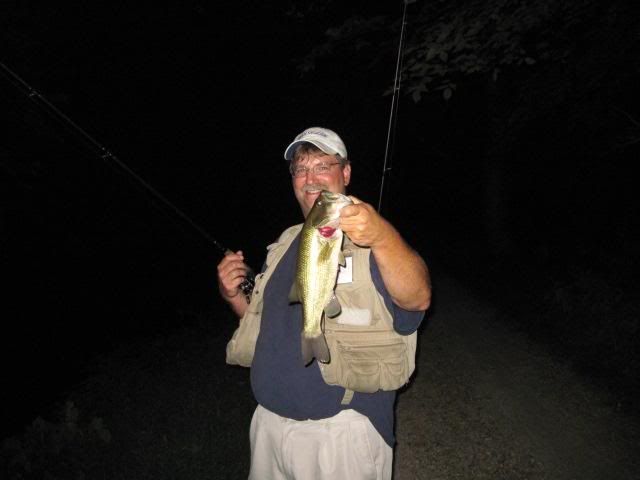
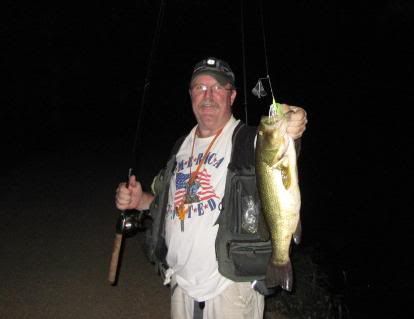
Don't be shy about trying them after dark as Howard shows you here.  Not only is that buzzbait time, but it's big fish time!  Explosive strikes that scare the you know what out of you can happen!
Next time you go smallie fishing, break out the topwater buzzers and give them a try.  You might have a 99 bass day bass day to remember too!

Saturday, August 27, 2011

Berkley Nanofil Product Review and Fishing Report

I've been slow on the blog write ups primarily because I've been out fishing as much as possible.  So, with hurricane Irene heading our way in a matter of a few hours, I figured the next best thing to fishing would be to write about fishing.  All I can think about is my last fishing trip, which was pretty good given the amount of time that I had to fish.  So, I'm going to write about that trip even though it only lasted an hour and a half or so.  One of the reasons that trip might be special is that I recently purchased a spool of Berkley Nanofil.  Yeah, I heard the hype about this line that is supposed to cast further per diameter than any other line.  I've heard claims about various braided lines in the past and have found that they aren't a lot different than standard mono when it comes to casting distance.  Plus, Nanofil is touted to have the same qualities as the other superlines, being low stretch, high strength per diameter, and durability.  When I set out to start this blog, I set a goal to not do product reviews.  I'm not endorsed by anyone, nor do I want to be.  I want to fish without any ties, to be unbiased and to work with what I feel are the best products.  But in this case, I felt that this product warrants my analysis.  Nanofil differs from other superlines because it's not constructed the same way.  Rather than having strands of microdyneema fibers and other fibers either braided or fused together, Berkley labels Nanofil as a uni-filament.  The next paragraph is the promo from Berkley, what they say about their new line:

"Not a Mono. Not a Braid. The Next Generation of Fishing line. NanoFil is made out of gel-spun polyethylene, much like a superline. This ultimate spinning reel fishing line consists of hundreds of Dyneema® nanofilaments that are molecularly linked and shaped into a unified filament fishing line. Dyneema, The World’s Strongest Fiber™, gives this line superline type strength and our uni-filament process makes it feel and handle like a smooth monofilament."

I caught this small bass using the Nanofil line/worm combo,
 all of the fish were this size (11-12") that I caught using it last night.
OK, I had about an hour and a half to fish.  The water was gin clear.  I caught seven largemouth using the Nanofil, and I didn't lose a single fish.  I'd like to think that was due to my fishing ability rather than the line, but I'll let y'all draw your own conclusions.  I fished from shore last night, and with the water so clear I was sight fishing.  Every fish that I saw except one, I caught.  The one that I didn't see was interested, but didn't strike.  (Edit:  let me explain, I didn't see the fish before my cast, until it poked it's head out of the weedbed, nosed my worm, and then decided not to bite).  I was using a 4" plastic worm, light weight, light wire worm hook, and 2 pound diameter 6 pound test Nanofil.  It casts like a dream, much further than any other braid or fused line that I've ever used even of the same diameter.  It's far more smooth than other braids, and shoots through the guides with ease.  It was so smooth that it almost felt weird, and it casts so far that I actually over shot my target a few times until I got used to it.  Like other superlines, it has no stretch.  I think that Nanofil is stronger than the pound test rating.  You don't need a massive hook set, just a quick snap of the wrist and the hook is driven home, just like other braids.  Even though the line is white, I didn't see it in the water hardly at all, but granted it was low light conditions the last hour prior to dark.  The fish definitely didn't care.  The action of the plastic worm looked great as it should with this bait.  I had no problems at all with loops coming off the spool, "wind" knots, or anything like that and I think that I even overfilled the spool.  So far so good.  I know that this little bit of testing isn't much, but so far I'm very impressed.  Time will tell if further experiences are positive or not.  I'll report back later after extended use.

I caught this nice bass on my third cast with a modified
Strike King Tri-Wing Buzz King buzzbait.  The modification
is the clacker that I added to give it that much more noise.
I could have kept catching that size fish the entire time, they were cruising everywhere.  They were on the hunt, as if preparing for the massive storm that was on it's way up the East Coast.  But, I switched tactics right at dark for two reasons.  One, I started seeing frogs everywhere.  When they become active, so do the bass.  And, I began seeing quite a bit of surface activity.  It wasn't as if fish were chasing minnows, but the shorelines became agitated.  It's the same kind of surface disturbance that you see when you walk up on a bass and spook it...except, these fish weren't spooked.  To me, that kind of activity should be fished by something big, loud, and fast to cover more water, so I went to a buzzbait.  It's not that the finesse pattern wouldn't catch big bass, but during the last hour of daylight, search baits, like buzzbaits, work a bit better in tempting big bass into striking.  I was working a weed patch when, on my third cast, a fish slurped my buzzer.  I managed to land that fish, a nice twenty one inch largemouth bass, although it seemed to be all head, and no belly.  This bass resembled those Lake Erie largemouth, all head and not a lot of weight.  Still, it was a quality bass. 

Here's the same fish.  I carefully laid her down on the weeds
to snap this photo.  All head and no belly, probably an older fish.
I'm dedicating the catch of this bass to Tom Boyd, who writes
the blog "Fishing with Dad" linked to the right.  Tom is at home
recovering from knee replacement surgery.  Here's a bass
for him to keep his spirits up during his long painful recovery.
I tossed a buzzer for about 20 minutes more, working the weedy and woody cover thoroughly.  I had three more blow ups, but the fish seemed way behind the lure.  I tried following up with my finesse rig, but the fish weren't interested in that once it became dark.  I decided to call it a day and look forward to the next outing.  Not too shabby, eight largemouth bass in a little over an hour, including a nice one.

Up until I tried the Nanofil, Suffix 832 seemed like the best casting line of the braids that I've been using.  I've fished with Power Pro, Fireline, and various Spiderwire versions.  All of them were pretty good, but none of them really stood out over the other until I tried the Suffix 832.  How did the Nanofil compare?  Nanofil casts much better for the same pound test, it's thinner too.  It's not as stiff as 832, is much more limber than I expected, and seems to come off the spool and through the guides smoothly.  Casting was effortless with the Nanofil.  With the 832, I had to put some oomph into my casts just to get close to the distance.  So far, the Nanofil was pretty tough and handled the fish nicely.  It's still early in my analysis though. 

So, for the future, I'll keep testing this line.  I still have questions to be answered:

How durable is this line after hours, days, or weeks of use?  I've only put an hour of use on it so far.

What issues with the poundage/breaking strength might I have?  I may not have any problems.

What about line twist, coils, memory, "wind knots", and other problems after the lines been used and on the spool a while?

How will it perform using other lures and techniques?

How will smallmouth in clear streams react to the visibility of the line?

So far, I like this stuff a lot, especially for jigging with finesse plastics.  But, only time will tell when it comes to answering these questions.

Suffix 832 withstood all the tests and only one time did I have to switch to fluorocarbon to get bites.  I wonder if the Nanofil will be as successful.  I will report back after a few trips, but so far, I think it's worth the investment.

My last question is, what will happen if this becomes the line that everyone is trying to beat technology wise?  Can you imagine?  The fishing line technology race may result in a superline that runs clear like fluorocarbon!

Monday, August 1, 2011

A Night Fishing Trip to Remember

When I started this blog, I wasn't sure what direction I wanted to go with it.  After a few posts, I opted to not produce the ho hum fishing reports that I normally post on the fishing forums that I frequent, but rather try to put together something that might actually be beneficial to someone while at the same time relating some of my past experiences in some meaningful fashion.  So, something changed last night, an event that I'll never forget.  So, if you'll forgive me this time, I'm going to report on that fishing experience.  In the future, I'll try and only post something extraordinary.

Last night was one of those nights to remember, a buzzbait nighttime experience similar to what I spoke about in my last fishing post, http://fatboysoutdoors.blogspot.com/2011/07/buzzin-for-summer-largemouth.html.  It was quite hot yesterday, so my buddy Howard and I opted to fish the evening bite at one of our favorite shore fishing spots with the intention of hurling buzzbaits at potential beefy largemouth bass well into the darkness.  Our previous trip, and the trip prior to that, the weather was really hot and the water was crystal clear.  The bigger buzzers didn't produce much but Howard scaled down to the smaller 1/8 oz. size and has really been nailing good numbers of bass.  Last week, while it was still light, I followed behind him picking up fish that missed his lure but wouldn't strike it the second time.  I also sight fished and it was one of those nights when they were tight to the bank and cruising, so if I could see them, I knew that pitching a finesse plastic worm would provoke strikes, and it did.  I finished with 18 chunky bass in three hours of daylight, and added one more on the buzzer.  Howard started buzzing earlier and finished with slightly more than me with the majority of those fish on the small buzzbait.  OK, that's a pretty normal, boring fishing report.  But, it sets the stage for last night.

Howard landed this nice four pounder on a finess worm.
I caught two fourteen inch bass on my first two casts with my finesse worm, and Howard started out with a fat four pounder with shoulders.  He saw it moving in and out of a weed patch in search of prey, and he provided the menu special of the day on a silver platter to that bass.  Next thing I heard was him hollering at me, hauling that bass along with a good portion of salad up the bank.  That was the last fish that either of us actually saw, much different than the previous trip.  I spent a lot of time searching for the visual clues of fish only to come up empty.  The fish were hunkered down in the weeds and on the wood.  If you found both together, then you had a potential hot spot.  The only other variable that made up this pattern was current.  If you could find moving water, the fish were there.  Also, they seemed to prefer the shallow shady spots.  After working the worm for a while, Howard began his 1/8 oz. buzzer pattern with some success, but more strikes than fish landed.  The fish seemed to be slurping at the lure early rather than the explosions that happened in trips prior...at least during the late afternoon while it was still hot.  I trailed behind him working my worm, and for those missed hits on his end, the vast majority of them were landed by me on the follow up.  We tag teamed them.  He found them for me, and I caught 'em!  It's easy fishing, when others do the searching for you.  All you have to do is execute with a well placed cast and jig the lure a few times.
Howard found this one for me, all I had to do was cast and
catch, the easy part.

So after a while, the worm was following up landing fish, and the buzzer was finding the slurping ones for me, but landing one here and there.  But, as we approached the magic hour, that time when every animal in the woods and water has to sound off and vocalize their existence, bringing the wild to life.  I love everything about that magic hour, except mosquitos.  Anyway, Howard began to get those explosive strikes.  Even the small keeper sized ones were annihilating that little buzzer.  I kept to the worm, but as that magic hour came to be, my worming luck was running out.  Howard wasn't leaving me much to follow with, and the fish seemed a bit disinterested too.  So, I put the finesse stuff away and pulled out one of my favorite buzzers, and in-line version that always works well with the slurpers.  It's long and big, and has a nice profile, but a gentle plopping noise from the bell shaped brass blade.  I wound up catching one fish on it all night with only two more hits. Howard beefed up to a bigger bait as well, a noisy Strike King triple bladed buzzer and that lure was money.  By the time that we worked our way back to the fish holding waters that we found earlier, darkness had settled in.  As we walked to our spot, there was a nice weed patch about ten feet from the bank, and I said that there had to be a bass on it.  He placed a perfect cast beyond the cover, brining the buzzer past the weeds and the water erupted.  This time, I found a bass for him!  Or, so I claimed... Hey, I have to take some credit for something once in a while!

Howard with a nice nighttime bucketmouth.  The bass hit so
hard it was almost a crime scene!
No more slurping on this night, at least for his bass.  A fat four of five pound bucketmouth engulfed that buzzbait.  It wasn't just feeding, that was revenge.  That bass hated whatever Howard's lure tried to imitate.  If that bass was human, she'd be on the most wanted list today.  The hit was criminal, and Howard was the police.  He landed the fat bass, gave her a warning, and let her go. Softie!

Howard was having success using his big noisy buzzer, and I've only had two hits, so I went noisy.  I chose one of those home made traditional style ones that had a smaller blade inside a cut out larger blade.  They don't get much nosier than than without a clacker.

OK, Howard let me lead.  "It's your turn now to hit some prime spots.  I've made my day already, so anything else is gravy".  So, I obliged and went forward, working my buzzer across the weed beds, knowing that they were there but unable to see anything.  It was darker on this night than it was last time.  The bass didn't seem to mind, however. 

This nice bass hammered my buzzbait, leaving my nerves
frazzled but with a grin on my face from ear to ear.
I came upon and area where a shallow weed bed with moving water met deep slower water just upstream.  I told Howard that if I was a bass, this is where I'd hold and ambush anything that came my way.  I placed a cast up and out from the weeds into open water, bringing my noisemaker back through an opening between two weed beds, where I'd hide if I was a bass.  When the lure passed the weeds about ten feet away from me, the water exploded.  I didn't outwardly react, but inside I felt like I jumped ten feet in the air.  Howard thought it was a beaver slapping his tail in disgust of our presence.  But, it was a big ol' largemouth taking it out on my noise machine.  That bass thrashed about on the surface so much it looked like when I was a boy trying to learn how to swim the butterfly stroke (I still swim like that).  I finally brought the fish to the bank and eased it up on the grassy shore, hoisted it up with all my might putting a bend on my St. Croix Avid baitcasting rod and lipping the fish clean.  The fish felt like it was going to break my rod.  I lipped that bass and had Howard take a picture for me.  That fish made my night.

But the night wasn't over yet.  We had to work our way back to our starting point, and I knew that there was one more prime area between us and quitting time.  It was Howards turn to take the lead, and he did, working his buzzbait parallel to shore and around every weed bed that he could see or remember was there.  Meanwhile, I trailed behind, blindly casting out and cranking back aimlessly, hoping that his lure would wake them up for me and I'd get that next hit if they snubbed his offering.  After about fifteen minutes of doing this, we reached the next prime area. It had all of the same features as the other place, so it had to produce.  Just give us one more good bass each before we call it a night.

After about ten casts each, I placed a cast straight out from the bank and worked it back, oblivious to any cover that might be out there and working the lure from memory and a tiny bit of ambient light.  I couldn't see my lure, but I could see the wake and hear the churning of the blades coming to me.  When my buzzer was about half way back, the water erupted, sounding like the giant extinct ten foot long beaver from the Eocene epoch forty million years ago.  Well, maybe not quite that big, but it was a bigger top water hit than any I've had in years.  More than that, this fish was going ballistic on me, thrashing and splashing and I wasn't gaining any line on him yet.  My fifteen pound line was being pushed to the limit.  Howard was sure this time that I'd snagged a beaver.  But I assured him it was a fish.  Was it a bass?  A musky?  A huge catfish?  It was massive, and seemed like it was in the twenty four inch range.  I fought the fish for a couple minutes and eased it to the bank.  I hoisted the fish up on the grass with one huge lift, and I could hardly lift the behemoth.  I looked down and saw it was a largemouth, with a mouth the size of a childs beach bucket.  Heck, both Howard's and my two fists would have fit inside!  I kept the line tight, and with the massive bass subdued, I started to bend down and climb down the bank to lip it.  It was too big to hoist up, so I had to get down to his level (or her level, I should say).  As I did that, the fish rolled and my lure popped free.  Just like that.  I scrambled down the bank in terror as the bass flipped once, twice, and kersploosh.  She was gone.  I was heartbroken.  I felt betrayed.  I felt embarrassed.  Howard saw it all.  He stood there, mouth agape, not believing what he just witnessed.

For the next hour, I kept questioning myself, as if I had done something wrong.  Heck, I dreamt about it and replayed that moment over and over in my head all night long.  That was the biggest bass that I'd ever hooked, and beached no less.  It was twice the size of the one that I hoisted out earlier, at least!  My guess is that it was in the eight to ten pound class.  For a fish in Maryland, that's a beast.  There just aren't that many of them around here.  My personal best is seven and a half pounds from the Lower Potomac, another twenty four inch bass.  And this bass felt bigger.  I and I felt dumber.  I did manage to catch one more small keeper size bass to ease my pain a bit.  They're all fun.

Howard consoled me, stating that hey, I landed it technically.  So what if I didn't get a picture?  I lost the fish though.  It won, fair and square.  I would have liked to hold it and get a picture, but if you don't touch it, it's not caught.  We aren't tarpon fishing in the keys using quick release methods.  But, he's right.  I had a chance to fight the bass of a lifetime.  And you know what?  I know where she lives now.  She was there because of the hot weather, because of the easy meals available to her there, and because of the cover that makes her feel comfortable.  I'll get her next time.  She's like the massive racked buck that the bowhunter scouts and hunts all year round for.  She's my trophy, and if Howard doesn't catch her first, I will.

Wednesday, July 27, 2011

Night Buzzin' for Summer Largemouth

It's pitch black outside and past your normal bed time.  It's really humid and still fairly hot considering that the sun had disappeared over the horizon hours earlier, and you're already drenched with sweat.  You opted to fish the nighttime hours rather than endure extreme daytime temperatures during the latest mid summer heat wave.  You're in an area where you know big bass lurk, but you can't see far enough into the dark well enough to place an accurate cast as you would normally do during the daytime.  Bugs are buggin' you, mosquitos buzz your ears, face, arms and legs seeking kinks in your armor of Deet.  Have you ever noticed that they always wait to bite while your reeling in your lure?  They dive bomb your ears sounding like World War I style planes attacking King Kong on the empire state building.  Tree frogs scream in the distance while a chorus bull frogs, green frogs and leopard frogs sound off around the lake.  The more humid, the more active the frogs seem to be. Bats flit and dart around and above you, sweeping down upon you at the slightest movement of your rod tip.  Katydids and cicadas attempt to drown out the sound of the amphibious choir in the background, chirping their own nighttime chorus.  Unlike the day light hours, night time gives you the impression of a rainforest alive with activity that most people never experience.  Fireflies flash streaks of yellow light everywhere.  You cast your buzzbait, oblivious to possible snags that may lurk in the distance while using only your memory of your honey hole as your guide.  After you cast, your lift your rod tip as the lure hits the water and begin cranking just prior to splashdown.  Your metal bladed buzzer never sinks and produces a constant plop plop sound combined with the high pitch squeaking of metal rubbing metal.  You've covered this area with several casts and are confident that big bass are on the feed here.  Even though the outdoors is alive with frogs and bugs, it seems peaceful yet tranquil.  You are very relaxed yet aware and focused on every sound around you.  You near the end of your retrieve and just as you attempt to lift the lure out of the water there is a massive explosion that nearly causes you to lose control of your bowels.  Your fishing partner jumps two feet in the air while yelling something that I dare not print in text.  With only about six feet of line out, mayhem ensues with a very ticked off largemouth bass on the other end of your line going ballistic, flipping, flopping, leaping and thrashing.  As you try to control the beast it finally dives and takes some drag and suddenly you have control and wear it down somewhat.  As the bass tires, you bring him back to the surface.  You reach down and lip the behemoth and turn to your partner with a smirk on your face while silently demanding that he snaps a photo of your prize.  Prior to you landing the fish, he's had the camera at the ready.  The digital camera's range finder appears image free and pitch black, but as the photo is snapped there's enough light to see you and your fish, a twenty inch, four pound largemouth that you'd love to catch each time out.  That's what hot summer nighttime buzzin' for bass is all about.  There's nothing like having a bass scare the you know what out of you when they annihilate your offering.
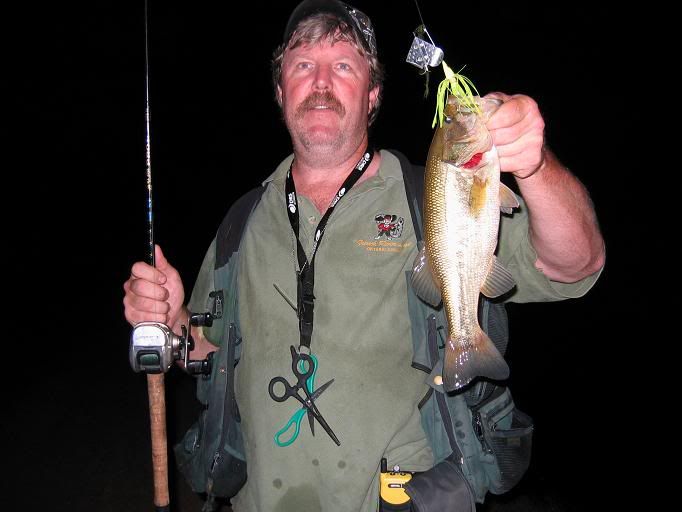
Howard Boltz caught this nice largemouth bass
on a Strike King Tri-Wing Buzz King buzzbait.

Yes, it's the dog days of summer.  It's widely known that fishing for largemouth bass through the hottest hours of the summer slows during mid day, but early morning and late evening hours tend to be quite a bit more productive.  Most bass anglers make sure that they're on the water during dusk or dawn, tempting aggressive actively feeding bucketmouths with a variety of lures, especially topwater lures.  Then, during the heat of the day, they probe the depths for lethargic largies, sometimes with success, other times not so much.  But most anglers overlook the time when the bigger bass prefer to feed during the hot summer, and that's during the pitch black hours during the night and wee hours of the morning.  You may or may not have a lot of strikes, but often the ones that you boat are fish that are a cut above those in size that you catch during the day.

Anglers that fish the last few hours of daylight at dusk may decide to stay an extra hour or so and fish and discover a dramatic drop off in the number of bites once the sun drops over the horizon.  In fact, it may stop completely, giving the angler the impression that the fish stopped biting all together.  When you think about it, when you're out in the dark, it takes a while for your eyes to adjust.  I believe it's the same thing with largemouth, needing about an hour or so for their eyes to adjust to key on prey.  Bass have good eyesight in the dark and combined with their sixth sense, the lateral line that senses vibrations under water, they effectively key on noisy prey.  Buzzbaits offer a big profile or silhouette and certainly emit strong enough vibrations to send a bass into attack mode.  So, before packing it in, if you have the time to fish late, stay an hour longer than you normally would before deciding if the buzzbait bite is on or not.

My favorite buzzbait spots are have shorelines with abundant cover but are shallow with deep water nearby.  Combinations of wood and weeds are optimal.  If frogs are abundant, so much the better.  Big bass spend the hot days in deep water sanctuaries but move shallow to feed during the night time hours.  It's my opinion that frogs are the key to night fishing in general.  When they're out, bass know it, and you should too.  Summer time temperatures slow the bass during the day, but the night time cooler temperatures are much more comfortable for bass and allow them to feed heavily on abundant prey while expending the least amount of energy.  When they sense a critter, or your buzzbait, splashing into the water, they hone in on that sound and track further vibrations to the point of the strike.  In other words, they hear it, feel it, find it, see it, and strike it.  Often, they'll follow it quite a ways before exploding on your lure, sometimes right at the bank or boat just a few feet away.  It's as if they strike at the last minute before their prey can escape.  If you're lucky enough to place your cast close to a bass waiting in ambush, the strike could be instantaneous with your lure entry.

This two pounder struck a Strike King triple blade buzzer
leaving yours truly with that deer in the headlights look!
When casting buzzbaits, make sure that after you launch your bait into the dark, that you raise your rod tip and begin cranking prior to your lure hitting the water.  This will prevent your buzzer from dropping below the surface and increase the amount of time the lure is operating properly to give the maximum amount of vibration through the strike zone.  Work it all the way back to the boat or bank because strikes could come at any time.  Bass will follow a potential meal quite a ways in the darkness without fear of being prey themselves. Don't set the hook when you hear or see the strike until you feel the weight of the fish, because if the bass misses then you'll yank the lure away losing a chance at a follow up strike.  Fish make mistakes at night and often miss, but they will keep trying to catch up to it.  So, it's important to maintain the cadence of your retrieve to give the fish the opportunity to strike again.  If you cast and a fish misses, follow up with several casts because sometimes they'll attack it again.  The only time that I've found that didn't work is if you hook the bass and lose it.  They don't seem to strike once you sore mouth them.

Another technique is to let your buzzer dangle in the water a couple seconds before yanking it out to make another cast.  Bass will sometimes hit with your lure just hanging there.  If you're bank fishing though, please be advised that bullfrogs will also hit your buzzer as it's dangling there in front of them!  Some anglers have found that bass will strike at the boat and miss, and try the figure eight technique that pike and musky anglers employ, they sometimes will draw a follow up strike.  To do that, at the end of your retrieve with the lure still in the water with a few feet of line still out, work your rod tip in a large figure eight motion at the side of the boat a few times.  Sometimes bass will hang out there and strike again.  Personally, I've tried it without success, but have had friends tell me that it's worked for them.  So, I'll keep trying.  It can't hurt, right? 

Vary your retrieve speeds and let bass tell you what they want.  If they want it, believe me, you'll know!  Often the strikes are explosive, but other times they'll just slurp the lure.  If you keep missing fish, try using a trailer hook.  Sometimes they like it burned across the surface, usually when there's some ambient light or moonlight to assist them in tracking the lure.  If it's really dark out, I prefer slowing the bait down to a crawl, just fast enough to keep the blades working.  That gives them time to find your lure.  If you're not getting strikes, make a change to either your presentation, type of buzzbait, or size of buzzbait.  Try different casting angles including a very productive one, casting parallel to shore.  Bass like to hug the shoreline in ambush of frogs, so casting parallel keeps your bait in the strike zone longer.  In fact, if there are multiple bass in the area, your odds are greatly increased because you're covering a lot of strike zones of individual bass.

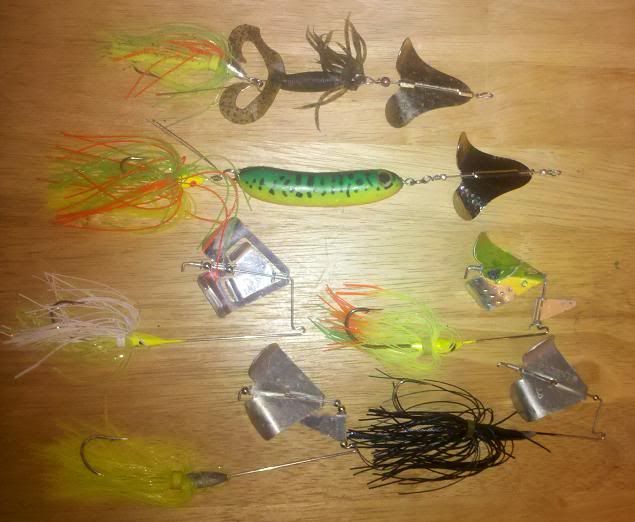
The top two are in-line buzzbaits, the third row shows a
tradtional buzzbait and a triple wing with a clacker, the
bottom row shows a clacker style buzzbait and a black
traditional model.  All of these have metal blades but you
can also find them with plastic blades for a different sound.
There are many styles of buzzbaits out there and they all pretty much work.  Double bladed buzzbaits provide more chop on the water and more noise.  Buzzbaits with clackers put our more noise and vibration.  Metal blades give you a noisy squeaking sound that helps bass home in on your lure, while plastic blades offer a more subtle plopping sound for less aggressive bass.  In-line buzzers ride higher on the water, are easy to cast, easier to keep on top, and very snag free but they have reduced hooking ability.  Traditional buzzbaits provide more wind resistance on the cast, but have better hooking ability because the hooks ride further under the surface.  There are some with really long shafts too that tempt shy fish into striking.  Different sizes provide different sounds and vibrations.  If the fish seem really active and aggressive, big noisy buzzers can call them in from far away.  If they are less aggressive, more subtle buzzbaits like those with plastic blades or smaller sizes may draw strikes when the large noisy ones don't.

What about colors?  I like chartreuse because, at least in my mind, it suggests frogs.  If a smart guy like me (yeah right) thinks it's a frog, then certainly an animal with the brain the size of a pea will think so too.  White is also visible at night because it reflects light the best, so if there's any ambient light it should be easy to see.  But, probably the most popular color to use is black or another dark color.  Why?  Because it offers a great silhouette and is easy for bass to see especially when there's a fair amount of moonlight.  Of all the qualities of a buzzer though, I think color is the least important when using them at night.  Noise and vibration come first in my opinion.  These are reaction baits, not finesse baits, and the reaction strike is the one that you're going to get.  That's what, after all, makes them the most exciting lure to use.

This is one of my favorite in-line buzzbaits, noisy and
squeaky, and I made it myself!
Make sure that you match your rod, reel, and line to the weights of your lures to get maximum action and performance out of them, including castability and distance.  I prefer baitcasting gear, medium heavy to heavy action, six and a half to seven foot rods to toss buzzbaits 1/4 of an ounce or greater, and at least 14 pound test line.  I like the longer rod simply because you can keep your line off the water and get better action on your lures.  I use a copolymer line because it has less stretch than mono but more than fluorocarbon or braided lines.  That way you're not yanking the lure out of their mouth if they hit at your feet.  The added line stretch gives you some measure of control over the fish during such a chaotic moment.  I feel that braid puts too much pressure on the fish, and when they're thrashing about they can tear open a hole in the mouth of your bass at the hook and possibly increase their chances of pulling free.  For 1/8 ounce buzzers, spinning tackle seems to work best using eight or ten pound test but you may have to go with heavier line depending on the cover that you're fishing.

This one hit a buzzer about ten feet from me.  This fish went
ballistic on me.  What fun!  I'm still shaking from that ordeal!
You can "tune" traditional style buzzbaits to run straight or veer to one direction by bending the wire containing the blade one way or the other.  This is a valuable technique for fishing in daylight hours especially around boat docks.  But for night fishing, I prefer them to run straight simply because most of the time you can't see what cover is around you anyway and at least you can visualize where your lure is at all times if you can't see it.  It could be easier for bass to track your lure as well.

Other night fishing tips, bring a light so you can re-tie, tie on a new lure after losing one, or change baits easily and see what your doing.  Also, when night fishing, things happen.  All it takes is a snag that you've freed to wrap line around your lure impeding it's action or that ties knots around your rod tip that you could never design yourself if you tried, or even picking out the dreaded backlash.  Having some light to remedy such a situation really can save your trip.  Lights that clip to your hat or wear on your head allow you to keep your hands free to do what you need to do.  Try to not shine the light over the water that you're fishing if at all possible.  I'm not sure if it makes a difference, but I'd rather not let the fish know that I'm there, so why take the chance?  It couldn't hurt to be as stealthy as possible.  Try to avoid making a lot of boat noise.  Bring bug spray with a high content of Deet or some other way to keep insects from biting you.  Mosquitos are the primary enemy in my neck of the woods.  Even though it's not the hottest part of the day, I make sure to drink plenty of fluids too.  And, probably the most obvious is to know the water that you're fishing because you can visualize the cover and be reasonably accurate with your casts.  Also, know your water that you're boating on for safety reasons.

Don't forget to read my posts about making your own buzzbaits so that you can increase your buzzer arsenal while saving money.  If you haven't already read them, here are the links:
and

In summary, largemouth bass are very active at night, especially the big fat females that we all love to catch.  There are many baits or lures that will catch them at night, but there's nothing that is as thrilling or exciting as a big fat bucketmouth exploding on your buzzbait when it's pitch black outside.  And, you can have it all to yourself.