Showing posts with label smallmouth bass. Show all posts

Thursday, April 18, 2019

Remembering Some of My Biggest Bass

Last night, I was reflecting on some of the biggest bass that I've caught in my home state over the years, and thought that maybe it would be a good time to share some of these stories with you.  Since some of the stories may be long winded, so I'll do this over the course of several blog posts.  Some of the stories might not have been my biggest fish, but, they were big fish, and the stories are worth telling.  I hope that you enjoy them and, even better, learn something that may help you catch your personal best bass.

Unfortunately, some of these stories happened prior to the digital age, and I have no idea what I did with the pictures that I had, so you'll have to take it on good faith that the stories are true.  Yeah, I know what they say about fishing stories.  I do have witnesses though!!!   So, if I don't have a pic to share of that actual fish, I'll post a substitute picture of a nice fish, or pics related to how I caught the big one.

One day, if I'm lucky enough to find any of those prints, I'll make a copy of them and share them with you.  I had a major septic flood in my basement in 2012, and lost a bunch of stuff, so it's possible that many of the pics are gone forever.  I also have rolls of film that I've never developed, so maybe there are some pics on those rolls.  Some of you may ask, what is "film"?  Ha ha.  Some of these big bass were caught prior to the invention of affordable waterproof or digital cameras.  What can I say, I'm an old fart!

How do I...???
One hot summer evening, I was bank fishing with my buddy, Howard, his girlfriend at the time, and his black Labrador, Max, along a body of water next to a local river, and decided to drop down to fish the river.  The bank was steep and it was a struggle to climb down there.  

The river was deep, and the water was, what some of my friends today call, "big fish green".  "Big fish green" means that there is a slight amount of color in the water, enough sediment to make fish feel comfortable to be active, yet not too much that they can't see your lures, leaving the river with a greenish tint.  

There was a huge log that ran parallel to the river bank right in front of me.  In fact, I had to fish over this log, and, it sat at about waist high to me, so it wasn't easy.  There wasn't a lot of room to stand along the bank there, and just barely enough room to effectively cast.  Just a bit upriver from me, about twenty feet or so, was a rock ledge that stuck out from the river bank about twenty five yards and created a nice eddy where I figured that fish would lay in ambush of their prey.

Just a few days prior, I purchased my first baitcasting outfit.  I'm not really sure, but it may have been my first time fishing with it.  Back them, stores pretty much only sold affordable baitcasting reels that cranked on the left side, and being right handed, and growing up fishing with spinning tackle, I was used to cranking with my right hand.  So, I had to learn to switch hands after each cast, and learn to crank with my left hand.  Learning to cast and not backlash was difficult enough back then, prior to the invention of fancy magnets in reels that prevent the spool from spinning too fast, but, switching hands too?  Still, I started to get the hang of it.

I remember that I had a large chartreuse buzzbait tied on, a perfect choice for targeting big, aggressive largemouth bass in the slower waters during the hot summer, but not really a lure meant for tempting smallmouth bass the fast river water.  Also, most people generally pursued river smallies with smaller morsel sized baits over the bigger lures commonly used to chase largemouth bass.  But, being lazy, I didn't want to tie on a new lure.  And, I only intended to toss a couple casts.  Honestly, I didn't really think that I'd catch anything on it in the river, but, what the heck?

My buddy, Howard, and his girlfriend, happened to walk by and watch me cast from the path above me.  I think that Howard, already a baitcasting veteran, enjoyed watching me struggle to learn the ropes.  It must have been somewhat amusing and entertaining throughout the day, watching me learn the hard way, as I cursed while I picked out the many birds nests.  I forced myself to learn the hard way by leaving my spinning rigs at home.  So, even if I wanted to toss smaller smallmouth sized lures, I wouldn't for fear of getting more backlashes.

On the first cast, I lobbed the buzzbait upstream and across, and retrieved it past the tip of the rocks and through the eddy.  Just as the lure reached the bank right in front of me and the tree, the water erupted.  Water went everywhere, on my sunglasses, on my face, and on my shirt as the fish thrashed about in front of me.  It suprised the heck out of me!

I don't have any pictorial examples of big buzzbait smallmouth, but, this picture shows that big smallmouth will hit big baits, and big baits don't get much bigger than this musky sized bucktail.
Of course, I was extremely surprised and excited, and nearly forgot what I was supposed to do.  In situations like that, sometimes people say the silliest things.  I fought this fish as it went ballistic on me just over the stupid log, I yelled out a couple expletives that are too vulgar for this blog, followed by "How do I fight this thing?"  Howard, his girlfriend, and probably the dog too, were laughing hysterically at me.   I really did get confused, not used to reeling with my left hand, and fighting a fish with the rod in my right hand.
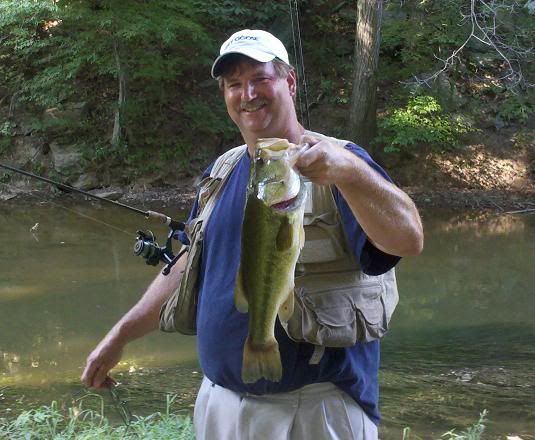
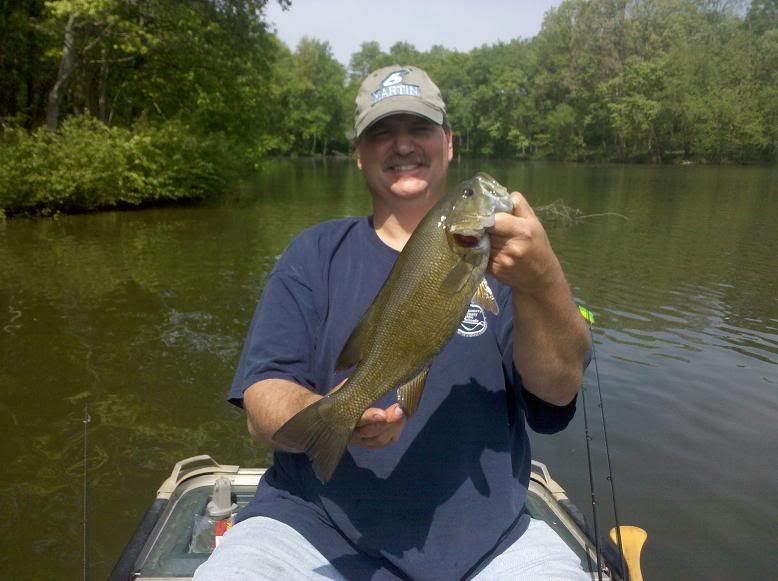
These days, I routinely toss small 1/8 oz. buzzbaits while targeting smallmouth bass like this decent fish.  The truth is that you definitely will get better summer time numbers of fish on these smaller buzzbaits.  But, big baits catch big fish, as the story told explains.  
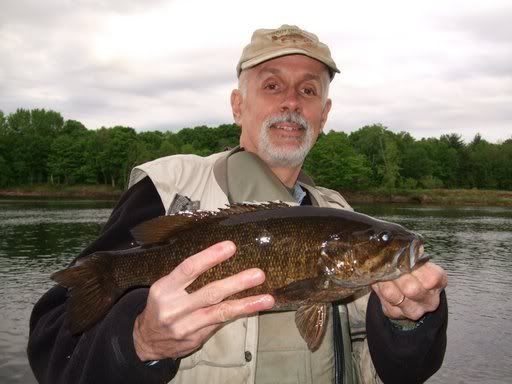
To this day, Howard teases me about that fish.  Eventually, I figured it out, got the fish in, and hoisted it over the log.  It wasn't the biggest smallmouth bass that I've ever caught, but it was a nice one for our area, and was my biggest to date at that time.  I didn't have a tape measure or scale with me, but I'd guess that fish was a fat twenty inch smallie.  And, it was the first fish that I ever caught using a baitcasting outfit! 

The hanging down to my ankles fish...
It was a hot, muggy, dog day of a summer evening as Howard and I met each other in the parking lot after work.  Typically, back then, we'd scurry to our fishing spot after work and get as much time as possible in to fish.  But, on these hot, steamy nights, there was no hurry.  We arrived at our spot about an hour before dark so that we could fish the magic hour, and then fish well into the dark.  Usually, our timing was about right, and we'd catch fish right away.  During the dog days of a hot summer, the best bite is often at night as bass are mostly inactive during the heat of the day.

Frogs sang and chirped loudly.  They'd jump from our footsteps and into the water as we walked along the path along the bank.  Bugs were everywhere, and mosquitos constantly buzzed us as they searched for a chink in our bug spray armor.  To me, all these things meant is that it was buzzer time.  

Using baitcasting outfits were so productive for me throughout the years, whether they were specialized rigs for flipping, pitching or just plain chunkin' and windin'.  I found them to be very effective for using larger lures, the spinnerbaits and buzzbaits, for example, that produced so many big bass for me.  These lures are perfect for fishing around sunken timber, weeds, lily pads and logs.  

We bank fished most often at one of our favorite bodies of water.  Baitcasting rods teamed with heavier line not only allowed us to toss larger lures, but also improved our chances of retrieving lures that we snagged in the timber.  After all, if your not snagging now and then, you're not fishing in the right places.  But, we were young and lived on a tight budget, so, every lure that we could get back was a bonus.
As Howard shows you, summer night fishing with buzzbaits can be the ticket for big largemouth bass.
Both Howard and I worked our way down the bank, and picked up some nice fish here and there.  On this particular night, the fish were bigger on average than what we normally caught.  Howard already caught a pair of twenty inch largemouth that probably weighed about four pounds at their summer weight.  I had a pretty good evening as well, landing a few eighteen inch fish and several fifteen inchers.  Howard and I eventually drifted away from each other, out of sight in the dark, as we each tried to figure out where the next big bass lurked.  I lagged behind as he moved on, because I knew that I was at a really good spot.  

I had a good feeling about this one particular spot, so I worked it thoroughly.  There were several blowdowns, and I wanted to make sure that I covered every angle fishing them.  I just knew that there had to be a lunker there.  This spot was about forty yards long, so I worked each tree from many angles to optimize my chances that a big fish would find my lure.  I picked up a couple smaller fish, and it was late, about midnight, so I figured that I'd work my way back toward Howard, meet up with him, and we'd head home.  After all, we had to work the next day.
Oh, how I love fishing buzzers at night during the dog days of summer!
On the way back over that same forty yard stretch, I fished the one spot that I hadn't really covered, where there weren't any trees, but, rather, had tons of frogs.  That spot was simply casting parallel to the bank.  On my second cast, I worked the lure all the way to me, covering as much water as I could.  I couldn't see anything except for where the weeds and water met, because it was so dark.  I couldn't even see my lure from the end of the cast to but to only about ten feet away.  But, I could hear the buzzbait, making a squeaky sounding plopping sound as it chugged along.  I worked the lure as slow as possible, just fast enough to keep the lure at the surface.

As I fished with the rod tip low to the water, and about four feet of line left from the tip of my rod, the water exploded just feet away.  Honestly, it scared the poop out of me!  I literally jumped when it hit.  I could tell immediately that this was a special fish.  On my baitcasting rigs, I set the drag pretty tight so as to get the maximum hook set, and typically, I'd horse the fish in.  There was no horsing this one in.  It took line, even with my drag set as to not allow that to happen.  Finally, I got it near shore, and I climbed down the bank and grabbed the behemoth by the lower jaw.
In the evening and at night during the dog days of summer, large buzzbaits, like this one, call in the hawgs.
As of that day, it was my biggest largemouth that I'd ever caught, for sure, and prior to that fish, I had caught dozens of five pound fish in my life.  This fish was bigger...unforgettable.  I was about two hundred yards away from Howard, and I wanted to show him this fish.  If this fish was so much bigger than most of the big fish that we catch there, that it was worth walking two hundred yards away to show my friend, and stop fishing, then you know it had to be a special fish! And that's what I did.  I walked down the path along the bank directly to him, carrying the fish at my side by the lower jaw.

When I reached Howard, he couldn't believe what he saw.  He said that, as I walked toward him, that he could see me holding the fish at my side, and the tail of the fish reached my ankle.  I'm 5'11" tall, as a reference for you, so it was a long bass.  He marveled at the fish as he proceeded to fit both of his fists into its massive mouth.  That amazed me!  The belly bulged on this fish, similar to the way my belly does now.  I was still shaking from the experience.  Neither of us had a camera, so, after a couple minutes of admiring the fish, I released it.
This was the buzzbait that I used to catch that huge fish, and many others since then.  I made this in-line buzzer by taking parts from other buzzbaits, bending my own wire shafts using a wire bending tool, and assembling the three components together with split rings.  This bait has caught me so many big fish.  The whole thing is about eight inches long.
Howard estimated that this bass would have been about twenty four inches long and weighed about seven pounds, give or take an inch or a few ounces.  It was truly one of the biggest largemouth bass that I've ever caught.  It would be a few years before I was able to equal that fish, but those are different stories for future blog posts.

OK, so that's all for today.  I'll post a few more on my next post.  Until then, I wish your all good fishing!


Tuesday, August 30, 2016

In, Under, and on Top of the River

After my last two blog posts about underwater photography and fishing buzzbaits, I couldn't wait to get out and try it all again in one trip.  What better a place to do that than our favorite summer wading spot?  My friend Rodger and I put in a full day of fishing and had a blast.  For me, it was all about the experience, not just numbers or the size of the fish (although bigger fish would have been more than welcome).
I love wade fishing the river in the summer.  We had gin clear water and bluebird skies to deal with, but the fish cooperated for us.  I had a great time.
The weather conditions weren't optimal for fishing, and as I later found out, not optimal for viewing certain species underwater either.  A cold front moved through the night before, and we had bluebird skies with a slight breeze, with air temperatures in the upper 80's.  That isn't a problem for wade fishing for smallmouth bass, but combine that with very low gin clear water, and it seemed that all of the fish were very spooky, including those that I wanted for my photo op.

I started off in the morning with a Heddon Baby Torpedo and after about thirty casts or so, decided to switch to a more finesse approach.  My buddy Rodger started out finesse fishing by tossing a small plastic worm and already had several fish under his belt by the time that I adapted.  Following his lead, I opted for the finesse approach and offered them the same four inch plastic worm, a lure that even skittish smallies will bite in our local river with such tough conditions.

My first spot fishing the worm was stacked with bass, so it didn't take long for my numbers to catch up.  At one point, I was able to catch them within a rods length of me and actually watch my worm bounce along the bottom and see the bass swim up and gobble it up.  The water was so clear that the fish would close in from about ten feet away on my lure!

It is amazing at how good their senses are.  As soon as the lure made the splash, their lateral line combined with keen eyesight allowed them to hone in for the attack from quite a distance away.

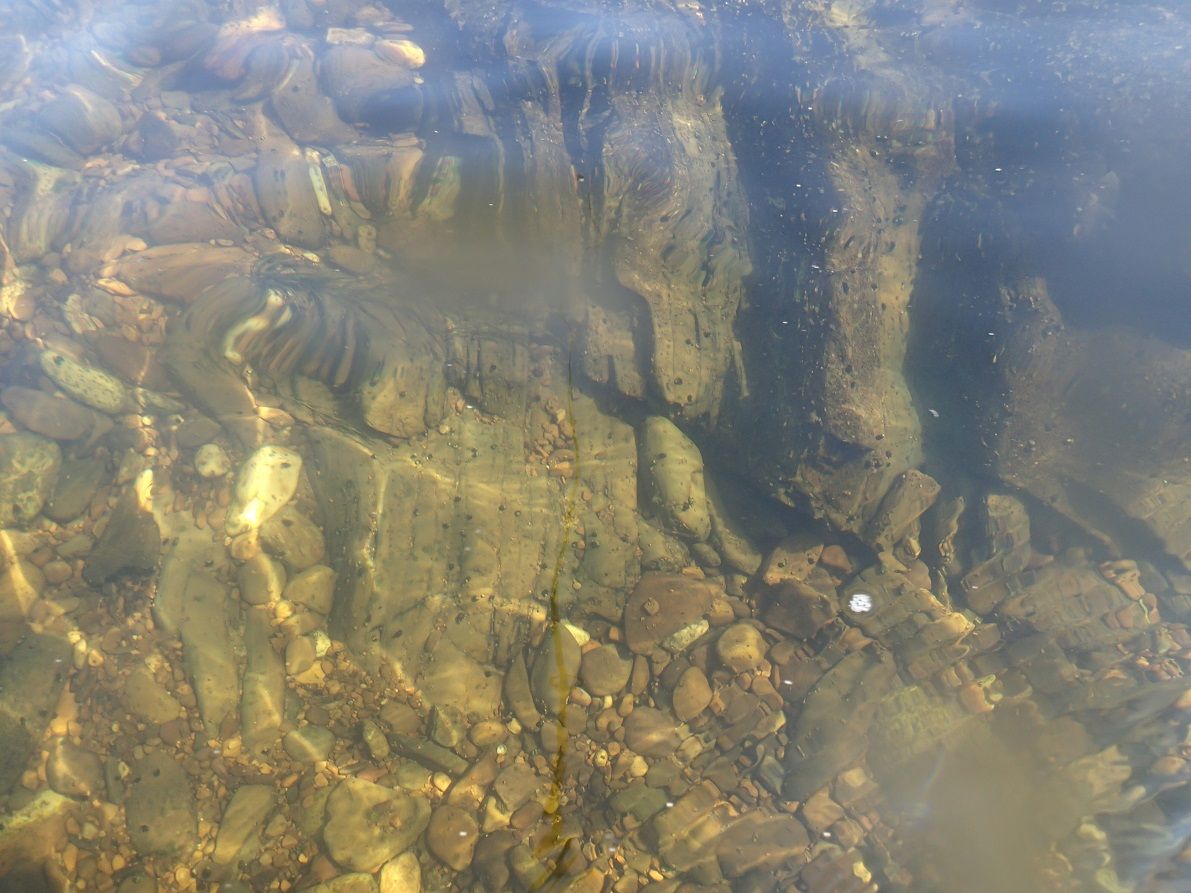
The river bottom, picture taken underwater from about waist deep.  The water was gin clear.
Here is the same spot with the picture taken above my waist with the camera out of the water.  Notice how clear the water is.  The only blur coming from water drops on my camera lens.
After catching a dozen or so bass, I started my underwater explorations, searching for good pictures of darters, minnows and anything else of interest.  However, even the little fish were spooky, and it was difficult getting close to the ones that I could find much less getting a good picture without scaring them away.  I did manage to get some pretty cool photos though.

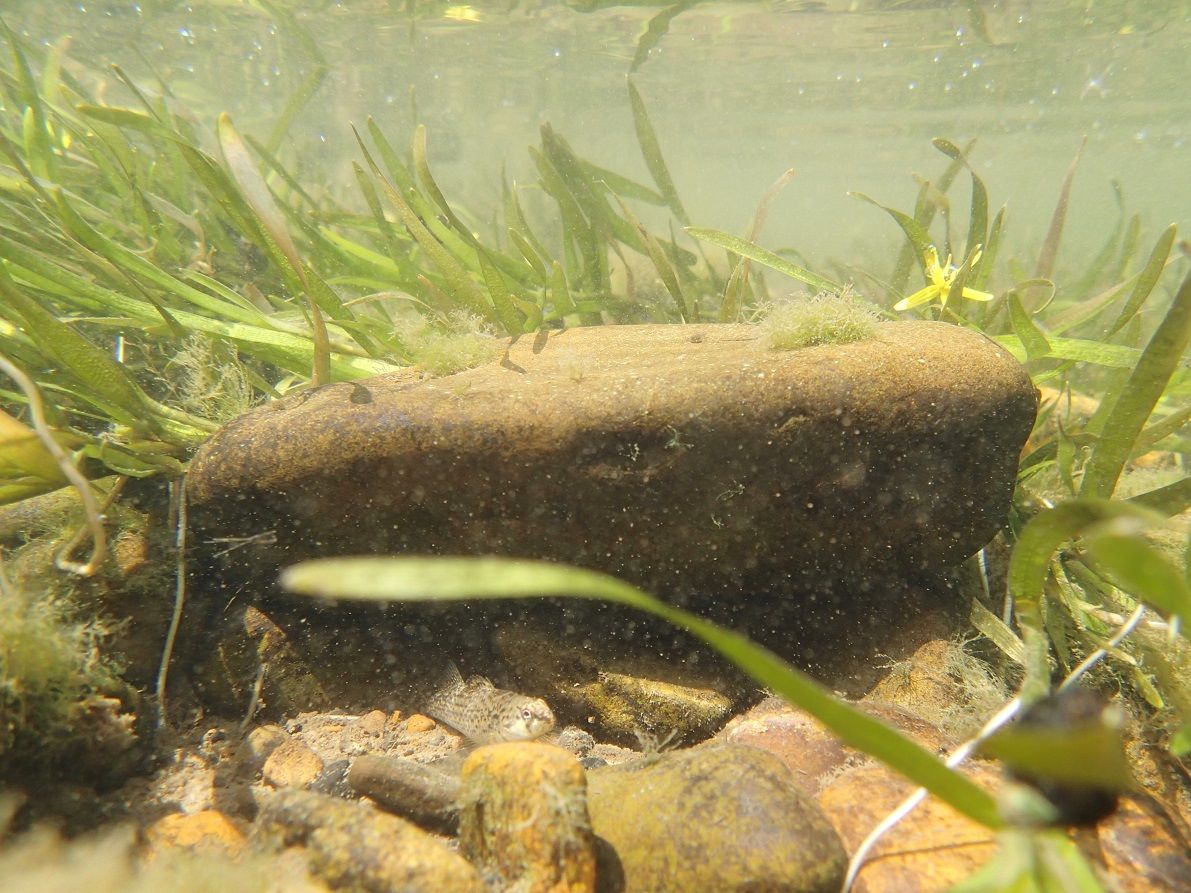
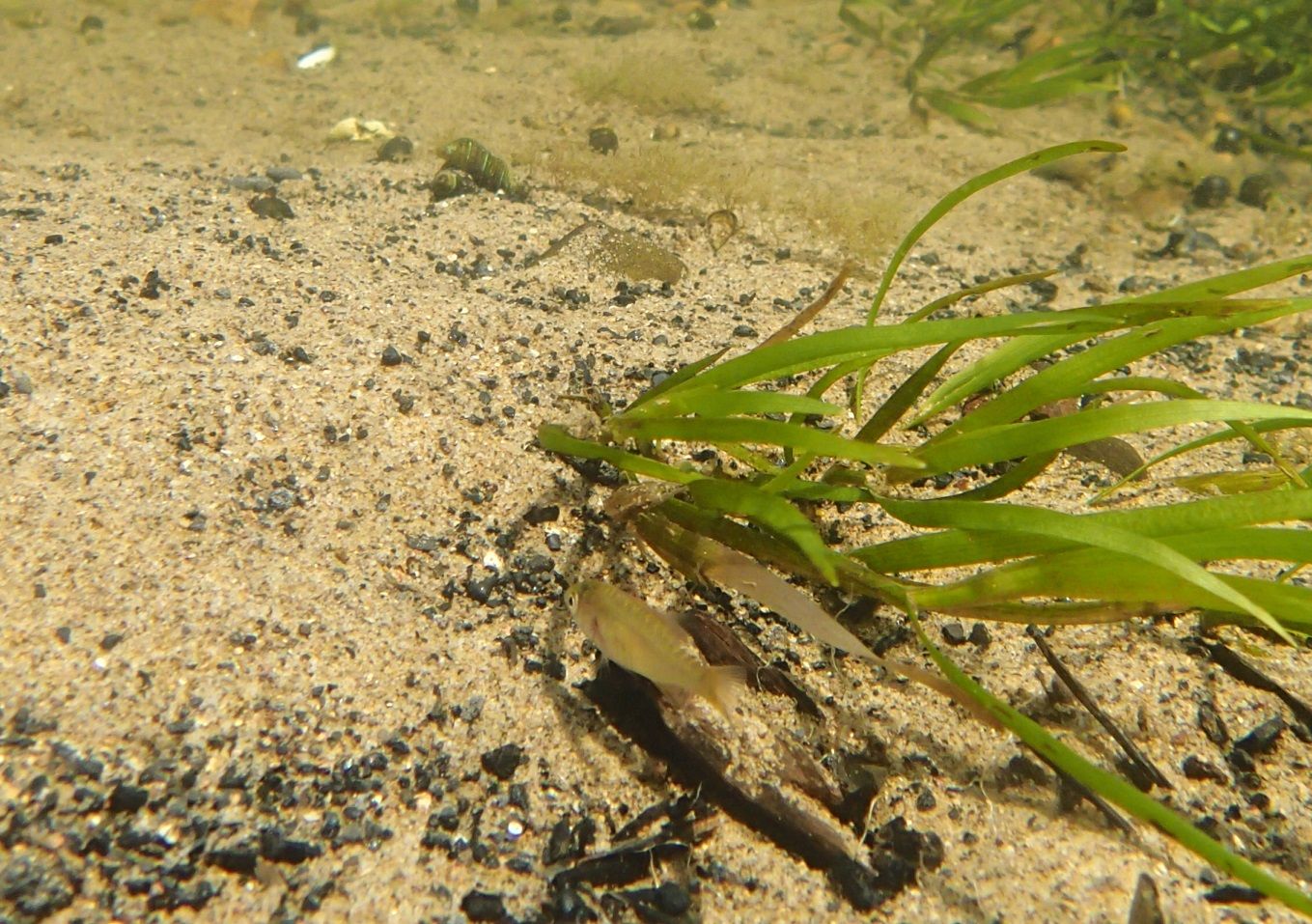
This darter posed for me briefly before I spooked it.  I'm not sure what kind of darter this is.
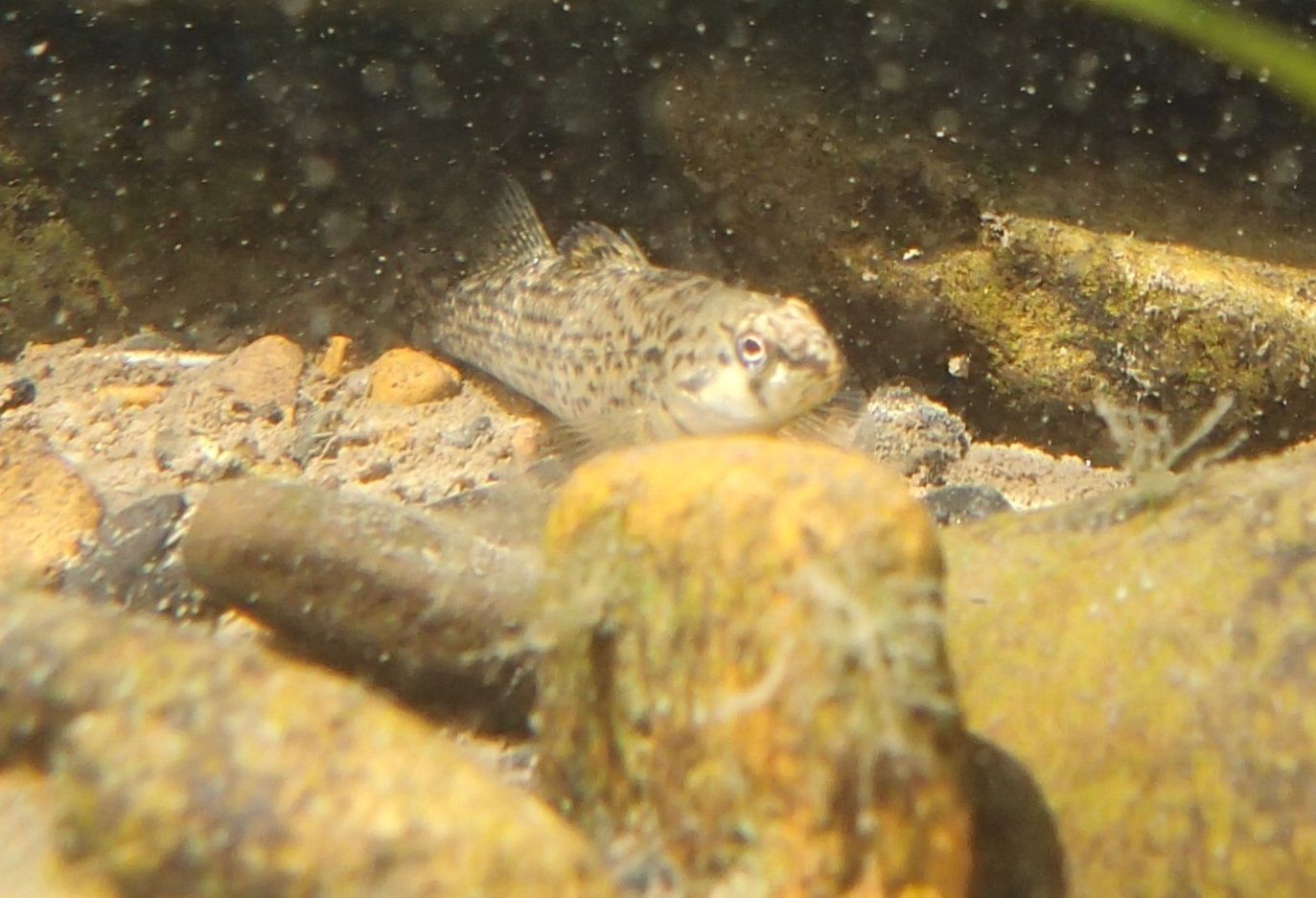
Edit:  This is a female rainbow darter, Etheostoma caeruleum.
Here's a closer look at the darter from above.  I can't identify it from this picture.  Greenside, tessellated, and rainbow darters live in this watershed.  What do you think?  Edit:  Since identified as a female rainbow darter, Etheostoma caeruleum.
Here's a closeup of a greenside darter from yesterday's trip.
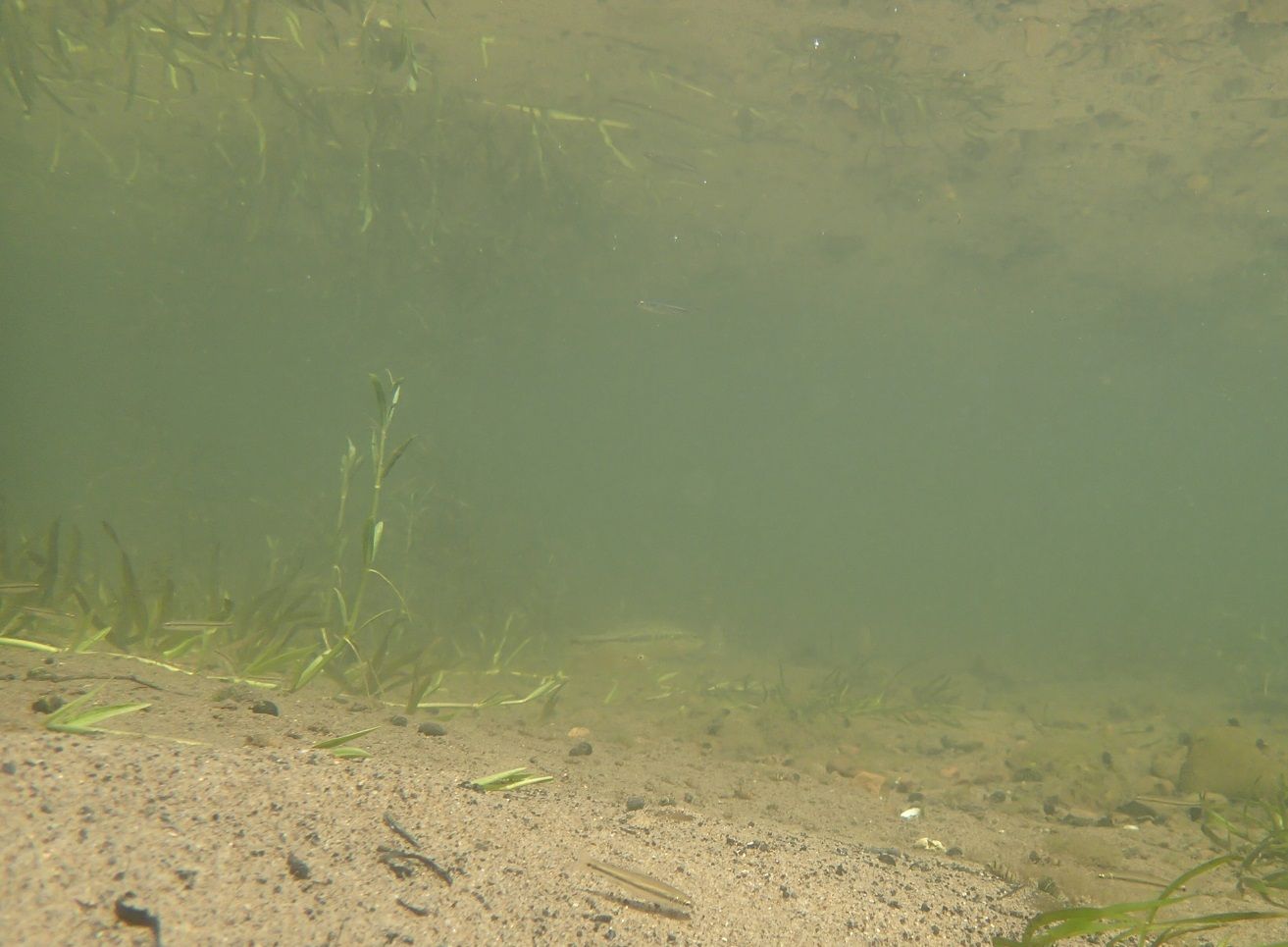
I think this picture is cool in many ways.  I love the surface reflection of the bottom on the waters surface.  the minnows feeding in the foreground are cool, but notice the predator in the background?  This 7 inch largemouth bass would dart in to attack the minnows every now and then.  There were a couple redbreast sunfish hanging out with it waiting to gobble up any morsels leftover from a successful attack.
I was able to snap a picture of this juvenile redbreast sunnie holding in the current, waiting for the current to deliver a tasty meal.
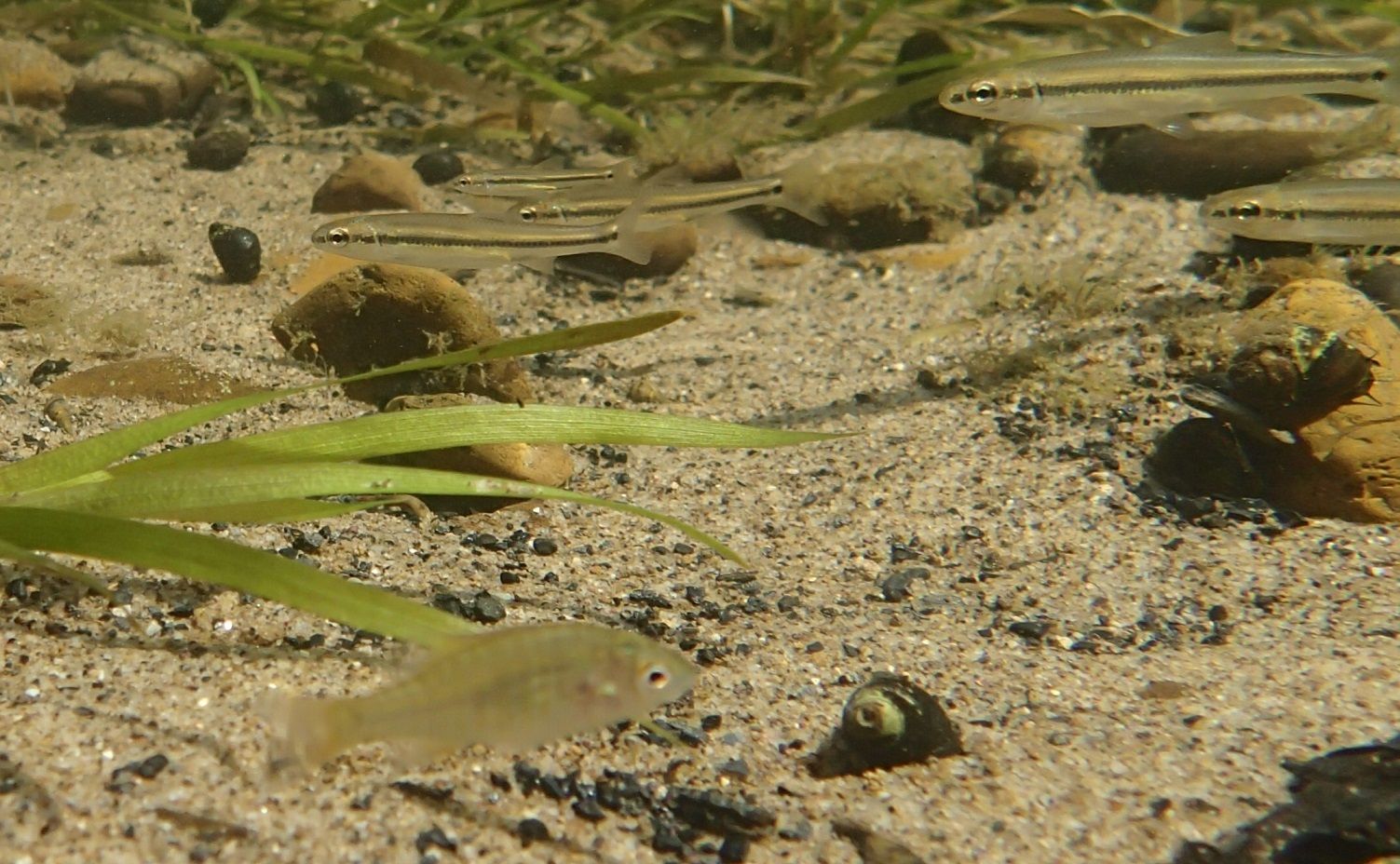
As the same sunfish turned down river, a school of minnows moved in to feed.  I'm not sure of the ID of these minnows.  Anyone know?
OK, changing gears again back to fishing - both Rodger and I caught a bunch of average sized smallies and took a lunch break at a local Mom and Pop joint, where we ate delicious but inexpensive food washed down with some cold beverages.  The atmosphere sports game mounts of all kinds, sporting memorabilia, and other things local to the area.  After eating and relaxing, it was tempting just to stay and watch football or racing, but we persevered through that laziness, mustered up some energy and headed back to our spot for the evening bite.

While the sun was still up high, Rodger and I found some worthy holes down river and let the plastic worm do its thing, tempting bass to bite consistently.  The problem was that the river was so low, that finding spots deep enough to hold fish was tough.  They weren't normally where you'd find them.  But, when you found a good hole, the fish were stacked in there.  When wading, it takes time to find those holes, not like in a boat when you can run and gun to them.  It takes time for old farts like us to wade from one spot to another.  I tried topwater off and on with only a couple slurping hits, but no fish hanging on.  While the sun was high, the plastic worm was the ticket for the majority of the time.
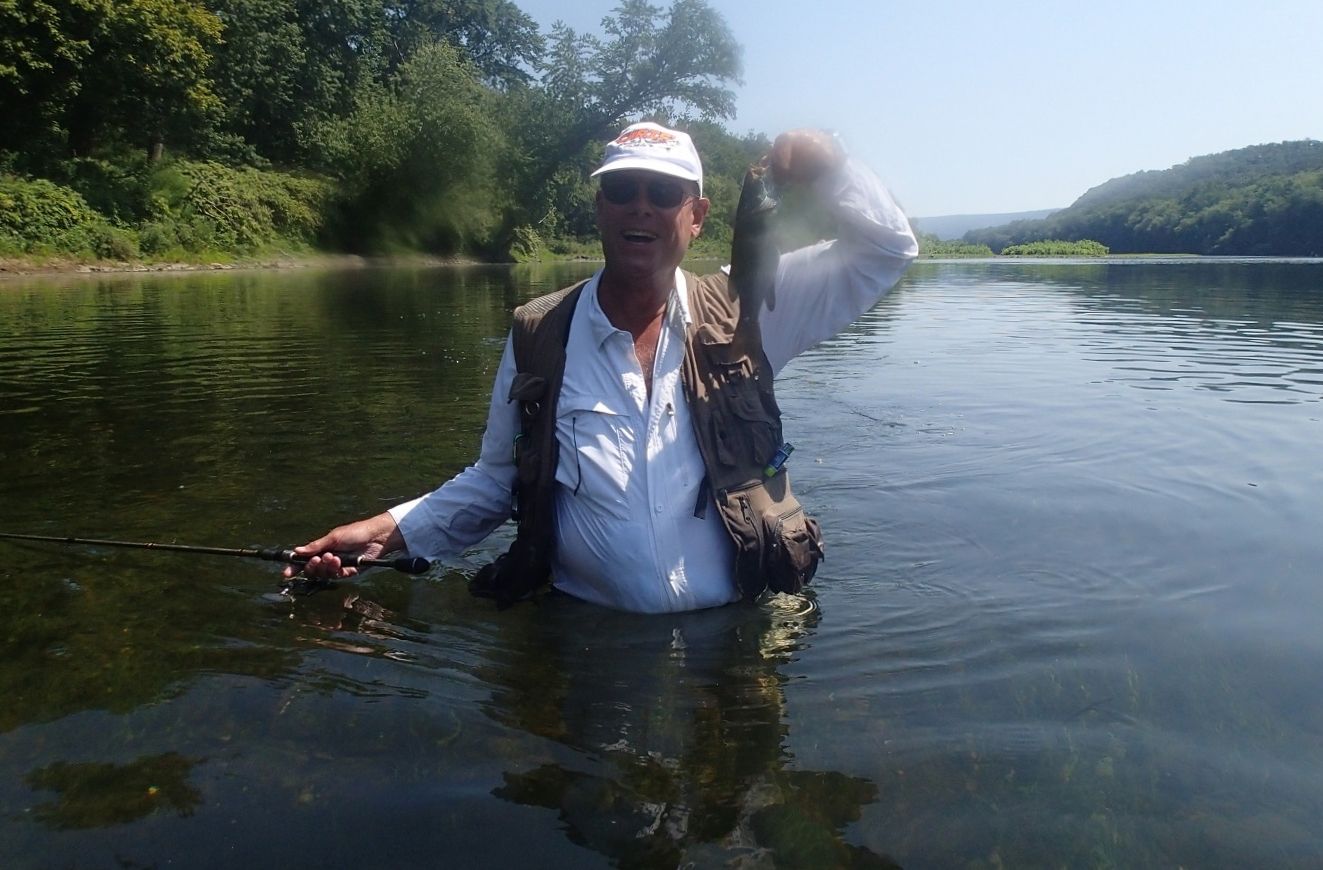
Here's Rodger with a willing smallmouth that inhaled his plastic worm.  Underwater photography is great, but remember to do what I didn't do, wipe off the water from the lens before taking a picture of your friend with a fish!
After searching for those productive holes while wading down river, we realized that we'd better start heading back as the sun edged over the adjacent Western hill so we could find our way back.  Of course, when you head back, you have to wade and fish your way back, stopping when the fish dictate.

Wading up against the current takes time, and on that day, it proved to be taxing on my old aching legs.  For some reason, the fish stopped biting my plastic worm.  Either Rodger and I sore-mouthed the fish in those productive holes or the fish wanted something else.  I decided to make things easier on my bones by wading to the other side of the river to very shallow ankle deep water and wade back.  I tied on a buzzbait to cover more water and maybe catch a few fish along the way.

While working that ankle deep water with the buzzer, I had a hit and a fish on briefly, but it spit the hook.  I thought that was encourage, so I kept casting.  A few casts later, as the lure hit the water, I saw a wake heading from about twenty feet away toward my bait and became very excited.  The fish nailed my buzzbait and took off.  I thought it might be a big fish, but after I turned it, I realized that the fish was a little bigger than the average for the day, but not by much.  It wasn't the size of the fish that got me fired up, but how far it came to hit my lure.  Prior to that, I can't recall a bass charging in from that far away!  It was an exciting moment though and I realized that the topwater bite was on, finally.
Here's a picture of the bass that made the wake in shallow water, charging from about twenty feet away to attack the buzzbait.
I managed to catch seven more bass on the buzzbait as we headed back to our take out spot, finishing with 41 bass for the day.  I fished about 70 percent of the time, with the rest of the time spent trying to get some decent underwater photos.  But, that's pretty productive anyway!  Rodger finished with 50 plus bass along with a few big sunfish.

All in all, we had a really fun day.  Even though it wasn't the topwater bite that I've been craving, I was able to accomplish two things with this trip, some topwater action and getting a few good underwater photographs.  I can't wait to do it again.  Good fishing, cool underwater wildlife to observe, good cheap food and drink, and sharing it with a good friend.  That makes for a memorable day!

Monday, August 22, 2016

I'm a Buzzin' for Smallies!

The dog days of summer bring out some of the best topwater bites for smallmouth bass.  All topwater lures can be productive at one time or another, but when the fish are aggressive, buzzers or prop baits are tough to beat and a heap of fun to fish.  Why?  They create a disturbance that aggressive bass can't resist and they cover a lot of water.  That's a formula for some pretty good numbers, wouldn't you agree?  Not only that, they're big fish baits too.
Mid summer river conditions like this just scream topwater to me, and my go to topwater baits are either a buzzbait or prop bait.
It doesn't matter to me if I'm fishing from my boat or wading, because when the fish are on this type of bite, it's quite exciting.  If I start off fishing low light conditions, I'll opt for a topwater lure of some sort, and for me, I like to cover water quickly, so it's either a buzzbait or a prop bait to get those aggressive biters that are a little less wary at that time.  Normally during mid-day, I'll work soft plastics, but, if I see signs of bass feeding on the surface or chasing minnows in the shallows, then I'll break out my topwater lures and give them a go.  Hungry summer bass may be aggressive even in the mid day heat.
My buddy Howard and I with a double, both caught on buzzbaits.  Nice size bass like these are so much fun when they crush topwater lures.
I find that both buzzbaits and prop baits are equally effective for provoking strikes, but river conditions and the mood of the fish dictate which one I'll pick.  If weed growth is abundant, then the buzzbait is a bit more effective because you can fish right through most weeds and draw strikes without getting the lure fouled.  I'd rather spend more time with my lure in the strike zone than having it out of the water cleaning it off.  Prop baits are weed collectors.
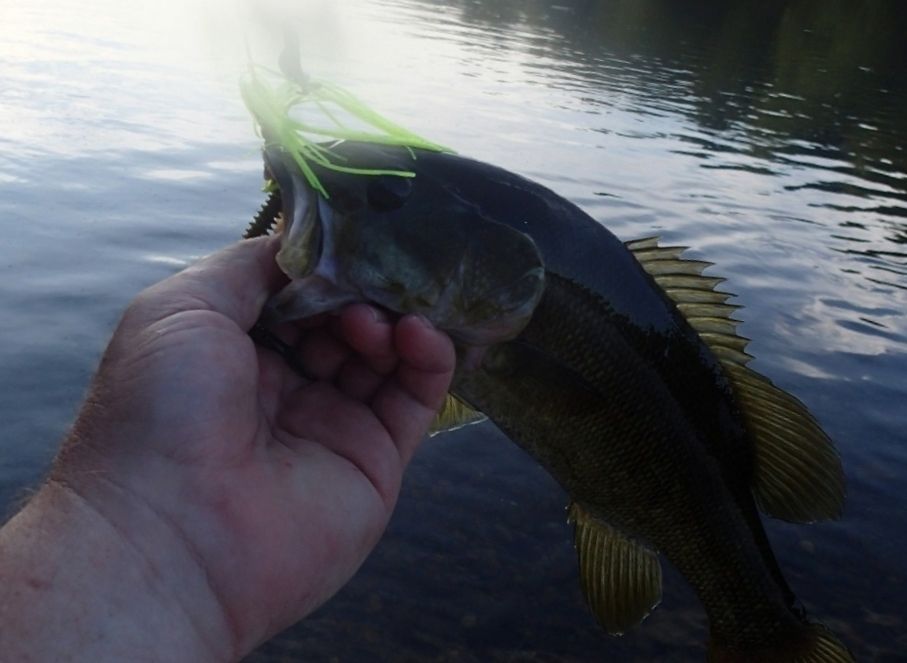
This chunky river smallie attacked my buzzbait!
However, if the water is up and the weeds are submerged, or perhaps, like in certain years, weeds aren't as abundant, prop baits seem to result in a better hook up ratio.  I don't think fish key on either lure over the other very often, but there are times when they slurp rather than crush the lure, and the prop baits work better in that situation, it seems, at least for me.

My go to buzzbaits for smallies are the 1/8 ounce Strike King or a similar buzzbait.  I beef them up by adding an old 4" ringworm as a trailer as it seems to trigger larger bass to strike than without the trailer.  When it comes to color choice, many folks local to me go with white, especially this time of year to match the white miller mayfly hatch.  That works great for them, but oddly, my first choice is an all chartreuse buzzbait.  My thought is that it imitates frogs, I guess, and chartreuse catches their attention (no pun intended), at least for me.  I will try larger buzzbaits too, especially if they're super aggressive.  Bigger baits often lead to huge smallies.  I always carry the larger buzzers in the boat, but don't carry them when I'm wading because I don't have that beefy tackle with me, and I like to keep my vest from being too full!
The 1/8 ounce Strike King chartreuse buzzbait with a ringworm trailer...deadly on summer bronze.
My favorite prop baits are the Heddon Baby or Tiny Torpedo.  I like the larger "Baby" size when the fish are really aggressive, and when they're in that slurping mood, I go to the "Tiny" version.  I like flash in my lure, so the "G Finish" is my favorite color.  My next choice would be any color with a white belly.  I'm not sure the fish care all that much about the color.  Just make sure that you tune the lure (by bending the propeller arms if need be) to make sure that the propeller spins freely in the current.  Keep an eye on it to free it from algae or weeds that you might pick up unknowingly.

For the buzzer, the key is to start your retrieve right at or just prior to the lure hitting the water on your cast.  This is to get the prop going as soon as possible and keep the lure on top of the water.  After that, I find it more productive to reel the lure as slow as possible so that the prop still gurgles on the surface (barely) without the lure sinking.  I seem to get more hits that way than buzzing it fast.  But, let the fish tell you, because there are days when all rules are thrown out the window.
Fish a buzzer during a summer evening and catch aggressive smallmouth bass, one after another!
With prop baits, it's the same type of thing, to retrieve just slow enough to keep propeller spinning, but not burn the bait too fast, especially when the fish are in that slurping mode.  One difference though is that with prop baits, they float, so you don't need to reel them in right away.  You can let them sit a bit, and you may find that some fish will hit it after the rings from the splash settle down, or when the river current starts spinning the propeller.  Be patient with these baits and let the fish tell you what they want.

If fish are slurping your buzzbait but not getting hooked, try switching to the prop bait.  Conversely, if they're crushing your prop bait but you're tired of dealing with removing those spunky fish from the treble hooks, try going to the buzzbait perhaps, although it's tough to change lures when something works so well!  Such a problem to face, huh?
The Heddon Baby Torpedo at work, landing one smallie after another that day.  The weeds weren't bad, and the fish were in a slurping mood, but man did they ever slurp!
If you get a strike and miss a fish, and then you follow up with another cast and that doesn't result in a strike, then make sure you or your fishing buddy follow up by casting soft plastic bait to the spot where the missed strike occurred.  Most of the time, that fish will be there and ready to eat something else.  Soft plastic flukes, stick baits, plastic worms, tubes or grub tails all work well for that purpose.  I always have a follow up lure like this rigged up for that purpose.  If you're fishing skinny water, flukes or stickbaits work great, for deeper water, tubes, worms or grubs will get that fish for you.

If you're fishing topwater and your fishing buddy is fishing soft plastics, you can team up on fish by letting your bud know that you just missed one, to cast to that spot, and give him or her the fish.  After all, if you're working topwater, you're picking up the most aggressive ones first, so it's a great way to share that aggressive bite with your fishing pal.  Your fishing buddy will appreciate those aggressive strikes, trust me!

These lures are great for the rivers, but don't forget trying them in small streams.  They can provide some terrific topwater action.  I had a great day on a local small stream several years ago, catching 99 smallies all on a buzzbait.  Because the bite was so hot, as the day went on, I set a goal for 100 bass on buzzers, but we ran out of time as it got dark, the bite slowed, and we had to leave.  Many of those bass were between 14 and 16 inches long, with a few up to 19 inches.  Buzzbaits are big fish lures for sure.  I'll never forget that day!
Here's a chunky small stream bronzeback that fell for my 1/8 ringworm tipped buzzbait.

My Buddy Howard fishing a small stream last summer.  Don't overlook using a buzzbait in streams like this, especially if the stream is remote with little fishing pressure.  Smallies may never have seen them before and might hit them often and hard.
During the summer, the great thing about these lures is that they may work when the water is gin clear or muddy.  When the water is clear, they seem to work great during cloudy days, when there is a slight chop on the water (not too much, but just enough to break up the surface and confuse bait), during the twilight magic hours of fishing (sunrise and sunset), or maybe even more, at night.  If the water has a stain to it or is muddy, especially during hot sunny days, a buzzbait is a great choice because the lateral line of an aggressive bass will allow it to hone in on the noisy disturbance that your lure creates no matter what time of day.

But, like I said earlier, let the fish make the rules and tell you.  They may work in the middle of a calm sunny day!  When I had that 99 fish day, I started using a plastic worm and didn't have much luck.  After a while of working that worm, I got fed up and reeled in the worm extremely fast and a smallmouth attacked it just as I pulled the lure out of the water.  The fish told me by its actions, that they were in a chasing mood, so I tied on the buzzer and the rest was history, a day that I'll never forget.

These aggressive topwater bites are so much fun, but don't let them get you in a rut.  Always keep an open mind this time of year, because if these lures don't work, other slower topwater baits might be the ticket, like popping plugs or walk the dog type lures.  If none of them work, then you always have the option to fish other patterns.
Don't be shy about trying them after dark as Howard shows you here.  Not only is that buzzbait time, but it's big fish time!  Explosive strikes that scare the you know what out of you can happen!
Next time you go smallie fishing, break out the topwater buzzers and give them a try.  You might have a 99 bass day bass day to remember too!

Saturday, May 12, 2012

Do Nothing Bliss

Naw, I don't mean laying around the house watching WFN repeats of Hookin' Up With Mariko Izumi and eating bon bons.  I'm talking about a type of finesse plastic bait that brings bass to the boat during the spawn and post spawn when they seem to ignore just about anything else, the soft stickbait.  On top of that, these baits are productive all year long. 
Soft stick baits produce fish like this all day long, and to me that is do nothing bliss!!!!
For those that aren't familiar with these, years ago Gary Yamamoto designed a bait that he coined the Senko, which basically took the shape of a ball point pen.  It had no curly tail, no ribbon tail...in fact, it had no tail at all.  I guess it has a head end and a tail end, but honestly, they work so well that I fish them either end head first to get the most use out of them!
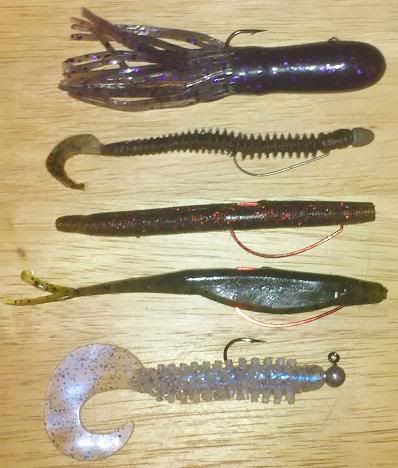
Gary Yamamoto Baits Senko (third from top) can be fished any number of ways, but it must be fished!
Over the years, these baits not only became popular, but have won tournaments and a lot of money for some people.  But, for weekend warriors like me, they simply catch fish.  Not only that, they can be fished a variety of ways, and bass simply love 'em.  You can fish them weighted or unweighted, Texas rigged, Carolina rigged, wacky rigged, drop shotted, on a shaky head or nose hooked with a circle or octopus hook, bit in half, thirds or quarters.  There is no wrong way to fish them except not fishing them.
My buddy Howard knows first hand about nice bass like this one that love soft stickbaits like the Senko
I recall a trip to a pond on Maryland's Eastern Shore many years ago when the Senko was just out on the market.  My buddy Howard and his significant other, April, were fishing out of his Coleman Crawdad cartopper boat, and I was fishing my buddy Bill's boat, on a decent late spring day when the bass weren't particularly easy to catch, but certainly catchable  We fished hard for our bites, tossing plastic worms with some success, jigging and worming, working our baits as any skilled angler might as to tempt chunky bass from their weedy or woody lairs.

Meanwhile, April was reading a book while perched in the front seat of Howard's Crawdad, with one line out dragging a Senko behind the boat.  Next thing you know, her rod tip is thrashing about and she's reeling in a decent two pound largemouth.  This happened again and again, and enough that she probably had to read a good many pages over again and again.  In fact, she didn't really have much time to read at all and wound up outfishing all of us two bass to one.  And it wasn't even close.  Her secret?  Do nothing!
Most soft stickbaits have similar traits to the Senko.  They're heavily salt impregnated, so they are heavy and sink much faster than other soft plastic baits.  They're also very soft, and when fish hit them, they hang on to them forever, and will swallow them if you don't set the hook quickly.  The action is really impressive, although they don't appear like they'd do much, they flutter down and kind of wiggle tantilizingly, and often glide in one direction or the other on the fall, sometimes taking the lure deeper under a weed mat or into the cover.

You can fish soft stickbaits in the rivers, creeks, ponds or your local lake, and fish them just about any time of year.  Often when other soft plastics aren't drawing the strikes that you'd expect, these do nothing baits will put either numbers of bass in the boat or good sized ones, or both.
Howard fooled this bass on a five inch Senko when the bite was tough.
Senkos, and their cousin the Kinami Flash, are available in several sizes and colors.  There are many other brands on the market these days with their own version, and many of them are quite good also.  I've tried some with great success, and have yet to be disappointed with any of them.  I've also tried Case Plastics Magic Sticks, which are somewhat more durable with a firmer plastic, a Yum version that has a hook slot, and Bass Pro Shops Stick-O.  They all work well.
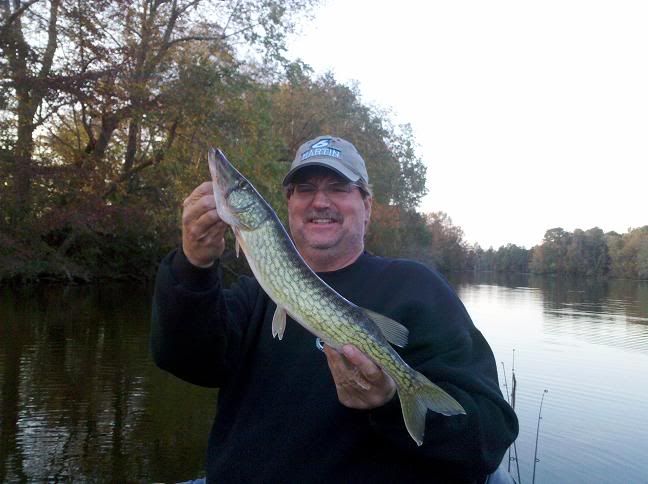
Toothy critters like this chain pickerel love 'em too.
There are also many versions out now, some with tails, some slim, some fat, some short and stout.  They all work well, so find one that works for you and fish it.  My favorite is the four inch regular version, but also regularly use the five and six inch sizes.  My favorite technique this time of year is to Texas rig them without weight, cast them out, and jig them, and if the fish are agressive, twitch them a few times and pause, and repeat.  Try working them quick at first, but if you don't get hits, slow things down, sometimes way down to a do nothing approach. 
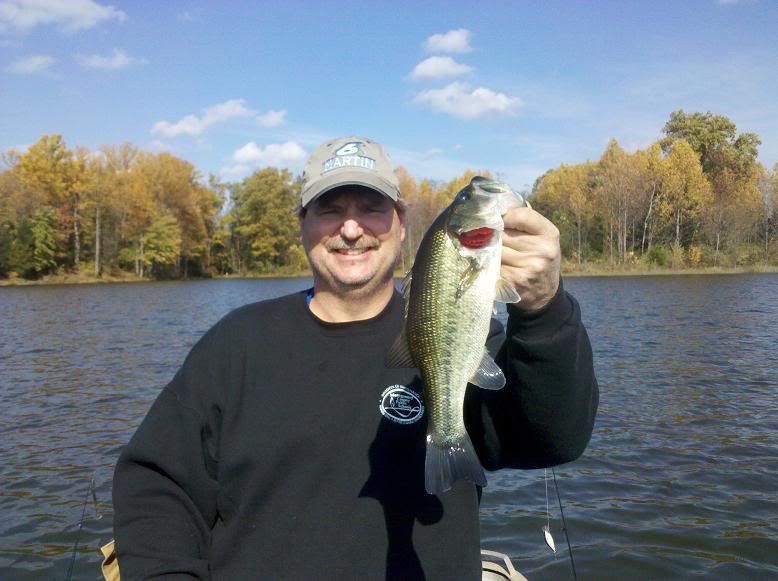
Reservoir smallies munch on soft stickbaits as if they're candy during late spring.
Yet, sometimes the best technique is to simply toss them into the cover and let them flutter down.  This works well Texas style, but even better when wacky rigging.  Bass can't resist them.  When fishing them in a river, toss them along a current seam and let them drift along an eddy where fat smallmouth bass lie in ambush.  Or, cast them up and across current, and let them drift down past river obstacles such as logs and rocks, where aggressive smallies on the feed will crush and hang on to them.
In rivers, toss a Senko amongst the rock piles and get ready for a bite from a hungry smallmouth.
If the Senko has one knock against it, they're soft, and fish hit them so often that they tend to tear them up.  And they're a bit pricy.  But, there are things that you can do to achieve more longevity out of each one.  When wacky rigging, you can use a wacky rig tool along with small rubber rings to hold the hook on your rig.  Others use small rubber bands.  Still others fish the pieces after they fall apart, and others, like me, weld them back together with a soldering iron.  I never throw the pieces away.

I'm not saying that the Senko is better than any other brand, but it's the one that got me started fishing these.  I keep fishing them, perhaps habit, perhaps because they work, so why change if you're catching fish on them, right?  I've used other brands when I've found colors or features that I like that I can't get from a Senko. 

For more information on fishing Senkos, check this article out, "Senko Secrets", by Steve Price on Inside Line online magazine.

The bottom line is that, if you haven't fished these do nothing style lures, you could be missing out on some quality bassin'.

Thursday, April 19, 2012

Black Marks, Blotches or Spots on Bass...OH MY!

I, like many anglers in my region, have been catching both largemouth smallmouth bass that exhibit large irregular black blotches or spots for many years now.  When I first started noticing fish with these weird markings, they occurred mostly with largemouth.  In recent years, I've been seeing them in smallies too.  The bass that I've caught with the spots were large adults and appeared to be really fat and healthy.
Black blotches or spots, like the ones shown here on a fat healthy largemouth bass from the Upper Tidal Potomac River caught by my buddy Bob Barber, are nothing to worry about.
In addition to the local waters that I fish, anglers in other states and, from what I've read, in Canada, have been seeing this phenomenon as well.  Naturally, when weird stuff happens to fish, anglers and biologists alike tend to think that the causes surround parasitic activity, water quality issues, or mishandling of catch and release fish.  These concerns turn to complaints and assumptions, and eventually research into the potential problem, and rightly so.  That's how the process usually works.

So, what are the spots and are they anything to worry about?  The condition is termed hyperpigmented melanosis, which is a fancy term for pigment discoloration.  The condition seems to occur in larger adult fish more often than juveniles.  The spots don't appear to be permanent.  Often, the coloration often returns to normal after a period of time.  And, researchers have found the fish exhibiting the spots seem to be otherwise very healthy.  Of the ones that I've caught over the years, I tend to agree, they seem very healthy.
The black blotches occur just about anywhere on bass, even the lips as shown here from a largemouth caught in a small Maryland lake.  The patterns can be simple spots, or large irregular blotches.  I think that they give the bass character!
Anglers are increasingly reporting occurrences all over the country that, in some cases, are on waters that are already troubled by poor water quality or pollution.  The fears about their home waters may be well founded, but perhaps the link to the spots may not be.  Reports of people catching fish with the spots seem to be increasing, but it doesn't necessarily mean that the number of affected fish is increasing.  People are noticing, and with the amount of free exchange of info over the net, are simply talking more about it.
Here's the same bass shown in the previous picture, displaying several spots and blotches on the lips, body, gill and fins.
Researchers speculated for some time that stress of some form may be the cause.  Stress resulting from fish handling (perhaps catch and release), parasitic activity, disease, natural injuries to the skin, bacterial or viral infections, pollution or poor water quality have been suspected causes.  Even though all of those could possibly result in the condition, there's no evidence to directly support that this type of melanosis is caused by those factors, and researchers have stated that the symptoms could very well be genetic or hormonal.

In many fishing forums, more and more people are posting fishing reports with pictures of affected fish along with voicing their concerns.  With all of the buzz about blotchy bass, and after catching a few myself, I decided to do my own research.  I really couldn't find much on the web except that nobody really knows that causes the spots, that the fish appear healthy, and that researchers at Auburn University are studying the phenomenon.  I was not able to find anything about the results of the Auburn study.

Gene Mueller, who writes and awesome blog that I urge you all to visit, Gene Mueller's World of Fishing & Hunting, mentioned to me that these spots aren't anything to worry about as he had spoken to Maryland DNR officials, and they assured him that the spots were nothing to worry about.  In addition, the Maryland Fisheries website mentioned in their fishing report in reply to a post something to that effect.

I wholeheartedly agree with Gene and am not worried about the spots.  But I'm not sure that the rest of the angling community feels the same way.  So, I wondered that, with all the increased concern about blotches on bass, maybe I'd address the topic here to put forth some of the latest info.

Wil Wegman recently wrote a detailed piece in the April issue of B.A.S.S. Times on the topic.  He interviewed various people researching the spots, and shared what he learned with the B.A.S.S. Times followers.  he relates that former Professor John Grizzle of the Southeastern Cooperative Fish Disease Laboratory at Auburn University and Associate Professor Jeff Terhune, who currently runs the lab, concur on their take on the spots. 

Dr. Terhune states that "...there could be lot's of causes, some anecdotal and some potentially real.  Even spawning may create lesions or sores that heal in this manner.  Genetics can also play a big part.  Overall, most of the hyperpigmentation that I am aware of causes no harm to the fish, otherwise you would see fish in poor condition (i.e. thin) or with some other diseased condition."

Mr. Wegman also reported that Dr. Terhune believes that "though anglers are targeted as causing the strange bass coloration, it's far more likely to be a natural occurrence that has little to do with how much a bass has been handled."  That doesn't let anglers off the hook though, as it's our responsibility to carefully release our catch (if that's our intent) and handle the fish with the utmost care as much as possible. 

Then again, many people are questioning what, in some bodies of water, seems to be a more recent phenomenon.  The Susquehanna River in particular where more and more smallmouth bass seem to be exhibiting the spots than many Susky veterans can ever remember.  Recent water quality issues that are known to cause other problems with the health of the bass populations there, along with dramatic decreased young of the year counts, have resulted in recent regulations closing all bass fishing in large stretches of the popular river during the spawn, including catch and release fishing (beginning May 2012).  Perhaps there is something to this. 

Some veteran anglers are asking for more detailed studies by Pennsylvania officials to see if the spots are indeed linked in some way to the troubles of that river.  Perhaps they'll find out one way or another.  If they're related, they could be an indicator of bigger problems.  At the very least, even if the spots prove harmless, more attention would be given to address the real causes of the decline in bass numbers there.  More to come I'm sure.
This Susquehanna River smallmouth bass shows multiple black spots.  Anglers that frequent this popular river are extremely concerned about increased occurrences of the spots in their river, especially in light of other problems related to pollution there.  Photo Courtesy of Bill Yingling, M.D.
So, in summary, as Gene pointed out to me months ago, the black blotches appear to be nothing to worry about, at least on the individual bass studied.  But, could they be an indicator of bigger problems on some bodies of water?  Our focus should be on improving the water quality as much as possible, especially if the spots really are an indicator that is tied to water quality.  The bigger problems that have already identified are decreased young of the year smallies in our upper rivers along with discoveries of intersexed bass, and bacterial lesions more than likely due to poor water quality and various forms of pollutants.  But that's a blog topic for another day.

By the way, I've been a lifetime member of B.A.S.S. for many years.  Their publications, Bassmaster Magazine and B.A.S.S. Times are highly informative.  They are a must for the serious bass angler.  I've saved every copy since becoming a member many years ago.  Often, the information found in both publications is useful to other anglers as well, especially topics regarding fishing politics and conservation.  I highly recommend both publications.  I'd like to thank Bassmaster and B.A.S.S. Times for their contribution and permission to share their research, and Wil Wegman for writing such an informative article.

Friday, December 9, 2011

Small Stream Magic...Going With the Flow

By guest author Jim Cumming

The twenty inch brown trout added an exclamation point to what was already rising to the rank of a career day.  It strained my four pound test in the strong flow, but everything held and my net hand was true.  After a brief moment of admiration and a snap of the shutter, he zipped off to join ten other browns that had slammed my Yozuri Pin Minnow in the course of the last couple hours.  I took in the scene for a moment, enjoyed the satisfyingly strong pull of the current against my chest waders, and chuckled at my fortune for having escaped the “you should have been here yesterday” mantra that eats so many well-intentioned trips for breakfast.  My revelry was broken by a dimly visible figure working his way down the bank toward me in the failing daylight.  It was a county sheriff’s deputy.  I had to strain a bit to hear him over the current.  “Hey, buddy, I received a call about someone in trouble in the water.  You OK?”  As humorous as the situation may have been to me, I realized that this area had been under a flood warning just two days earlier as the first strong cold front of the fall plowed into what was left of summer’s stickiness.  To be sure, I no longer waded as surely as a blue heron and my sporadic stumbles probably attracted some attention.  Still, there was only one answer for the deputy’s question, “I’m fine.  REAL fine.”  No field sobriety test was administered, and he left me with, “All right.  Just be careful.  I don’t want to get called back here later tonight to fish you out.”  Well past sunset now, there was just a sliver of light left on the western horizon.  Still time for a final cast or two.  Enough for another chunky brown before hitting dry land.

The sheriff’s deputy had worried about me being in trouble, and perhaps I was, but for a different reason.  I was nearly two hours late when I pulled into the driveway, but my wife was unfazed.  “Was the fishing good?”  I’m sure she knew the answer before the question left her lips.  I’m almost always on time, almost to the minute, unless to quote myself, “Something dramatic happens.”  On this evening, the fishing clearly had risen to that level.  By why?  What were the triggers?  Ah, let the small stream journey begin.  It’s a journey that I started nearly forty years ago and is still my calling to this day.  Like any trip, it is best broken down into smaller, easily navigated segments.  By their very nature, small streams can change more quickly than lakes and other more stable parts of the water world.  Seemingly, they can morph from nearly dry streambeds to raging torrents overnight.  It only makes sense to start the small stream adventure by “going with the flow.”


Hair styles have changed since he caught these brown trout in 1976 and a smallie
in 1985, but the author's passion for small stream angling has only grown.
Going With the Flow
The very things that can make fishing small streams challenging and difficult can also make them easy to master if you keep a few basics in mind.  Fish relate to current in predictable ways regardless of a stream’s geographical location.  Fish rely on current to bring them food; however they will rarely stay in open current areas for long periods of time in order to avoid expending too much energy fighting the current.  This makes current breaks behind boulders, below riffles, or behind woody cover key spots to target.  The fine September evening described previously provides an example of two other locations that are often keys on a small stream……the outside of bends in the streambed and a confluence with a smaller tributary.  I encountered the brown trout that night at a spot where the water deepened below a set of riffles, while at the same time bending to the left.  This meant that the right descending bank (the outside part of the bend) was scoured out and deeper.  It was all the better that a smaller tributary flowed into the stream at this point, creating a small fish-holding eddy.  This was a classic, “textbook” stretch of stream, with three or four great things going on within 100 yards or less of each other.  You don’t find that everyday!  But finding and recognizing even one of these fish-holding features on your favorite stretch of stream will maximize your chances of finding a concentration of fish.

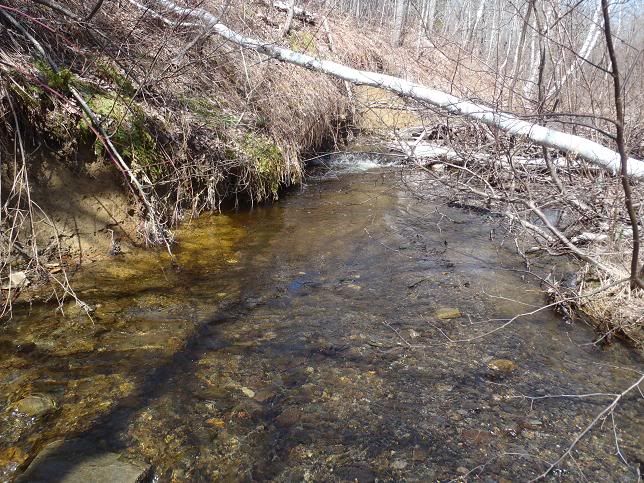
This stretch of a Maine coastal stream has many key fish-holding elements...a deep pool, a current break, an undercut bank, and even a nearby confluence with tidal water.
The spot yielded this fine early spring sea run brook trout for the author.
Riffles and pools are important structural elements of small streams.  As their gradients increase, streams quicken as they pass through shallower, faster riffle areas.  Further downstream, the gradient lessens, the current subsides, and depth increases into a pool.  At the downstream end of the pool, the depth decreases, the current picks up, and the next set of riffles marks the beginning of a repetitive stream bed pattern.  The eternal question with this and every other situation on the water is, “Where are the fish?”  The answer will vary with the stream flow, time of day, time of year, and other factors, with stream flow usually being the most critical. 

Fish tend to hold in predictable locations based on the stream flow.  As a rule of thumb, I’ve found that fish tend to hold in the large numbers at the head (upstream end) of a pool under lower flow conditions.  The same can be said of the tail (lower end) of the pool where currents increase approaching the next set of riffles downstream.  On the other hand, when flows are up from rainfall or snowmelt, the current at the head and tail a of pool tends to be swift.  Fish are no different that the rest of us…..they love food on their dinner plates, but want to avoid expending too much energy in getting those tasty morsels to their mouths.  Fish in pool and riffle sequences handle high water conditions by holding in the deeper, more placid sections of pools. 

The drop off into a pool below a set of riffles is a classic spot for pre-spawn fall brown trout.
This large brown responded to a well-placed crankbait.
At bends in the stream bed, fish also react to flow changes.  In low or normal flows, fish will tend to stack up in the deeper outside part of the bends.  On the other hand, the same current that scours out these outside bends to create what is normally good holding water, will become too swift for comfort after rain or snowmelt.  When flows go up, fish will often slide up into the shallower flats on the inside parts of bends.  This provides an important example of why you should cast the shallows first before wading in and potentially spooking fish. 


The small stream game is a multi-species affair.  Even crappie and white perch congregate in pools below riffles.
Smaller tributaries can be an ally in several ways when flows on the main part of a stream go up.  The confluence of a tributary and the main stream creates a relatively placid, fish holding eddy.  I remember a particular outing in May 2009 on the Androscoggin River in Maine.  May is still “early spring” at that latitude, and snowmelt is still very much a factor.  My buddy Dick and I had ventured out in his canoe on a pleasant Saturday.  Quite honestly, as good as his company was, I was thinking that yard work would have been a pleasant alternative (that speaks a mouthful for me) after having fought with the canoe in the current for the whole morning with only a fish or two to show for it.  We decided to tuck back into a protected cove to get out of the current for lunch.  The cove was located where a small tributary flowed into the main river, creating an eddy area.  Two bites into his sandwich and Dick’s glance fixed on the eddy, “Was that a fish?”  I turned in time to see the spreading rings of a surface swirl.  Lunch would have to wait, but it tasted a lot better after we’d brought a dozen or more quality smallies to hand. 

The author with a large smallie that was holding in an eddy where a small tributary entered a swollen main river.
Smaller tributaries themselves can give you a nice “Plan B” if you find a larger river unfishable.  They have smaller watersheds and won’t blow out as badly after a rainfall event.  In addition, if the water gets high enough on the main stream or river, fish will move up into the lower reaches of the tributary.  An outing with Fat Boy back in November 1985 comes to mind.  We had planned an outing during the week for late fall smallies on the Upper Potomac.  Vacation time approved, gear packed, and anticipation building.  What could go wrong?  Moisture-laden Hurricane Juan, that’s what and that monsoon muddied our plans as surely as it did the Potomac.  Never being inclined to throw in the towel in our fishing pursuits, Fat Boy and I were determined to make lemonade out of the weather lemonade we’d been dealt.  Plan A would become Plan B, C, or Z if needed.  The selected back-up plan of attack was to hit the lower reaches of a few tributaries to beat the main river blowout.  The first tributary we tried was what I call “high, fishable” and only slightly muddied.  Twenty five plus years have a way of muddying your memory more than that tributary, so I can’t recall with certainty which one of us scored first.  I do know that, “Fish on!”, “I’ve got another one”, “Good smallie”, and other simple phrases dominated our conversation throughout the day.  No need for deep, philosophical discussions on the meaning of life when the bite is on.

There are other factors that can trump all considerations for fish location in riffle and pool sequences on streams.  Forage fish like chubs will spawn literally right up in the shallowest part of riffles, with predators following them into the bony water.  One particular day in late April 1998 in Maine comes to mind.  Large brown trout pursued chubs up into spawning gravel, with their spotted backs breaching the surface as they chased their prey and made visible wakes as they homed in on a properly placed crankbait.  I shared that day with my buddy George.  George stays beyond busy as a restaurant owner, and we rarely get a chance to chat, let alone fish together.  Though whenever we cross paths, the conversation rarely seems to go more than ten words before we launch into our “remember the day” discussion about that blitz gone by.

I’ve also seen smallies drawn into shallow riffle areas to sip on diminutive mayflies that thrive and hatch in abundance in the turbulent, well-oxygenated water.  Anyone who doubts that smallmouth bass can be selective feeders has never fished for them in these situations.  “Matching the hatch” with Size 18 dry flies and getting the right drift in this scenario can be about as technically demanding as fishing gets.  But when your hook set into that little dimple of a rise leads to a heavy fish blasting off like a torpedo, all of the temporary frustration is forgotten. 

As critical as water levels are to stream fishing, it pays to check out stream flows when planning a trip.  I like to use the real-time stream flow data available from the U.S. Geological Survey at http://waterdata.usgs.gov/nwis/rt.  This web site provides a map that allows you to click on your state and access real-time stream flow conditions.  Dam operators and power companies often have hotlines or web sites where you can also access flow information.  While most of the flow data you obtain will be for main rivers, over time you will be able establish how the flows on the bigger rivers correlate with the flows on the small streams covered in this article.

As with any type of fishing, it pays to constantly seek ways to improve your game.  On small streams, in addition to mastering riffles, pools, bends, and other features, it pays big time to look for “spots within spots.”  For example, if a nice pool also has some wood structure, the potential for action will often skyrocket.  Wood provides shelter for both predators and prey, plus it is the focus for insect hatches and a “drop in” site for grasshoppers and other terrestrial insects.  In other words, wood is a fish magnet.

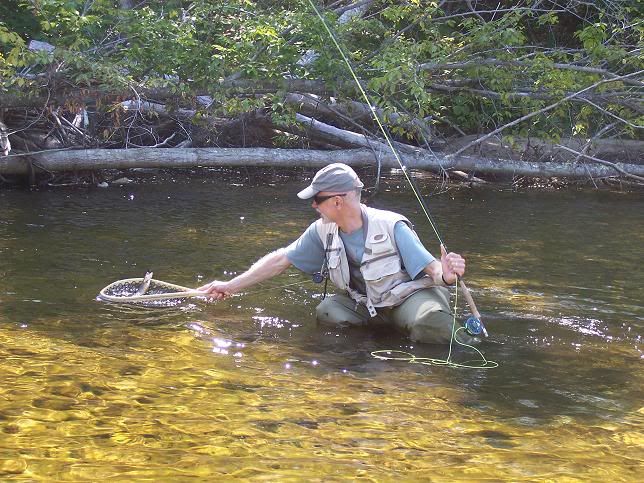
The author prepares to net a native brook trout that hit a fly drifted by a downed tree.
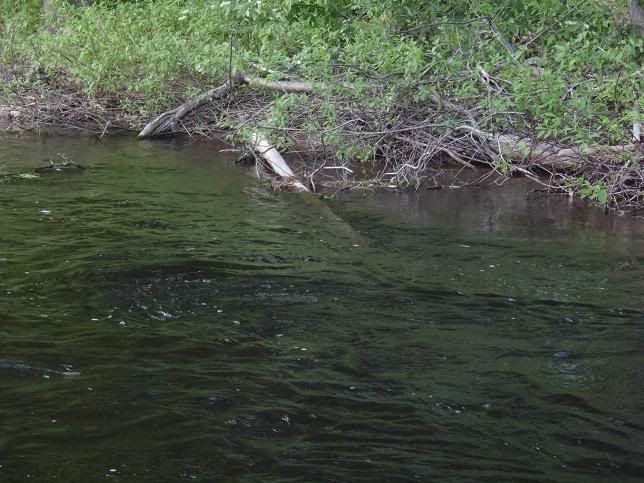
This current seam with the benefit of sunken wood looked fishy in full daylight.
The author returned at dark to entice this stocky brown trout with a dry fly.
It can also pay dividends to locate spring seeps, particularly during low water conditions in summer.  In addition to noticeably cooler water in the vicinity of spring seeps, their location will often be marked by lush shoreline vegetation.  In summer, fish will seek out the cooler water that springs provide.  At times of low flows, I’ve seen streams literally bone dry above significant springs, while at the same time having substantial flow below.  It can also pay to make a mental note of these spring holes for winter fishing.  The springs deliver ground water that remains at a relatively stable temperature when compared to surface water in the icy grip of winter.

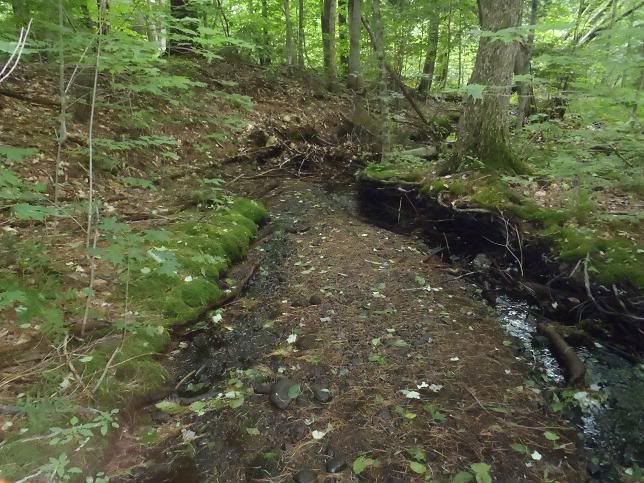
A dry spell left the upper reaches of this stream as dry as a bone in early August.
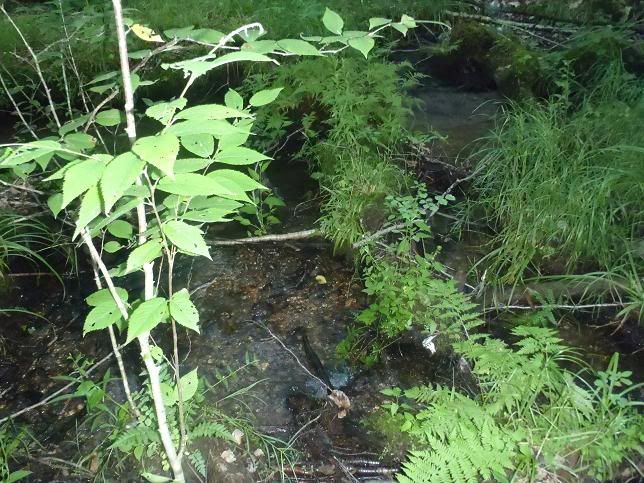
A mile hike through the woods led to a series of spring seeps which increased flow and created a veritable oasis.
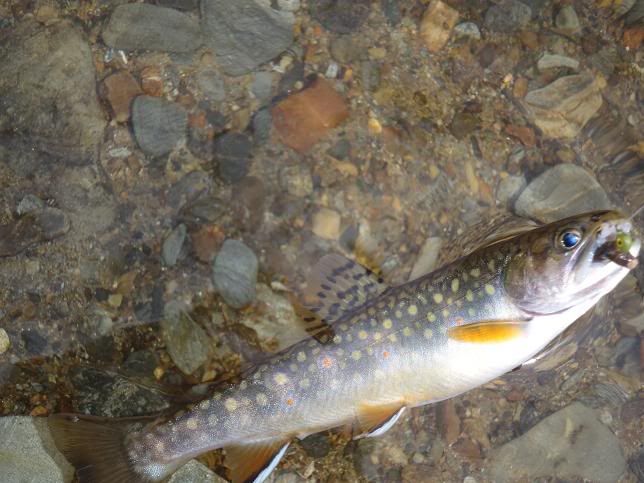
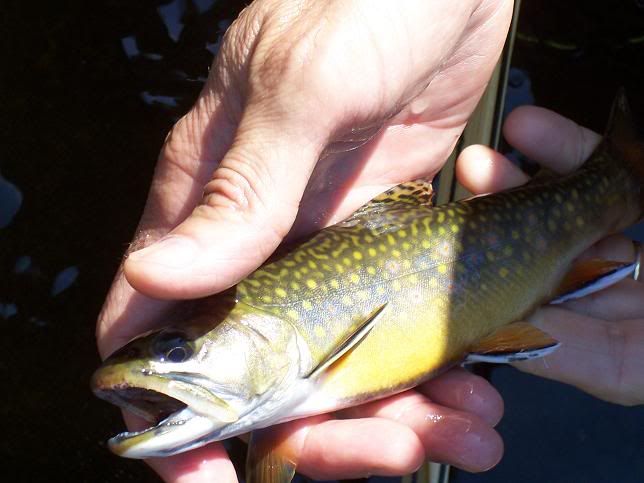
A gorgeous August brook trout caught downstream from a set of springs.
I’ve presented a few thoughts about the relationship between fish location, flows, currents, and other factors.  I hope you find the information helpful on whatever you call your home waters.  If Fat Boy will have me back to his blog in the future, I plan to explore water temperatures, seasonal considerations, safety, resource protection, record-keeping, and other items that will enhance your success and enjoyment on small streams.

Jim Cumming has written fishing articles for the Great Lakes Angler magazine amongst other periodicals.  I've known Jim for many years, and have yet to meet anyone with the passion for small stream fishing that he has, whether it be fishing for trout or warm water species.  I hope that you all enjoyed Jim's piece as much as I did, and look forward to his next article as much as I do. 

Jim, thank you for your contribution to my blog.