Tuesday, September 20, 2011

National Hunting and Fishing Day 9/24/11

You can celebrate National Hunting and Fishing Day on
9/24/11 by going fishing or hunting, or pay a visit to one
of the many organizations holding celebrations across the
county.  I'll be celebrating with the Izaak Walton League
Rockville Chapter in Germantown, Maryland.
Saturday, September 24th, 2011 is National Hunting and Fishing Day.  Make sure that you get out and enjoy this day by hunting, fishing, or visiting an organization that celebrates this day.  You can bring your family or friends and really have a good time as many organizations have all kinds of activities going on.  To find an organization near you that celebrates this day, please visit the National Hunting and Fishing Day website at http://www.nhfday.org/

For Marylanders and folks local to the Washington D.C. Metro area, celebrate this annual event by paying a visit to the Rockville Chapter of the Izaak Walton League in Germantown, Maryland.  They are holding an open house type of event that is free to the public, with lots of fun activities for family, including kids, and friends. 

I'll be there too with a booth displaying some of my fossil collection along with a station for kids and adults to sort through some material that I brought back from North Carolina to look for micro shark teeth and other micro fossils.  I'll be giving away a small sample of shark teeth to the kids that visit my booth too.  So, please come and have a good time! 

Below is the press release for our event:

Izaak Walton League of America-Rockville Chapter

NATIONAL HUNTING & FISHING DAY CELEBRATION

Germantown, MD -- The members of the Izaak Walton League of America-Rockville Chapter will be sponsoring a Celebration of National Hunting & Fishing Day, Saturday, September 24, 2011. Open to the public, this FREE event will run from 11:00 am to 4:00 pm at the IWLA-Rockville Chapter located at 18301 Waring Station Road, Germantown, MD 20874.

“Join us in celebrating the original outdoor challenge -- National Hunting and Fishing Day. It will be a family-oriented event, with free, fun and educational hands-on activities that everyone will enjoy. This is a great way to introduce youth and newcomers to outdoor sports while teaching them about the important role that hunting and fishing play in Maryland’s wildlife conservation programs.  It’s a perfect opportunity to create a better public understanding of hunting and fishing and to create a better public awareness of the important role that hunters and anglers have played in conservation and improving our natural resources,” said Theresa Daly, spokesperson for the Izaak Walton League-Rockville Chapter.

A few of the fun and challenging hands on activities you can try will be archery, trap shooting, fly-fishing, canoeing and kayaking.  There will also be opportunities to learn about many conservation efforts such as wood duck nest boxes, Save Our Streams monitoring, deer management, hunter safety and recycling at home and in the community.  Rocky Mountain Elk Foundation, Maryland Department of Natural Resources, Maryland National Park and Planning Commission, Montgomery County Government Department of Solid Waste, Maryland Deer Management Association, Trout Unlimited and other sportsman’s and conservation groups will also have exhibits. There will be displays of hunting and fishing equipment and demonstrations of outdoor skills. Kids, don’t forget to check out the junior archery, fishing derby, BB and black powder demonstrations.

For more information about the event planned for Germantown, contact Theresa Daly, NH&F Day Coordinator, 301-972-1645.

As the official home to National Hunting and Fishing Day, Wonders of Wildlife is the only hunting and fishing-focused facility that’s both affiliated with the Smithsonian Institution and accredited by the American Zoo and Aquarium Association.

National Hunting and Fishing Day, formalized by Congress in 1971, was created by the National Shooting Sports Foundation to celebrate conservation successes of hunters and anglers. From shopping center exhibits to statewide expos, millions of citizens have learned to appreciate America’s sportsman-based system of conservation funding. That system now generates more than $1.7 billion per year, benefiting all who appreciate wildlife and wild places.

National Hunting and Fishing Day is observed on the fourth Saturday of every September.

Thursday, September 15, 2011

To Fish or Hunt? That is the question...

It's a tough choice for me in the fall, to choose
to bass fish or bowhunt for whitetail deer.
In my home state of Maryland, today marked the opening day of whitetail deer bow season.  For years, I'd burn a couple days of leave and head to the Western part of the state for some camping and early season bowhunting along with some of my local friends, and some that came down from Pennsylvania.  I had some great times and some fun hunts for several years.  Over time, some of those friends have grown apart due to family and work demands, and the annual camping trips became less annual, and eventually stopped.  I miss those days.  But, my urge to get in the woods still lingers.  These days, I'm a bit of a loner now when I hunt, making short trips to local spots.  Every now and then I'll hunt with a buddy, but they have teenage kids that occupy their time with high school sports, much like the experiences I had the past several years.  My daughter's grown now, in college, and is playing for her college softball team, so I'll be busy watching her a few times this fall.  But the most problematic influence on me NOT getting in the woods during early bow season has nothing to do with any of that any more, it's my drive to catch fall bass.  In other words, I'm torn between two of my favorite things to do.

I used to balance my problem by taking a few days off to hunt on the camping trip, and fish the Sunday of that opening weekend.  For me now, taking a few days off this time of year is out of the question, as it's one of the most busy times of year for me at work.  Growing up and being responsible has it's drawbacks!  So, I'm limited to weekends, and with family demands, that means choosing a day to either hunt or fish.  In recent years, I'd play it by ear, see who wants to fish and where, look at the weather forecast, and make a decision on which way to go.  This year, they're calling for cool temperatures this weekend, yet, I have a buddy that would like to fish, setting the stage for a tough decision on my part, and I've still got a huge urge to catch bass.

I guess it's fall now, I'm not sure, I can't ever remember when the season officially changes.  But the days are getting shorter, and the weather is changing.  I hate hunting in hot weather, but even when it's somewhat cooler, early season, I prefer to bowhunt without using a headnet and full body armor protection from those pesky annoying mosquitos.  They have deet products now that are supposedly scent free, but I don't believe it.  And, when it's hot, I sweat like a pig, and even if I may or may not smell like one, I certainly have this feeling that no matter how much I try to stay scent free, I have this feeling that every deer in the area can smell me.

Still, some of my most successful bowhunts have been early season ones.  Typically, I'd take a doe early on to put some tasty venison in my freezer.  At some of my favorite early season spots, on public and private land, I have some favorite trees that I like to climb using my portable tree stand.  By the way, I really like my Lone Wolf climber, they are light and don't creak, and pack very flat.  The only thing you need to bring is a nice cushion to sit on, because that's one thing that they lack.  And with my tailbone becoming more exposed as a result of the atrophy of my butt muscles due to my increasing age, the importance of the cushion each year has become the utmost importance.  These favorite trees are my favorites for various reasons.  I choose trees that I can have decent shooting lanes and visibility, but still have enough cover that deer can't spot me in the tree.  Unfortunately, visibility in early season isn't like after the leaves fall, and the deer can sneak up on you quickly and quietly.  Therefore, being alert is of utmost importance, because your window of time to get that good shot is a bit shorter.  Pre-season shooting practice, even better if you've done it all year long, really can make the difference this time of year in having the confidence to get that good shot.  And there aren't many experiences than bagging a deer with a bow during early season.  My special seasoned grilled tenderloin venison is proof enough of that...ask anyone who has tried it, especially mine!

Most bowhunters exclusively bowhunt during hunting season, and fish very little, but frequent the fishing holes during spring and summer.  When they vacate, they're leaving more room for anglers like me to take advantage of the feeding binge that occurs beneath the surface.  Bass, like many other warm water fish, sense the change in the seasons and they shorter days, and begin to fatten up on their favorite prey items, often wtih gluttonous abandon.  That translates to some of the best fishing of the year in my book.  I've been part of some awesome bass fishing bites this time of year, catching both size and numbers. 

So, while the waters we fish are less populated by anglers due to the start of hunting season, anglers could be missing out on some of the best bowhunting of the season.  Deer are a bit off guard this time of year, after having most of their woodland home pretty much free from human intervention.  They aren't expecting us, unlike late season, when deer have learned to search the trees for humans.  Some people don't believe that whitetail deer are capable of that, and I was one of those people, but I've witnessed it.  Anyone that bowhunts on public land has witnessed it too, and if they haven't, they will soon.  During early season, rut hunting tricks are ineffective for the most part, so leave your hormone type scents at home, and your rattling antlers too.  The only tools that I've found to work during early season are grunts and bleats, and if overused, you'll chase the deer away.  One bleat or grunt might help bring a deer in range, maybe two at the most.  Deer routinely vocalize to each other, but not often, so if you are any different than what they normally hear this time of year, your efforts can backfire and all you'll see are white fluffy tails waving at you and snort calls in return warning all other deer in the area of your presence. How exactly has using a call worked for me in the past?  It worked twice, that's it.  Twice.  During both times, I had deer within range and couldn't get a shot.  As they moved away from me, I grunted once, and they stopped and hung out longer, and eventually I was able to shoot a doe that may have walked away otherwise.  The year before that, a bleat did the trick.  That time, I had two does around me, and they stopped and reversed direction on the bleat, and nearly came right to my tree.  I saw a buck appear a few minutes later, so I thought that I'd try a grunt to keep him from moving away, only to have all three deer run and snort away.  The message is that it may work, but it could work against you.  I've come to think that I'm better off being scent free, blend in, and be unnoticed.

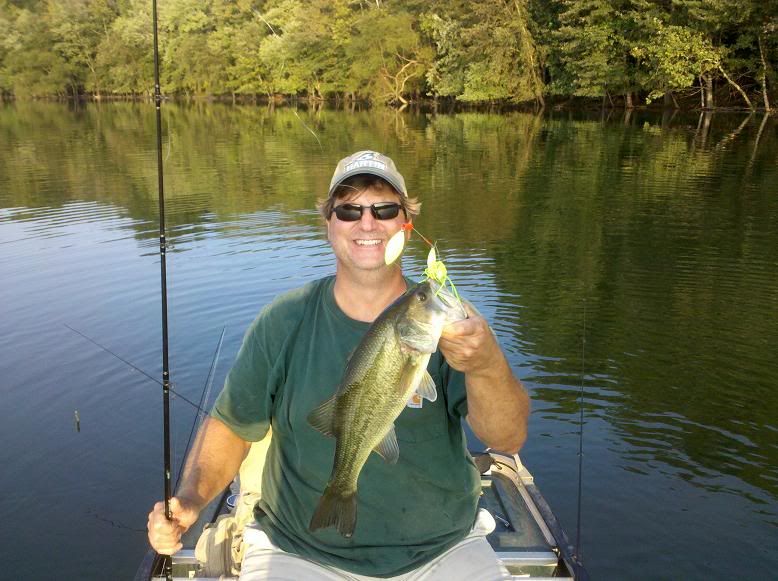
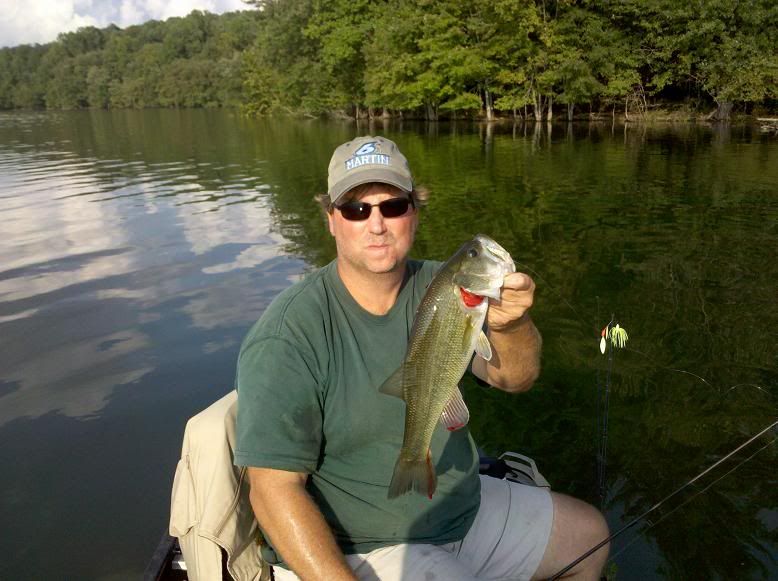
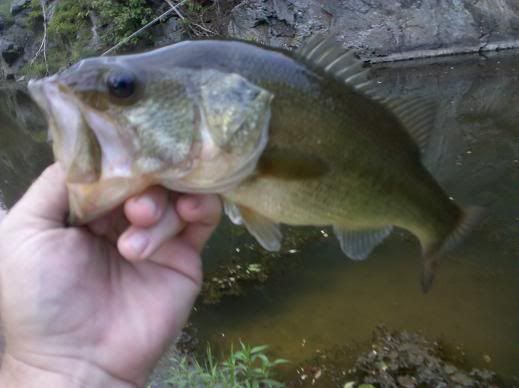
My buddy Howard boated this nice largemouth last weekend
while tossing a spinnerbait across an underwater hump.
Meanwhile, while folks like me are sitting in trees, anglers are pounding the banks in search of active largemouth or smallmouth bass.  Bass probe lake shallows along ambush points like points and underwater humps, islands or bars, or hold along woody cover if you can find it.  Reaction lures, like spinnerbaits, tempt good sized bass and allow you to cover a lot of water quickly.  Crankbaits, both lipped and lipless, are extremely effective search baits.  In reservoirs with a shad population, schooling bass can hardly resist a shad imitation crankbait.  Crankbaits are very versatile, allowing you to cover multiple depths, speeds, and by varying retrieve cadences by stopping and starting the lure, you can draw some pretty violent hits and land quality sized bass.  Suspending crankbaits are also very effective, allowing you to stop your retrieve leaving the lure holding at a desired depth, and bass often strike when the lure is at rest or on the very next little bit of movement.  Rapala Flat DT crankbaits are very good for this presentation, and come in a versions that dive to three, seven and nine feet.  Lipless sinking crankbaits are also great search baits, and are very versatile as well.  You can cast them out, let them sink while counting down to a specific depth, and crank them back.  You can cast them out and work them back right away near the surface.  Or, you can allow them to sink completely to the lake bottom, then jig them back in a yo-yo fashion.  Bass often strike when the lure is on the fall, so watch your line closely while doing this.

Howard found that this chunky largemouth bass fell for a
Texas rigged plastic worm fished over a reservoir hump.
Soft plastics also work well in the fall, especially on days when the search lures aren't drawing strikes.  Shaky head rigs, and Texas or Carolina rigged plastic worms will allow you to effectively work the bottom, while drop shot rigs will allow you to catch bass that are suspended just off the bottom.  Skirted jigs, jigheads teamed with twister tails, tube jigs, and jigging spoons can also help you locate fish on deep water structure.  Twister tails, or grubs, also make great search baits allowing you to cast, jig, or retrieve them and cover a lot of water.  Sometimes you can simply swim them straight back and find a few schooled bass in search of shad.  You can also attach jig spinners and turn them into a spinnerbait.  Jig spinners are spinner blades on wire arms that clip to the jighead, creating a spinnerbait.  In line spinners also work quite well as search baits for bass and other species in reservoirs.  These often overlooked lures can be worked at various depths and speeds, and readily put fish in the boat.  You can catch quite a mixed bag of fish using them, and when bass aren't biting, other species can make your day.  I've caught trout, bass, sunfish, perch, pickerel, crappie, pike, rock bass, walleye, and even catfish on in-line spinners in the fall.

What about lure colors in the fall?  Of course, chartreuse works all year round.  A guide local to our area, Glenn Peacock, used to have a saying, "If it ain't chartreuse, it ain't no use".  I always loved that saying.  I only fished with him one time, and we had a great time.  He put us on fish too, and some big ones, along the Upper Tidal Potomac.  Anyway, that saying always stuck with me, and there is some truth to it for sure.  Colors that match the natural forage of your lake will tempt bass, but one color seems to always rise to the occasion in the fall for me, especially when fishing spinnerbaits and twister tails, and that is white.  Why?  I don't know.  Perhaps the visiblity, drawing strikes when bass are the most active and can see it from a good distance away in clear water?  Perhaps it's because it's the most visible color when waters are murky? And, for bottom soft plastics, black or chartruese when the water is murky, or green pumpkin or watermelon work well during clear water.  Any natural color will work, and others include smoke, pumpkinseed, motor oil, or root beer can be effective in clear water.

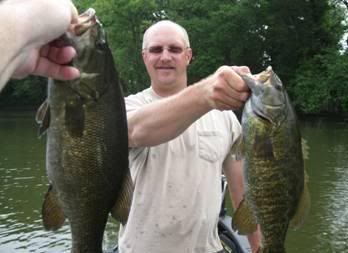
During the fall, fat smallmouth bass might show up as
"doubles" as my buddy Bob and I found out on the Susquehanna
River not long ago.  These fish fell for spinnerbaits.
In addition, smallmouth bass in rivers become extremely active, and can give you some of the best fishing days all year long.  They are also fattening up for the upcoming winter, binging on minnows, crayfish, insects, and anything else that the river currents deliver to them.  Just about any lure will take smallies this time of year, but when they are super active, nothing is more fun for me than tossing the white tandem spinnerbait. They hit them so hard that the bigger ones bend them out of shape, leaving you with a twisted heap of wire, lead and metal sometimes.  Ah, I love it!

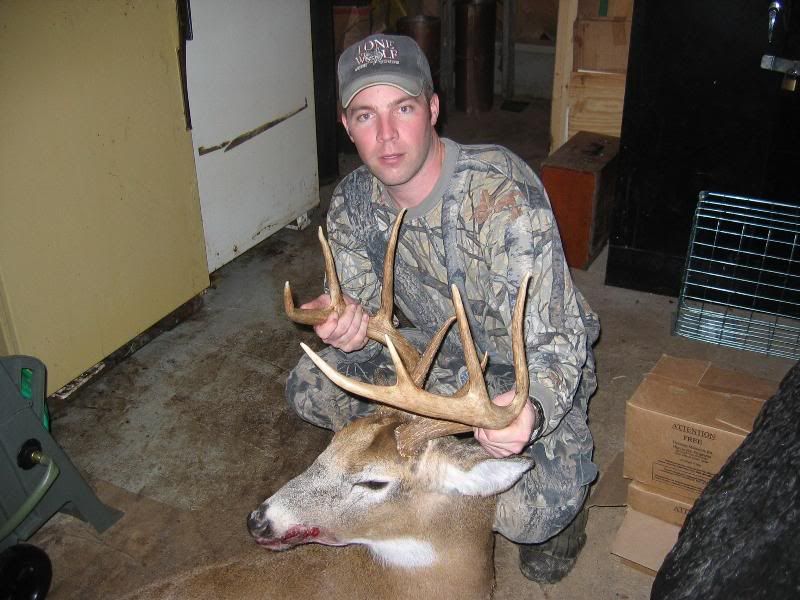
Bucks like this one that my brother shot in 2005 with his bow
might walk by your early season stand unaware of humans
invading their woods in a new hunting season.
OK, so what will keep me off the water, away from my fishing addiction?  Not much really, except perhaps a great bowhunt when the weather is right.  Cool crisp fall mornings, nice sunny post cold front days when the fishing might not be as good tend to result in great days in the woods.  Let's face it, I'm an angler and a hunter, it's friggin' hard to choose folks, and often my choice rides on just a whim of what I'm thinking about the most on any given day.  In the past, I had planned to hunt an upcoming early season day, even having all my scent free pre-hunt preparations done (see my hunting stories to read about my nearly anal anxiety about scent free preparation), only to have a friend offer me a spot on his boat to a location that I'd never pass up.  Such problems for an outdoorsman to have, eh?

Wednesday, September 7, 2011

New hunting story posted - "Sometimes it Pays to be Lucky!"

I posted another hunting story, titled, "Sometimes it Pays to be Lucky!" Click Here
This fine buck pictured was one of my favorite stories.  I didn't expect to bag this one, he came up on me by surprise. I also have a field shot embedded with the story about this hunt as I found him after the shot.  Enjoy!

Tuesday, August 30, 2011

Nanofil Product Review: Update

Last week I wrote about my first impression of Nanofil fishing line.  When I purchased this line, my plan was to use it for finesse plastics on largemouth bass.  I purchased the six pound test, that has a thin diameter comparable to two pound test.  I wanted maximum casting distance, minimum visibility, and the most strength possible given the first two qualities.  I only logged one hour of fishing time, and in a nutshell, I was impressed with the line that it exhibited the above qualities.  It seemed strong, casts very well, the fish didn't seem to mind the visibility, and it had similar qualities to other superlines.  I was able to fish a few more hours last night, with mixed results this time.  Basically, all of the qualities that the line exhibited the previous trip were still apparent.  The only thing wrong was that I broke off four times on the hookset. 

This largemouth bass nailed a four inch ringworm through
a weed mat using Berkley Nanofil line.  My plan was to hop
the lure over the weeds and drop it off the ledge, but the
bass had other ideas exploding on it through the mat.
Now, before I go on, let me explain that I've found this same issue to be true with all of the superlines that I've tried with that same small diameter, including Fireline, Power Pro, Spiderwire, and Suffix 832.  I solved the problem with those lines by increasing the pound test and diameter, sacrificing some of the castability of the line for strength.  I've also had issues with fluorocarbon lines doing this in the past, but changed brands and upped the pound test and haven't had problems since.  So, the problem is the only one that I've noticed so far, and I believe that the problem can be solved by taking that same approach.  So, my plan is to purchase and test either the eight or ten pound test Nanofil line.  Which one I purchase and test depends on how it feels when I pay a visit to the store.  A nice feature of many of the superline brands is that they attach a sample of the line and pound test to the package so you can get an idea what it's like prior to purchase.

One of my first bass last night caught using Nanofil.
What will I do with the thin two pound diameter version that I have now?  I'll use it until my new line arrives, and I'll solve the immediate problem by just being aware when I set the hook to not set it too hard.  Let me say that I wasn't putting out bone jarring hooksets last night.  I used the same short quick snap hookset that I've always used with superlines in the past, but just doing it a bit more gingerly.  Admittedly, I was frustrated after losing those four fish, but it wasn't the end of the world.  I was sight fishing and the fish that I tried to catch were not all that big to begin with.  And, to correct the problem, I cut back on the power that I put into the already short hookset, and it worked out just fine.  

This nice bass was caught using six pound test Nanofil.
What about the strength of the line?  I have yet to lose a fish via breakoff during the fight, and I've pulled some decent bass through the slop (weeds galore) without any problems.  So, the actual strength of the line is fine.  Also, every now and then the line will wear and fray at the end, so I had to clip off a couple feet as the evening wore on.  In fact, the instructions included in the package recommend that this be done once in awhile.  This is no different than when I used mono or fluorocarbon in the past. 

So, how did I do fishing last night?  I can't have this post be totally about a product, so I have to include some fishing pics.  I finished with nineteen largemouth bass in three hours and a rock bass, seventeen of which came via the plastic worm on Nanofil.   The other two bass came via a Strike King Tri-Wing Buzz King buzzbait that I modified by adding a clacker to produce more noise.  Of the nineteen bass, my biggest six bass were 20, 19, 18, 17, and two 16 inch bass, plus a good many bass in the thirteen to fourteen inch size.  So, it was a fun night indeed.  Not bad for three hours of fishing!

A nice "Slop and Drop" largemouth.  This is the same fish
shown in the first picture on todays post.
One of the techniques that worked as a substitution for a frog pattern that I term "Slop and Drop" to my fishing buddies.  I didn't have my frogs with me, and plastic worms work nicely.  Basically, when you have a mat of weeds or leaves, you cast your lure on the top of the weeds and jig your rod tip quickly while reeling slowly, causing the bait to hop like a critter across the mat.  Usually, I'll do this with a frog lure, like many people do, but I didn't pack any last night (forgot them), and had to do it with a plastic worm.  You have to use light weight to accomplish this to keep it on top of the mat, kind of the opposite of punching.  The cool thing is that the light bullet sinker bounces up and down on the mat, making vibrations, that make this technique very effective at times.  You can also use it with other soft plastics, in fact, Chompers twin tails work great at this.  Then, when you get to the edge of the mat, let the lure drop off the edge.  The light weighted soft plastic bait falls slowly and draws strikes when faster falling baits might not.  So, at least a dozen or so of my nineteen bass were caught this way.  In some cases, as the lure falls off the mat, you can see the bass shoot out and take the worm.  If they are big, man is that exciting.  One of the bass couldn't wait for the worm to get to the mats edge and just exploded through the weeds.  The light Nanofil line held up nicely on many of these fish, bringing in the "salad" with the fish.

My buddy Howard with a nice largemouth caught last night.
My buddy Howard and I found one large mat of weeds that had several fish underneath.  I caught six in seven casts, and finished fishing that mat with ten of my bass landed.  Howard caught six fish out of that hole too.  Many of those fish were keeper sized, and most of them came via plastic worm and the "Slop and Drop".

As daylight ended, it became tough to see what we were doing with the worm, and the fishing seemed to slow, so out came the buzzbaits.  I caught a fish on my first buzzer cast, a chunky fourteen incher.  I fan casted the spot without a hit, so I thought about all those fish under the mat.  I tossed my Tri-Wing modified Strike King buzzer to the back edge of the mat, cranked and had it moving as soon as it landed so as to not hang up on the weeds, and skittered it across the mat.  The buzzbait cleared the mat and not two feet later, KERSPLOOSH!  A fat nineteen inch largemouth hammered the buzzer.  That experience was so cool and I was so fired up after landing that fish, that I hooted and hollered so loud that I believe that I spooked every great blue heron along the river for at least a mile! 

This fat bass hammered my buzzbait last night.
That was my last bass of the evening.  Howard caught two more on the buzzbait and had several huge blow ups, and I had a couple blow ups but didn't hook up.  It was a very productive evening at one of our favorite places to fish especially on the weeknights.

In summary, I still have a lot of questions about Nanofil line, but so far I'm pleased with the results.  Part of the hookset breakoff problems were my fault, both by purchasing a thin diamter that I knew might be risky for my technqiue, but also by putting too much pressure on the hooksets.  Part of that is getting used to the line, and learning it's strengths and weaknesses.  And, this learning experience taught me what I have to do next, and that's to purchase the pound test that is best for the job.  I won't give up on the two pound diameter though, because I think it could be a great line for winter ice fishing.  I will provide more information as I experience this product in the future.  Hopefully for now, you'll benefit from my experience with it, albeit for a short amount of time.  Also, I hope you enjoyed my report of last night's fishing experience.  It's a night that I won't soon forget.

Saturday, August 27, 2011

Berkley Nanofil Product Review and Fishing Report

I've been slow on the blog write ups primarily because I've been out fishing as much as possible.  So, with hurricane Irene heading our way in a matter of a few hours, I figured the next best thing to fishing would be to write about fishing.  All I can think about is my last fishing trip, which was pretty good given the amount of time that I had to fish.  So, I'm going to write about that trip even though it only lasted an hour and a half or so.  One of the reasons that trip might be special is that I recently purchased a spool of Berkley Nanofil.  Yeah, I heard the hype about this line that is supposed to cast further per diameter than any other line.  I've heard claims about various braided lines in the past and have found that they aren't a lot different than standard mono when it comes to casting distance.  Plus, Nanofil is touted to have the same qualities as the other superlines, being low stretch, high strength per diameter, and durability.  When I set out to start this blog, I set a goal to not do product reviews.  I'm not endorsed by anyone, nor do I want to be.  I want to fish without any ties, to be unbiased and to work with what I feel are the best products.  But in this case, I felt that this product warrants my analysis.  Nanofil differs from other superlines because it's not constructed the same way.  Rather than having strands of microdyneema fibers and other fibers either braided or fused together, Berkley labels Nanofil as a uni-filament.  The next paragraph is the promo from Berkley, what they say about their new line:

"Not a Mono. Not a Braid. The Next Generation of Fishing line. NanoFil is made out of gel-spun polyethylene, much like a superline. This ultimate spinning reel fishing line consists of hundreds of Dyneema® nanofilaments that are molecularly linked and shaped into a unified filament fishing line. Dyneema, The World’s Strongest Fiber™, gives this line superline type strength and our uni-filament process makes it feel and handle like a smooth monofilament."

I caught this small bass using the Nanofil line/worm combo,
 all of the fish were this size (11-12") that I caught using it last night.
OK, I had about an hour and a half to fish.  The water was gin clear.  I caught seven largemouth using the Nanofil, and I didn't lose a single fish.  I'd like to think that was due to my fishing ability rather than the line, but I'll let y'all draw your own conclusions.  I fished from shore last night, and with the water so clear I was sight fishing.  Every fish that I saw except one, I caught.  The one that I didn't see was interested, but didn't strike.  (Edit:  let me explain, I didn't see the fish before my cast, until it poked it's head out of the weedbed, nosed my worm, and then decided not to bite).  I was using a 4" plastic worm, light weight, light wire worm hook, and 2 pound diameter 6 pound test Nanofil.  It casts like a dream, much further than any other braid or fused line that I've ever used even of the same diameter.  It's far more smooth than other braids, and shoots through the guides with ease.  It was so smooth that it almost felt weird, and it casts so far that I actually over shot my target a few times until I got used to it.  Like other superlines, it has no stretch.  I think that Nanofil is stronger than the pound test rating.  You don't need a massive hook set, just a quick snap of the wrist and the hook is driven home, just like other braids.  Even though the line is white, I didn't see it in the water hardly at all, but granted it was low light conditions the last hour prior to dark.  The fish definitely didn't care.  The action of the plastic worm looked great as it should with this bait.  I had no problems at all with loops coming off the spool, "wind" knots, or anything like that and I think that I even overfilled the spool.  So far so good.  I know that this little bit of testing isn't much, but so far I'm very impressed.  Time will tell if further experiences are positive or not.  I'll report back later after extended use.

I caught this nice bass on my third cast with a modified
Strike King Tri-Wing Buzz King buzzbait.  The modification
is the clacker that I added to give it that much more noise.
I could have kept catching that size fish the entire time, they were cruising everywhere.  They were on the hunt, as if preparing for the massive storm that was on it's way up the East Coast.  But, I switched tactics right at dark for two reasons.  One, I started seeing frogs everywhere.  When they become active, so do the bass.  And, I began seeing quite a bit of surface activity.  It wasn't as if fish were chasing minnows, but the shorelines became agitated.  It's the same kind of surface disturbance that you see when you walk up on a bass and spook it...except, these fish weren't spooked.  To me, that kind of activity should be fished by something big, loud, and fast to cover more water, so I went to a buzzbait.  It's not that the finesse pattern wouldn't catch big bass, but during the last hour of daylight, search baits, like buzzbaits, work a bit better in tempting big bass into striking.  I was working a weed patch when, on my third cast, a fish slurped my buzzer.  I managed to land that fish, a nice twenty one inch largemouth bass, although it seemed to be all head, and no belly.  This bass resembled those Lake Erie largemouth, all head and not a lot of weight.  Still, it was a quality bass. 

Here's the same fish.  I carefully laid her down on the weeds
to snap this photo.  All head and no belly, probably an older fish.
I'm dedicating the catch of this bass to Tom Boyd, who writes
the blog "Fishing with Dad" linked to the right.  Tom is at home
recovering from knee replacement surgery.  Here's a bass
for him to keep his spirits up during his long painful recovery.
I tossed a buzzer for about 20 minutes more, working the weedy and woody cover thoroughly.  I had three more blow ups, but the fish seemed way behind the lure.  I tried following up with my finesse rig, but the fish weren't interested in that once it became dark.  I decided to call it a day and look forward to the next outing.  Not too shabby, eight largemouth bass in a little over an hour, including a nice one.

Up until I tried the Nanofil, Suffix 832 seemed like the best casting line of the braids that I've been using.  I've fished with Power Pro, Fireline, and various Spiderwire versions.  All of them were pretty good, but none of them really stood out over the other until I tried the Suffix 832.  How did the Nanofil compare?  Nanofil casts much better for the same pound test, it's thinner too.  It's not as stiff as 832, is much more limber than I expected, and seems to come off the spool and through the guides smoothly.  Casting was effortless with the Nanofil.  With the 832, I had to put some oomph into my casts just to get close to the distance.  So far, the Nanofil was pretty tough and handled the fish nicely.  It's still early in my analysis though. 

So, for the future, I'll keep testing this line.  I still have questions to be answered:

How durable is this line after hours, days, or weeks of use?  I've only put an hour of use on it so far.

What issues with the poundage/breaking strength might I have?  I may not have any problems.

What about line twist, coils, memory, "wind knots", and other problems after the lines been used and on the spool a while?

How will it perform using other lures and techniques?

How will smallmouth in clear streams react to the visibility of the line?

So far, I like this stuff a lot, especially for jigging with finesse plastics.  But, only time will tell when it comes to answering these questions.

Suffix 832 withstood all the tests and only one time did I have to switch to fluorocarbon to get bites.  I wonder if the Nanofil will be as successful.  I will report back after a few trips, but so far, I think it's worth the investment.

My last question is, what will happen if this becomes the line that everyone is trying to beat technology wise?  Can you imagine?  The fishing line technology race may result in a superline that runs clear like fluorocarbon!

Thursday, August 18, 2011

Shore Fishing for Largemouth Bass

There are tons of fishing magazine articles detailing strategies and tips on fishing for largemouth bass from a boat, and only once in a while do you see articles about shore fishing strategies.  Not everyone owns a boat, and I wouldn't be going out on a limb to say that the majority of bass anglers don't own a boat.  For them, shore fishing is the way to go.  Many shore anglers feel that they have a disadvantage, and in some instances that's true, but there are advantages to fishing from the bank too.  I'm going to discuss some of the strategies that my friends and I employ to catch more and bigger bass.

My fishin' pal Howard with a dandy largemouth caught from
the bank, tossing a plastic worm around weedbeds.
First, let's discuss a few tips that will enable you to effectively fish from the bank, then we'll move on to specific strategies.  I like to have my hands free as much as possible, yet have the ability to carry the tackle that I need to do the job.  Being mobile is an integral part to my strategy, which allows you to cover more water, save time, and get some extra casts in.  Time that your lure isn't in the water is time not catching fish.  You can carry all your tackle and other necessary items in a backpack, fanny pack, fishing vest, or a combination of any of the above.  Later in this post, I'll discuss in detail specific items that I feel are essential on any shorebound fishing trip. 

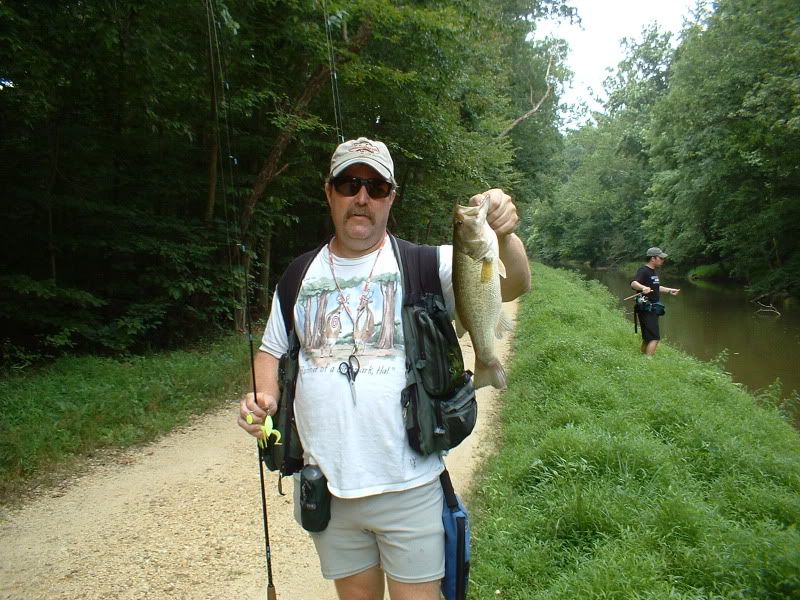
I like to carry two rods, each with a different purpose.  That purpose and how many rods you carry of course is up to you, but I prefer to have a rod with some power to toss bigger baits, like jigs, spinnerbaits, and buzzbaits, and also a rod to finesse fish with soft plastics or lighter lures.  You can adapt as needed, but for an average trip, I'll carry a six foot six inch medium heavy power fast action graphite baitcasting rod and reel combo spooled with 15 pound fluorocarbon line for my bigger lures.  And, for finesse fishing, I'll bring a medium power fast action graphite spinning rod spooled with eight pound fluorocarbon line or thin diameter braided line.  Of course, if you have a different pattern in mind that requires a specific application, then feel free to adapt as needed.  You may opt to bring a flipping/pitching rod, or a frogging rod, or perhaps two finesse rods or power fishing rods.  It's up to you, but the point is to have two rods set up with different presentations.  The reason that I prefer to bring both baitcasting and spinning outfits is so that if I miss a fish on a power presentation, I can follow with a finesse presentation to catch that bass.  Now, remember what I said about keeping your hands free?  You can certainly move about with two rods and fish hands free, but that may involve setting a rod down or lean it up against something while you fish.  That's OK, but bending over a lot wastes time, and that mean less casts and perhaps a sore back at the end of the trip.  So, I've come up with my own way to be able to stand upright and have both rods available to me where I can get to them rather quickly, both rigged with different presentations.  I accomplish this by having a large clip on the back loop of my fishing vest, where I can clasp the rod blank with the clip and let it dangle behind me, out of the way.  You simply clip it below the guide close to your reel.  You nave to be careful about casting directly overhead though, but for me, I have learned to cast from different angles anyway, for various reasons including that one.  I'll get to that later. 

Noticed the rod clipped to the back of my vest.  In this case,
I'm using my baitcaster and my finesse spinning rod is
clipped to my back.  My brother Kyle is in the background,
his rod is being supported by his fanny pack belt.  This
keeps our hands free and allows mobility to find more bass.
What about damage to the rod?  I've done this for nearly 25 years now, and have never broken a rod as a result of wear from clipping the rod to my vest, and the only damage that I've ever seen was cosmetic damage to the finish.  That said, clipping directly to a guide on a rod will cause damage, so I'd avoid doing that.  If you're worried about damaging your rod, try a means of attachment with a softer surface, perhaps a velcro strap or something like that.  Or, if you're really worried about it, you could have a set of rods that are rather inexpensive to designate for shore fishing and save your more expensive rod and reel combos for boat fishing.

What advantages would you have by fishing from the bank over a boat?  Well, other than the obvious cost difference, there a couple things that give you the edge from shore.  You don't drift, so movement of the boat is not a factor on your presentation.  Plus, you spend less time controlling your boat and it's easier (in some cases) to position yourself to cast.  I truly believe that this alone allows you to work a specific area more thoroughly than your average boater would, maybe resulting in bass that a boater may overlook.  Obvious disadvantages are that boats can reach bassy spots that you may not be able to, either because of shoreline access problems or fishy areas away from shore.  Conversely, I could argue that you could reach places that most boats may not be able to go.  Another advantage is that often, you can save your cast.  What do I mean by that?  Well, let's assume that you're fishing a particular piece of cover, and you envision a beautiful cast beyond the cover that will run right by it resulting in a big bass.  But, in reality, for many reasons, your cast is slightly off target, and if you stand there and crank it back, your lure will miss the strike zone.  But, alas, all is not lost, you can "mend" your cast beyond your rod position simply by moving your feet a few feet one direction or the other, and thus your lure runs right where you want it.  In a boat, you'd have to move the boat, and that's fine if you have that control (and, it's easier said than done), but what if you're in the back of the boat?  Finally, back to the cheaper cost thing, you don't have to pay a lot of gas money beyond getting to the lake.  And, it's easier to change locations, meaning bodies of water, because you don't have to pull the boat out.  I'm not trying to say that shore fishing is better, because having a boat is the ultimate in comfort, storage, and access.  Rather, I'm saying that it's probably much better than you'd ever have thought it could be.  Another disadvantage is that you have to make sure that you're using lures that you can toss in heavy cover and be willing to lose, while in a boat you might have a better chance of retrieving your lure.

Sometimes when you snag your favorite lure, you might have
to get wet and go after it, or just break it off and hope some
kind boater, kayaker, or canoeist retrieves it for you.  In this
case, I wasn't about to lose my favorite fish catching buzzer.
On the subject of losing tackle, to catch big bass, often you'll need to put your lure at risk by pitching it into heavy cover.  So, the best lures for shore fishing are either those that hang up less, or those that you're willing to lose.  But, you can take steps to reduce that by the tackle choices you make.  Fishing heavier line or heavy braid on baitcasters will enable you to free most of your lures.  When they wrap around branches or vines however, you can pretty much kiss your prize lure goodbye most of the time.  Still, there's a chance that you can still get them back, so don't give up.  For finesse presentations, as long as the water clarity permits, small diameter superlines will also enable you to free many more snags, sometimes even straightening the hook.  Be advised when using braid, not to pull the line to free a snag with your hand.  If you have never used braid before, it could cut your hand.  So, use a thick stick or something to wrap the line around and pull with that.  If your perfect cast isn't so perfect because of that limb that you didn't see, and your lure dangles over it, you can free it by letting it hang about a foot under the limb, and if it's still swinging so much the better, time it so that the momentum of the swing of the lure is going the direction to free it, give your rod tip a quick short snap back to flip the lure back over the limb.  Sometimes you can actually save the cast and it could turn out positive for you.  Also, sometimes if the lure is dangling into the water over the strike zone, and the limb is relatively light, a bass may still hit your lure and hook itself and it's weight could pull your line free from the limb.  Not only could you retrieve your lure but you get that bonus fish too!  So, don't panic when your lure winds up over a limb, especially if it's weedless, because you may be able to actually vertically jig that lure on the surface and provoke a strike!  If snagged undewater, it's possible to use the bow string technique to free your lure.  Tighten up your line, then using the rod put some additional pressure on the line, then grab the line with your free hand and pull it back like a bow string about six inches to a foot, then let go quickly while easing pressure on the rod, and your lure may come free, especially on rocky cover.  If it doesn't come free right away, try doing it from a different angle.  Don't give upon the first try, keep at it and you may still get your bait back.  If you successfully retrieve your lure, then make sure that you check your line and retie as necessary.  When using heavier line or braided line, that extra pound test may allow you to pull a limb or small log out the snag to the point that you can reach it and free it.  We jokingly call that technique, "rearranging the cover".  Of course, it's not by design that you're ruining the hole for the moment, but you have to look at the bright side.  Often such situations are inevitable, because even if you try to break it off and save the spot, the power of the line may prevent you from doing it stealthily.  Another way to reduce snags and increase fishing time is to select weedless style lures that hang up less.  And finally, on this topic, practicing your casting will improve your odds for success in catching bass and reducing tackle losses.

Quality bass can be caught from shore on a regular basis.
 What types of lures do I carry on a regular basis while shorefishing for largemouth bass?  For my power fishing, the most weedless big bass catching lures that don't cost me an arm or a leg are spinnerbaits and buzzbaits.  Also, see my post about making these lures, if you make your own to save money, you're more likely to cast them into big bass holding lairs than when using more expensive lures.  Frog baits, especially less expensive soft plastic ones, are good choices for power fishing the slop from shore. Weedless jigs are also good choices for shore fishing, but again, making your own saves money, and you'll use them more than if you buy them off the shelf.  For finesse situations, soft plastics are the norm, rigged Texas style or on weedless style hooks.  They're very inexpensive and very effective, and the Texas rigged plastic worm is probably the most popular way to catch bass than any other from the bank. 

My buddy Bill caught this chunky bass from shore
using a Texas rigged plastic worm on light line on
while using his finesse spinning set up.
If you're fishing reservoirs or places where cover is nearly absent, or the cover is rocky, crankbaits and topwater plugs would also be a good choice.  Again, the amount of risk is up to you.  Specifically, when fishing from shore in areas that have heavy cover, my arsenal includes spinnerbaits, buzzbaits, jigs, plastic worms, tubes, soft jerkbaits, frogs, senko style plastics, grubs and all associated terminal tackle.  The possibilities are endless, and your favorite shore fishing spots may dictate a different selection, and the amount of tackle that you carry depends on how much you can either stuff into a vest or backpack, or how much weight that you're willing to tote around.  Finally, having your fishing tackle in a vest or backpack enables you to remain more mobile and hands free.  You don't have to bend over and pick up that giant possum belly tacklebox each time you need to move, and you save your back if you're an old dog like me. And finally, you have your tackle, accessories, and comfort items at your fingertips.  Other useful items to have at your fingertips, clippers and/or scissors on a lanyard, forceps, water bottles, bug spray, maybe a lunch, extra spools of line, worm dye, Ibuprofen for old folks aches and pains, sunglasses, and anything else that you can stuff in there.  If I anticipate a good spinnerbait bite, perhaps a prespawn situation, I'll bring my spinnerbait bag that contains all the spinnerbaits combinations that I could possibly use along with extra skirts, blades, and trailers.

My friend Mark McWilliams found this quality bass while
thoroughly working a likely fish holding spot from shore.
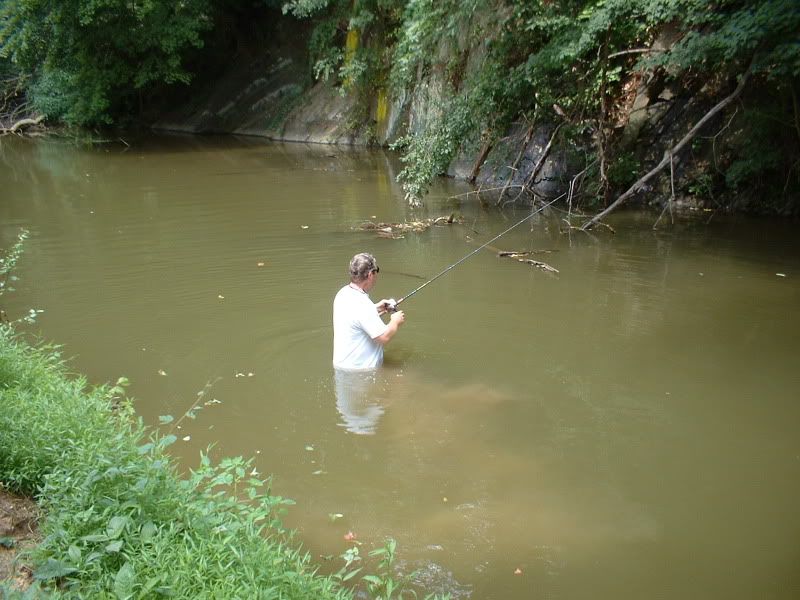
Now that you're hands are free, you're loaded with tackle, and you have both rods - one in hand, and one at the ready, what strategies do you need to find big bass?  They hold in the same types of places regardless if you're fishing from shore or a boat.  Look for fish holding structure that has shoreline access.  Find places where overhanging trees aren't an issue.  If they are, wearing hip boots, waders or even wet wading could free you up to fish places that are too tough to fish from dry land, and enable you to avoid overhanging limbs.  This is where learning to cast from the side, backhand, or using other casting techniques comes into play.  You may find a good spot but casting overhead is nearly impossible, and perhaps the only way to get your lure to the cover is to cast backhand.  So, learn different ways to cast so you can work around obstacles.  Learning to flip, pitch, or cast with both hands will improve your access and catch more fish.  If you have a lot of room to fish from the bank, make sure that you work likely spots thoroughly, casting from different locations around the cover and from different angles.  Likely spots that you've patterned warrant more casts.  Don't blindly cast to a spot, develop a plan and pattern your fish, and make all of your casts count.  If you catch a bass on a particular piece of cover, or at a specific depth, or on a specific lure, remember what you did.  If you duplicate those efforts with success, you've found a pattern.

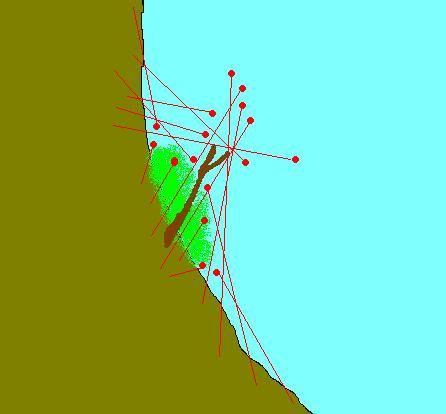
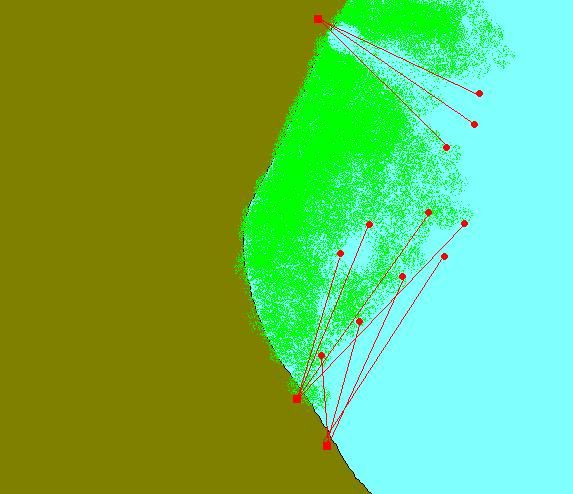
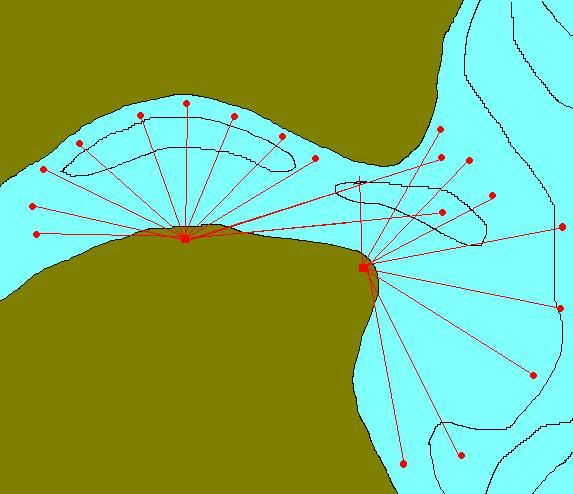
The following diagrams may seem fuzzy as shown, so for a clearer view, click on the diagram.  First, depicted in the diagram to the right, wood or weeds provide great cover to look for.  Cover give fish protection from predators and provide great hiding places from which to ambush prey.  To fish these spots from shore, if possible, try casting from different positions to give you various angles to work the cover.  Weeds and wood together are potential hot spots.  Deep water sanctuaries nearby allow bass to use cover like this in shallow spots too.  For wood or blow downs extending out into the water, make sure that you cast beyond the cover and work it back, for two reasons.  First, you don't spook bass in the cover, and second, you may be working cover that you can't see beyond what is exposed.  Casting parallel to shore near cover can also get you strikes from cruising bass that hang out near cover or are moving to and from the cover from deep water sanctuaries.

Large weedbeds may at first seem unfishable, but often bass will relate to these as they provide perfect ambush points, shady cover, and are bait magnets.  Cast from various angles making sure to cover channels, outcroppings, holes, and sparse patches nearby.  Try working the outside edges first and work your way in to the cover.  Texas rigged plastic worms, spinnerbaits, buzzbaits, topwater plugs, and crankbaits may be great lures for working the edges.  Frogs, weedless topwater lures, floating soft plastics, and a technique known as punching will allow you to work the heavier weed patches, especially if they are matts where bass can hang out in the shady comfort below.  Early in the spring when these weedbeds are emerging, spinnerbaits, shallow diving crankbaits, chatterbaits, and lipless sinking crankbaits are extremely effective.  Try various positions that enable you to cover the weedbed effectively while at the same time allowing you the ability to land your fish.

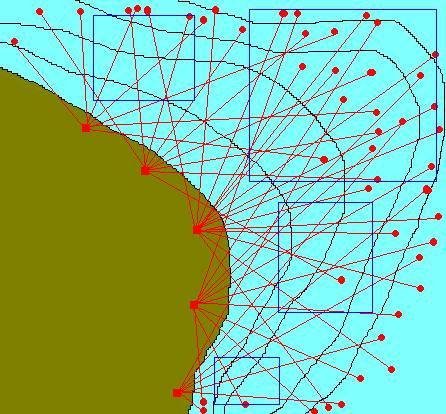
Probably the most popular structure on any lake or reservoir is the point.  If deepwater is nearby, or you have deep water on each side, a long sloping point could hold bass in several places.  Try positioning yourself in various places and fan cast the area.  If you're catching fish, move when the bite slows, if you're not catching them right away, try a different angle.  Any type of lure goes in this situation, just try different things that you know work during the time of year that you're fishing and let the fish tell you what works best.  The blue boxes indicate likely spots, and you can see how fan casting from various places on a point will allow you to cover the maximum amount of area around the point. Work shallow and deep until you locate fish.  If the point has woody or weedy cover, so much the better.  Consider wading to get a cast out to the end of the point.  Knowing the depths around the point may help you eliminate fishless water and focus on the hot spots.  If you're not familiar with it, trial and error may be your best bet.  Wind across a point will stir up the food chain, attracting baitfish and predatory largemouth bass. 

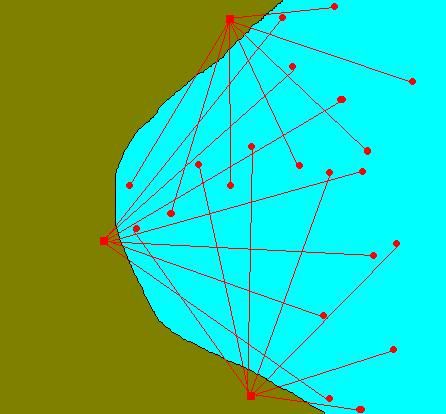
Backs of coves in early spring, especially if wind is blowing warmer water into the cove, can be fish magnets stirring up the food chain, especially if they are of Southern exposure.  These areas are likely spawning areas, and fish may stage there and feed heavily prior to the spawn.  Work as many angles as you can, and don't forget to cast parallel to shore to effectively work the area.  If there are stumps, logs, or weedy cover, make sure you take advantage of the shoreline changes to give you better casting angles.  Knowing the lake contour in the area might prove useful and help you focus on more likely spots.  If the bottom is pea gravel, it's likely a good springtime spot because of the potential for bass to use the area to spawn.  Look for changes in bottom composition, because fish, like most game, relate to edges, and these changes form an edge and affect the availability baitfish or other tasty morsels in the food chain.

Creek mouths offer great fish holding ability, especially in the spring.  If you can cast across the creek, outside creek bends usually offer slightly deeper water providing a good hiding place for bass, especially if you have weedy or woody cover along the bend.  The points of creeks, or the "delta" formed by silt deposits create an underwater structure similar to a point.  Fish areas around the delta that have deep water pockets and cover like weeds, woods or stumps.  Having waders may allow you to cross the creek and work even more angles.  If the creek has current, look for current breaks provided by rocks, log jams, creek bends, gravel points or bars and cast to the downstream eddies behind such cover.  If the current is strong, you may have to cast upstream of the cover and let the current carry your lure into the eddy.  This is true for tidal waters too.  Changes in tides move the water, which stirs up bait, and puts our favorite fishy predator into feeding mode.  They'll stack up in tidal eddies waiting to pounce on and swallow bite sized critters that wash by them. Tides create a conveyor belt of bait, bringing a smorgasbord to the bass on the feed.

During winter months, waders allow you more insulation and protection from the elements, and serve the same purpose from shore as any other time allowing you access that you might not otherwise have. Look for similar situations diagrammed above except work the deeper areas around those spots if they are available, especially off points and the outside edges of coves.  If spring is approaching, big bass will stage nearby prior to the spawn.  On those "Indian summer" days when winds push warmer waters into the backs of coves, or across a point, shallow water next to deep in these situations could yield good numbers of bass on the feed.  I've found that the first warm day may not be productive, but if you have two or three warm days in a row, the bite could really be hot.  Use bigger baits in the spring because they best match the forage, and you'll have a good chance of catching a huge fat sow of a bass.  I really like a tandem white 1/2 or 3/4 ounce spinnerbait with a large blade, up to size seven, and a white plastic worm or grub trailer to give it a big profile, to tempt a big female largemouth to strike.  These same areas will also hold bass in the summer, except they are more active.  Think deep, like 10-15 feet or more, and you'll find bass.  Larger baits again work well in the summer, because they offer a big meal and sometimes you'll get that good reaction bite.  Don't be afraid to throw a topwater over deep water.  A Zara Spook or other walking plug can be deadly across a point, and big bass will attack from deep water and explode on your lure especially if the water is clear. 

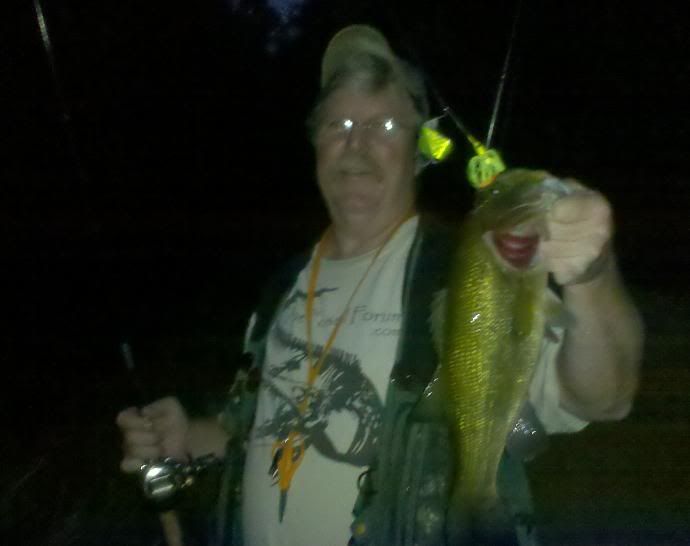
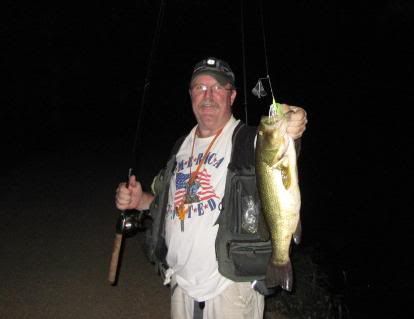
Howard shows off the rewards of finding bass in the shallows
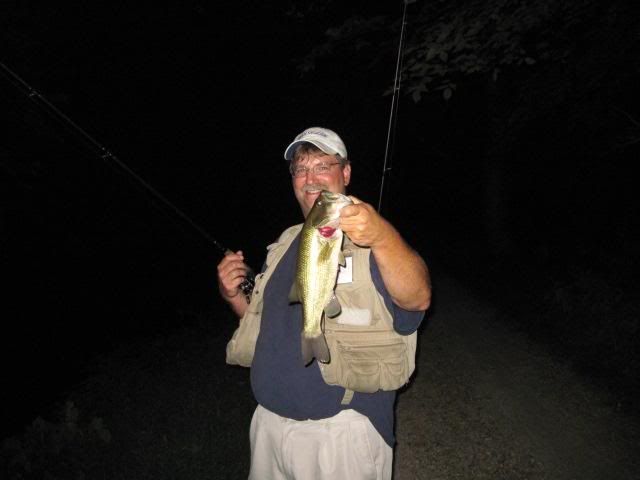
during the hot summer months by fishing at night from shore.
Finally, on those hot summer days, think about fishing the early morning and late evening hours.  Dawn and dusk are prime time, like the magic hour on your morning or late afternoon hunting trip when everything seems to come alive.  And sometimes fishing at night is the best during the dog days of summer, assuming that it's legal for you to do so.  Noisy topwater lures, black spinnerbaits, and even plastic worms will take bass during the darkness.  Bass move close to shore, providing the shoreline angler better access to them than they might otherwise have during the daylight hours.

Small ponds on public or private land (make sure you ask permission before fishing), provide some of the best fishing available, and in many cases these waters are underfished.  As a result, many state records or citation fish are caught from private ponds.  Shore angling isn't the only way to take advantage of these small waters, but it certainly is an option in many cases.

One more thing, there are times when you may only have a half day or a few hours to fish, and often shore fishing provides you the most time efficient way to fish.  There are many folks that take their lunch hour at work and fish nearby waters from shore for bass (I'm not that lucky).  But in my case, if I have only a few hours, I can grab my gear and go, and I'm on the water in no time catching bass.  In one of my earlier posts about finding good smallmouth wading spots, I mentioned using maps or internet satellite maps to find good potential spots to fish.  You can also find good spots along lakes or ponds this way.  So, find a good lake, find a good potential spot with good access, grab some gear, keep your hands free and stay mobile, and you'll catch more and bigger bass.

For more info on shore angling, make sure that you check out Bass Junkies Fishing Addiction blog post titled, "Shore Angling, Anywhere Anytime", just CLICK HERE

Saturday, August 13, 2011

Quest for Great White Shark Teeth

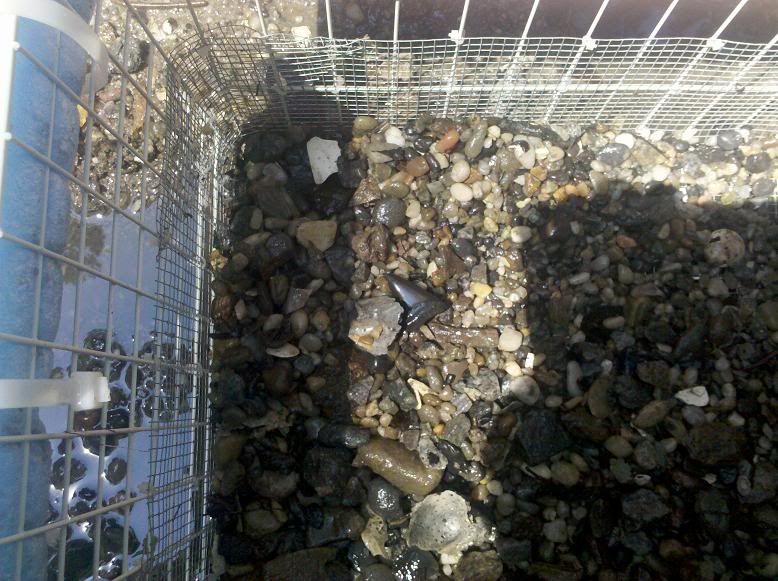
Check the gravel bars visually for fossils, then try sifting the
deeper water for those that are not on the surface.
Don't ask me how I did it, but at the end of our family vacation, I convinced my wife to spend a day in North Carolina while my daughter and I hit a popular small stream in search of nice great white shark teeth to add to our collection.  The Atlantic Coastal Plain formations found along this particular creek include the Cretaceous formations known as the Black Creek and Pee Dee, the Yorktown formation and possibly the Eocene Castle Hayne formation, or at least some reworked material from it.  The term "reworked" means that fossil material that normally occurs in other formations became mixed in with the known formation of an area.  Weather and erosion usually contribute to this, but it could also occur as a result of the existance of life during the time of the formation of younger deposits.  An example would be something like some sort of animal excavating a burrow, perhaps a shrimp, where the burrow was deep enough that it extended from the substrate surface into an older underlying formation.  As the animal makes it's burrow, the material dredged from the burrow may contain older fossils and is pushed out of the burrow, being "reworked" out of the older formation and into the younger sedimentary deposits (or a future fossil formation).

It's no secret that it gets pretty hot in the Carolinas in the summer, but fortunately for us, the temperatures were normal for this time of year while back at home in Maryland we were experiencing higher than normal temperatures in the low hundreds with heat indices around 110 degrees F or higher.  Nevertheless, it was hot and humid in North Carolina yet we could take some comfort knowing that we'd be wading a small stream with a shady tree canopy overhead.

We brought two sifters, one with a half inch mesh and one with a quarter inch mesh, both home made ala Ditchweezil design.  Here's the link so that you can make your own sifter if you like this design:  http://www.blackriverfossils.org/Sifter/tabid/79/Default.aspx.  Obviously, the smaller mesh sized sifter will yield more fossils and shark teeth than the larger mesh sifter simply because the smaller fossils that would fall through the half inch mesh are trapped in the quarter inch mesh.  The advantage of the larger sifter is that you can cover a lot more larger material and not spend time picking out the smaller fossils.  Which one you use depends on what you are after, more fossils including smaller sized ones, or larger fossils only.

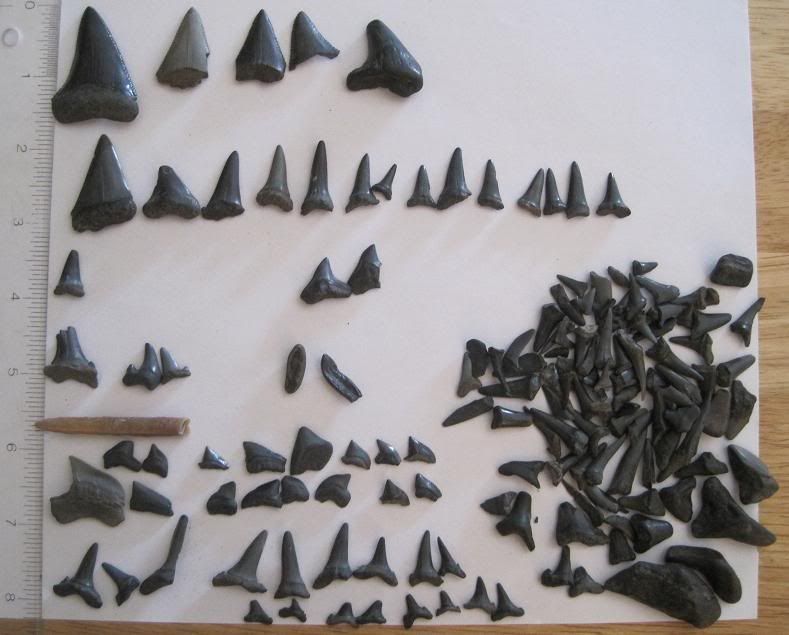
My finds for the day were mostly as a result of sifting, but I
did find one great white shark tooth with a broken root and
several smaller teeth on the gravel bank.
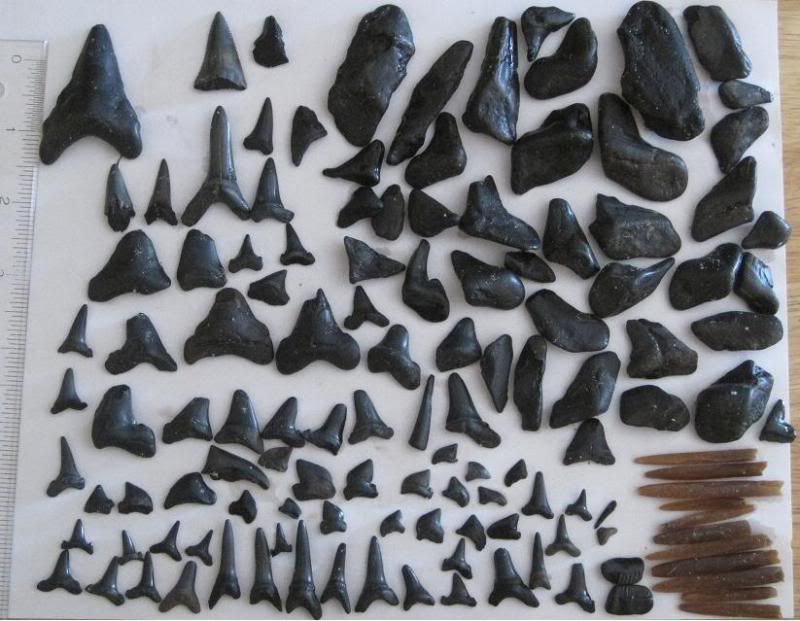
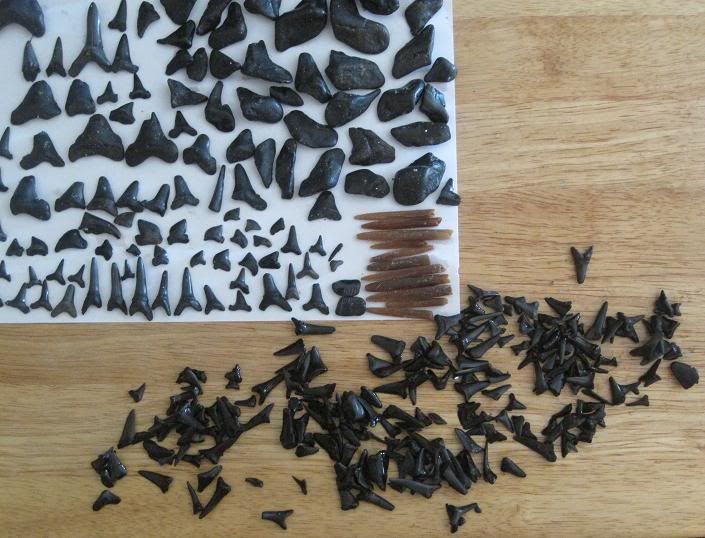
My daughter, meanwhile, spent the entire day surface collecting.  That is, simply walking around or sitting on the stream bed picking up fossils from the surface of the stream bottom or exposed gravel bars.  I did a little of that, but mostly put the work in by primarily sifting.  How effective were the techniques?  I'll let the next three pictures tell you, both techniques proved effective though.  During times when the water levels are higher or murkier, surface collecting may not be all that effective in some streams.  In this case, the stream was very low and clear, so that technique worked out just fine on this day.

I used the larger half inch mesh sifter for most of the time in search of the larger shark teeth.  You still sometimes get some smaller teeth that adhere to the gravel in your sifter, but most of the smaller ones fall through. 

Here are my daugher's finds, including a two inch worn
megalodon tooth and a larger mako tooth, and many very
worn fragments of megalodon and other large sharks.
In this particular stream, you really have to be careful, watching out for broken glass and other sharp man made objects as you sort through your sifted material.  Basically, it's a very simple plan, find gravel in the stream, shovel it into your sifter, and then sift and sort through that material pulling out any fossils that you find.  In the picture above, you'll see that sharks teeth were common in the stream that we were collecting in.  In addition to shark teeth, you'll find belemnites from the Cretaceous period, which are fossilized internal skeletons of an extinct squid like creature.  You also have a chance to find other fossils from the Cretaceous, including mosasaur and plesiosaur teeth, crocodile teeth, and various types of fish teeth like the extinct saber toothed salmon, Enchodus, and an extinct pycnodont drum fish, probably Anomaeodus.

Meanwhile, while I'm worked my butt off shoveling, sifting, and sweating profusely, my daughter is walked around surface collecting along the gravel bars.  The water was low and clear from lack of rain apparently.  The two pictures to the right are her finds, much more than I found.  I probably walked around over much of that material not seeing them as fossils.  Duh.  So that's one reason she has twice as many fossils collected as I do, my poor eyesight and her perfect 20-20 vision or better.  The other reason is that the smaller teeth were probably dropping through my half inch screen.  Excuses, excuses, right?  She has an eye for this, a gift I'd say.  I always thought that I did, but I'm no where near the eagle eye that she is.  Anyway, you can see that she found a lot of material, including a two inch worn megalodon tooth, and lots of fragments of teeth from "megs" and other large sharks.  She also found a bunch of belemnites, the amber colored bullet shaped fossils shown on the lower right portion of the paper in both pictures.

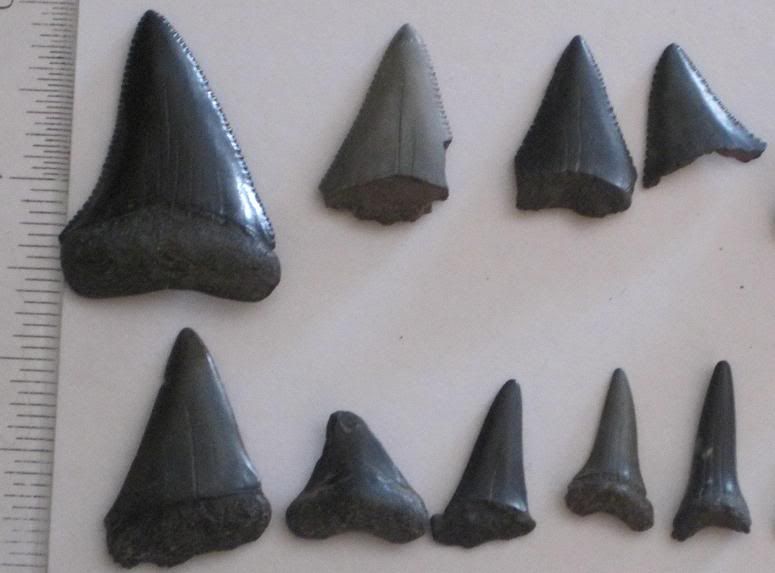
In the top row in this picture are teeth from the great white
shark, Carcharodon carcharias. The second row are extinct
mako shark teeth.  Notice the similarity of the top left row
great white tooth and the mako below it.  The mako below
is Cosmopolitodus hastalis, the extinct giant mako that many
scientists believe was the direct ancestor to our great white.
I have to say that I did find several nice teeth while surface collecting including a rootless great white blade stuck in the side of the creek bank.  But, again, most of my stuff came via the back breaking hard work of shoveling and sifting.  You never know from one sift to the next what you'll find, so every sift could be an adventure and yield a tooth of a lifetime.

I found several nice mako teeth and some worn meg and mako fragments while using the half inch mesh sifter.  I was hot, cranky, and soaked in sweat, and not finding the number of teeth that I had hoped for.  I picked likely spots, tried a few sifts, and if I didn't find anything worthwhile, moved on working my way along the stream.  My daughter trailed behind me picking up tooth after tooth.  So, being frustrated, I decided after a couple hours to switch to the quarter inch screen and start padding my fossil numbers with smaller teeth. 

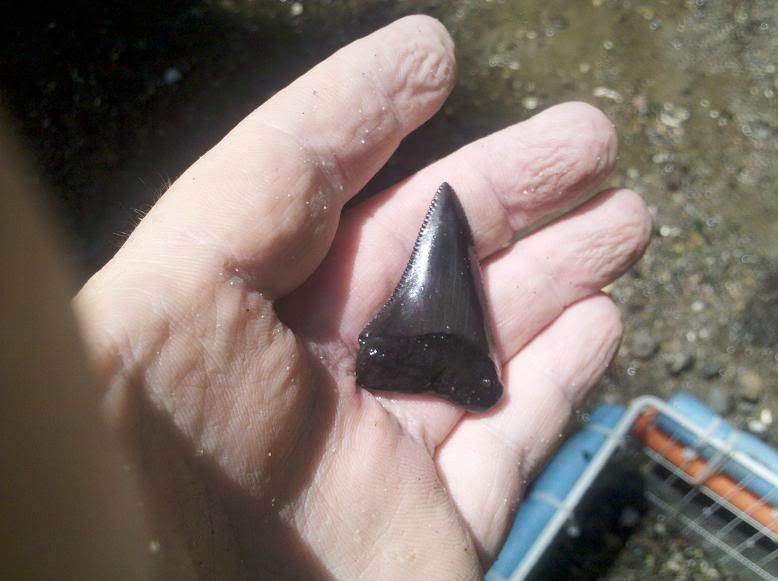
My first sift with the quarter inch screen gave me a nice one.
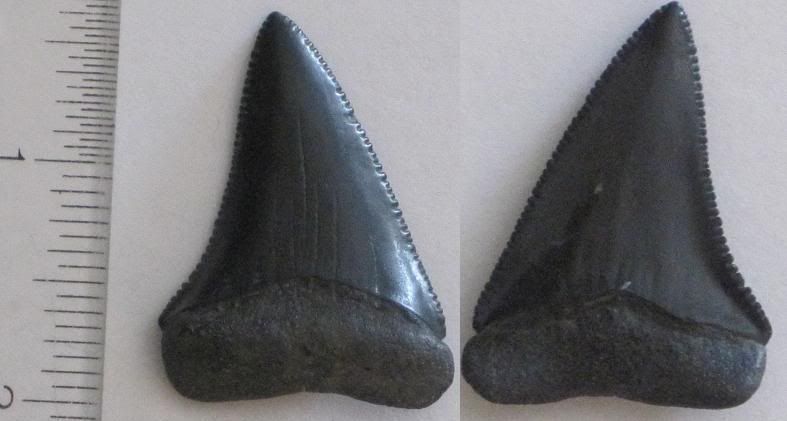
The very first sift presented me with my best great white shark tooth to date, a 1 3/4" perfect beauty of a tooth.  There are bigger nice teeth to be found here, but I haven't had that much luck doing it, so this tooth may not be much to some that collect here, but for me it made my trip.
The good thing about using the smaller sifter is that you'll find a lot more teeth, and the bigger ones will still be there.  The drawback is that there is so much material to pick through and so many teeth to pull out, that you spend a lot of time picking through each sift.  I actually felt that the added time spent looking through these sifts became a welcome break for my back and allowed me to slow the rate of sweating.  It was so humid that sweat was dripping off my eyebrows and onto my glasses, and my shirt was so soaked that I had nothing dry to wipe them with, hindering my poor old eyesight all the more.  It didn't help that there was absolutely no wind at all to help dry us out.
 
Carcharodon carcharias, great white shark
I really can't complain though, we had plenty of water with us and I was out collecting fossils with my daughter.  You can't beat that for quality time with your family.  My wife, however, isn't into it.  She was hanging out at the Hotel pool worshipping the sun.

Here's a worn "meg" tooth that my daughter found, which
brought a smile to her face! 
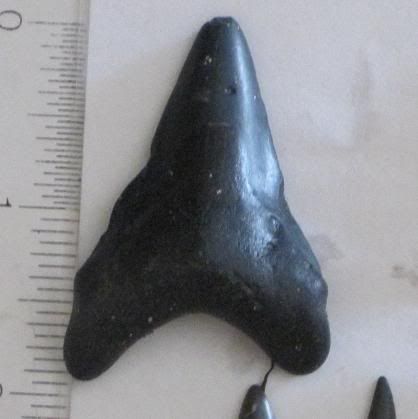
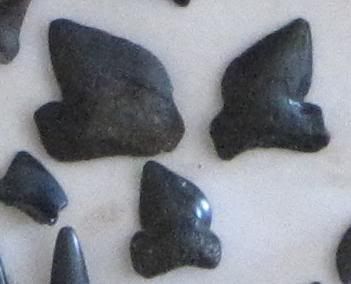
Basically, the fossils that you'll find here from the Pliocene can be in really good shape, or very worn.  The great white shark teeth are the prize and probably the most sought after fossils here, but you have a chance to find some big megalodon teeth.  Many are very worn, but I know some folks that have found some very nice ones too.  In addition to the great whites and megs, you will find mako teeth, bull shark teeth, and once in a while you'll find the modern tiger shark, Galeocerdo curvier.  There are plenty of fossiled bone fragments from whales, porpoises, and other marine mammals from that time, and every now and then you'll find a fossilized land mammal tooth.

In addition to fossils, it's quite possible to find Native American artifacts.  On the two fossil forums that I frequent (check out my links), there are folks that have found some very nice artifacts too, including pottery, arrowheads or points, and spear points.  You may also find various other evidence of human activity as I mentioned before including old coins and bottles, but more than likely you'll encounter metal trash and broken glass, so care should be taken when sorting through your sifted material.  Gloves are a good idea, but I'll admit that I didn't have them with me the last time.

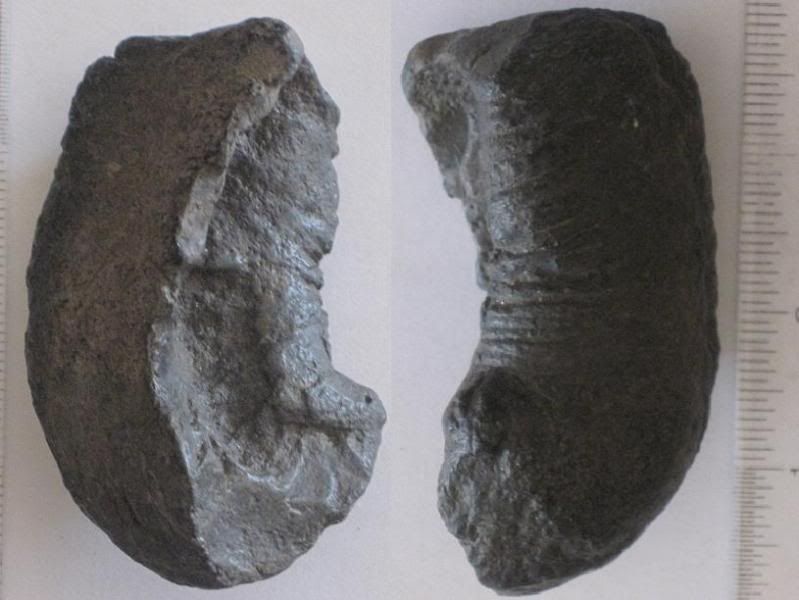
This is a whale inner ear bone, or tympanic bulla from GMR
from the Pliocene Yorktown formation.
You may also find fossils from two Cretaceous formations mixed in with the Pliocene material.  Those formations are the Black Creek group, and the Pee Dee formation.  You may encounter fossilized mosasaur teeth, plesiosaur teeth, crocodile teeth, and possibly other marine reptiles from that time, the age of the dinosaurs.  Shark teeth from the Cretaceous mostly include three species of extinct crow sharks, extinct sand tiger sharks, and an extinct goblin shark.  The crow shark species include Squalicorax kaupi, the most common crow shark, the larger Squalicorax pristodontus, and the less common weird looking Squalicorax bassani.  In addition to the teeth, you may find vertebra, bones, scutes, and broken turtle shells from the various marine vertebrates.  Invertebrate fossils include various oyster shells, clams, gastropods, and belemnites.  Personally, I like finding fossils from the Cretaceous because they are not common from my neck of the woods, so it's a treat for me to visit this creek and bring some material from that fascinating time home with me.  Perhaps that's a good reason to use the quarter inch sifter, because most of the teeth from that time are smaller and fall through the half inch mesh.
 
The three crow shark teeth in this picture are from one of
the less common ones, Squalicorax bassani.  I've found one
of these cool teeth in my life, and my daughter finds three
of them on this trip alone!
You may also find other fossils from other formations, perhaps from the Eocene or Miocene, that were most likely reworked, as mentioned earlier.  Some of the shark teeth that you may find include Carcharocles chubutensis, megalodon's direct ancestor, and Eocene ancestors, Carcharocles auriculatus and possibly Otodus obliquus.  Since many of these teeth are extremely worn, it's difficult to identify them because the identifiable characteristics, like cusplets and serrations, are mostly broken or worn away on these teeth.

Within the material that you're sifting, the fossils are found in what is known as "float" deposits.  Basically, these deposits consist of material eroded from the formation itself, and deposited along the stream bottom through time.  In other words, the material is no longer physically connected within the formation. So, it's really technically difficult to determine exactly what formation a particular fossil was from.  Another example of float deposits are beaches that contain fossils, like Myrtle Beach.  We know probably what formation the fossils are from simply because you can compare them to specimens of known fossil species that were discovered directly in the formations.  In many cases, the fossils that you're collecting are unique to a certain formation.

This was my third trip to this creek.  I've seen people post some amazing trip results from this place.  Although I have yet to have a day like that, each time I go I find something different that I've never found to add to my collection.  It's hard work but well worth it in my opinion.  You'll feel it at the end of the day, but at the same time you'll be satisfied with what you find.

What tools do you need for this type of fossil collecting?  For creeks like this, obviously this time my daughter didn't need much except her keen eyesight and the ability to bend over, pick up and check out potential fossils all day long.  But, for sifting, you can build a sifter like the one linked above, or fashion one out of a wood frame, and a shovel to fill your sifter with.  During hot weather, wet wading is OK, so wear clothing and shoes that are comfortable but you aren't worried about getting soiled.  I prefer wading boots with felt soles to give me foot protection, ankle support, and traction on potential slippery stream surfaces.  Other things you'd need during hot weather would be plenty of fluids, a back pack to carry your stuff in, a container for your fossils (and perhaps something to protect your better finds from being broken during transport), a change of clothes and a towel for when you're done, and probably most importantly, plenty of bug spray.  For cooler months of the year, it would be advisable to wear waders or hip boots.  Waders tend to give you more flexibility when navigating through deeper water.

I'm going to finish this post with a statement about some common sense and some pictures from my past trips to show you some of the other fossils that I've discussed earlier in this post.  When working streams like these for fossils, make sure that you're only digging into the float material on the stream bed or gravel bars.  Do not dig into the sides of the streams unless you have specific permission from the land owner to do so.  This causes unnecessary erosion and could result in our privileges being revoked and areas like these posted or such activities prohibited.  Don't think it can happen?  It sure can, as witnessed in Summerville, SC, where it's now illegal to walk streams in the city limit with any kind of tools for digging.  So please, use some common sense to protect our resources and ensure that future generations may enjoy collecting fossils and other artifacts from our local streams.

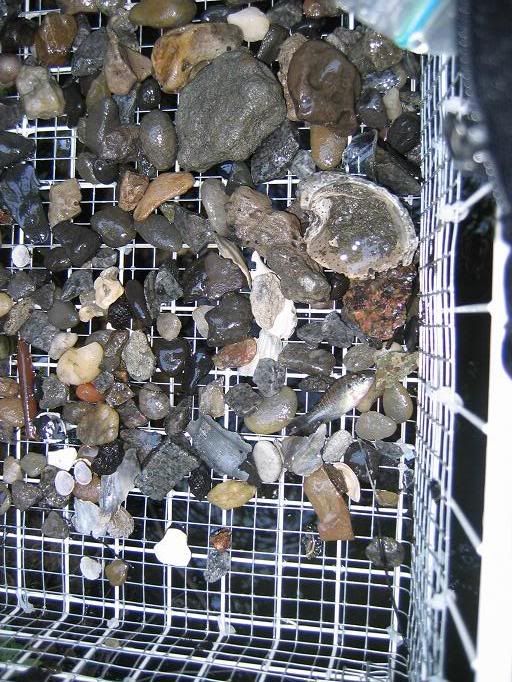
And for the anglers out there, how's this one?
I had one sift several years ago that resulted in
the catch of a bluegill sunfish!!!!!

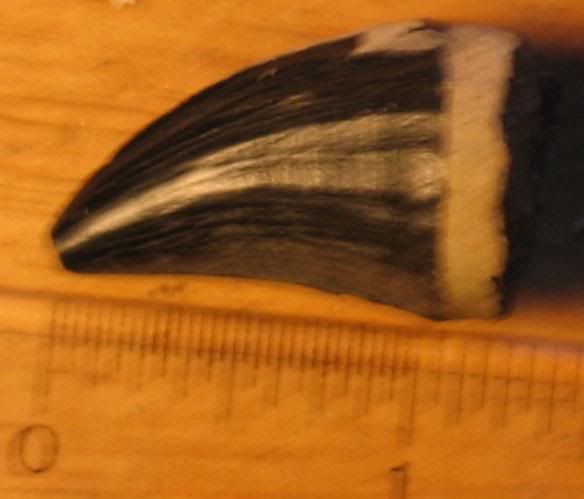
Mosasaur tooth from GMR that I found a few years ago.
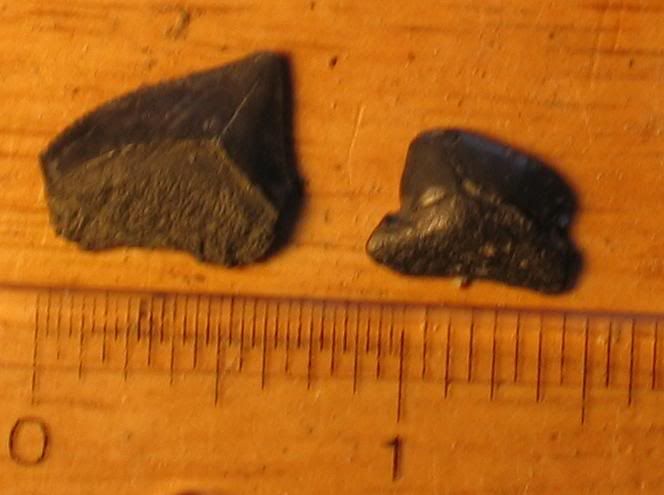
Crow sharks, Squalicorax pristodontus (left) and Squalicorax bassani.
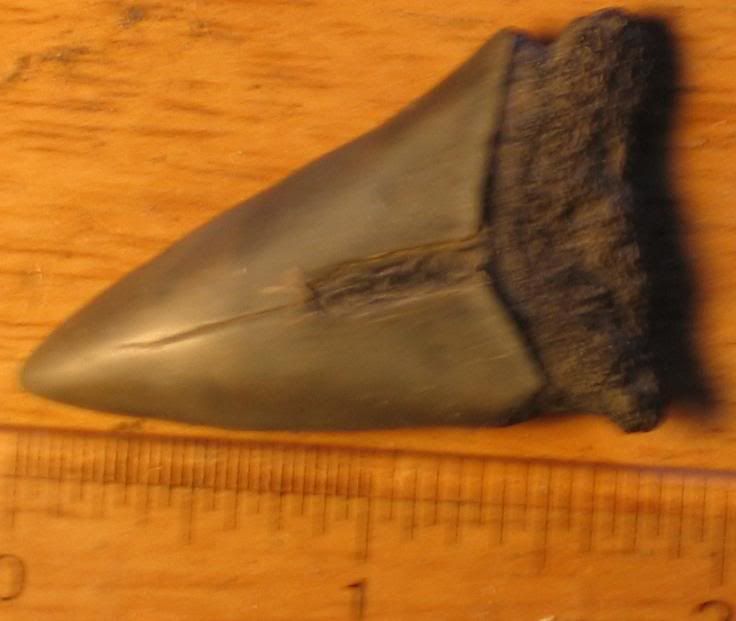
Cosmopolitodus hastalis, extinct giant mako shark that was
most likely the ancestor to the modern great white shark.

For more info on fossils, and to interact with other fossil collectors, please visit the following links:
http://www.thefossilforum.com/
http://www.blackriverfossils.org/
Make sure that you register, it's worth it!