Wednesday, June 13, 2012

Top 10 Bonehead Fishing Incidents of the Year

10)  You spend twenty minutes successfully picking out a backlash of expensive (but excellent) Suffix 832 braided line, while your fishing buddy is catching one bass after another, only to put too much oomph into your next cast and backlash again, even worse!

9)  You spot a hot looking piece of woody cover that just has to be a bass magnet, and as you cast you pick the most likely spot, a small pocket within the log jam that a big bass just has to hold on. You pitch your jig in there, but your cast is off by a foot to the right for whatever reason.  You reel up quickly to try again, and put your next cast in the exact same place, a foot to the right.  This can go on for another pitch or two perhaps.  It's like there's a force field preventing your lure from getting in there.  You get fed up and make a major adjustment in your mind and you eye a spot a foot to the left, only to actually pitch your bait a foot to the left!
I'll get that jig in there if I have to wade out and do it!
8)  You leave a Plano 3700 box full of soft plastics in your truck on a hot day only to find out the next day that the Strike King Perfect Plastic Rodents and Rage Craws have melted into a big mass of green pumpkin goo.

7)  After a long day of bass fishing out of your buddy’s boat, you place your rigged rods in your car for the drive home.  After you get home, you reach to pull out your fishing rods only to find that one of them rigged with a Lucky Craft Pointer has one treble hook firmly implanted in your car seat.

6)  When you tie up a Texas rigged version of your favorite plastic worm, hooked perfectly straight leaving you beaming with pride knowing that it will put some nice bass in your boat only to realize right before you cast that you forgot to slip the bullet sinker on the line first.

5)  You tie on your favorite spinnerbait and proceed to clip off the tag end of the line, but clip the main line instead, and your brand new Booyah Vibra Flex spinnerbait falls into the water...the water is gin clear and you can see it laying on the bottom in 15 feet of water.

4)  You go on a fly fishing trip to a secluded trout fishing hole.  You spend hours in preparation late into the night prior to your trip, meticulously packing your fishing vest with your fly boxes, tippet spools, accessories, tools and equipment, everything that you’ll possibly need.  You tie on new leaders and tippets, and pick the fly that you think will work best.  The next morning, after packing your fly gear and waders into your car, you drive to your favorite stream nearly two hours away.  You pull out all of your gear and don your waders, only to discover that you left your wading shoes at home.

3)  You find out after doing your laundry and pulling your clothing out of the dryer that you accidentally leave a bottle of Spike It Dip-N-Glow chartreuse worm dye in your cargo pants side pocket.  You think that the dryer drum and new tie dye clothing looks cool in chartreuse, but your wife doesn't think so.

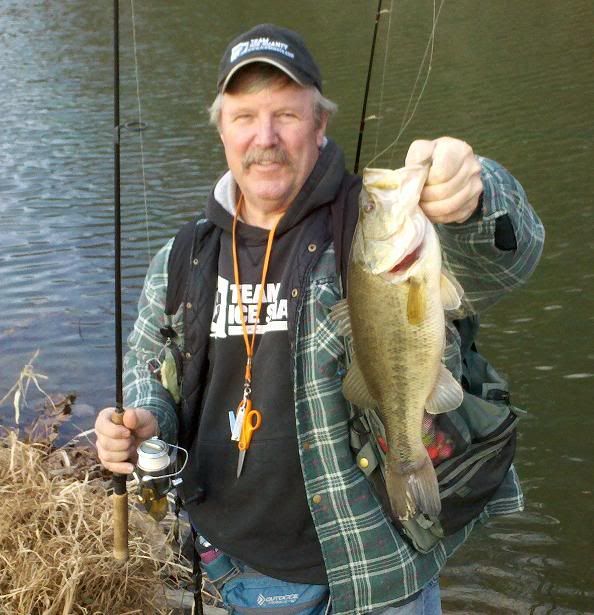
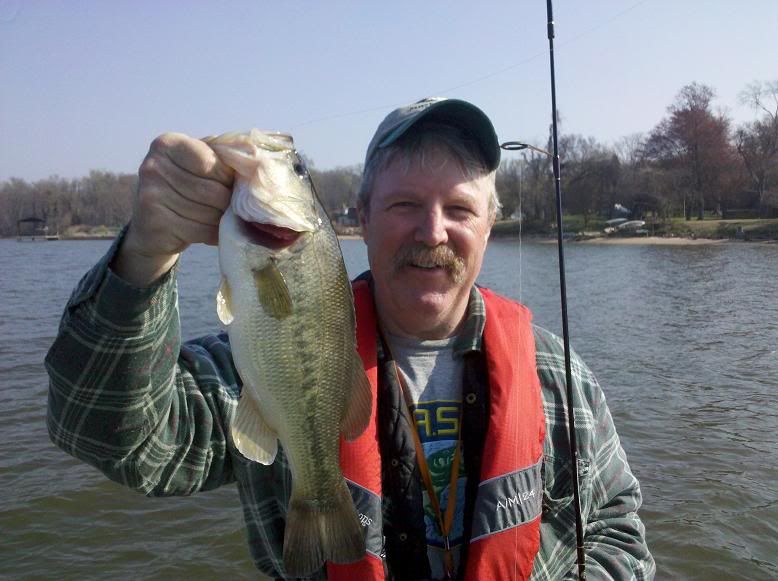
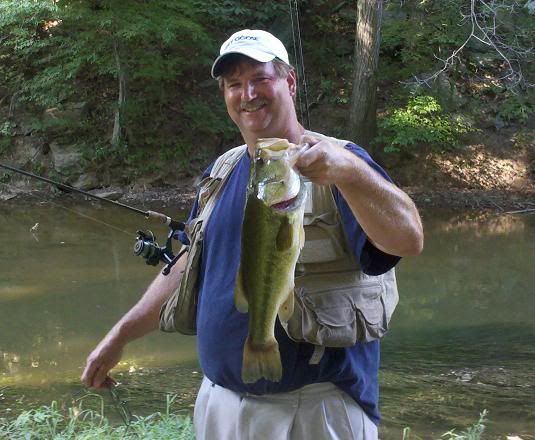
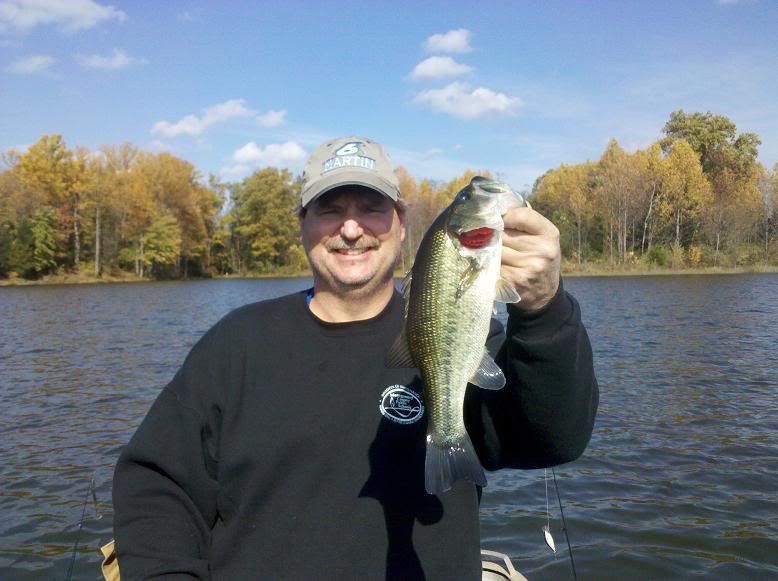
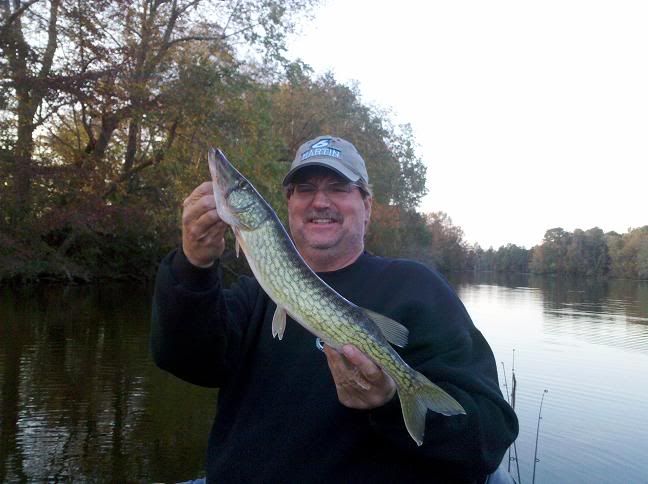
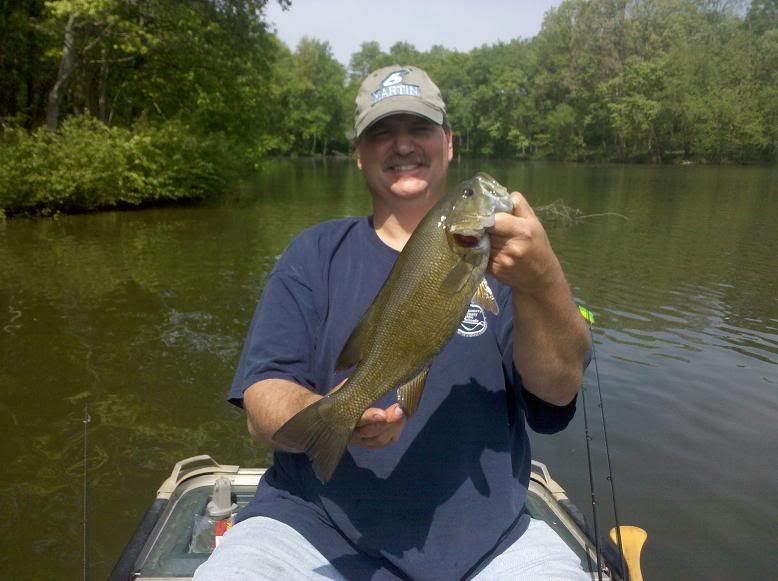
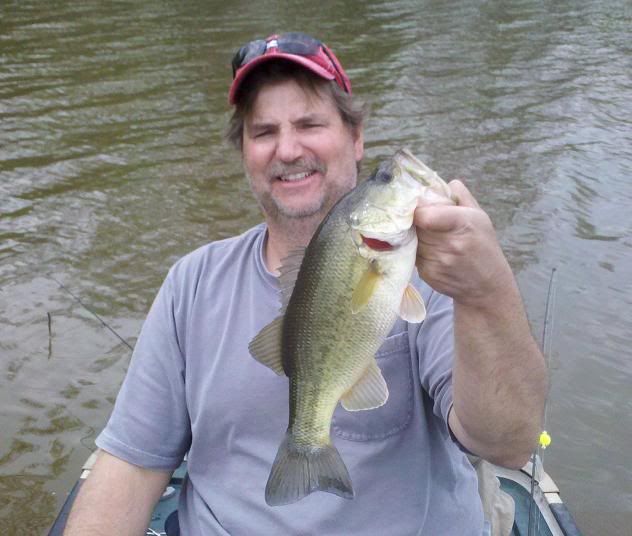
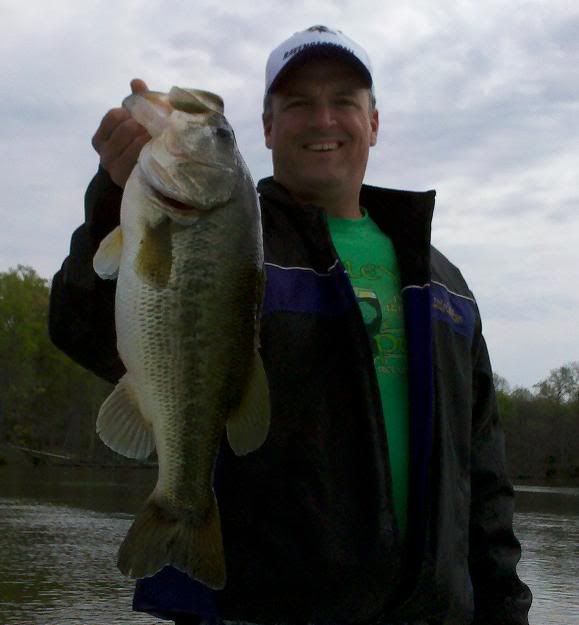
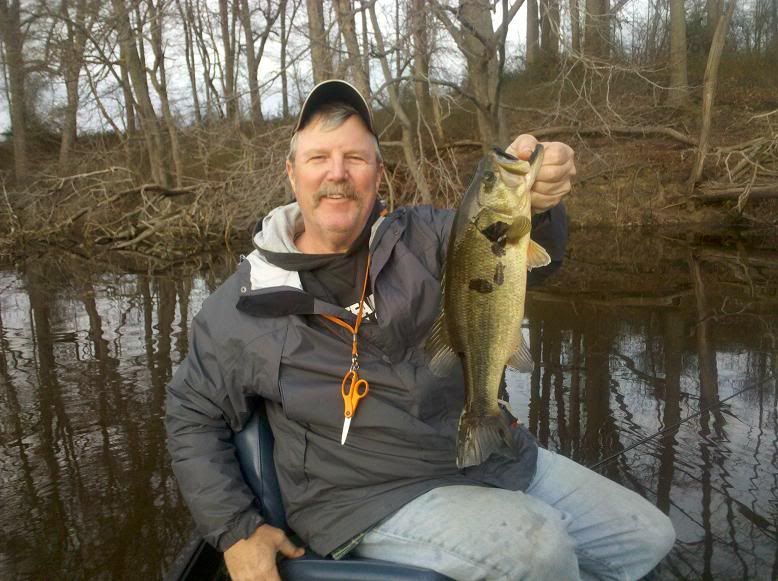
2)  You proudly pose for a picture that your buddy is taking with his camera, lipping a nice four pound largemouth bass.  The next day after your buddy emails out a fishing report to all of your fishing pals complete with pictures.  You notice in your picture that your barn door was open…
Good thing the barn door wasn't open on this pic...
…and the number one bonehead fishing incident of the year…

1)  You get up at 4 AM Saturday morning and head to the boat ramp to meet your fishing buddy who is taking you out on his bass boat.  When you get there he’s not there.  After waiting a half your you decide to give him a call.  After the phone rings six times, his wife answers the phone, obviously groggy and out of it after you woke her from a deep sleep.  She grumpily hands the phone over to your buddy who, also very groggy, let’s you know that the fishing trip was planned for Sunday morning…
 
Disclaimer:  the incidents on this list did not happen to me.  No way.  Just sayin’.  

Sunday, June 10, 2012

Internet Fishing Resources - Part I - Internet Fishing Forums

Back in the good ol' days, anglers relied on their fishing intel from newspaper fishing reports, fishing magazines, fishing television shows, local tackle shop buzz, and word of mouth reports from fellow anglers at just about any spot a fisherman would hang out.  Those sources are still great ways to gather information.  But with the internet, fishing has changed forever in both good and bad ways, but mostly good.  Just about any type of information is at your fingertips and can answer questions within minutes or seconds depending on your internet connection speed. 

The fact that you've found this blog means that you probably are aware of all, if not some, of these fishing resources.  But maybe there is something out there that you haven't found yet and this could help point the way.

What types of resources are out there?  I'm going to discuss the following categories of web fishing information:  fishing forums, government websites, on-line tackle stores, magazine web sites, television web sites, blogs, personal websites, and on-line video sites.  In addition, I'll discuss great ways to find these sites on your own, and also will give you some links to my favorites.  This blog post will be Part I of a series of posts detailing these various resources, where I'll discuss internet fishing forums.

You can find fishing information for free or pay for it, and that's your choice.  I'm going to focus here on the information that you can find for free and avoid the pay sites.  Why?  Well, I'm cheap, and therefore I know more about them than the pay sites.

Internet fishing forums are one of my favorite ways to gain information.  Not only could they provide valuable information in general, but you can find regional and local information, and all the while it's possible that you could make a few friends in the process.  Web forums require you to register to post, and most of them are free, some appreciate donations to help pay for expensive costs of maintaining a web forum, and others require payment to join.
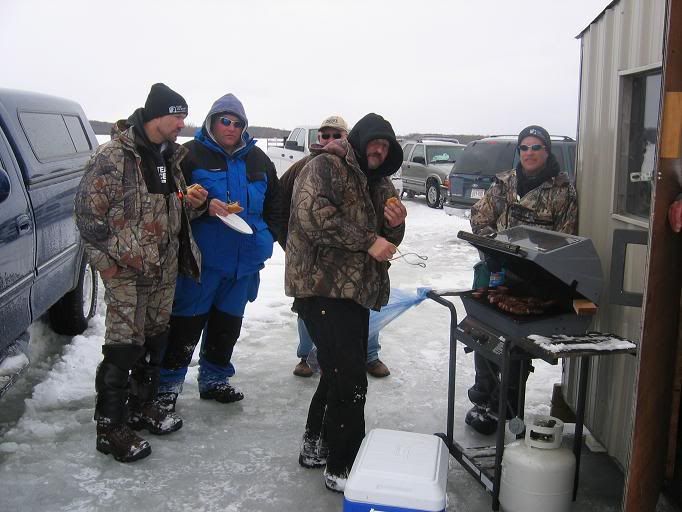
Internet fishing forums can lead to friendships.  Here are some buddies that I met on http://www.iceshanty.com/ where a bunch of us met during a get together to fish and socialize on the ice in Wisconsin.  Pictured left to right are Bean, Polar Bear, John-Boy, and Carpcatcher.
Some web forums are very general fishing forums, others are either specific to a particular form of fishing or perhaps species specific.  Fishing forums target various audiences, so you may find worldwide, national, regional or even local forums.  In my opinion, each of them has their place.

Like the variety of forums that you may find, within the forums you'll find quite a variety of audiences.  Some members, like myself, tend to have diarrhea of the keyboard and post long winded messages (although I try to keep things organized and as brief as possible).  Posts that are too long winded often lose the reader, so when posting, like blogging, keep that in mind.
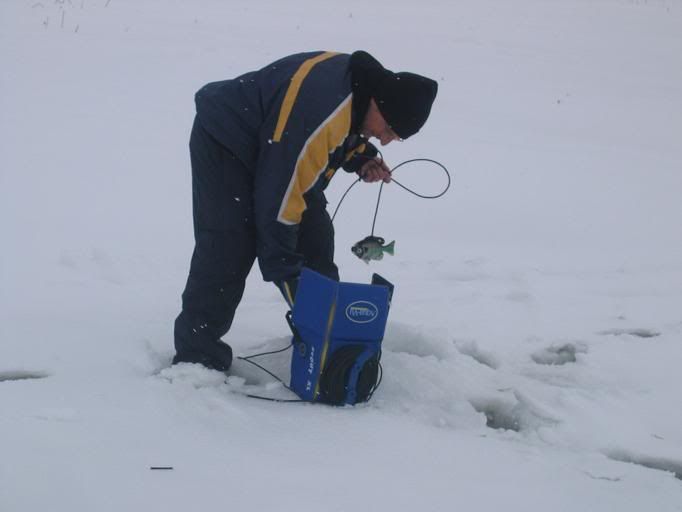
My good friend from Wisconsin founder of Iceshanty.com.  His user name?  Iceshanty, of course!
Some members may not be quite as internet savy or type with the King's English, or perhaps even type in texting mode, so it's important to remember that it's not about writing skills but rather the exchange of information and comraderie.  When it comes to fishing, there are folks that may not type, write or spell particularly well, but are willing to share valuable fishing knowledge and experience with you.  Their posts or fishing reports might be brief, but expect them to be to the point.

"Lurkers" tend to join websites for the sole purpose of gathering information from them without any intention to contribute back to the website.  In most cases, this is frowned upon, but let's face it, they're part of any forum.  There may be reasons other than selfish ones that they don't post.  Perhaps they are embarrassed about their typing skills, just don't know what to write, or they don't want to sound redundant in a thread because someone else already posted their thoughts, or maybe just don't have the time to be much of a contributing member.  In some cases, lurkers eventually become contributing members.  Many forums require that you log in to see forum posts which reduces the number of non-registering forum users.
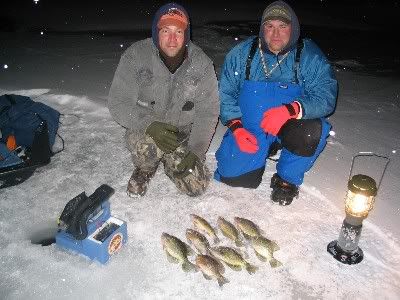
My good friend Polar Bear from Iceshanty and Myfishfinder forums posing with some iced crappie along with my brother Kyle.  Kyle was also a member of both sites.
Contributing members often fear the impact of lurkers on their local fishing opportunities, fearing that they'll find their secret honey holes and ruin their years of hard work finding those spots.  To protect their interests, they often post in vague generalities, and sometimes distort photo backgounds and landmarks that could give their spots away.  Are their fears warranted?  Yep, sometimes they are.  I've heard complaints about people posting too much information about their favorite fishing hole only to find that the next time they arrive to fish there, someone is parked on their hole. 
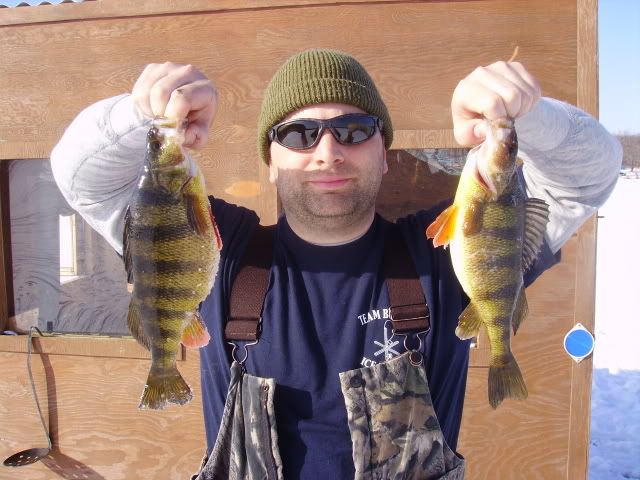
Fellow Iceshanty and Myfishfinder moderator adkRoy showing off some nice yellow perch caught through the ice.  Although we've never met in person, over the years you can develop internet friendships.  Often, moderators on websites go through more than the average forum member together, creating a bit of a bond.
Now, to be fair, people find fishing holes all the time from various sources.  Luck plays a roll, but sometimes just doing your homework can find you new fishing opportunities.  So, the fact that someone is on your spot doesn't necessarily mean it's from an internet post.  But you can certainly understand their concerns.  So, perhaps the best thing to do is to be careful what you post.  You may not want to give away your secret fishing spot or you wouldn't want others angry at you for doing so either.

How are most forums structured?  Many are organized by topic, with a "General Discussion" board being the most popular place to post.  Most of the time, the boards and rules of the site require you to stay on topic with your posts.  Some forums have "Off Topic" boards or sections for those that like the one stop shopping approach to web fishing forums.  Most fishing forums have topic boards about techniques, species, regional fishing reports or tackle.  Site layouts and design vary based whim of the site owner. 

Within each forum, topics are arranged in boards, which consist of threads (specific topics), which consist of posts from individual members.  Most forums have rules, codes of conduct, etc. that you have to abide by to maintain member status that you agree to upon your registration.  Often, you have to register and log in to post, but some web forums allow guests to post.  Some forums contain resources or links to other related websites.  Registered users on most forums can start threads and post on threads started by other users.

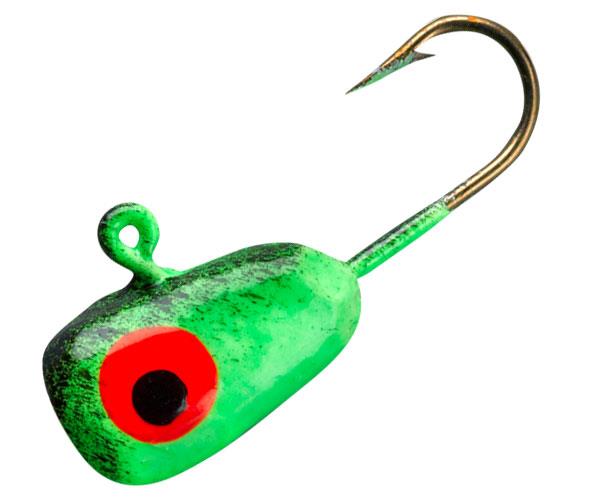
How about your identity?  On web forums, you have the opportunity to be known the way that you'd like to be known while keeping some measure of anonymity.  You can use your own name, or create a user name.  Some web forums have popular threads about why members chose certain user names, which can be quite entertaining.  My user name is Fat Boy on most of my forums.  I chose this while joining my first web forum, http://www.iceshanty.com/, naming myself after a popular ice fishing jig, the Fat Boy by Lindy Systems Tackle simply because it was my ice fishing flavor of the day.  That jig still ices a lot of panfish for me!  Well, the name stuck and a lot of folks know me that way, so that's why I retained its use for this blog.
I chose this jig as my user name, the Fat Boy, check out
the link if you are interesting in purchasing some.
You can tell your story on your "Profile".  Forum profiles allow you to say something about yourself that others can view at any time by clicking on your user name.  Often, profiles allow for "signatures" or messages at the bottom of each of your posts.  In addition, many forums allow you to use "avatars" or small photographs that show under your user name.  Profile information can be seen on each of your posts but some of it is only viewable when someone clicks on your user name.  Most of the time, the number of posts (and your forum status based on that), your join date, signature, and avatar are the items that other members can see on your posts directly.

How about forum ettiquette?  Most of that is covered in the rules but some is just plain common sense.  Basically, forum administrators or owners expect you to abide by the rules.  Those that don't are often banned from using the site either temporarily or permanently, depending on the severity of the violation or the discretion of the site administrators.  Most site owners have a moderation team consisting of members or, in some cases, paid employees, that have the responsibility of maintaining order on the forum.  They are the forum police basically.  Some have administrator powers, others have limited powers.

Basically, it's not advisable to type using only capital letters.  That's a good way to get folks angry on web forums.  On the internet, that's interpreted as yelling and is frowned upon.  Also, it's a good idea to be respectful of other users and not "flame" them.  Flaming is basically a form of bashing someone for some reason.  Again, these type of things vary from site to site, so the best thing to do is to know the rules of the forum that you plan on joining.

Fishing forums are basically an internet community created by someone (the administrator) for whatever purpose, made up of its members.  The vast majority of them are private, and I'd say that when it comes to fishing, that's just about all of them.  So, why do I bring this up?  Often, as a moderator on several web forums, I hear complaints about members not having "freedom of speech", as if it's their constitutional right to post anything that they please, and their posts are untouchable.  The truth is that, web forums are privately owned and free speech laws do not apply.  If you don't like being treated like that on any particular forum, you have the right to create your own web forum and exercise your right to free speech.

Web fishing forums are virtual communities, and as a member, you'll be a part of something that you share in common with other anglers.  The great thing about that is the free exchange of fishing information.  Web fishing forums are full of great tips, fishing reports, and just about anything that people want to talk about when it comes to fishing.  And, having so much in common with so many people, you're bound to make friends.  I regularly fish with friends that I've met on web fishing forums.
drobertsinMaryland from myfishfinder.com and myhuntingforum.com showing off a nice largemouth bass.  I met Dave through these websites.  Even though they are national or even international in nature, they also have local sections for fishing reports and general discussion.
A pet peeve of web forum users or members about "newbies" is that they ask questions about topics that have been covered over time sometimes at nauseum.  So, here's a tip for you as a potential newbie to a web forum.  So as to not anger other members, use the "Search" function when looking for specific information about a fishing topic.  If you can't find what you're looking for, or the answer doesn't seem to exist, then by all means feel free to post your question.

Web forums offer some measure of anonymity often freeing people to post things that they may not say face to face to another person.  Be careful of this because "fights" often ensue on web forums and in some cases, actually become a reality in person.  This goes back to respecting other users that I discussed earlier.  In addition, posting on the internet or in email lacks emotion, and despite electronic attempts in the form of emoticons (smileys), words typed may not be taken the way that the writer intends.  The best thing that you can do is review and critique your post prior to clicking on that submit button, and ask yourself this question, "How would I feel if I read this post?"

Another nice feature on web fishing forums is that they offer Personal Messages, or PMs, that allow you to contact other members for any reason.  PMs are similar to email, but are maintained only on the forum website. 
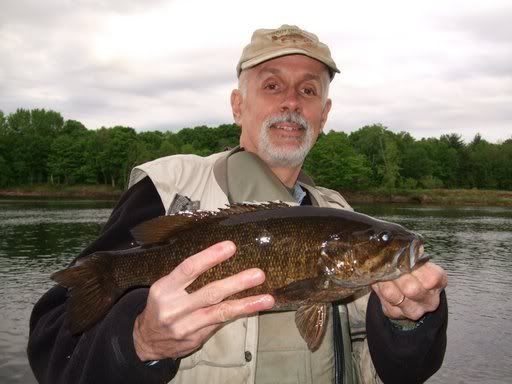
Jim C, a guest author on this blog and from Iceshanty.com and Myfishfinder.com with a nice Maine smallie.  After joining a forum, introduce your friends and get them to join.  Not only is it a great way to stay in touch and share reports, but they can make new friends too.  I met Jim long before I joined any internet forums and fished with him regularly.  After moving to Maine, these websites found some fishing buddies for him and allowed us another means to stay in touch.
Web forums also have other features, like chat rooms, or links to other fishing resources.  Some contain blogs, product reviews, fishing articles or even picture galleries where you can store and upload pictures or view those of other users.  Some have links to State or Territorial government departments of natural resources and fishing related links, tide charts, lunar tables, or river stages.  Others sell T-shirts, mugs, or other fishing products displaying their respective forum logos to earn revenue for forum maintenance and other expenses.

I'm going to list a few of my favorite web forums as examples to illustrate the ways that they are structured.  They are all free to join, and if you register to them, they don't share your registration information with anyone and you won't be spammed.

One of the first web forums that I joined many years ago is http://www.iceshanty.com/.  This web forum is specific to ice fishing and is popular, as you'd expect, in the Northern sections of the United States and Canada.  There are members from other nations in Europe that also join and share in the ice fishing discussions.  I've personally learned a ton of information about ice fishing and have met a bunch of friends on this web site from all over the country.  Traffic on this web forum is much heavier in the winter than other times of the year, but as the site has grown, the off season has been much more active the past few years.  As a service to its members, Iceshanty created a "sister" site for open water fishing, http://www.myfishfinder.com/ and also a sister site for hunters, http://www.myhuntingforum.com/.

Another website that I joined years ago, http://www.riversmallies.com/, targets a more specific audience, those anglers that love to fish for smallmouth bass in rivers.  It's a site with a national audience, but not much use for anglers where smallies don't reside.  Yet, for such a limited design, the site is quite popular, attracting some very experienced anglers.

http://www.bassresource.com/ is a national forum about bass fishing with some regional flavor but specific to bass fishing.  I've found this website to be a good one as well. 

Eastern Pennsylvania Fishing Reports is a web fishing forum targeting anglers from Eastern Pennsylvania or those that fish lakes and watersheds in Eastern PA.  It has a great design, a bit different than others, but a nice contrast.  It has a large following from anglers from Pennsylvania, Maryland, Delaware, New Jersey and New York.

Virginia Stripers is a website designed to attached striped bass anglers that fish in Virginia waters.  This website initially was designed specifically for Smith Mountain Lake anglers, but has since expanded.  It still has that local flavor and friendly attitude, however and remains one of my favorite forums. 

FishDeepCreek is a website with a very specific audience targeting anglers who like to fish at Deep Creek Lake in Western Maryland.  This website, with a small membership, gets a large amount of traffic and has a really fun local appeal.  The members are quite respectful and friendly, and the information on here is great for those fishing locally.  It's also very active during ice fishing season, and is one of my favorite sites to participate in.

Are fishing forums for you?  Find some that interest you, register, and try them out.  You may find some useful information, learn something about fishing, or even make some friends to fish with.  About a year ago, I started a blog based on a post on Myfishfinder by Bassjunky (Icejunky) talking about writing blogs.  He sparked my interest in writing and sharing stuff like this.  By the way, check out his blog titled, "Bass Junkies Fishing Addiction".

Who knows?  Maybe you'll be inspired to do something that you aren't doing today!
Monday, May 28, 2012

Just a Walk on the Beach

Serenity.  Peace.  One with nature.  The thrill of discovery and the satisfaction of the find.  The gentle slapping of waves against the shoreline acting as natures sorting machine while lulling you into imagining what life must have been like 65 million years ago along these waters.  That pretty much describes my experiences while beachcombing for fossilized shark teeth.  And it's even better as a family activity.  Imagine walking a beach, perhaps having the beach all to yourself with the only stress being how to navigate by wading around fallen trees or other obstacles, or perhaps climbing over them, to get to fresh collecting areas.  And it's even better when you have someone to share it with.
With fossil material all over the beach, all you have to do is enjoy the peace and quiet, and pick the fossils up off the beach.  What a great activity to share with my daughter, and bring home some of natures treasures as well.
In my case, it's a perfect way for me to bond with my daughter.  We've been collecting shark teeth and other fossils together for many years now.  Each trip results in the satisfaction of finding shark teeth, but more important than that, memories that last a lifetime sharing the experience with a loved one.  The great thing about my daughter now, is that although she's grown into a lovely college aged woman, she still loves to go with me.  And now she's getting back into fishing too, which is even better.

Our last trip was to a location where the finds consisted of Palaeocene shark, ray, and reptilian fossils.  For more information on fossils from this era, check out my post titled, "Catching Prehistoric Sharks".  We took some good friends from New York that were down for the weekend on a fossiling trip along with us in hopes of finding Otodus obliquus teeth, fossilized teeth of a gigantic great white shark of that era that grew from thirty to forty feet in length or perhaps some of the rarer teeth from that era.
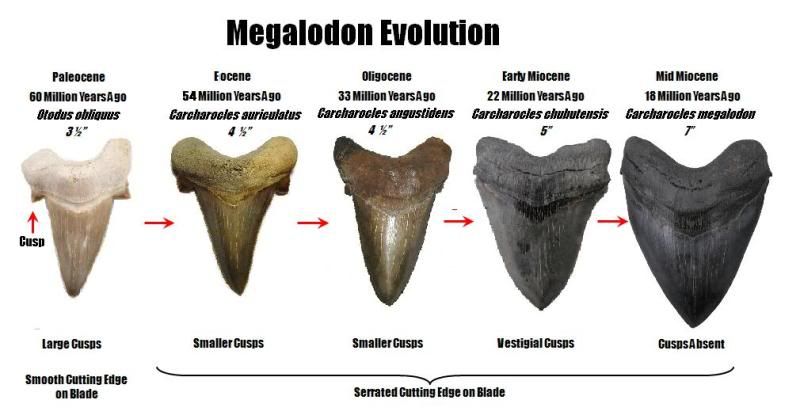
Otodus obliquus, far left, was believed to be an ancestor of the famous gigantic shark Carcharocles megalodon (far right).

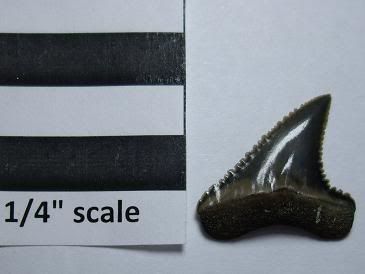
Palaeocarcharodon orientalis.  Photo courtesy of Kevin May.
We all had a goal of finding teeth from two species of fossilized shark teeth from that time are very rare, the pygmy great white shark Palaeocarcharodon orientalis, and a bottom dwelling shark similar to todays cat sharks, Paraorthacodus clarkii, along with the impressive Otodus teeth.  You also have a chance to find crocodile and ratfish teeth.  But the most common type of tooth found there are those of the sand tiger sharks.

Sand tiger sharks were the dominant species of that time.  Not that they were the most dominant of sharks, rather, the number of species of that type of shark far outnumbered other types of sharks.

Last week, one of our friends found a worn but rather large (for this location) Palaeocarcharodon orientalis tooth within the first ten minutes after our arrival.  Amazing.  You never know what or when you'll find something like that!  My daughter and I weren't so lucky, but we did manage to find a good many shark teeth including some nice Otodus obliquus teeth and a pile of sand tiger shark teeth.
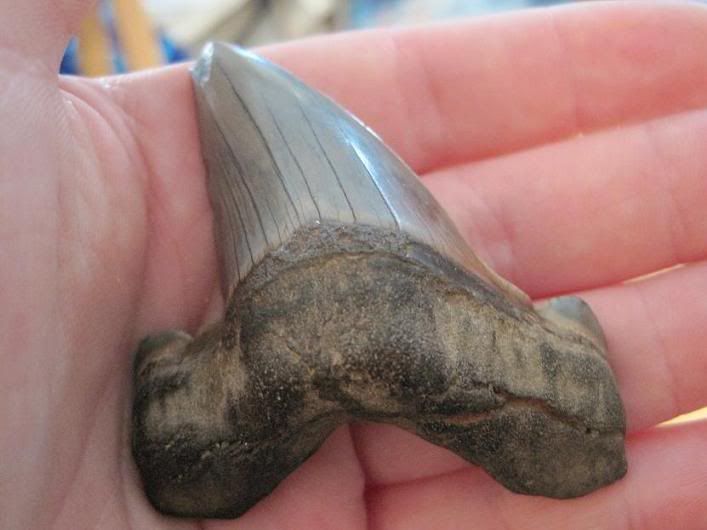
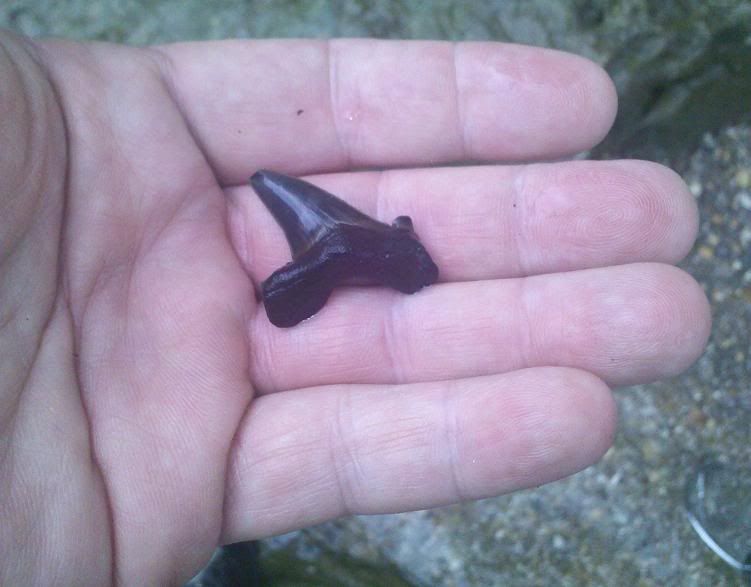
Otodus teeth like this one found by my daughter a couple years ago of this size are rare.  Although we didn't find any like this one on this trip, we did find several teeth up to an inch and a half long though, which are also a nice addition to our collection.


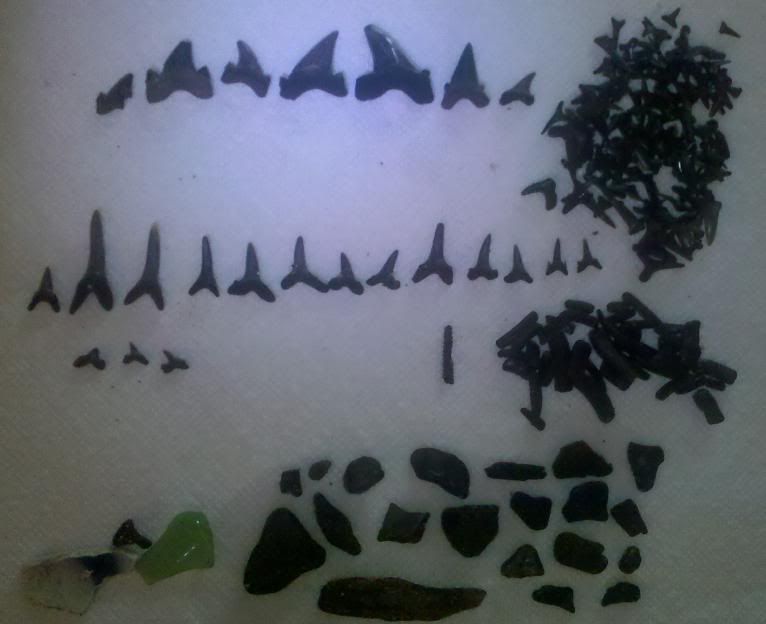
Although I didn't find the rare teeth, I did manage to find six nice Otodus teeth (top row) with the biggest having a slant height of an inch and a half.  I also found a piece of pottery (bottom left).

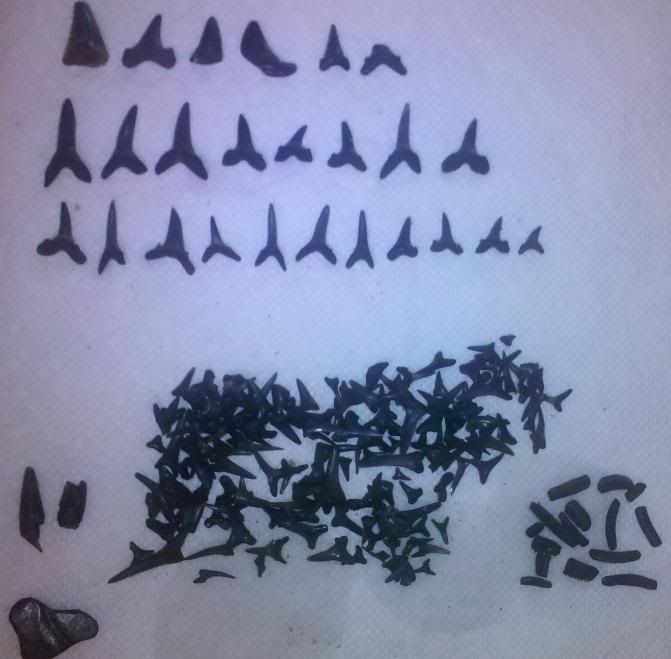
My daughter's finds on the trip, including a crocodile tooth (bottom left just above that piece of turtle shell).  She found some huge sand tiger shark teeth too (second and third row).
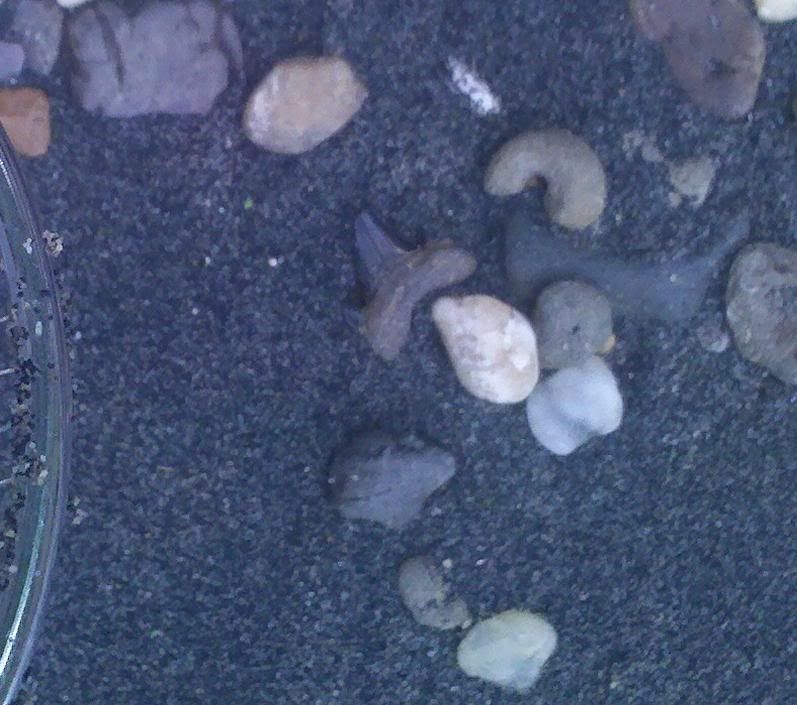
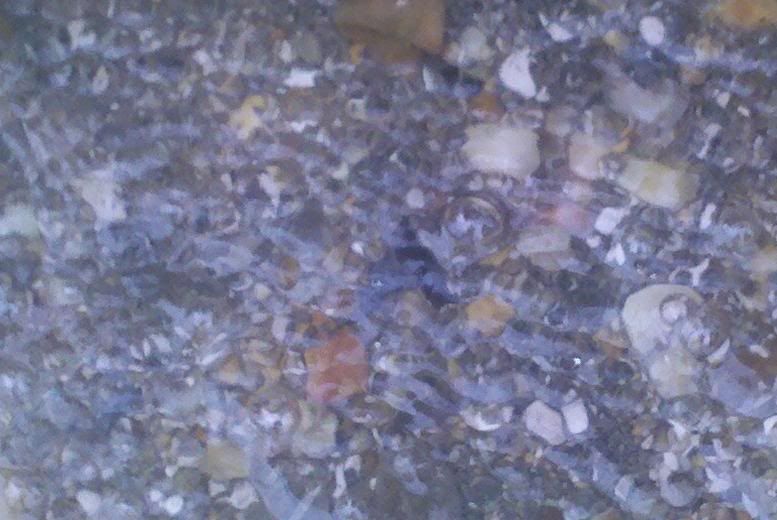
Finding shark teeth on the beach can be easy as some of them just seem to appear by themselves on the beach.  Others are much tougher to find because they blend in with the rocks, pebbles, sand and shell fragments making them difficult to see.  All it takes is one wave to wash away some sand and uncover a tooth.  There are other fossils there too, like internal molds of gastropods or even entire shells.  I've added a few of these to my collection over the years, but my preference is to collect vertebrate fossils, especially shark teeth.
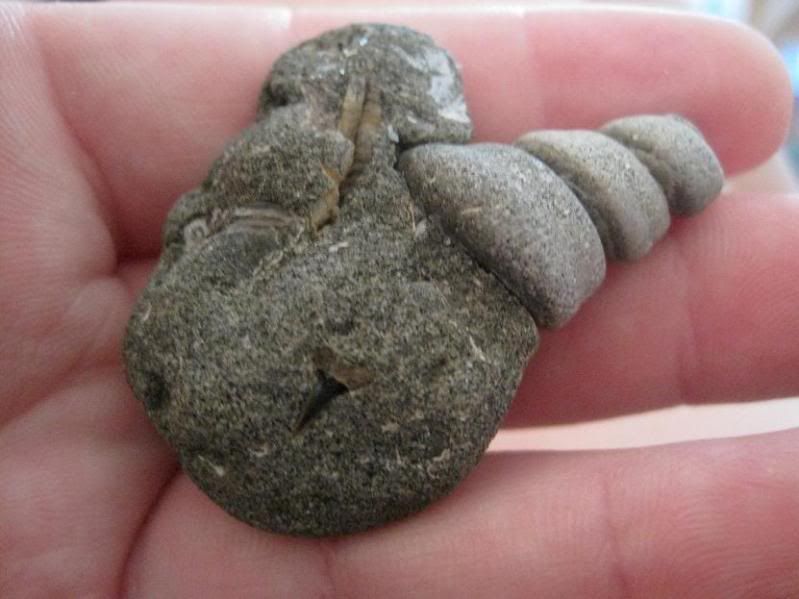
Although I prefer to collect vertebrate fossils like shark teeth but have added some gastropod fossils to my collection over the years, sometimes it's nice to find them all in one nice neat package.  Here is a shark tooth in matrix combined with an internal mold of the gastropod, Turritella.

See the Otodus tooth?  It's to the right of my skimmer tool.
Here's a close up of the Otodus tooth.

All it takes is one wave to wash a little sand away and uncover a tooth (center).
When the wave clears, here's the treasure left behind.  A nice sized Otodus tooth.
We also observed tournament anglers practicing for a big tournament later that weekend.  Prior to them moving to our location, large fish were feeding on the surface just a cast off shore.  The commotion was far too much for largemouth bass, so my guess was that they were either large striped bass feeding on shad or herring, or perhaps big blue catfish.  Either way, the fish busting the surface were massive.  I wondered if any of those anglers had hooked anything like that during the day while targeting largemouth.

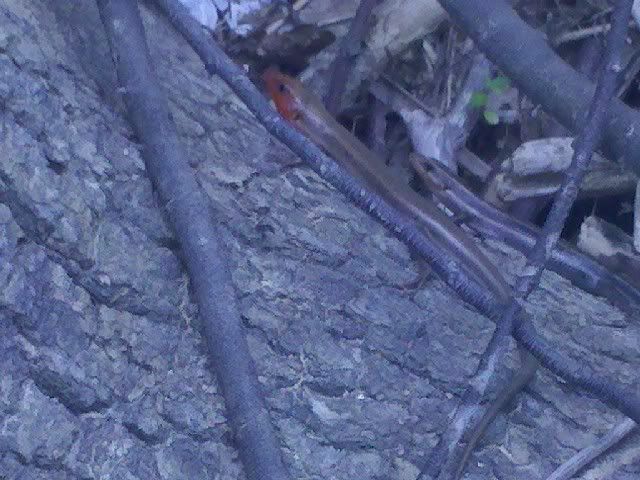
Another plus while beachcombing for shark teeth is that you often see things that most people don't get to see when it comes to nature.  Like hunting and fishing, fossil collectors often encounter wildlife.  Sometimes we'll encounter deer, fox, mink, or just about any animal that frequents a river bank.  The other day, we found a breeding pair of five lined skink.  These beautiful lizards could care less that we were there and let us sneak up to take a picture.
We were able to sneak up and take a picture of this breeding pair of five lined skinks. 
So, last week we had a great time sharing a fossiling spot with our friends Mike, Mike and Nick from New York.  In return, they invited us to collect at some of their spots further North.  I think that we'll take them up on their offer.  We had a great time socializing with them and collecting.

For me, any time I can get out with my daughter outdoors is a great day, whether it's finding shark teeth on the beach or out on a fishing trip.  I can't think of a better way to spend time with someone you care about.  Can you?

Sunday, May 13, 2012

Nanofil - FBO's Final Analysis and Review

I've used Nanofil exclusively on my open water spinning tackle, with the four pound test on my ultralight panfish set up, and for my bass and walleye finesse fishing rigs, I'm sold on the twelve pound test.
Using the twelve pound Nanofil allows me to put the boots to 'em on my hooksets.  I no longer worry about break offs and still get great casting distance while casting all of my finesse bass stuff.
Why twelve pound?  Because I was tired of breaking off on the hook set.  It was too much for my feeble mind to remember to hold back.  I like to put the boots to the fish on the hookset.  It's habit, and I've been doing it for years.  The good thing using the twelve pound test is that, although I've sacrificed the casting distance that the thinner diameter Nanofil had to offer, I'm still casting further than any other line that I've used in the past, and I have yet to break a fish off on the hook set.

Edit:  When I had problems with the lighter versions of Nanofil, I was used a Palomar and Double Palomar knots.  With the twelve pound Nanofil, I've used the Palomar without any issues.

The only maintenance that I've done to keep the breakoffs from happening is that the line will fray after a while and weaken, so I trim a couple feet off prior to each trip.  To keep the spool full, all I have to do is to replace the lost line every once in a while with backing (by transferring from one spool to another).

Memory?  There is no memory.

About the visibility?  I have yet to use my fluorocarbon spool or a fluorocarbon leader in over six months of fishing with it.  The fish don't seem to mind the white color even in gin clear water, and between you and me, I can see it better and that makes for good jigging in my book.
Even when fishing gin clear water, the Nanofil twelve pound with the white color passed my test.  I have yet to use any fluorocarbon leader or my other fluorocarbon spool in over six months since using Nanofil line.
Nanofil isn't quite as strong as similar diameter super lines, but it's pretty close, and stronger than monofilament or fluorocarbon lines of the same diameter.  Also, like superlines, it doesn't have any stretch.

Also, after putting the light stuff on my panfish set up, I haven't gone back to mono or fluoro either, and I've caught a ton of panfish in the last six months.  I haven't had any breaks on the hook set, but also using a slower action ultralight power panfish rod may help with that.  And, I've caught some decent bass and chain pickerel on that set up while panfishing.  Using the Nanofil also allows me to cast my ultralight jigs further than with other lines.
While panfishing, the Nanofil held up well for me on chain pickerel and plenty of bass like this one...
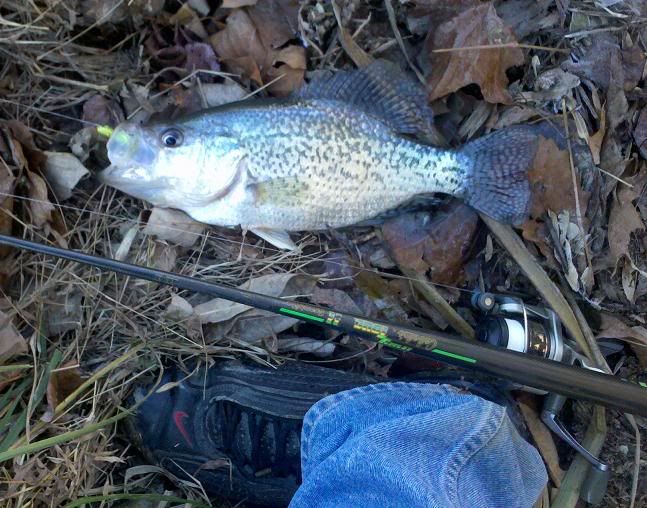
...and plenty of slab crappie have fallen victim to my ultralight rig and jigs using Nanofil.
I'm sold on this line until something better comes out.  Is it perfect?  Nope, but it's the best that I've used to date.  What step in technology that will get me to change?  How about making a line just like this with the clarity of fluorocarbon line?

Bottom line on the line, is that when using this stuff for the right purpose, and choosing the right diameter for the right application, this line should produce for you too.  Is it for every application?  I don't know the answer to that.  I like it for working finesse plastics for bass, and for catching panfish on my ultralight set up.  I've also caught some nice walleye in our local rocky rivers, chain pickerel in weedy ponds, and even striped bass while bass fishing without any issues.

For those that have recently started following this blog and missed the other reviews, you can find them here:

http://fatboysoutdoors.blogspot.com/2011/08/berkley-nanofil-product-review.html

http://fatboysoutdoors.blogspot.com/2011/08/nanofil-product-review-update.html

http://fatboysoutdoors.blogspot.com/2011/10/nanofil-product-review-update-to-update.html

Saturday, May 12, 2012

Do Nothing Bliss

Naw, I don't mean laying around the house watching WFN repeats of Hookin' Up With Mariko Izumi and eating bon bons.  I'm talking about a type of finesse plastic bait that brings bass to the boat during the spawn and post spawn when they seem to ignore just about anything else, the soft stickbait.  On top of that, these baits are productive all year long. 
Soft stick baits produce fish like this all day long, and to me that is do nothing bliss!!!!
For those that aren't familiar with these, years ago Gary Yamamoto designed a bait that he coined the Senko, which basically took the shape of a ball point pen.  It had no curly tail, no ribbon tail...in fact, it had no tail at all.  I guess it has a head end and a tail end, but honestly, they work so well that I fish them either end head first to get the most use out of them!
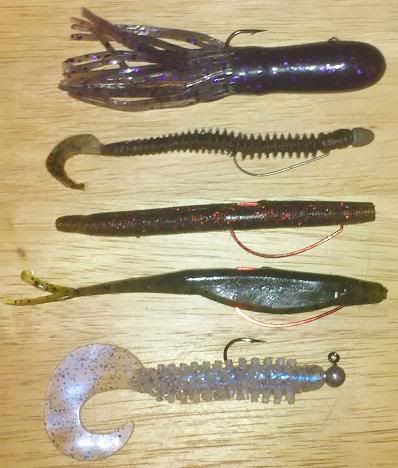
Gary Yamamoto Baits Senko (third from top) can be fished any number of ways, but it must be fished!
Over the years, these baits not only became popular, but have won tournaments and a lot of money for some people.  But, for weekend warriors like me, they simply catch fish.  Not only that, they can be fished a variety of ways, and bass simply love 'em.  You can fish them weighted or unweighted, Texas rigged, Carolina rigged, wacky rigged, drop shotted, on a shaky head or nose hooked with a circle or octopus hook, bit in half, thirds or quarters.  There is no wrong way to fish them except not fishing them.
My buddy Howard knows first hand about nice bass like this one that love soft stickbaits like the Senko
I recall a trip to a pond on Maryland's Eastern Shore many years ago when the Senko was just out on the market.  My buddy Howard and his significant other, April, were fishing out of his Coleman Crawdad cartopper boat, and I was fishing my buddy Bill's boat, on a decent late spring day when the bass weren't particularly easy to catch, but certainly catchable  We fished hard for our bites, tossing plastic worms with some success, jigging and worming, working our baits as any skilled angler might as to tempt chunky bass from their weedy or woody lairs.

Meanwhile, April was reading a book while perched in the front seat of Howard's Crawdad, with one line out dragging a Senko behind the boat.  Next thing you know, her rod tip is thrashing about and she's reeling in a decent two pound largemouth.  This happened again and again, and enough that she probably had to read a good many pages over again and again.  In fact, she didn't really have much time to read at all and wound up outfishing all of us two bass to one.  And it wasn't even close.  Her secret?  Do nothing!

Most soft stickbaits have similar traits to the Senko.  They're heavily salt impregnated, so they are heavy and sink much faster than other soft plastic baits.  They're also very soft, and when fish hit them, they hang on to them forever, and will swallow them if you don't set the hook quickly.  The action is really impressive, although they don't appear like they'd do much, they flutter down and kind of wiggle tantilizingly, and often glide in one direction or the other on the fall, sometimes taking the lure deeper under a weed mat or into the cover.

You can fish soft stickbaits in the rivers, creeks, ponds or your local lake, and fish them just about any time of year.  Often when other soft plastics aren't drawing the strikes that you'd expect, these do nothing baits will put either numbers of bass in the boat or good sized ones, or both.
Howard fooled this bass on a five inch Senko when the bite was tough.
Senkos, and their cousin the Kinami Flash, are available in several sizes and colors.  There are many other brands on the market these days with their own version, and many of them are quite good also.  I've tried some with great success, and have yet to be disappointed with any of them.  I've also tried Case Plastics Magic Sticks, which are somewhat more durable with a firmer plastic, a Yum version that has a hook slot, and Bass Pro Shops Stick-O.  They all work well.
Toothy critters like this chain pickerel love 'em too.
There are also many versions out now, some with tails, some slim, some fat, some short and stout.  They all work well, so find one that works for you and fish it.  My favorite is the four inch regular version, but also regularly use the five and six inch sizes.  My favorite technique this time of year is to Texas rig them without weight, cast them out, and jig them, and if the fish are agressive, twitch them a few times and pause, and repeat.  Try working them quick at first, but if you don't get hits, slow things down, sometimes way down to a do nothing approach. 
Reservoir smallies munch on soft stickbaits as if they're candy during late spring.
Yet, sometimes the best technique is to simply toss them into the cover and let them flutter down.  This works well Texas style, but even better when wacky rigging.  Bass can't resist them.  When fishing them in a river, toss them along a current seam and let them drift along an eddy where fat smallmouth bass lie in ambush.  Or, cast them up and across current, and let them drift down past river obstacles such as logs and rocks, where aggressive smallies on the feed will crush and hang on to them.
In rivers, toss a Senko amongst the rock piles and get ready for a bite from a hungry smallmouth.
If the Senko has one knock against it, they're soft, and fish hit them so often that they tend to tear them up.  And they're a bit pricy.  But, there are things that you can do to achieve more longevity out of each one.  When wacky rigging, you can use a wacky rig tool along with small rubber rings to hold the hook on your rig.  Others use small rubber bands.  Still others fish the pieces after they fall apart, and others, like me, weld them back together with a soldering iron.  I never throw the pieces away.

I'm not saying that the Senko is better than any other brand, but it's the one that got me started fishing these.  I keep fishing them, perhaps habit, perhaps because they work, so why change if you're catching fish on them, right?  I've used other brands when I've found colors or features that I like that I can't get from a Senko. 

For more information on fishing Senkos, check this article out, "Senko Secrets", by Steve Price on Inside Line online magazine.

The bottom line is that, if you haven't fished these do nothing style lures, you could be missing out on some quality bassin'.

Saturday, May 5, 2012

The Bite

You know where the bass are there because you've fished your spot countless times over the years.  The water is crystal clear, leaving you with the first impression that the bass might be spooky.  It doesn't matter what time of year it is at this spot, because the bass always seem to hang out in this area all year long.  It's the perfect spot for bass to ambush unsuspecting prey with plenty of cover, a drop off to deeper water, and during this time of year, vegetation.  On this day, you're facing typical cold front conditions with Northwest winds at ten to fifteen miles per hour and bluebird skies, not exactly ideal bassin' weather.  You normally work these areas with crankbaits, spinnerbaits or buzzbaits, looking for that big fish reaction bite.  But today, you're finesse fishing, because you know that under tough conditions, this is your go to technique.  You aren't worried, because you know that you'll get "the bite".  Maybe a big fish, or maybe a lot of bites, or maybe both.
One of my favorite things in fishing, catching bass on a plastic worm, and getting "the bite".
Most people don't like fishing these conditions; bluebird skies, annoying relentless winds creating a bow in your line, and crystal clear water.  Yet, you know that with these conditions, the wind piles up warmer water along the woody shoreline, also breaking up the surface and decreasing the ability of prey to see predators that lurk in the heavy, until it's too late.  Today, the bass should relate tightly to the wood or hide under the mats of weeds.  Reaction baits may work, but your past experience has shown the fish to be picky under these conditions at your honey hole.

You pitch your plastic worm right into a hole through  a tangle of branches in a huge blowdown.  Your offering falls slowly as you watch your line intensely for the slightest movement that should indicate a strike.  You're using a superline, where the lack of stretch gives you confidence that when a bass bites, you can easily drive that hook home on your hook set.  You position your rod to minimize the bow in the line as much as possible for two reasons, to allow your lure to fall naturally through the cover, and to feel the bite as easily as possible.

And then, you feel it.  "The bite".  It's not a bone jarring strike, nor does it rip the rod from your hands.  Rather, it's a suble tap, as if someone gently flicked their fingernail against the blank of your rod.  Immediately, you sense the weight of the fish beginning to move away with what it assumes is an easy meal.  You drop your rod tip and crank up a little slack line, and with a quick short snap of your wrist, drive the hook home.
Long time fishing bud Howard Boltz knows "the bite" as well, recognizing it early enough to set the hook into this fine largemouth bass.
Then the bass goes ballistic, diving deep into the cover against the force of your rod.  You put pressure on the fish to oppose it's will to escape, and turn the fish successfully.  The fish tries to dive once again, but your drag is tight, and there's nowhere for it to go.  Your superline is much stronger than the rated pound test, and soon you move the fish out of it's woody lair.  You reach down and grab the bass by the lower jaw and hoist your trophy out of the water.
My friend Steve felt "the bite", nailing this hawg on a plastic worm.
In my opinion, I live for that bite.  That's when I know when I'm doing everything right, the way that I need to perform.  I know that I'm on the verge of bassin' success for that day.  I know that when I can get that first bite, I can get more.  And after catching that first bass, I'm greedy...I want more bites.  And when you're in a zone, worm fishing can do that for you.

There are other exciting bites in fishing.  Many are very exciting, like a bass slamming a buzzbait at boat side, or a musky attacking a blade bait at boatside after a figure eight finishing retrieve, or a massive striper crushing a crankbait at the end of your cast.  Some bites are so explosive at the boat side that you may feel the need to change your drawers!  Even in bassing, the spinnerbait or crankbite bite is a very addictive, adrenaline generating event.
Crash Mullin's demonstrates "the bite" in this awesome and humerous video.  It can't get much more exciting when a musky follows your cast and you draw a strike after going into a figure eight.  He has a great fishing show, by the way.  "The Bite" gets your adrenaline going for sure!!!!

It's not the braggin' style photos posing for fish that I live for, nor is it the numbers, and it's certainly not just the activity outdoors that many say, "a bad day of fishing is better than a good day at work".  On the contrary, I live for "the bite".  And I live for lots of them!!!!!!

Thursday, April 19, 2012

Black Marks, Blotches or Spots on Bass...OH MY!

I, like many anglers in my region, have been catching both largemouth smallmouth bass that exhibit large irregular black blotches or spots for many years now.  When I first started noticing fish with these weird markings, they occurred mostly with largemouth.  In recent years, I've been seeing them in smallies too.  The bass that I've caught with the spots were large adults and appeared to be really fat and healthy.
Black blotches or spots, like the ones shown here on a fat healthy largemouth bass from the Upper Tidal Potomac River caught by my buddy Bob Barber, are nothing to worry about.
In addition to the local waters that I fish, anglers in other states and, from what I've read, in Canada, have been seeing this phenomenon as well.  Naturally, when weird stuff happens to fish, anglers and biologists alike tend to think that the causes surround parasitic activity, water quality issues, or mishandling of catch and release fish.  These concerns turn to complaints and assumptions, and eventually research into the potential problem, and rightly so.  That's how the process usually works.

So, what are the spots and are they anything to worry about?  The condition is termed hyperpigmented melanosis, which is a fancy term for pigment discoloration.  The condition seems to occur in larger adult fish more often than juveniles.  The spots don't appear to be permanent.  Often, the coloration often returns to normal after a period of time.  And, researchers have found the fish exhibiting the spots seem to be otherwise very healthy.  Of the ones that I've caught over the years, I tend to agree, they seem very healthy.
The black blotches occur just about anywhere on bass, even the lips as shown here from a largemouth caught in a small Maryland lake.  The patterns can be simple spots, or large irregular blotches.  I think that they give the bass character!
Anglers are increasingly reporting occurrences all over the country that, in some cases, are on waters that are already troubled by poor water quality or pollution.  The fears about their home waters may be well founded, but perhaps the link to the spots may not be.  Reports of people catching fish with the spots seem to be increasing, but it doesn't necessarily mean that the number of affected fish is increasing.  People are noticing, and with the amount of free exchange of info over the net, are simply talking more about it.
Here's the same bass shown in the previous picture, displaying several spots and blotches on the lips, body, gill and fins.
Researchers speculated for some time that stress of some form may be the cause.  Stress resulting from fish handling (perhaps catch and release), parasitic activity, disease, natural injuries to the skin, bacterial or viral infections, pollution or poor water quality have been suspected causes.  Even though all of those could possibly result in the condition, there's no evidence to directly support that this type of melanosis is caused by those factors, and researchers have stated that the symptoms could very well be genetic or hormonal.

In many fishing forums, more and more people are posting fishing reports with pictures of affected fish along with voicing their concerns.  With all of the buzz about blotchy bass, and after catching a few myself, I decided to do my own research.  I really couldn't find much on the web except that nobody really knows that causes the spots, that the fish appear healthy, and that researchers at Auburn University are studying the phenomenon.  I was not able to find anything about the results of the Auburn study.

Gene Mueller, who writes and awesome blog that I urge you all to visit, Gene Mueller's World of Fishing & Hunting, mentioned to me that these spots aren't anything to worry about as he had spoken to Maryland DNR officials, and they assured him that the spots were nothing to worry about.  In addition, the Maryland Fisheries website mentioned in their fishing report in reply to a post something to that effect.

I wholeheartedly agree with Gene and am not worried about the spots.  But I'm not sure that the rest of the angling community feels the same way.  So, I wondered that, with all the increased concern about blotches on bass, maybe I'd address the topic here to put forth some of the latest info.

Wil Wegman recently wrote a detailed piece in the April issue of B.A.S.S. Times on the topic.  He interviewed various people researching the spots, and shared what he learned with the B.A.S.S. Times followers.  he relates that former Professor John Grizzle of the Southeastern Cooperative Fish Disease Laboratory at Auburn University and Associate Professor Jeff Terhune, who currently runs the lab, concur on their take on the spots. 

Dr. Terhune states that "...there could be lot's of causes, some anecdotal and some potentially real.  Even spawning may create lesions or sores that heal in this manner.  Genetics can also play a big part.  Overall, most of the hyperpigmentation that I am aware of causes no harm to the fish, otherwise you would see fish in poor condition (i.e. thin) or with some other diseased condition."

Mr. Wegman also reported that Dr. Terhune believes that "though anglers are targeted as causing the strange bass coloration, it's far more likely to be a natural occurrence that has little to do with how much a bass has been handled."  That doesn't let anglers off the hook though, as it's our responsibility to carefully release our catch (if that's our intent) and handle the fish with the utmost care as much as possible. 

Then again, many people are questioning what, in some bodies of water, seems to be a more recent phenomenon.  The Susquehanna River in particular where more and more smallmouth bass seem to be exhibiting the spots than many Susky veterans can ever remember.  Recent water quality issues that are known to cause other problems with the health of the bass populations there, along with dramatic decreased young of the year counts, have resulted in recent regulations closing all bass fishing in large stretches of the popular river during the spawn, including catch and release fishing (beginning May 2012).  Perhaps there is something to this. 

Some veteran anglers are asking for more detailed studies by Pennsylvania officials to see if the spots are indeed linked in some way to the troubles of that river.  Perhaps they'll find out one way or another.  If they're related, they could be an indicator of bigger problems.  At the very least, even if the spots prove harmless, more attention would be given to address the real causes of the decline in bass numbers there.  More to come I'm sure.
This Susquehanna River smallmouth bass shows multiple black spots.  Anglers that frequent this popular river are extremely concerned about increased occurrences of the spots in their river, especially in light of other problems related to pollution there.  Photo Courtesy of Bill Yingling, M.D.
So, in summary, as Gene pointed out to me months ago, the black blotches appear to be nothing to worry about, at least on the individual bass studied.  But, could they be an indicator of bigger problems on some bodies of water?  Our focus should be on improving the water quality as much as possible, especially if the spots really are an indicator that is tied to water quality.  The bigger problems that have already identified are decreased young of the year smallies in our upper rivers along with discoveries of intersexed bass, and bacterial lesions more than likely due to poor water quality and various forms of pollutants.  But that's a blog topic for another day.

By the way, I've been a lifetime member of B.A.S.S. for many years.  Their publications, Bassmaster Magazine and B.A.S.S. Times are highly informative.  They are a must for the serious bass angler.  I've saved every copy since becoming a member many years ago.  Often, the information found in both publications is useful to other anglers as well, especially topics regarding fishing politics and conservation.  I highly recommend both publications.  I'd like to thank Bassmaster and B.A.S.S. Times for their contribution and permission to share their research, and Wil Wegman for writing such an informative article.