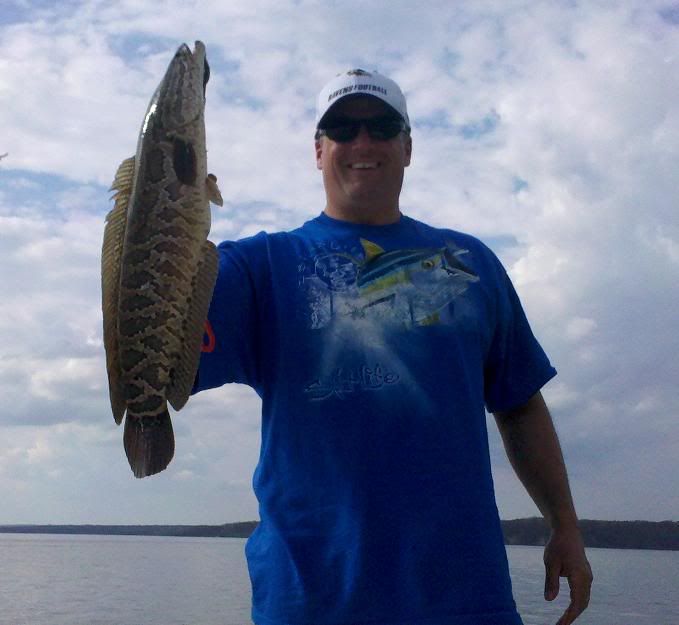
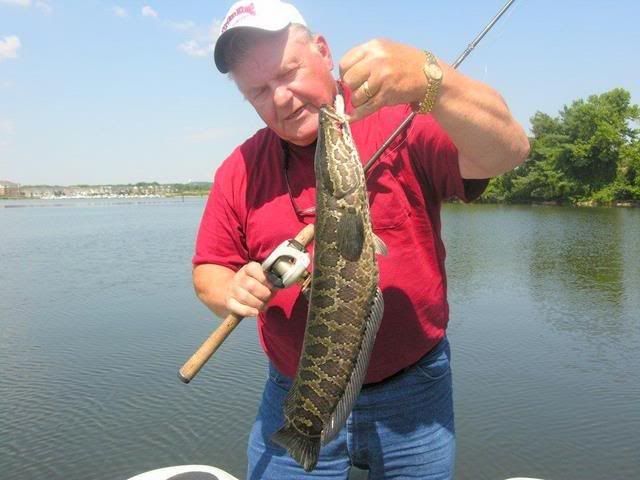
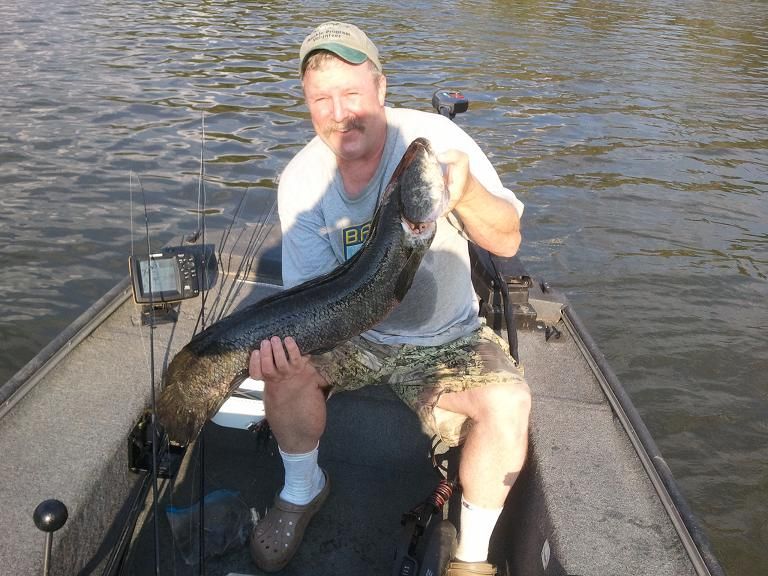
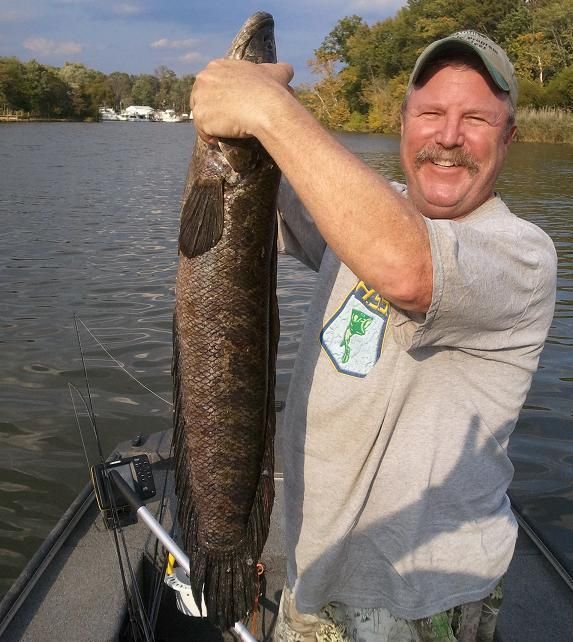
Saturday, November 24, 2012

Fall Slab Crappie

It was the day after Thanksgiving.  The air temperatures hovered at just above freezing with the afternoon forecast to hit nearly sixty degrees, and the water temperatures were in the upper to mid forties.  My buddy Howard and I decided to launch my boat and head out for some mixed bag tidal river freshwater fishing in search of bass and crappie, and anything else that wanted to bite.

I could barely zip up my personal flotation device (PFD) because belly remained stuffed from my Thanksgiving turkey the night before.  In fact, I was wearing my backup PFD, because Howard was complaining about the same thing, and my PFD was the only one that would fit him.  He said it was because he had so many clothes on...Hmmmm.  Yeah, right...  Finally he admitted it was also due in part to massive eating syndrome the night before.

The moon was full, and a Southwest wind backed the tidal waters up to create an unusually high tide.  A wet dock greeted us at the launch, making it a little too slippery for my liking, so care had to be taken when boarding the boat. On our run to our fishing hole, logs, leaves and debris littered the river making navigation difficult, even clogging my jet drive outboard half way to our destination, leaving my hand soaked and freezing cold for the remainder of the trip.  But it was worth it.

We reached our destination, a spot along the river where the river depths chanced from about five feet to a deep hole that was about twenty feet deep.  When the tides change, currents can be strong, so we also had to find an area that was somewhat sheltered from the strong tidal currents, where predators could wait in ambush of baitfish.  I started out in search of largemouth bass using a four inch finesse plastic worm.  It didn't take long for that first bite.

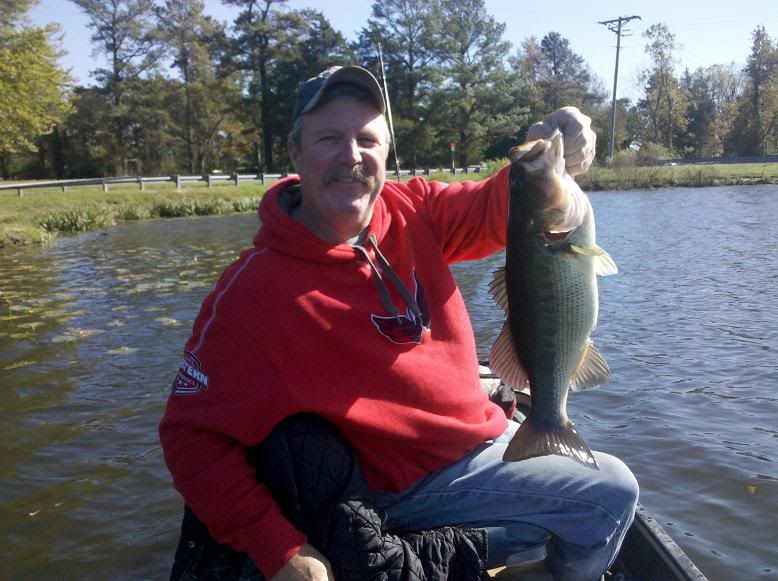
I was stoked to get bit so early, and really looked forward to a nice battle with a tidal bass.  I set the hook and had a decent fight, but it wasn't a big bass.  As it turned out, it was a fat slab crappie.  This fish had shoulders too, a saying that anglers often say when they refer to a muscular healthy fish.
I was after largemouth bass, but when crappie like these inhale your bass baits in an area that could have them bunched up, you could have a heck of a fun fishing day.  We had a crappie day after all!
Meanwhile, my buddy Howard listened to the advice of a friend of ours, Gene Mueller, to try a lure that, quite frankly, doesn't look like much.  Please visit his outdoor blog for some fine articles on fishing, hunting and other outdoor news at Gene Mueller's World of Fishing and Hunting.  Howard tied on a three inch Mann's Stingray Grub in the avocado color rigged on a one eight ounce jighead, and, per Gene's advice, smothered it in Smelly Jelly.  I kept after the bass, but Howard started slaying the crappie, one after another.
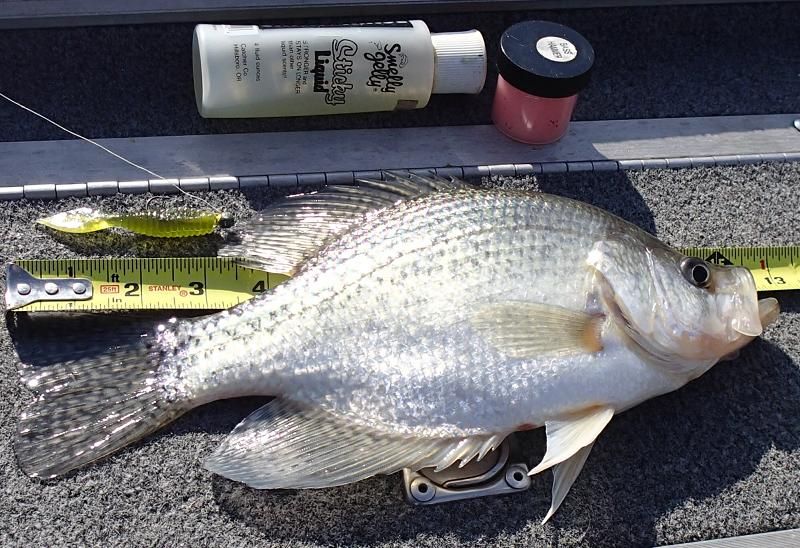
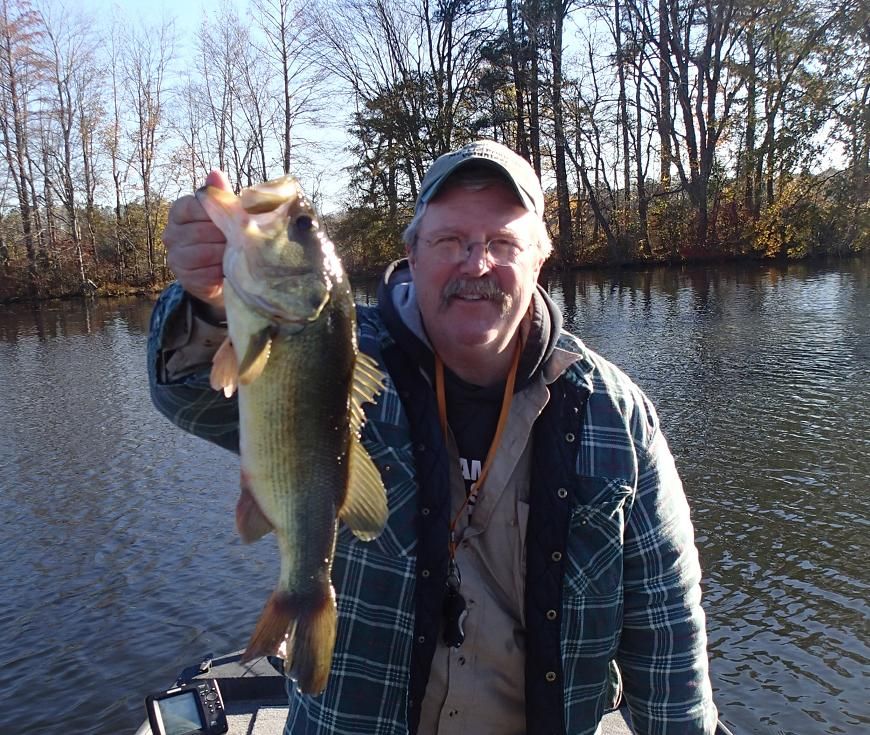
Gene's Stingray Grub/Smelly Jelly combo recommendation paid off time and again, yielding slab crappie like these all day long.  You can't ask for a more fun fishing day catching good numbers of fish like this.
With this lure, you really don't know what you're going to catch next.  These deep tidal holes attract predatory fish of all kinds.  While thumping the slabs, Howard tied into a decent fat but not especially large bass.  But that bass was spunky, peeling drag off his spinning reel before finally being landed.  Not an hour into our trip, we knew we'd had fun, and found a spot that gave up one fish after another.  
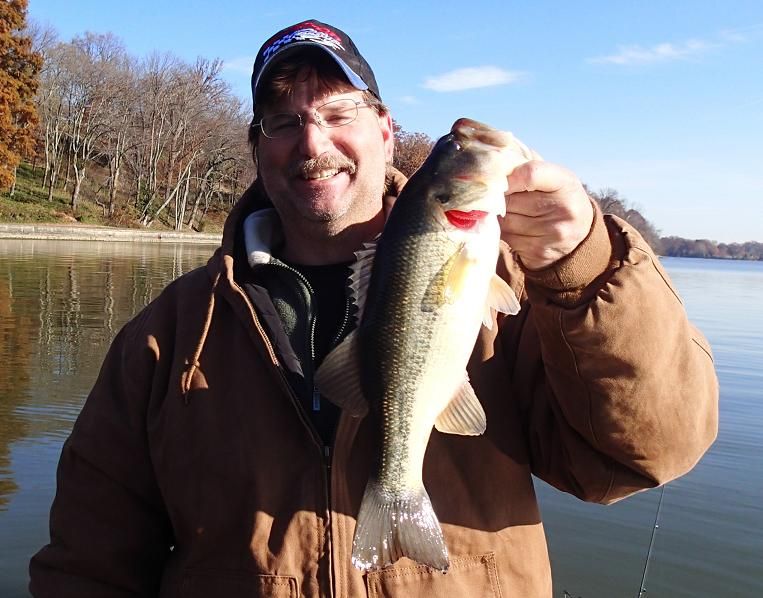
Howard with a chunky two pounder, a bass that inhaled his Stingray Grub.
I hadn't tied the Stingray on yet, and was itching to do so, but the action was hot, so I went with what I had, a small two inch chartreuse grub tied onto my panfish rod.  While he was catching slab crappie and bass, I was catching smaller crappie and bluegills on that set up.
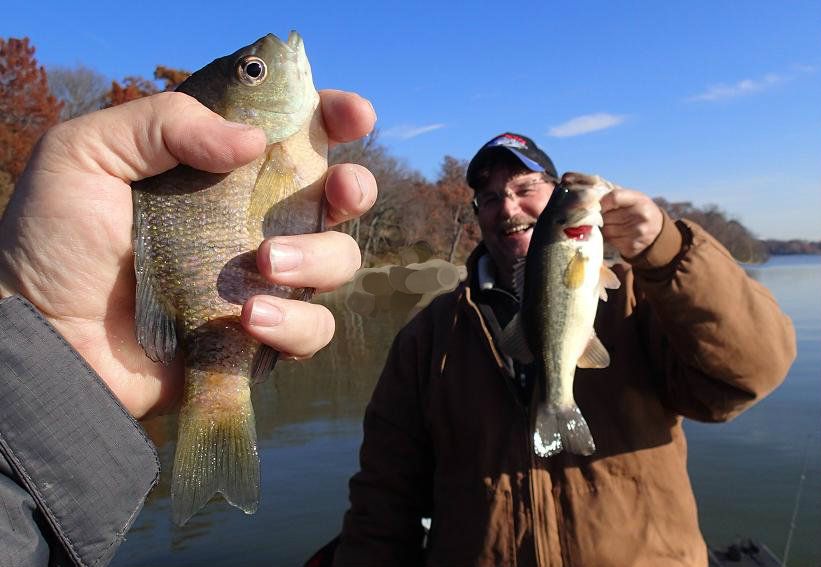
While Howard was catching big fish on his Stingray Grub, I was getting bluegills and smaller crappie on my panfish set up.  It doesn't take a rocket scientist to figure out that I needed to change tactics.
The truth is, while spending the hour drive down to the ramp from my house, I talked up the Stingray Grub and couldn't wait to tie one on.  Howard must have been plotting to beat me to the punch.  He knows my habits, my lazy habits, of starting out with the lures that I had tied on from my previous trip.

So, after falling behind in the bigger fish numbers, I made the change, tying on a Stingray Grub.  After a cast or two,  the crappie let me know how they wanted it.  I'd let it sink, and they'd either hit it on the fall, and if that didn't work, I'd slowly drag it across the bottom with an occasional slight jigging action.

Gene says that the Stingray Grub is a special bait in our tidal waters because it's a good imitation of local forage, a bull minnow.  Actually, these minnows live in many of the Mid-Atlantic tidal rivers, so this pattern should hold for just about any of those waters.
Howard shows off a fourteen inch slab crappie that fell victim to a Mann's Stingray Grub.
For several hours, the action seemed non-stop.  We caught one crappie after another, and then, when the tide became slack the bite slowed.  It didn't stop, but we had to work harder for them.  We still picked up the occasional fish.  I took some time to go back to my plastic worm, and proceeded to catch a mixed bag of smaller largemouth bass and crappie.  I was after the bass, but the bigger crappie seemed to like the bigger bait too.  I wasn't all that dissapointed!
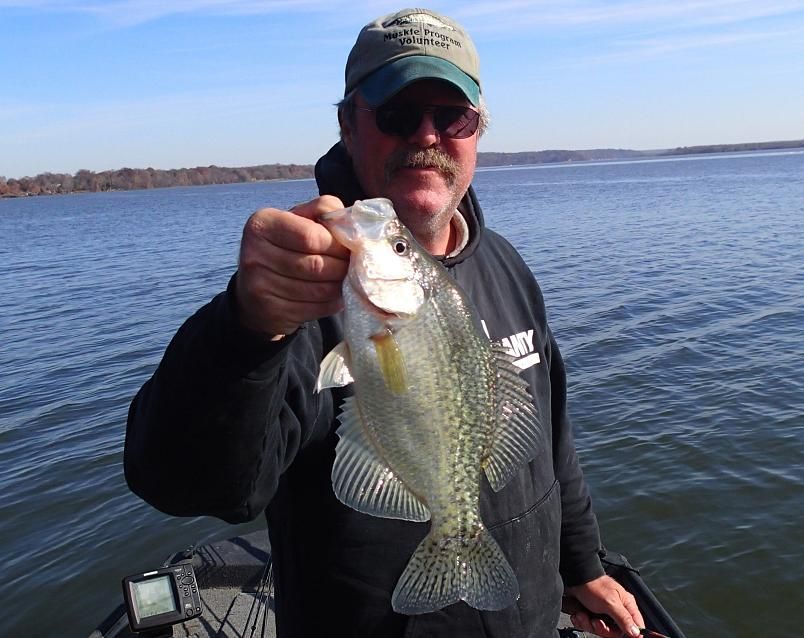
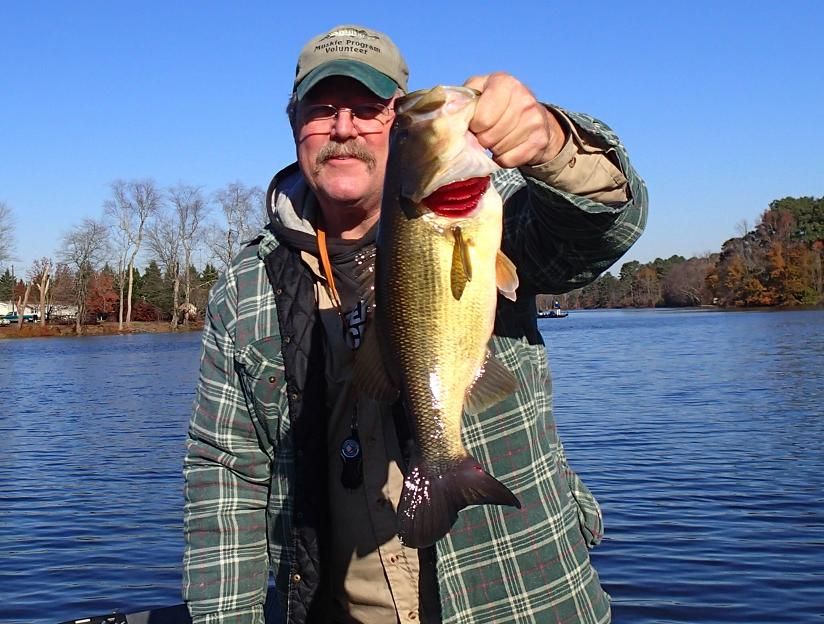
I moved back into largemouth fishing, tossing a finesse plastic worm.  I managed to catch some small bass, but slabs like this didn't mind engulfing my offering.  Howard, meanwhile, stuck to Stingray fishing.
At the end of the day, we finished with so many crappie boated that we lost count.  We had many many doubles (both of us landing fish at the same time).  I managed to catch four species of fish, bluegill sunfish, black crappie, largemouth bass, and even a yellow perch.  Just about anything will bite that Stingray Grub, and when fishing tidal water wintering holes, you really never know what's on the end of your line when you set the hook.  But who cares, right?  Catching fish and having fun is what it's all about.
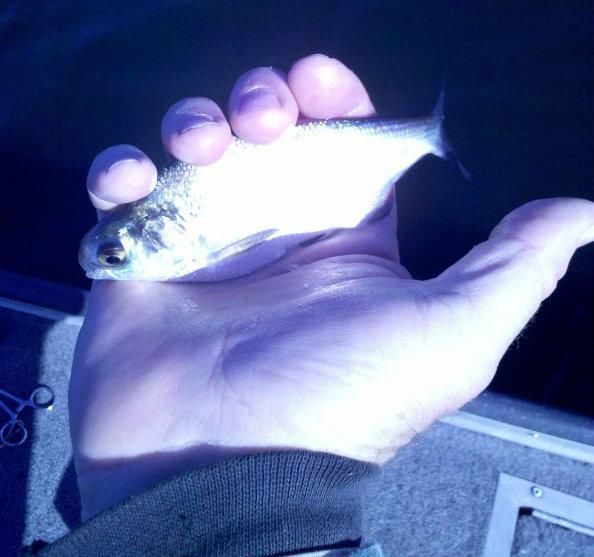
This yellow perch rounded out the mixed bag of fish, four different species boated.
So if you want to catch fish this winter, visit Gene's blog and read the many posts on this subject, take his advice, and you'll catch plenty of fish.  Better yet, if you can do it, take his advice and hire a guide to show you how to do it.  His buddy, Andy Andrzejewski, a licensed guide on the Upper Tidal Potomac River, would be a great choice.  You can reach him to book an outing at (301) 932-1509.

So, while others are out there hunting, it's a great time to get out on the water and catch lot's of fish.  Dress warmly in layers to stay comfortable and enjoy the late fall and winter bounty that your tidal waters offer, including big slab crappie like the ones that we caught yesterday.


Tuesday, November 20, 2012

The Dream Bowhunt

Do I have all of my tackle packed in my boat?  I wondered what I had forgotten.  Last time out, I forgot my polarized sunglasses that would have helped spot sunken timber where we knew bass where waiting in ambush of unsuspecting shad.  Hey, there's my laptop on the boat deck displaying a spreadsheet that I had been working on the other day.

Huh?

Huh????

My body lurched upright as my instincts prevented me from falling over.  I nearly dropped my bow and almost snorted out loud.

I climbed into my Lone Wolf climbing treestand an hour earlier, pulled up my bow and set up for my hunt about twenty five feet up in the tree, but it was still too dark to legally shoot.  I must have dozed off.  That's never happened to me for this long before.  Usually I only doze for a matter of seconds or less than a minute at most.  I guess that's inevitable after staying up most of the night preparing for this hunt.
I wasn't in my boat after all!  I awoke to a bright forest in fall colors.  What a beautiful morning.
Whew, I'm glad that my safety harness was secured to the tree.  I always climb with it, and wear it.  In fact, I would feel naked hunting from a treestand without it.  The woods was quiet.  I know that if a deer had approached during that time, I would have heard it coming.  With a thick layer of fallen leaves displaying brown, red and yellow hues blanketing the forest floor, there would be no way even the smallest mammal could move across it without me hearing it.  Fresh Doritos would have been quieter to walk on.

Not much was moving, even now.  I hadn't seen nor heard even a squirrel.  It was seven thirty in the morning.  But, I was optimistic.  Yet, my mind wandered as I tried to stay alert for any movement in the distance.

I visualized my last fishing trip, where big largemouth bass and big chain pickerel pounced on my crankbaits. I can't get those images out of my head.  As if the experience the other day, having one of my best bass fishing days of the year, wasn't enough, the anticipation of my next trip the day after tomorrow to the same lake is an overwhelming distraction to the task at hand today.  Will I have another banner day of fishing?

"Snap out of it, Kevin!!!!", I thought as I tried to focus on the gaps between the trees in the distance. I scanned for movement, for anything white, for horizontal shapes that might be the backs of standing whitetails.  I need to pay attention.

It's late November, and in my neck of the woods (no pun intended...well, OK, maybe), the whitetail deer are well into the rut.  A couple weeks ago, bucks everywhere were competing for the attention of does in heat.  They chased each other.  They chased the does.  They chased the does from each other.  Live was hectic in whitetail world.

Now things have settled a bit.  The bucks are spending more and more time just hanging out with the loves of their life.  By now, the smaller bucks are hanging around for sloppy seconds.  Most of the young bucks know better now than to mess with the dominant buck in their territory.  They've lost battles, yet their hormones compel them to keep up the chase that they might sneak one opportunity in to mate.
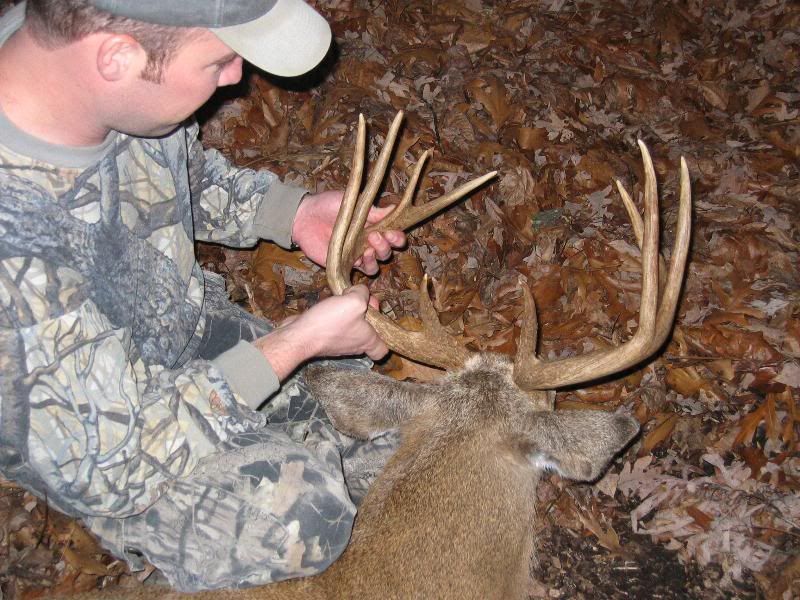
In my younger days, this buck followed a doe to my tree stand grunting all the way.  It was his last mistake.  It was early December.  Certainly that could happen today.
It's still a great time to be in the woods.  I'm bowhunting today, only a few days away from the opening day of our gun season.  Maybe I'll get lucky like I've done before and kill a nice buck before the gunners have a shot at them.  There's still a great chance that the dominant buck will chase the younger ones off.  And, at the least, I might still have a chance at a decent buck trying to invade the dominant ones action.

I daydreamed about the day my brother, Kyle, shot a nice buck with his bow during late November on public land not far from my home.  I helped him drag it out of the woods.  I'll never forget the phone call from him asking for my help.  At first, it was like, "What the heck does he want now?".  All I heard at first was "Blah blah blah, blah blah blah", like the television cartoon, Peanuts, were the adults had that muffled sound.  But then I hear, "Kevin, I got a deer, a big buck!"  I jumped up, dressed, and met him at his truck as fast as you could read the last paragraph!
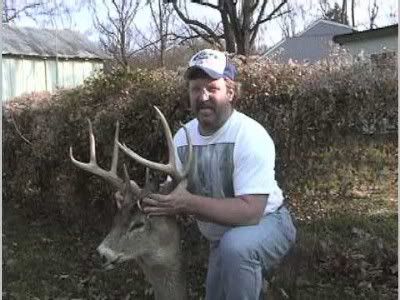
My brother Kyle shot this nice buck with his bow during late November.  I daydreamed about the experience afterwards, how much joy he had, how much joy I had being part of that evening.
Kyle was elated.  And who wouldn't be with a big bodied big rack buck like that?  I was elated!  Kyle was a heck of a bowhunter, killing many big bucks over the years with his bow, all on public land.  I learned a lot from him, how to do things right, to pay attention to detail.  To not stink and make sure to be scent free.  To practice and be a good shot.  You can read about Kyle, who passed away in 2007, in a tribute that I wrote not long after I began this blog.  Here's the link in case you missed it:  Tribute to My Brother Kyle

Again, my body lurched as I snapped out of my daydream.  I suddenly heard the cracking sound of a stick breaking behind me.  That sound in the woods can be good or bad.  It's either a hunter, a dog, or a deer.  I hope it's a deer.

Normally, I try and stand to get a shot long before the deer near my stand.  My form is better standing, and the trick is to see the deer first, and get into shooting position before they have a chance to see you.  I slowly stood up and looked over my shoulder.

Immediately a small button buck looks right up at me.  Holy cow, the deer were much closer than I thought! I froze praying that they'd ignore me.  The sun was at my back, maybe they didn't see me.  Obviously my movement, from standing, got his attention.  Miraculously, the little button buck thought I wasn't a threat and went back to feeding mode.  Right behind him was Mom, and two more does.

They all walked into my shooting lane.  At one point, not at the same time, each of them paused long enough broadside at ten, fifteen, and twenty yards for me to put them down.  I passed on the shot, wondering if I'd made a mistake since I have yet to put any venison in the freezer.  What little I had left went bad after losing power from hurricane Sandy.
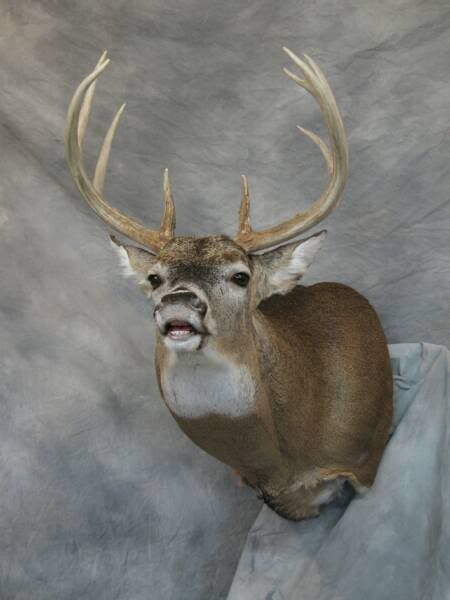
I passed on the does hoping for a beast like this one.
Out of the corner of my left eye, over my left shoulder, I caught some more movement.  Two deer approached, not thirty yards behind the first four.  First, a doe followed by another button buck.  The doe moved into my shooting lane giving me another easy broadside shot.  Then, she turned and looked right up at me.

What?  I was scent free, I know it.  I was meticulous in my preparation, from my clothes, my shower, spraying down my equipment.  And, the wind was blowing in my favor. There's no way she winded me.  She's had experience with hunters in treestands before.  She recognized my silhouette.

She stomped several times, moved, then stomped some more trying to get me to move.  I stood as still as the oak I was sitting in.  She bobbed and weaved her head like a boxer ducking punches in defense, trying to get a better look at me.  She lifted her nose in the air, trying to smell me, as she marched around my tree.  Meanwhile, her son, presumably, fed unaware and unfettered by my presence.

The large doe all of a sudden lost interest in me and began feeding.

Whew!  I thought I had blown it.  Now I'm in a good situation.  All I need for them to do is to move far enough away without leaving the area entirely and bed down.  But they all lingered, feeding, and moving away ever so slowly.  I had within a forty yard shot at almost any of them for about a half hour.

I stood motionless for almost the entire time.  My arms and legs were cramping, but I knew if I moved, it would be all over.  I nearly prayed that they'd move off.  Finally, they did.  I saw them bed down about sixty yards away.

This was great!  Now I have the best bait there is for a big buck, a bunch of does!  All of a sudden, a small yearling comes hightailing it through the woods from whence the others came.  Not seconds later, it ran by at top speed right back where it came from behind a thicket behind me.  I heard it crashing through the woods. Not seconds later, here she came again, bounding full speed right through my shooting lane and toward the bedded does where she stopped, and bed down.

I quietly laughed inside.  I was wide awake now.  No more daydreaming or nodding off.  No more thoughts of fishing.  I was focused.  I was ready for the big buck to walk through at any moment.
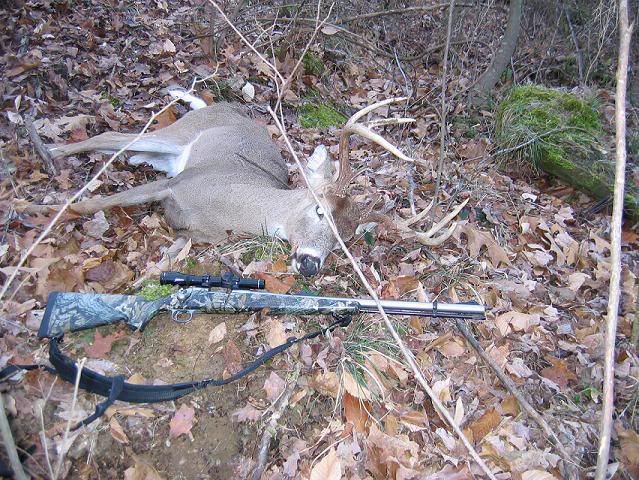
While hunting in Ohio, this buck came walking in grunting, looking for a doe.  I put him down with my muzzleloader.  Would I have a chance today at a buck like this one?
Well, I stayed ready for two hours.  The does and button bucks that were bedded sixty yards away all stood up, as if their alarm clock went off, and walked away from me.  It was eleven in the morning, and I had to be home by one in the afternoon for a doctor's appointment.  I climbed down, and the big buck never showed.  Again, I wondered if I made a mistake by not putting a deer down for my freezer.

There will be other days, but not many more chances at a big buck.  I did the right thing.


Sunday, November 18, 2012

Experience+Luck=Good Fall Bassin'

My wife loves those crisp cool sunny fall days, but bass anglers either love 'em or hate 'em.  Why? Bass anglers love those days when the feeding bell seems to ring all day long as bass binge on any active bait that they can find, or hate those same kind of fall weather days where cold front bluebird skies can cause bass to hunker down and not bite, appearing to have lock jaw.
Windy sunny days with bluebird skies can be hot or tough, who knows why or when.  Either way, they make for beautiful scenic photographs.
Yesterday, my buddy Howard and I hit one of our favorite small lakes in search of a mixed bag of bass, chain pickerel and crappie.  My buddy Bob, who I purchased my boat from, wanted to tag along with his boat, and bring a special guest, his eight year old Son, Carson.  Howard and I have a history of hitting lakes like this in the fall, and every year we seem to learn something new.
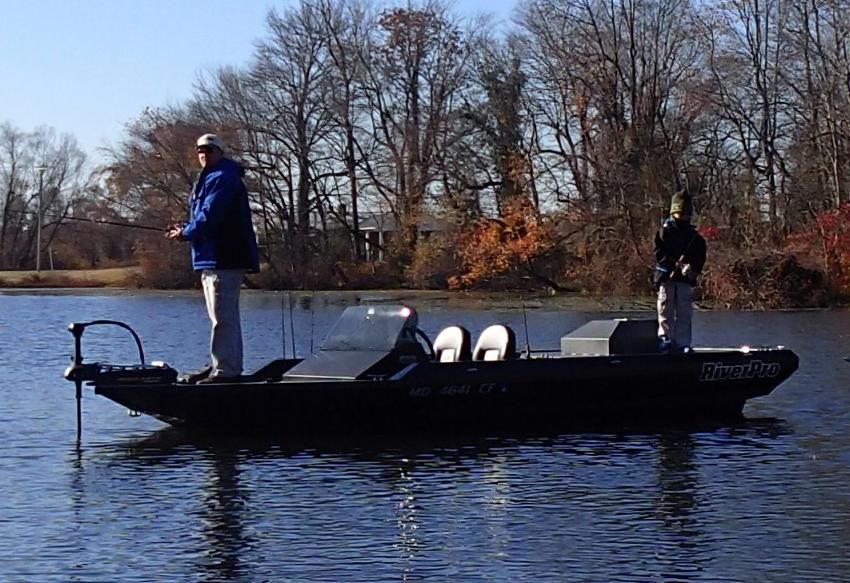
Bob and Carson fishing out of Bob's new dream boat, the Riverpro LoPro.
Experience... One of the elements in my equation titling this post.  Last year we hit this spot and had a really tough day most of the day.  We had an early morning start and by noon, not even a bite, fishing for bass or pickerel.  We hit all of the woody and weedy cover and nothing.

Not two weeks earlier did we have a banner day, all day, boating many chainsides and chunky bass that were hammering our chatterbaits and soft plastics.  The upper end of the lake that week was loaded with predators, and massive schools of bait to keep predatory fish happy.  Golden shiners and schools of shad were on the upper lake menu that day.
Last year, prior to the cool down, we caught bass like this and chain pickerel all day long on woody and weedy cover.  They were chasing baitfish in the upper end of the lake.
So where were the predators?  Where they just suffering from lockjaw due to the weather and cold temperatures?  Or did they move?  Not only did we not catch anything in the upper end of the lake or on any of the cover, but we didn't see any baitfish either.

It was so tough we resorted to fishing for crappie and bluegills.  Not that panfishing is bad.  Not at all, they can save a trip and turn a bad day into a good one.  In fact, when the crappie bite is on, fishing days are far from crappy.  They can be as fun as any fishing day of the year.  But, we were spoiled.  Chunky bass and big toothy pickerel were still on our minds.

On that day last November, we had Northeast winds blowing down the lake all day.  The forecast called for wind speeds in the five to ten miles per hour range, but they turned out to be more like ten to twenty.  It made for tough fishing and tough boat control.

While we were drifting from one crappie spot to the next, we remarked how the wind was piling up on the Southern shore.  Of course, warmer temps would be there, it was the deepest part of the lake, and that might be where the bait went.  So, we opted to try for predators once again.

My mind couldn't shake the sight of bass and chain pickerel chasing baitfish two weeks earlier, so I opted to tie on a gold half ounce Rat-L-Trap to imitate the golden shiners that are prevalent in this lake.  Neither Howard nor I had ever fished rattling lipless crankbaits in this lake.  Normally, these lures are hot during the spring, so it wouldn't previously have been my top choice in the fall.  But they do cover water quickly, and do resemble the forage for this lake.

My first cast toward the deep end resulted in too deep of a retrieve and hooks full of snot grass (bottom scum like algae). So, I tried another cast keeping my rod tip up and cranking medium speed, and wham, nice fish on.  After a nice fight, I landed a chunky four and a half pound bass (weighed four pounds seven ounces and went twenty inches long).
Matching the hatch, a gold Rat-L-Trap imitating a golden shiner, proved the ticket to land this fat bass, combined with finding the right location.
The pattern held all afternoon after that.  The rattling lipless crankbait boated several nice fat bass in the three pound range the rest of the day.  In addition, we landed some large chain pickerel in the same area.  As evening approached, we fished the crankbaits on the way back to the ramp around wood, like you might do with a chatterbait or spinnerbait, and that too produced some fine bass and pickerel.

Matching the hatch along with figuring out where the predatory fish liked to be this time of year were keys to our success.  The Northeast winds piled up warm water along the deeper section of the lake.  The baitfish were there, and so where the predators.  As the temperatures warmed during the day, some of the bass and pickerel moved into the cover that seemed devoid of life just hours earlier.
We actually accidentally snagged some of these baitfish yesterday with our crankbaits.  At first, I kept thinking that fish were bumping my lure, or perhaps I was ticking the tops of weeds or cover.  Well, I finally snagged one, and it turned out to be this little critter, a gizzard shad.  Bob and Howard also hooked a couple of them.  When you find these, predatory fish are close by.
So yesterday, we all made it to the ramp.  Temperatures were below freezing, with ice on the dock next to the ramp, and frost covering all of the cut soy bean and corn fields everywhere on the ride to the lake.  The surface water temperature was a chilly 44.3 degrees according to my depthfinder.

After an hour of trying the lily pads and woody cover with just a couple bites and no fish landed, we pondered crappie fishing again.  But wait, remember last year?  Howard and I made the change early and headed right for the deeper water where the wind once again piled up warmer water.  The water temperature there was 46 degrees, nearly two degrees warmer.  And, my depthfinder marked schools of baitfish everywhere.

I had my gold Rat-L-Trap already tied on for just such an occasion.  My first cast was with the wind as the boat drifted in the same direction.  With the rod tip held high like last year to keep the snot grass off the hooks, I didn't crank five times when, wham, a nice hit.  I was pumped up as my first cast in that area resulted in a 19 1/2 inch largemouth with a big head and not much of a belly, but it was a good fish, and my first fish of the day.
My first cast with my gold lipless crankbait golden shiner imitation resulted in this long probably older bass.  But it couldn't have been more beautiful to me after a tough start. 
Howard snapped a couple photos with my camera and my phone.  We then took some measurements and released the fish.  I quickly texted Bob about what we found with a picture of my new fish telling him to bring him and his boy down to our location.

After we drifted several yards , I picked up my rod and made my second cast, again, with the wind and the drift.  About eight cranks, rod tip high, and wham!  After another good fight.  This time I landed another chunky bass that measured a nice 17 inches.  More pics, the release, texting Bob again, and back to fishing.  Things seemed to be working in our favor, the tide had turned, and what seemed like a tough fall day was looking up.
My very next cast resulted in a much fatter but slightly shorter 17 inch largemouth bass.
Not long after that last fish, I landed this 18 inch largemouth.  What was a tough day for me was turning to a banner day quickly.
Like last year, the fall pattern was holding.  My gold Rat-L-Trap fished with the rod tip high in the deeper water was producing.  Bass were gobbling it up.  Even the pickerel where there, as Howard found out.  His Rat-L-Trap was bitten off and taken from him.  That had to be a huge chainside.

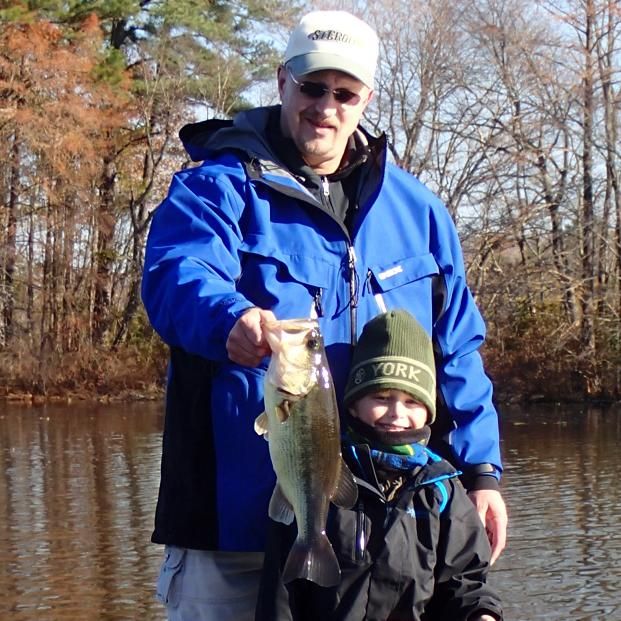
Soon, Bob and Carson made their way to our spot.  I told them of the pattern, and soon they were both working the deeper water with the rattling crankbaits.  It didn't take long for Carson, an eight year old quick learning heck of an angler (watch out KVD), to hook up and expertly fight and, with some help of his Dad, land the biggest chain pickerel of his life.
Bob holding Carson's chain pickerel, his personal best.  Watch out KVD, here comes Carson on the angling scene!  Don't worry Mr. Van Dam, Carson still is a bit nervous about holding his fish, so you have some time.
About ten minutes later, Carson proceeded to land his personal best largemouth, a fat 19 incher!  Bob joked about how his fishing karma had rubbed off on Carson, leaving him to start over again.  We also pointed out how his six year old boy had been putting a thumpin' on his Dad!  But Dad didn't take long to show his stuff, landing a nice chainside too.
Carson smiling proudly over his catch, a personal best 19 inch nearly four pound largemouth as his Dad proudly displays if for him.
Bob with a nice chain pickerel caught on a chrome Rat-L-Trap.
We had a very early start, and although Carson was excited to fish and about as happy as he could be over his catches, he ran out of gas around two in the afternoon.  Bob and his tuckered out child angling prodigy headed home, leaving the rest of the pickerel and bass for us.

Howard and I continued to work the area hard.  Fishing wasn't easy, but it was consistently giving up quality fish.  Not only did the rattling lipless crankbait work, but I also did well on a shallow diving shad like chrome crankbait, the Luhr-Jensen Speed Trap.  I also managed to catch four keepers, but also my smallest fish on my trusty plastic worm after finding some deeper water cover.

Like the past year, as the day neared the end, we fished our way back to the ramp hitting the woody cover that was fishless just hours earlier.  By this time, the water temperature had warmed to nearly 50 degrees.  I suspected that once the water warmed enough, some predators would move back into the woody cover.  I fished my Rat-L-Trap again, like a spinnerbait, and hooked and lost two nice chain pickerel, but landed one smaller pickerel and a few more fat bass, including a 17 3/4 inch and 18 inch largemouth.
Another fat crankbait bass, this one on a Luhr-Jensen chrome Speed Trap, again, fished with the rod tip high.
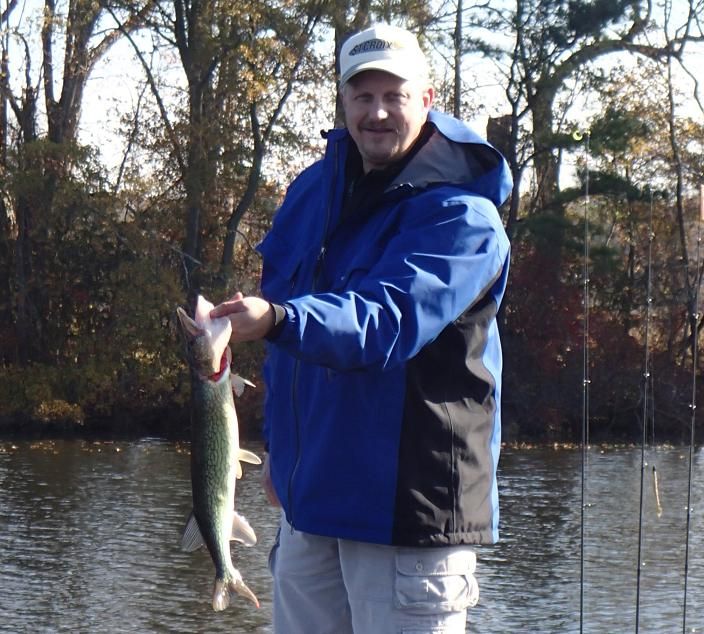
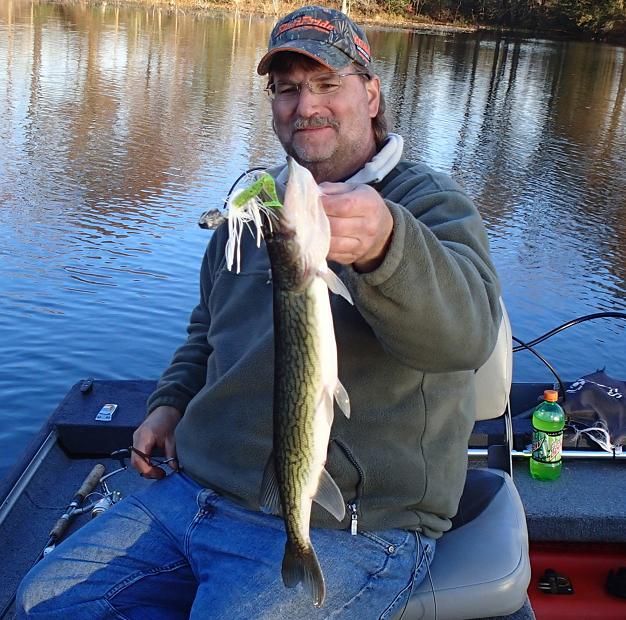
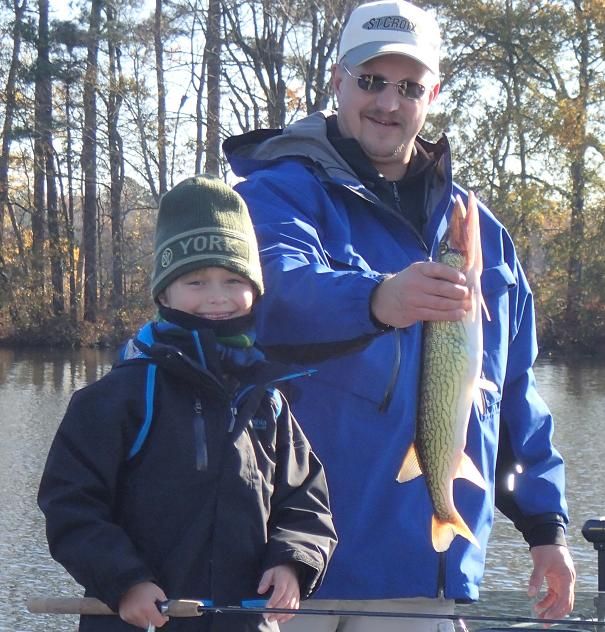
Howard connecting with a quality toothy predator, Esox niger, the chain pickerel.  This beauty inhaled a white chatterbait.
Luck... Experience plays a huge role, but when fishing open water, making that right cast is a combination of luck and experience.  But confidence in what you are doing, based on experience, improves your odds and brings you luck.  You caught fish there last year, doing the same thing, consistently.  Chances are, under the same conditions, your odds are pretty good that it will happen again.  Why one guy catches bass under these conditions and another angler doesn't, seemingly doing the exact same thing with identical lures, well more than likely it's luck.  Or, it could be subtle differences in tackle or technique.

Good Fall Bassin'...Now, another key component with finding bass in the fall is to use lures that can cover a lot of water quickly.  These search baits, like spinnerbaits, crankbaits, and chatterbaits, can really rack up the numbers for you, but may take a lot of casts when bass are in open water.  Rattling lipless crankbaits and diving crankbaits are good choices for locating schools of fish that feed on shad.

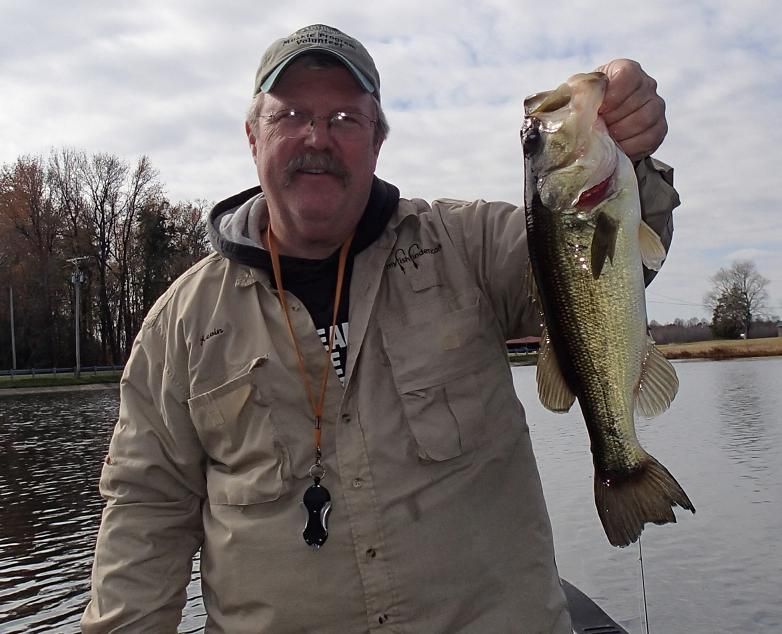
My day seemed tough at first, but turned out to be a great fall bassing day.  I finished with eighteen fat largemouth bass, with my biggest seven bass ranging from 17 inches to 19 3/4 inches.  The other ten fish were between 13 and 15 inches.  I managed a nice pickerel too, along with a crappie that inhaled a plastic worm.  Apparently, the crappie thought he was a largemouth.  Eight bass were on the Rat-L-Trap, four fell for the plastic worm, and six quality bass engulfed my Luhr-Jensen Speed Trap.

So there you have it folks.  Experience combined with a little luck, could turn a chilly fall day into one of your best bassin' days of the year.
______________________________________________________________________________

By the way, I want to thank everyone who keeps checking my blog for updates, and at the same time apologize for keeping you waiting for my next post.  I'll do a much better job in the future with updates.  Stay tuned with more fishing, hunting, and shark toothing articles.  I have a special shark tooth article nearly completed, highlighting some adventures of some internet friends from South Carolina.  Have a happy Thanksgiving!


Tuesday, September 25, 2012

Grill-a-Fishzilla

The frightful fishzilla, the northern snakehead, an invader normally native to China, Russia and Korea, is now found in tidal Maryland waters.  That's bad news for our ecosystem.  As I blogged yesterday, I caught my first snakehead this weekend, a 36 and 1/2 inch, fourteen pound brute that mangled a white chatterbait with a plastic worm trailer.  I took some pics, killed it, took it home and grilled it (well, broiled it).  Here's that post in case you missed it:  Monster Toothy Fish of the Potomac.
Snakeheads like this one eat just about anything that they can swallow.  They are an apex predator.  But guess what?  They ran into another apex predator...me!  And boy did it taste good!!!!
There is a bright side however, being that they are willing biters on bass tackle, fight like gangbusters, and taste fantastic.

That's right, they taste fantastic.  I promised to grill snakehead for my wife this evening, but things didn't quite work out as planned.  The big storm that knocked everyone's power out a while back also knocked over my grill.  I didn't realize it until tonight that the damage requires more than minor repair.

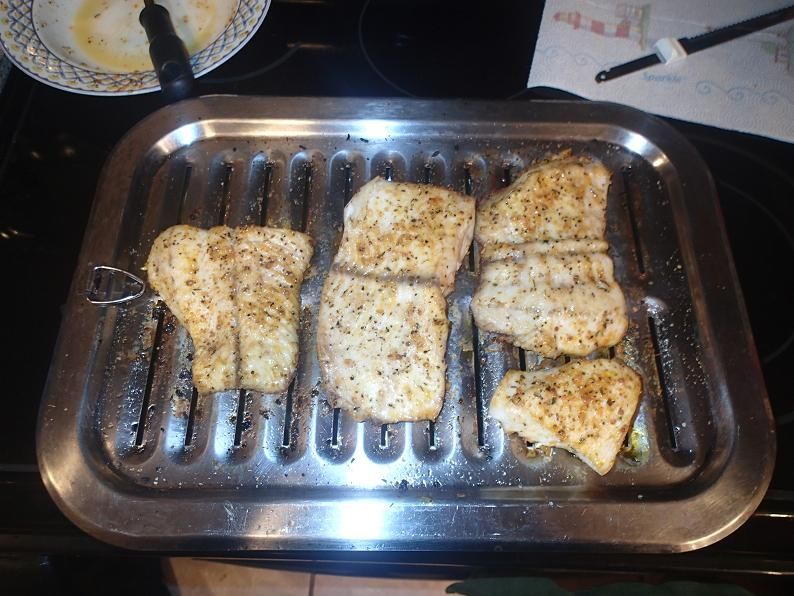
So, I had to move to plan B, cook indoors.  So, between you and me, my promised recipe should be termed, broiled snakehead rather than grilled snakehead.  Regardless of the method, my wife scarfed hers down with gusto while at the same time trying to get the ugly mug of the snakehead out of her mind.  And, I'll admit, I stuffed myself silly on the remaining filet cuts...and we still have enough for another meal or two in the 'fridge.
Here's the frightful snakehead in it's rightful Maryland environment...on my broiler pan!  YUM!


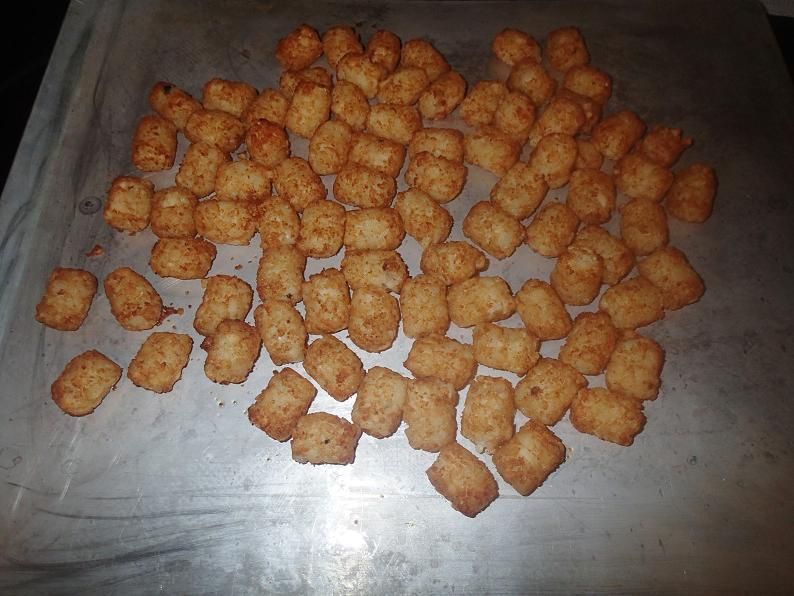
I didn't cook a gourmet meal by any means, serving my newly discovered fish filets with Ore Ida Tater Tots.  But man was it ever a tasty meal.
My recipe?  It's not gourmet by any means.  In fact, we served it with extra crispy Ore Ida Tater Tots.  Good eats, but hardly gourmet.  I'd cook it all again in a heartbeat if I wasn't so plum full right now though.  OK, I'll get to it, and you can't get much simpler:

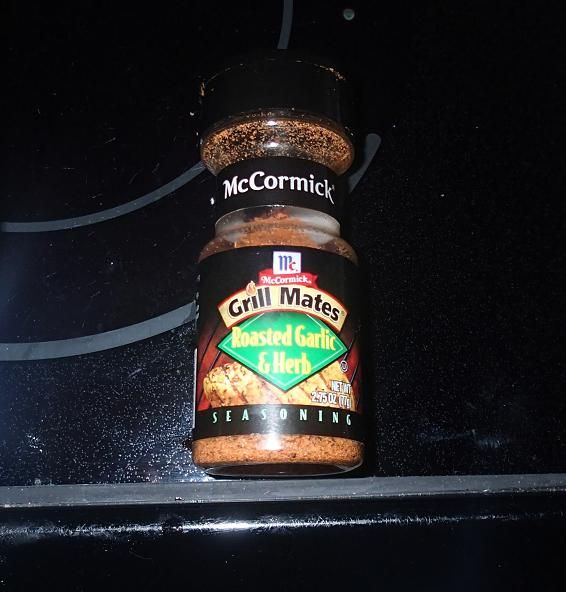
McCormick Grill Mates Roasted Garlic and Herb and
a little olive oil is all I needed for a tasty meal of
broiled snakehead filets.
1)  roll the snakehead filets in extra virgin olive oil.

2)  sprinkle McCormick's Roasted Garlic and Herb Grillmates spice on both sides

3)  broil 8 to 10 minutes on each side

4)  scarf it down.

It's that easy, and yes, it's that delicious.  I recommend the bass fishing throughout the Upper Tidal Potomac, and as a bonus, I wish you the best of luck in nabbing a snakehead. 

Do Maryland a favor and kill a snakehead, and do yourself, your family or friends a favor and take it home, filet it and grill it.  This meal will bring you all nothing but smiles and satisfaction, guaranteed!

Monday, September 24, 2012

Monster Toothy Fish of the Potomac

Legend has it that a species of gigantic fanged ferocious prehistoric fish exists, that breathes air and is capable of climbing out of the depths and flopping across vast tracts of land to invade other waters, attacks farm animals and high school teens, leaving death, destruction and terror in its wake...and that fish is the northern snakehead, Channa argus.

All of the above statement is fact, as long as you believe what you've seen in the movies.  A couple films portrayed the fish as some sort of monster that can leave the water, run down, and mutilate or eat residents of waterfront communities.  The movies, Snakehead Terror and Frankenfish (no relationship to Senator Al Franken), following a highly publicized wave of media coverage about this invasive species discovered in a Crofton Maryland pond, certainly helped to sensationalize and demonize snakeheads.
Fear not, guys like Steve Kelley are doing their part to protect your lives from these monsterous killer fish!  Steve caught two of these on plastic worms while bass fishing this spring, both in the same day.  In fact, they were taken on near back to back casts!!!!    Picture courtesy of Steve Kelley.
OK, truth be known, perhaps I've exaggerated a bit.  The Maryland DNR is still quite concerned about the ecological impact that the northern snakehead may have on the fisheries in the state, as are the neighboring states of Virginia, Delaware and Pennsylvania.  It's illegal to posess live snakeheads in Maryland or to transport them across state lines for that reason.
Granted, the extremely toothy powerful jaws of the northern snakehead are fearsome, especially to any critter that can fit in it's massive mouth.  But it's hardly the monster that the movies made it out to be.    Picture courtesy of Rodger Moran.
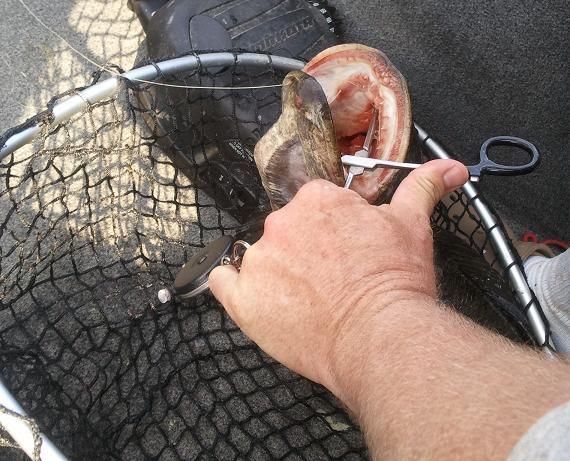
If you catch a snakehead in Maryland, state law demands that you kill the snakehead immediately.  Don't even think about keeping it alive in your livewell, lest you risk a hefty fine if caught.  You can visit the Maryland DNR site to learn just about everything you need to know about these fish including how to identify them, and even see a video on how to kill them. 

The Maryland DNR even sports a contest where, if you post a picture on their website, you stand a chance to win a $200 gift certificate to Bass Pro Shops, a fishing license, or a couple other prizes.  Last years efforts proved to be quite a success with a large number of anglers submitting pictures of their dead snakeheads.  Here's the press release for this year's contest: 

http://www.dnr.state.md.us/dnrnews/pressrelease2012/032812.asp.

Snakeheads currently are fished by either rod and reel or bow, and more and more people are reporting catches each year.  And the fish are getting bigger and bigger each year.  There are snakehead tournaments too.  All of these provide something new for those fishing in Maryland, another form of recreational activity or sport.  Let's face it.  These fish are here to stay.  When fishing for them, they hit hard, fight hard, get big, are toothy, and guess what?  They taste great!
Death to snakeheads!!!!  Here's Steve's second of the day.  I swear that this fish did a summersault when he set the hook on that plastic worm!    Picture courtesy of Steve Kelley.
Not only do they seem to have become a new sought out fishery in our region, but these toothy critters seemed to get quite a bit bigger than other parts of the world.  Recently, it was reported that an angler, Juan Duran, caught a four foot long, eighteen pound four ounce monster snakehead from the Occoquan River, another Tidal Potomac tributary. 

Why is that significant?  It seems to be a world record, shattering the previous one from Japan by over a pound!  Here's the story as reported by the Washington Post:  Juan Duran Catches Record Breaking Snakehead Fish.  It's not the first place that I read the story, there are other links out there, but this happened to be the first one I pulled, so here it is.  No matter what, that's a big fish.

Gene Mueller, retired long time outdoor writer for the Washington Times and outdoor blogger, wrote this nice piece about catching and eating these critters.  It's worth reading, and if you've read it, worth reading again:  Mueller: Snakeheads on the Menu.
Here's Gene Mueller with a brute of a northern snakehead.  Be sure to check out Gene's blog, Gene Mueller's World of Fishing & Hunting, where he posts pictures of snakeheads submitted by followers of his blog, and also those of his buddies.    Picture courtesy of Gene Mueller.
Snakeheads were illegally introduced into the Potomac, and seemed to have spread throughout the tributaries of the Chesapeake Bay.  Apparently they can tolerate a fair amount of salinity.  After all, in the Upper Tidal Potomac River where many are caught weekly, Maryland watermen are hauling in huge catches of blue crabs!  Not only that, red drum are also being caught in the same waters as bass, catfish, and the invasive snakehead.  They've even been caught in the upper stretches of Marshyhope Creek in Delaware.  Marshyhope Creek is a Maryland tidal tributary of the Nanticoke River.

Another man, not too long ago, claimed to have caught a two foot long snakehead in the Upper Potomac River at White's Ferry.  This caused quite a stir, because it was believed that they couldn't migrate above Great Falls, or even the fall line at Chain Bridge.  This alarming news, however, turned out to be a hoax.  The guy did catch the fish, but he caught it near Difficult Run, but because he didn't possess a tidal license, reported his catch to be in the non-tidal waters.

So, the Upper Potomac seems to be safe, for now. 

I didn't decide to blog about this beast out of the blue.  I had reason to post, based on a recent experience this past weekend.  While other anglers reported catching these impressive but invasive monsters, despite many trips to tidal waters and many bass and stripers to my name of the years, I've been snakehead challenged.  I've hooked and lost two of them...I think...over the past few years. 

Well, on Saturday, I broke that streak.  Near the end of a tough windy day of bass fishing, I managed to hook and land one of the hardest hitting, best fighting fish that I've ever caught, a 36 and 1/2 inch long, fourteen pound snakehead.  What a thrill that was.  It absolutely hammered and engulfed my white chatterbait.

I know that these are invasive, and I did my part and immediately killed that fish, but I can't help but feel excited by the experience.  That was fourteen pounds and three feet of pure muscle at the end of my line!  Not many freshwater fish are capable of peeling drag off of that baitcaster of mine like this one did.  And truth be told, I'll look forward to hopefully catching more.
My snakeheadless streak ended the other day, with me landing this massive 36 1/2 inch, fourteen pound slimy monster.  Picture courtesy of Rodger Moran.
I had hoped to cook it this evening, but a late work night combined with an empty can of propane and my lack of effort to obtain a refill, caused me to put the effort off one more night.  So, I can't yet attest to the tastiness of the snakehead filets.  But, I promise that after my wife and I partake of the future snakehead meal, that I'll provide a follow up post, complete with my recipe.  I plan to cook C. argus tomorrow night.
Here's another pic.  I had both paws gripping those gills.  This fish was alive at the time, and there was no way I was letting it flip out of my grasp.  So, I apologize for the not so great picture.    Picture courtesy of Rodger Moran.
So, in summary, the northern snakehead seems to be here for good.  We still, as loyal anglers, are obligated to do our part to eradicate them from our waters by not releasing those that we catch, and kill them on the spot as well.  Our reward is a good fight from a big toothy fish, and a supposedly good tasting meal of fish. 

What about the damage to the fishery?  I don't know, but I, and other anglers, probably agree that the bass fishing in the area is as good as ever despite the increasing snakehead and blue catfish populations.

Best case scenario...we help the Maryland DNR and similar neighboring state agencies to eradicate this invasive species. 

Worst case scenario, and it seems the likely one...we help to keep their numbers in check while enjoying an additional angling opportunity that can put a tasty meal on the table.

Tuesday, September 4, 2012

Finesse Fishing for Bass at Night. What?

One thing that most bass anglers know is that bass will feed at night.  Of course, the most popular methods include tossing topwater plugs, noisy rattling crankbaits, buzzbaits, and thumping spinnerbaits.  I've discussed night fishing in two other posts where you can get a good take on those techniques, so if you need to catch up, here are the links:  "Night Buzzin' for Summer Largemouth" and "A Night Fishing Trip to Remember".  But one thing that many people that fish for bass don't know, is that you can be successful using finesse techniques for bass even on the darkest of nights.
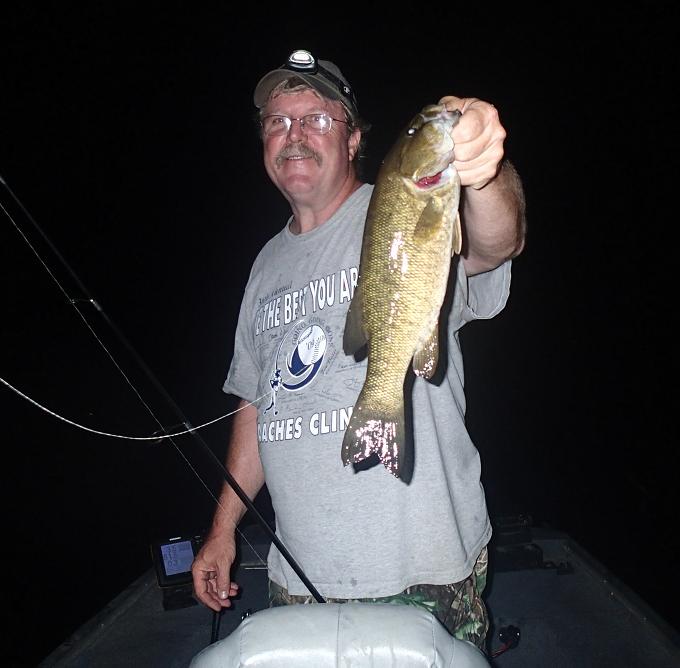
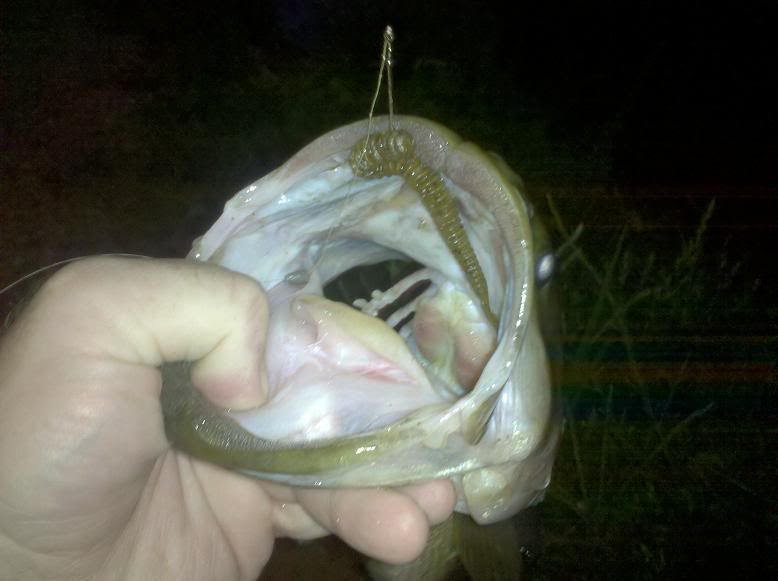
Smallmouth bass like this one will readily bite soft plastics on light tackle at night.  When the hard baits aren't working for you at night, try a finesse approach.
I've discussed finesse bassin' before in a post titled, "Finessing Largemouth Bass" where you can apply all of those techniques at night when certain conditions permit.  In this post, I'll discuss the finesse bassin' techniques that have worked well for me over the years and under what conditions work best.

One thing that I've noticed is that when fish are very active, most of the time they'll hit aggressively on hard baits at night, but when they don't, have a rod ready with a plastic worm or jig and give them a try.  For specifics on tackle set ups or different techniques for finesse bassin', please refer to the link above.  The rest of this post applies that info towards the dark hours of night, or mostly dark at least.

So what works and when?  Generally speaking, when it's pitch dark out or no moon, I prefer baits that will tease the lateral line of bass by putting out some sort of vibration.  Curl or ribbon tailed worms will do just that.  In addition to the inherent properties of your soft plastic, jigging methods could provoke strikes.  Action on your bait puts out vibrations.
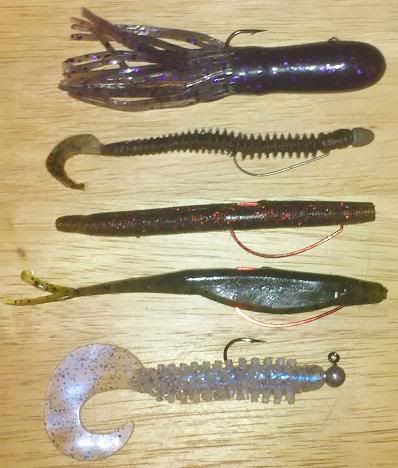
Action tailed soft plastics, like the ringworm (second from the top) and caterpillar grub (bottom) will emit vibrations that the bass can hone in on even in the darkest conditions.  The ribs or knobs on those lures may assist in putting out additional vibrations.  These lures will work at any time at night.  Tube jigs (top) are great crawfish imitations, and the Zoom Super Fluke and Senko when worked near the surface work well at night as well.  All of these lures can be finessed slower on the bottom too, especially during brighter nights and full moons.
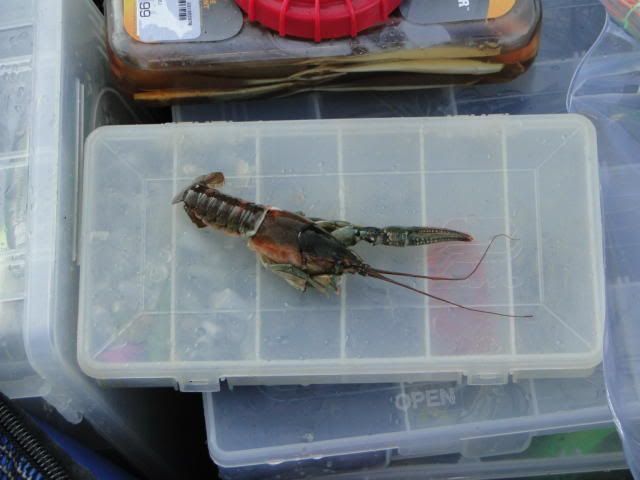
Crawfish imitations are a good bet at night too.  Why?  Have you ever shined a flashlight at the waters edge at night to see what's active?  If you have, you've no doubtedly noticed that the crayfish are most active at dark.  Crayfish are like candy to a bass, and a very high source of protein, so when their food is most active, I'd expect the bass to be ready to eat when the opportunity presents.
Crayfish are like candy to bass, and they're most active at night.  Try crayfish imitations at night, you might be rewarded.
In fact, most invertebrates tend to be more active at night.  Ice anglers that fish for nighttime crappie after dark know this, as the increase in daphnia, copepods and other crustaceans affect the returns on their electronics and their view on their underwater cameras.  And, the predatory fish often become just as active.  It's the same with bass.  If you want to catch a lunker, night fishing might just improve your odds, especially on heavily pressured waters.

What about minnows and other prey fish?  If you've ever owned an aquarium, you may know that many fish go into a trance like state at night.  It's not sleep as we know it, but for all practical purposes, they sleep.  And, for those inexperienced aquarists that have even introduced a predator into their tank, have you noticed that the numbers of your other resident fishes may have been reduced?

Minnows when disturbed at night by a predator will dart and move, and the "school" is not formed to protect them.  They can't school with each other because they can't see.  And, they become confused when disturbed, and become easy prey when a predatory creature finds them, like a bass or catfish.
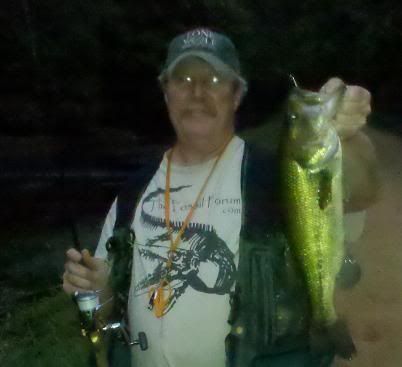
This dandy largemouth bass inhaled a plastic action tailed worm during a dark summer night.  Finessing at night can pay off for you too.
Conversely, when you have a full moon, you might not have to impart as much action, or you may get strikes on "do nothing" type soft plastics, like tubes, soft stick baits, or soft jerkbaits.  Bass have good visibility, and you probably already know how active they are at dusk and dawn which are known as the magic hours, so it stands to reason that during a bright moon, bass will feed when presented with the opportunity.  After all, they are opportunistic predators.

The color of your lure is probably the least important factor when choosing an option, but many anglers prefer black, with the popular line of thought being that they produce the best silhouette.  There may be some truth to that, but honestly, between you and me, I do just as well with chartreuse or green pumpkin, even white.  My belief is that the action of the bait, or what you impart on your lure, is far more important than the choice of color.  Scent added to your soft plastic, or using those that are made with scent infused, could play a factor in producing a strike or not.
You may not think that finesse plastics will catch bass at night, but this bass sure does!
Another general rule of thumb of mine is when it's darker out, I fish faster or higher in the water column.  I'll either jig the lure more, or keep my rod tip high and keep the lure as close to the surface as possible.  It's my opinion that bass may more easily see the silhouette of your lure, and tend to feed up in those situations.  Conversely, I find that I can slow down more if there is more light out there, such as during a full moon.  Why?  The fish can see it on the bottom, so the silhouette plays a less important role.  That's my belief anyway, and I don't have any scientific proof, just my personal experiences.

Before I go on, let me restate that those rules above are very general, and if the fish aren't biting, by all means, break them.  Whatever it takes to generate a bite is the best rule of thumb, so don't paint yourself into a corner.

So, are bass always active at night?  No, they may or may not be active.  I'd consult the solar lunar tables to assist you, but in general, I find them easier to catch at night during the warmer months.  They will feed at night all year long though, but it's just that they don't chase down prey like they do during the warmer months.  They simply conserve energy and wait for the prey to come to them.  So, when it's colder, put the lure in front of them.
My buddy Howard will be the first one to agree that buzzbaits are an effective tool at night, as evidenced by his catch in this picture, but he'll also agree that finesse bassin' may produce when other methods don't even during the darkest hours.
Bass will sometimes go into a slumber at night, and for those that have kept bass in fish tanks, you'd know this.  But, with the introduction of prey items that actively emit the vibrations of prey, or other things that trigger a feeding response in bass, you'll see them wake up and seek the prey.  Sometimes agressively too.

________________________________________________________________________________

The Old and the New
OK, I have to change gears.  I just want to point a couple things out, and by saying the old and new, I'm not at all referring to peoples ages here. 

So, first let me point out that one of my old links to another outdoors blog deserves additional recognition, and that blog is Gene Mueller's World of Fishing & Hunting.  Why?  Well, I could probably go on for a page or two of reasons, but what comes to mind is his continued dedication to the outdoors folks of the State of Maryland.  He produces fishing reports and news for Marylanders, D.C. outdoors folks, or Virginians, even though he no longer lives anywhere near there.  Please visit his blog (linked above) regardless of where you live, but if you're a Marylander or Virginian, or from the Washington D.C. area, keep in mind he's still lookin' out for us.

Gene's still lookin' out for us, so let's make sure that we look out for him too.  Please visit his blog.
Also, to get to know Gene a bit more, check out my post titled, "Interview with Gene Mueller, Outdoor Writer Celebrity".

Thanks Gene!  We really appreciated your efforts!


Now on with the new.  I've been following a blog that is new to me, but a few years old now.  Fellow angler Jon Griffiths has a very fine outdoors and fishing blog.  I've had the pleasure of reading his posts on fishing forums, but just recently found his blog, and I'm now a fan.  So, let me introduce his blog to you, and please pay it a visit, the Opportunistic Fisherman.  I hope you enjoy it as much as I do.

Monday, September 3, 2012

The Shark Tooth Hunt (Set 3)

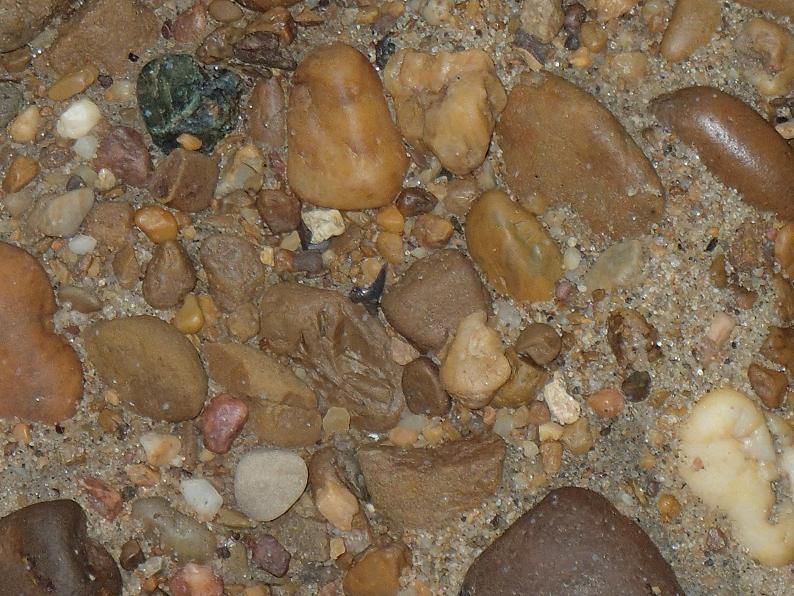
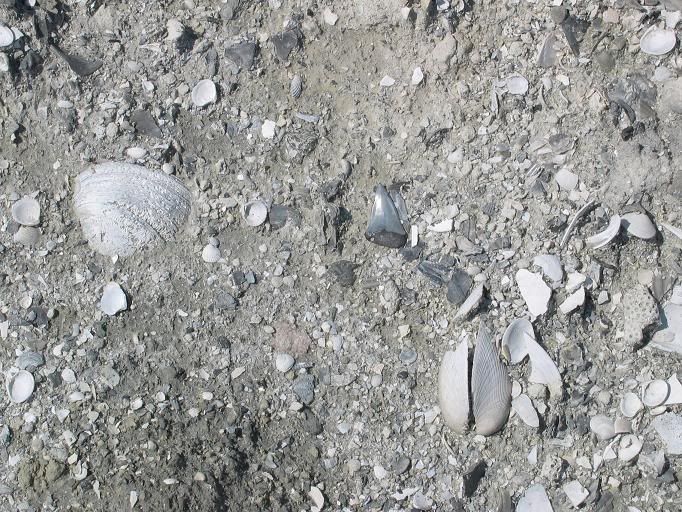
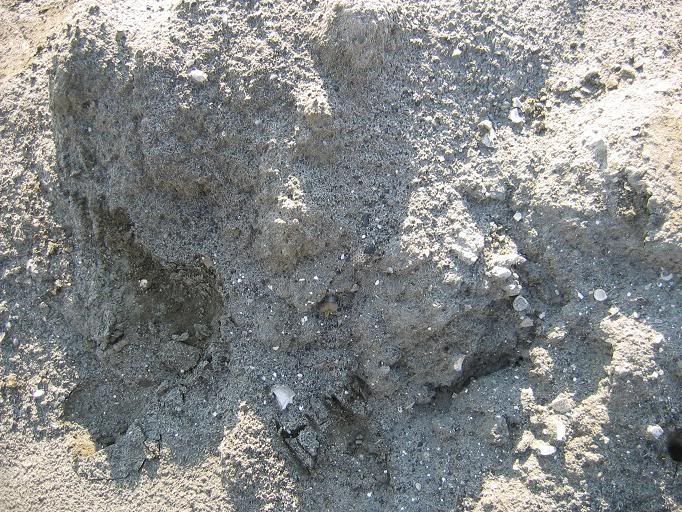
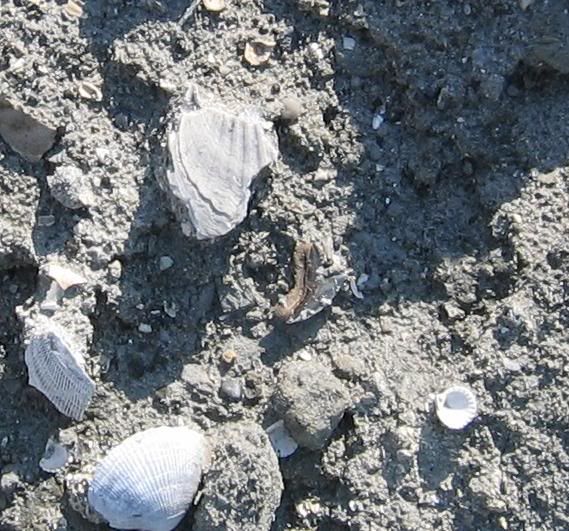
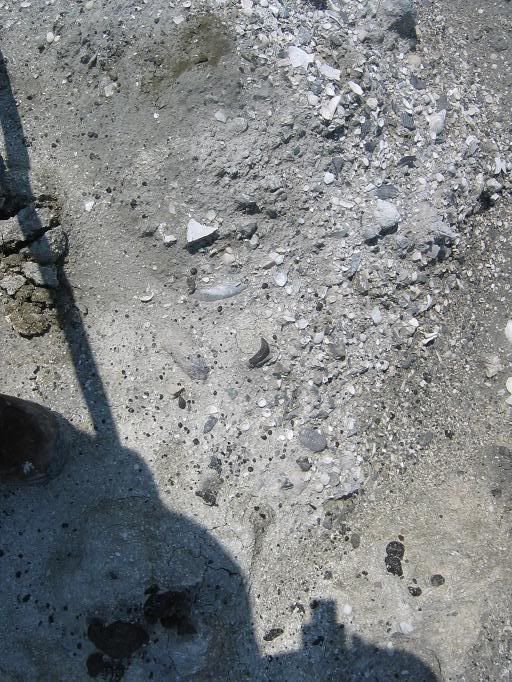
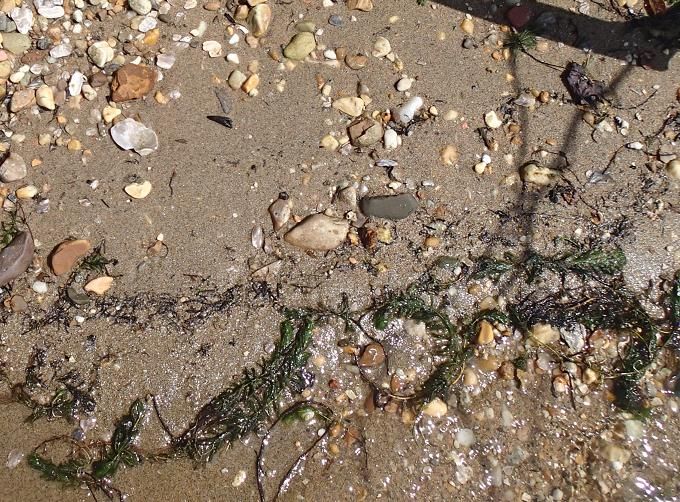
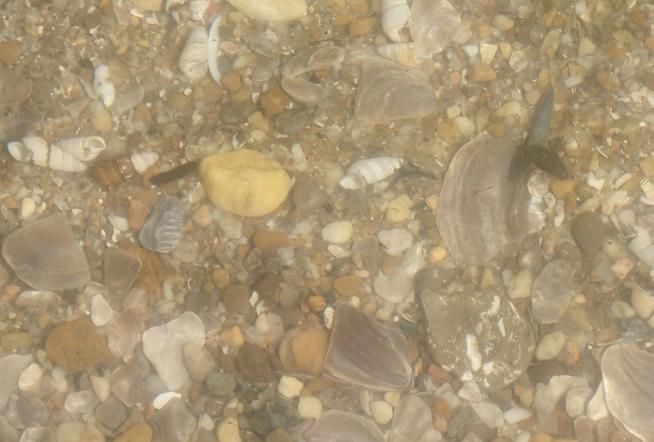
We'll continue our shark tooth hunt, eye spy style, with pictures 21 through 30.  To see the first twenty pictures, you'll have to go back and revisit my two prior posts, "The Shark Tooth Hunt (Set 1)" and "The Shark Tooth Hunt (Set 2)", where I posted ten pictures of in situ photographs of fossilized shark teeth.  These next ten pictures will be a mix of locations and background styles, but still should be a lot of fun.  Hope y'all enjoy them!

Picture 21
A different fossil this time...there's a fossilized Palaeocene crocodile tooth in this picture.   Click on the link below to find it.

Picture 22.
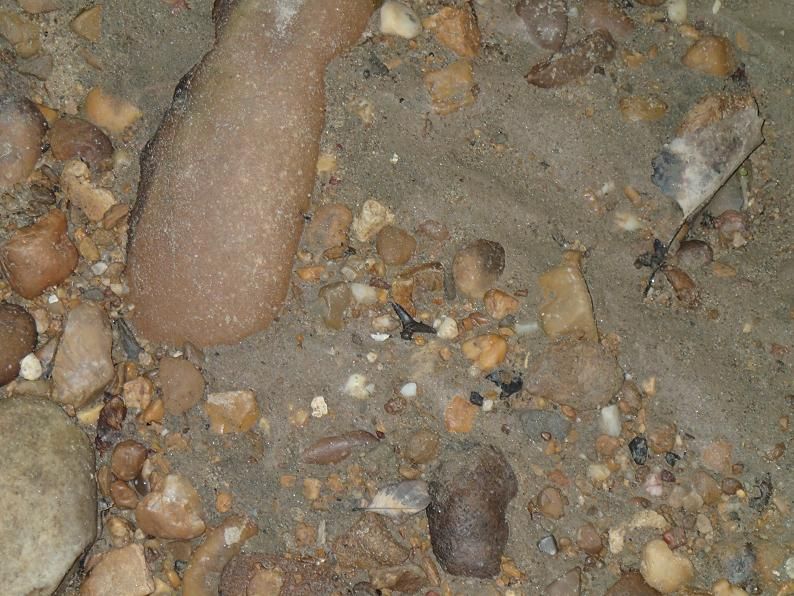
There are two teeth in this picture, one obvious fossilized Striatolamna sand tiger shark tooth, and a not so obvious partially hidden tooth.

Picture 23.
OK, well this isn't a fossil, but he's pretty well hidden, but his defensive posture gives him away.  Say hello to a Maryland blue crab!
Picture 24.
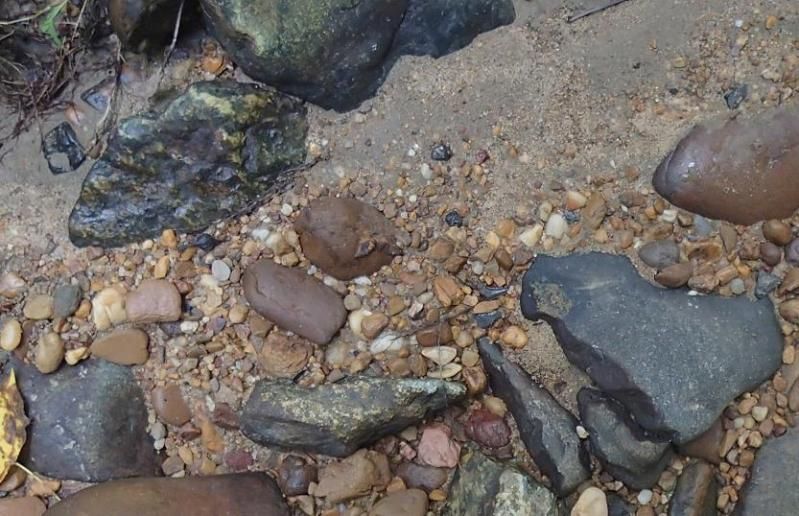
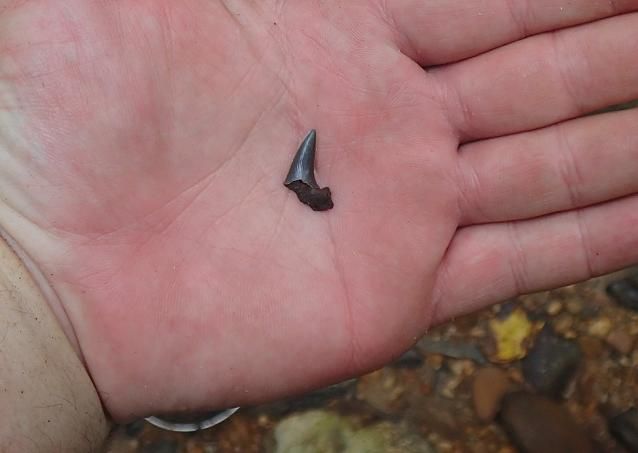
This tooth has a broken root, but was found at a different location.  I think that it's also Palaeocene based on some of the other fossils found in the creek along with a little research on the area.  I was prospecting a new spot that had potential, not knowing if I'd find shark teeth or not.  Here's the first one that I found here.  Can you spot it?
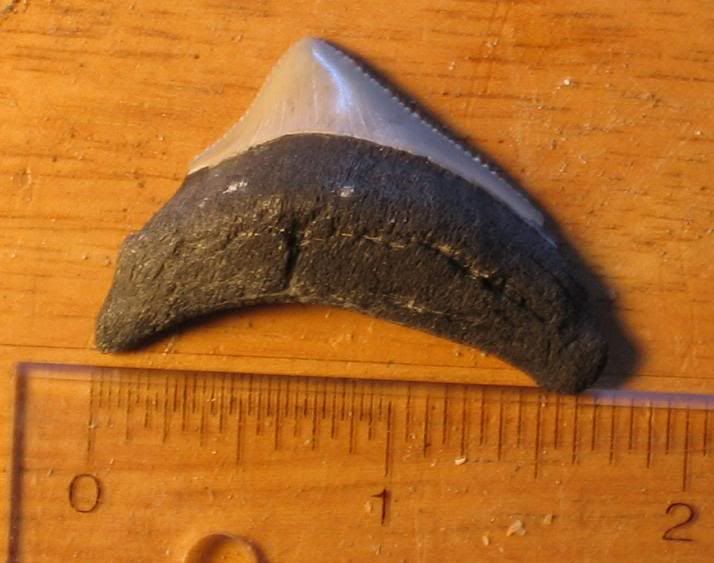
Here's a picture of the tooth...I'm not sure of the species yet, but I think it's another sand tiger shark lateral tooth.

Picture 25.

Here's another one from my new spot...it's a bit easier to see though.  Although the quality of the finds on this trip weren't that great or numerous, this spot has a lot of potential.

Picture 26.
Here's another easy one to find.  It seems easy here, but in real life this was much tougher to find.  Give credit to the camera!

Let's look for some stuff from the PCS mine in Aurora, North Carolina.  Currently, they don't allow collecting there, but a few years ago they did.  Let's hope that they open it up to collectors again some day soon.

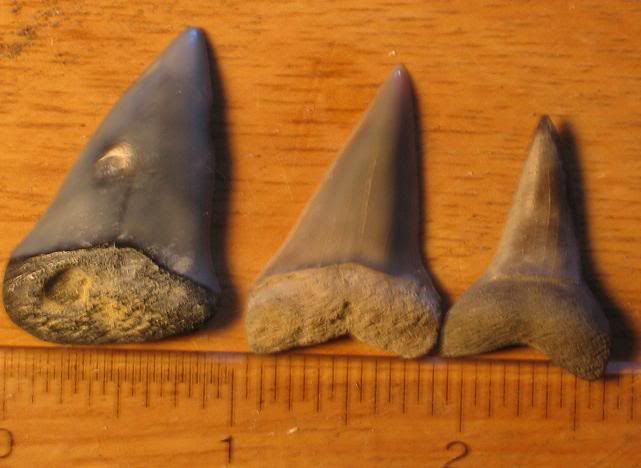
These are some pretty large shark teeth and should be easy to find, right?  Well, let's see how you do finding the two on the left.
Picture 27.
Well, this is the easiest one of the bunch.  It's the left most tooth in the picture above of the three teeth.  This mako, Cosmopolitodus hastalis.  This shark was perhaps ancestor or close extinct cousin to today's great white shark.
Picture 28.
There's another Lee Creek mako in this picture.

Picture 29.
There's a Lee Creek Pliocene tiger shark in this picture, Galeocerdo cuvier.  

Picture 30, the last one of this post.
There's a Lee Creek megalodon in this picture.  It's a posterior tooth. 
It's not the huge meg that folks look for at the PCS mine in Aurora, NC.  But it's a good find., not very common at all.

During our virtual shark tooth hunting trips the past three posts, we visited Palaeocene and Pliocene locations and saw a variety of shark teeth.  I admit that it's quite a bit more difficult to pick the teeth out of these pictures than it could be in the field, but not much really.  My hope is that you had fun reading these and if you are a beginning collector, this might help to give you the "eye" for finding your own.  If y'all provide some positive feedback then perhaps I'll post more like this.