Showing posts with label Shore Fishing. Show all posts

Saturday, December 29, 2012

What Makes a Good Shore Fishing Buddy? Part II

In my previous post, we discussed various aspects of what makes a good fishing buddy from the perspective of a boat owner.  Many of the traits you'd look for in a fishing buddy apply in all of those situations, but what this post will cover will be those not discussed that may be important to shore anglers. I'll throw in wading as shore angling also, because there are similarities.  This is part four of a five part series, links to the fishing buddy tips are at the end of this article.
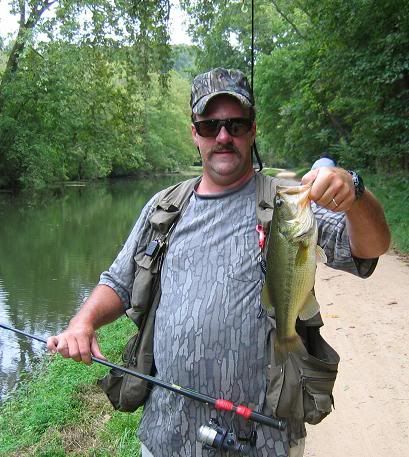
Fishing from shore often offers some great fishing.  Having a fishing buddy to share that with enhances the experience.  The following suggestions may ensure that you and your fishing buddy enjoy the experience even more.  Here, my fishing buddy, Howard Boltz, sports a chunky largemouth from a shore fishing spot that we learned together over the years.
So what specifically would I look for from a shore angler?

I think that one thing all anglers have in common is that they want to catch fish and have fun doing it.  So some of these traits will focus on helping your fishing buddy catch more fish, while others are more ethical in nature, both will earn you respect as a fishing pal.  So, let's get started.

1)  If possible, don't disturb a good fishing hole.  A quiet and stealthy approach to a fishing hole will improve the chance of fishing success for both you and your fishing partner.  If you're wading a river or stream, don't wade through it with reckless abandon.  Keep to the shore as much as possible.  Try not to stir up too much silt.  In some situations, like when fishing a gin clear brook trout stream, being stealthy could mean approaching on your hands and knees, keeping a low profile.  If you spook fish, chances are they won't hit for some time.  If your fishing buddy shows you a new spot, if you go in and spook the fish, it will most likely be the last spot that he shows you.  Wade or walk carefully and quietly to get into casting position and access the spot.  Doing so improves the odds for both of you.
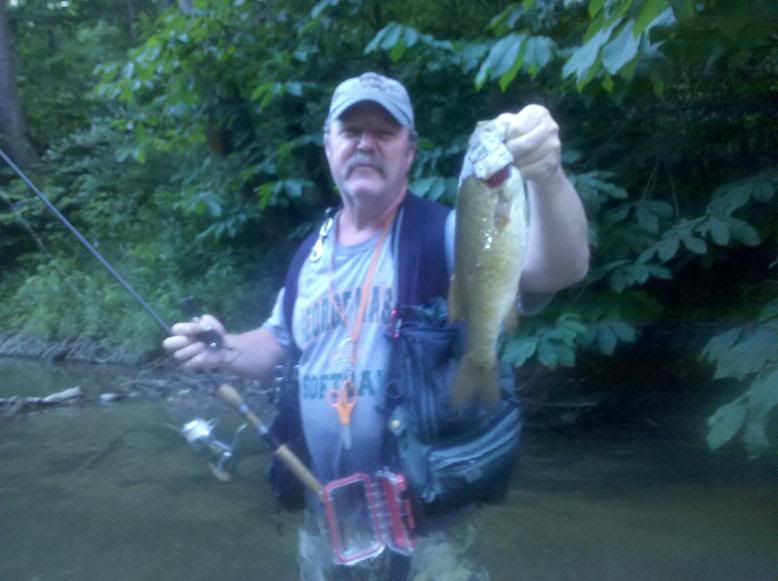
Wading a river or stream is a fun way to catch fish.  Approach fishing holes in a stealthy manner and you both can catch fish like this.  Wading through a hole like a bull in a china shop will spook fish and make for a long day.  Quiet and careful wading is the key.
2)  Share the spots, and don't be a spot hog.  If you're fishing small water, try the leap frogging technique as described in my last post, but from shore or wading.  If you hit the first spot and get the first cast in, then let your fishing pal get first crack at the next spot.  Alternate every other hole.  If you know of especially good spots, work it out so your fishing buddy gets first crack at some of them.  If you are both working a good hole, and there is room to do this, alternate casting positions every now and then so that both of you get the most out of the hole and catch fish.
One of my fishing buddies, Bill May, with a fat shore caught largemouth bass.  Bill and I learned many fishing spots over the years and worked together to find and catch quality fish like this.
3)  Figure out the patterns together.  It's not a competition, unless, of course, you stage the trip that way.  If you're on fish and your fishing buddy isn't, help him out with some suggestions on what is working for you.  Maybe, if you have enough, offer to let him or her use lures that are producing.  That's probably why I carry way more fishing tackle than I actually need on my shore fishing trips, just in case my fishing buddy needs my help!
My fishing buddy Rodger Moran and I worked together to catch fish like this smallmouth bass all day long.  Figuring out a pattern together and sharing information could improve the fishing for both you and your fishing pal.
4)  Don't ruin a good hole with a snag.  If you snag an inexpensive lure, break it off so that you don't ruin the hole.  If it's an expensive lure, wait until you fishing buddy has a chance to work the hole before you wade in and get your snag, or work the water into a froth in your attempt to free your lure.

5)  Swap fishing locations.  If your fishing buddy shows you a good body of water to fish.  Reciprocate by putting your buddy on a good place to fish.  Also, keep the spots between you and your closest friends that you trust that won't put the entire world to it.  Making a secret honey hole public is a good way to ruin that hole for good, and lose a fishing buddy.  Obviously public waters or well known spots don't really apply to that last statement.
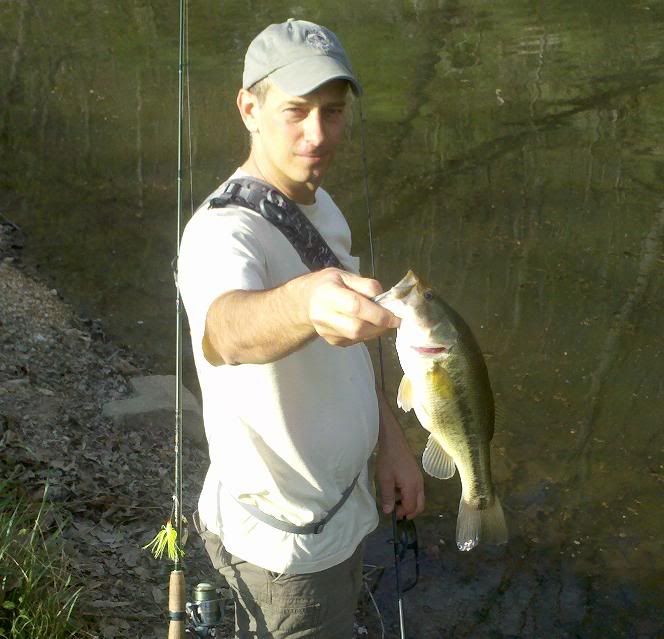
I put my friend, Mark McWilliams, on one of my shore fishing holes and put him on some nice bass.  He was kind enough to take me fishing on his boat, sharing this shore spot with him was the least that I could do.  Sharing fishing locations is what fishing buddies do.
6)  Take turns driving and/or offer gas money.  Sharing in  a good fishing experience also means sharing in  the efforts and expenses to get there.

7)  Help land big fish.  Learn how to properly net fish, and offer that skill when needed if doing so applies to the body of water and type of fish that you are fishing.  A helping hand, or net, could help your fishing buddy land the fish of a lifetime.
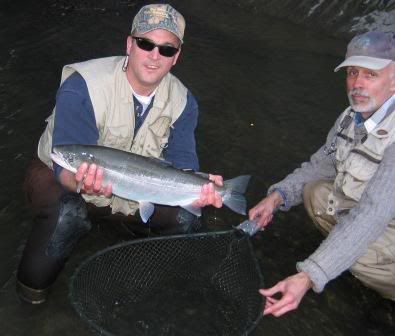
Being a good net man could make or break a trip.  Here, one of the best anglers and net men that I know, a fishing buddy that taught me how to properly net fish and the importance of being good at it, Jim Cumming, nets a fine steelhead for another fishing buddy of mine, Steve Kelley.  Fishing buddies working together like this make for awesome lifetime memories.
8)  Don't crowd.  If your fishing buddy is on fish in a hole, don't crowd him or her.  If your buddy offers to let you in on the action, that's fine, but still give your friend some elbow room and don't cast into your buddy's spot.  Casting into your buddy's hole without permission, or cutting your buddy's cast off by crossing over the spot are both taboo.  And, never intentionally cross over their line.  If you do that on purpose, you may wonder why your fishing partner is no longer your fishing partner.

9)  Learn together.  One of the great joys of fishing is to discover new fishing holes.  When prospecting for new holes, two people doing the research may allow you both to obtain useful information faster than one person doing the research.  This may be internet research, using Google Maps, or taking the drive to spots on non-fishing days to scope them out.  Also, figuring out how to fish new spots are also a great experiences for the both of you.
Mark Sirko (right) and I posing for a steelhead double.   Mark is one of the best anglers that I know, and put me on some of the best fishing that I've ever had in my life.  You couldn't ask for a better fishing buddy.  All of the qualities of a fishing buddy that I've written about are exemplified by his actions in the most professional manner.  I'm forever thankful.
10)  Stay in touch with each other.  It's nice to share the experience with someone and work together to fish.  Doing a disappearing act, leaving your fishing buddy behind, is not cool.  If you agree to work separately, that's a different story, don't just disappear.  Sometimes splitting up is a good tactic to developing a pattern and is a productive approach.  Just make sure that your fishing buddy knows what is going on and where to find you.  This is also a good practice for safety reasons.  Electronic aids help with this too, cell phones, radios, etc. will allow you to stay in contact with each other.  These aids may help in figuring out where the fish are if you're both working a large body or multiple bodies of water.  One last point on this, staying together also allows you to take pictures of each other fishing and of each others fish.  I wouldn't have many of these nice pictures if it wasn't for my fishing buddies.  If you spread out too much, you may not capture a great fishing memory on film.  Memories last a lifetime, but a picture of one of those memories makes that memory even more special.
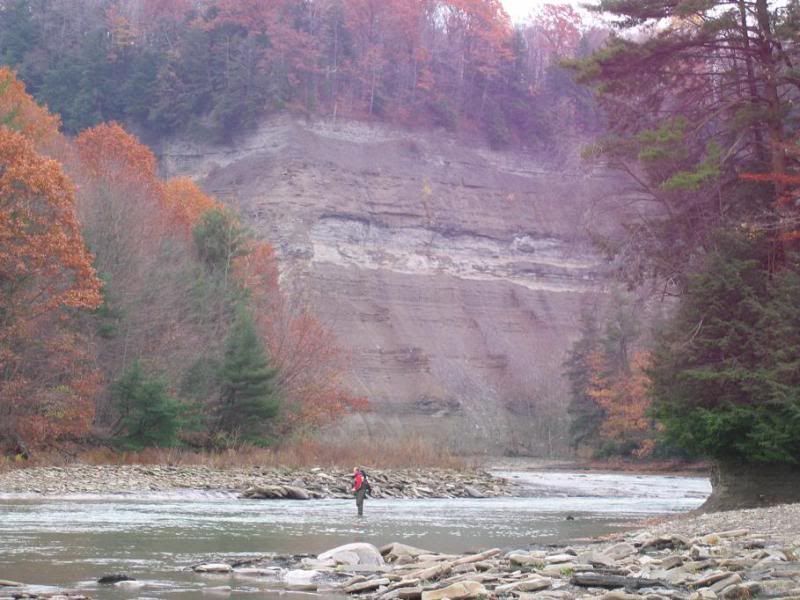
My fishing Buddy Bob Barber fishing for steelhead.  Scenery shots like this wouldn't be possible without the help of a fishing buddy.  Being too far apart wouldn't allow for quality fish pictures like this one either.
These ten suggestions will help you and your fishing buddies remain that way, and improve your fishing success as well.   Working together is a great way to discover new fishing waters, fishing techniques, and new fishing patterns.  Working well together when your fishing with someone the first time may expand your overall fishing horizons and get you a new fishing buddy.  Being considerate of the person that you're fishing with will ensure that you both fish together again in the future.


Also, let's try something different.  Feel free to participate.  Please use the comment function if you have anything related to this topic to add.  Thank you in advance!

As mentioned in the first post of this series, this is a four part series.  Here are the titles to all four parts.  As each one is published, you'll be able to click on the text and take you to that document:

Part I - What Makes a Good Fishing Buddy (from a boaters perspective in general)
Part II - What Makes a Good Shore Fishing Buddy
Coming soon:
Part III - What Makes a Good Fishing Buddy (from the perspective of a non-boater)
Part IV - What Makes a Good Ice Fishing Buddy

Monday, March 5, 2012

Tip - Hands Free Shore Fishing

If fishing from shore, and you have access to enough shoreline to move about freely to find fish, here are a couple tips that will save your back and give you more fishing time.  Most anglers will carry multiple rods to either offer different presentations when fishing for the same species, or to fish for two different species.  If you like to move around to find fish, constantly putting down your extra rod or tackle box gets old real fast, causing back aches in old fellows like me, and it wastes time.  After a while, you might be content to stay on one spot longer than you'd like simply because you don't feel like bending over to pick up your stuff and move.

So, since mobility is important to find and catch more fish, you have to be innovative to gear up to be mobile.  Here are a few tips to help.

1)     Wear a fishing vest to stow the tackle that you might need for the day.  Some of them have a large back pocket for extra gear or even a lunch.  I pack mine full of everything that I might need for a day.  The amount that you can carry is limited to the number of vest pockets that you have and the strength of your back.  You can carry a lot of stuff like me and be prepared for anything, or you can go as light as you wish.  That's a personal preference.

2)     Use a fanny pack or some system to pack water or more gear that won't fit in your vest.  I currently have one that has two water bottle holders and I'll stuff the main compartment with more tackle.  I carry my spinnerbaits in a soft tackle pack that I can clip to my belt or wear with a strap over my shoulder.
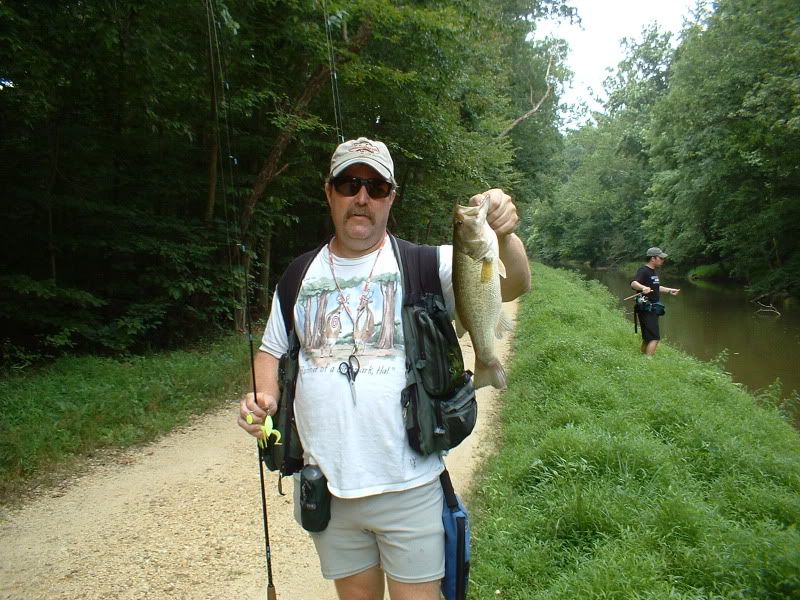
Notice the vest packed with tackle and the rod clipped to my vest behind me.  This enables me to fish hands free without having to bend over to put stuff down and pick it up all day long, maximizing my mobility.  I also have a water bottle and spinnerbait pouch clipped to my belt.  Here I am tossing spinnerbaits with my baitcasting rod, but have a plastic worm rigged on my extra rod clipped to my back for a back up presentation.  My brother Kyle, fishing behind me, found a way to attach and carry his extra rod on his fanny pack.
3)     Attach a clip large enough to fit around your rod blank below the bottom guide to the loop on the back of the neck of your vest.  That way, you can carry an extra rod for a separate presentation.  Make sure that they clip is easy enough to open and close to enable you to access the rod easily without removing your vest.
 A couple things to note when doing this, watch out for trees and don't forget that you have a rod clipped to your back.  All you have to do to get around a tree is to reach around and grab your rod blank, and pull it over your shoulder horizontally to get around tree branches.

Now, when shore fishing, you too can be mobile and catch more fish.  Try my tips above or come up with your own way to be mobile.