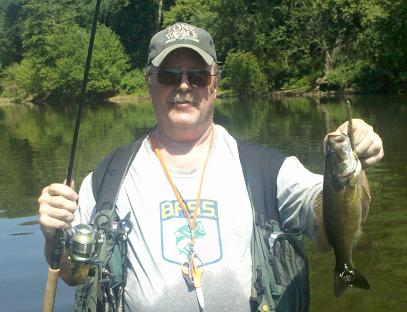
I hear complaints on the radio about the current heat wave sweeping the Mid-Atlantic, but the way that I look at it is that it's summer, and summer is hot. I have sympathy for the thousands of people that lost power in the aftermath of last weekend's storms and especially for those that still don't have power. My birthday occurs this time of year, and I try to spend it each year fishing or doing something fun. Here's a news flash, it's hot every year on my birthday reaching near record temperatures every year but rarely breaking them. It's not global warming, its summer. So how do I cope with such hot weather on my birthday? One could take refuge in the air conditioning, go see a movie, hang out at home and maybe do a cookout, watch fireworks in the evening...all that is good, but for me, I like to find a river or stream and wade for smallies.
 |
| When it's hot, get out and wade a river or stream with a good population of smallmouth bass. You'll stay cool, catch a lot of fish, and have fun! |
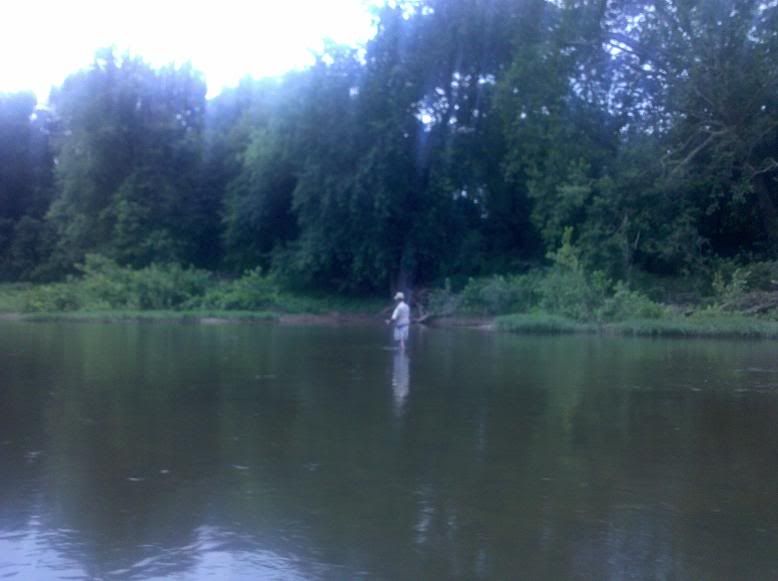
As my buddy Rodger put it after yesterdays half day of wading, smallmouth bass are like little pit bulls of the fishing world because they fight hard all the way and including through the release, often pulling off acrobatic leaps in the process. Imagine wading waste deep in gin clear river water, hooking a fat bellied pugnacious bronzeback, and having it nearly leap over your head while running circles around you during the fight. Folks, that's what it's all about.
 |
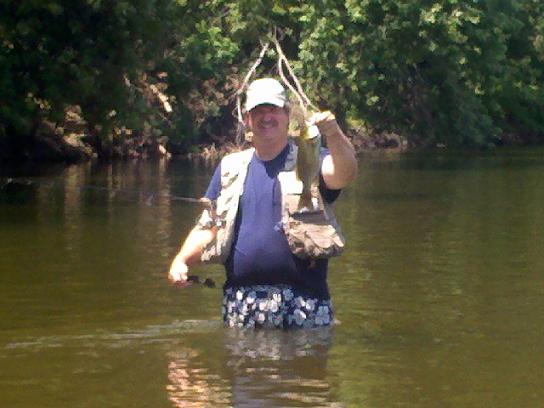
| Rodger wading our river, refers to the smallies here as pit bulls! |
So, other than keeping cool and catching good numbers of willing smallmouth, why wade? It's true that boats can put you on lots of fish by either running from productive spot to productive spot, or drifting for miles at a time over tons of productive spots to pick off the most aggressive fish on the river. Kayaks or canoes offer similar advantages. So, why wade? First of all, the cooler water is always at hand if you get overheated. But from a fishing standpoint, wading can actually be as productive if not more productive if you pick a spot that has a good population of smallmouth bass to fish because, quite simply, you can cover those hot spots and fish much more thoroughly.
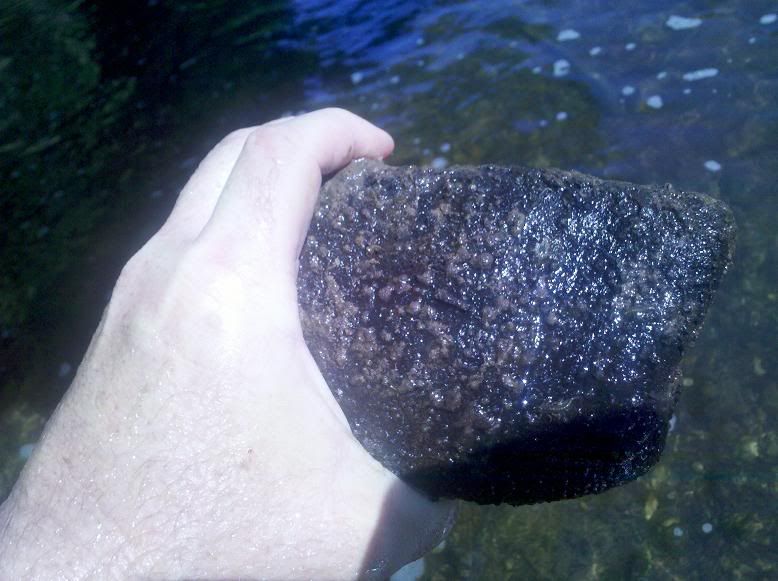
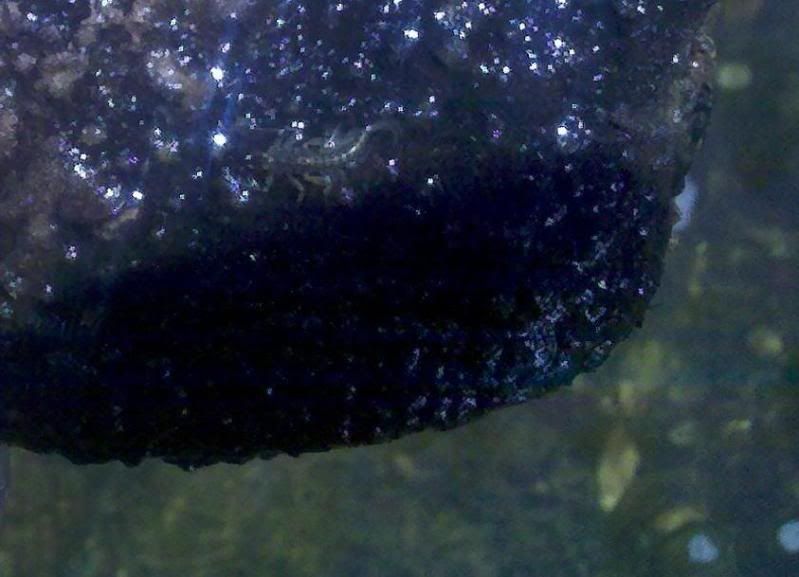
On most streams, once you get away from the put in location, the scenery is very nice. I'll often find a nice rock to take a break mid way through the trip, have a drink of water or each a little lunch, and observe the scenery and wildlife. I really enjoy watching the smaller aquatic stream life at my feet during my break. I'll pick up a rock or two and check out the aquatic insects attached to the bottom. I guess the presence of mayflies and caddisflies pacifies me a bit, giving me perhaps a false impression that the stream is healthy. Increasing populations surrounding this particular watershed translate to more cars on the roads, and increased pollution results. I know that the stream could be healthier, but at least for now, it appears to teem with life.
 |
| I'll usually take a break for a drink or snack during the trip, and check out the aquatic life nearby. Here I picked a rock off the river bottom and turned it over to examine the aquatic insects. |
 |
| Zooming in, you can see one of the mayflies that lives beneath the rock. Mayflies are an important staple food for smallmouth bass and other fishes within the river, and an indicator of stream health. |
Like many trips in the past, my fishing vest was packed to the hilt with my favorite wading lures. The biggest vest pockets were crammed with soft plastics including soft stick baits, flukes, tubes, creature baits, grubs and small plastic worms. One large pocket held two boxes, one containing my terminal tackle, hooks and sinkers, and the other stuffed with crankbaits, topwater plugs, and hard jerkbaits. And one small pocket held another summer smallie favorite, small 1/8 ounce buzzbaits. The large back pocket held four water bottles, and it's really important to keep hydrated in this hot weather, and a can of bug spray to ward off biting flies and mosquitos. Other small pockets held spare reel spools, worm dye, and other necessary hardware.
My buddy Rodger and I picked a location on a medium sized Mid-Atlantic river sporting classic smallmouth habitat. I haven't had the pleasure of wading this river for several years, but it has plenty of chunk rock and ledges - prime cover for lurking smallmouth lurking in ambush of unsuspecting river prey. It's also kind to my aging bones, allowing easy wading most of the day with a minimum of aches and pains afterwards. We parked one vehicle at the put in, and one at the take out location, which allowed us to cover more water with the least amount of physical effort in a shorter amount of time.
We entered the water just before sunrise and began to wade, but mid-eighty degree water temperatures don't take that much to get used to, and even though the sun wasn't up yet, the conditions were quite comfortable. I began fishing a small green pumpkin four inch plastic worm, with the tail dyed chartreuse, using light weight and a small wire Gamakatsu offset shank worm hook. I didn't use psychic ability or indepth fishing skill in choosing this rig, rather, it was simply tied on from my last fishing trip. Yeah, I'm lazy that way!
The water was low and clear, but the bass were more than willing. It didn't take long for the first strike as a fat smallie inhaled my plastic worm and nearly wrapped the line around my leg during the fight. As that happened, I saw bass chasing bait along the bank on the far side, so I opted to tie on a buzzbait. Fish are often much more aggressive during low light conditions, and dusk is a great time for topwater. Actually, if the bass are hot on topwater, that action could last all day.
 |
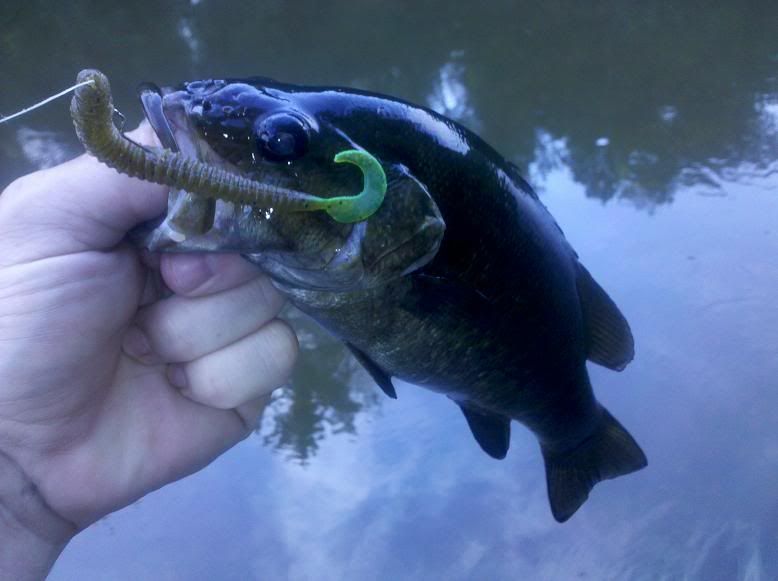
| I caught bass like this one all day long. This spunky bronzeback hit on my second cast. |
I fished the buzzer for about an hour, with a fat fourteen inch smallie crushing it on my first cast, followed by his twin who hammered my buzzer on the successive cast to the same spot. That was it for the buzzer. Oh, they hit it, but a dozen strikes later, all misses, even after adding a trailer hook, I became frustrated and went back to my fishing comfort zone, the plastic worm.
The fish weren't really holding in the usual places where we could count on finding them in past years. It was really weird though because we'd find them holding on deeper slow sections with chunk rock, and then find other similar spots and all we'd get were red-breast sunfish. But, when we found the smallies, we found them in bunches. If anything, we probably could have caught more if we didn't get hung up spending so much time trying to catch smallmouth where they were supposed to be and weren't, than if we had just kept moving until we found them. I guess that I'm hard headed that way.
Other lures may have worked, but I knew the worm would work, and I wasn't disappointed. But the sunnies drove me nuts, attacking the soft plastic fake morsel with reckless abandon on nearly every cast. Most of the time, you could discern their strikes from the bass. I purposely didn't set the hook unless I thought that it was a smallmouth, and I still hooked and landed fourteen of the little buggers without even setting the hook! They drive me nuts because they tear the tails off the worms or pull the hooks out of the Texas rig changing it to a less than snag proof red-breast rig.
 |
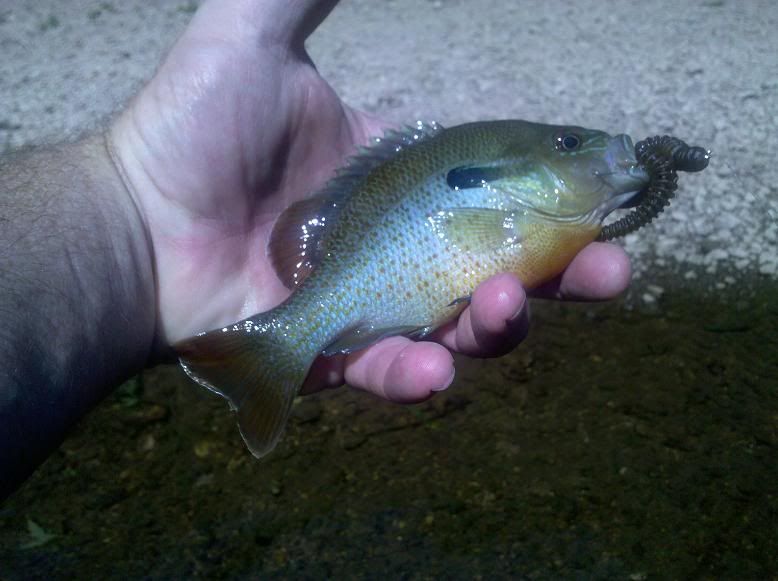
| These pesky red-breat sunfish drive me nuts, tearing the tails from my soft plastics. But I have to admit, they are one of the most beautiful of fish to catch in our rivers. Check out these spectacular colors. |
My wife was counting on me being home for some much needed household chores, including repainting our bedroom. Needless to say, I came home late. Hey, they were biting, and the wade which usually takes about six hours to complete took much longer. I won't get into why, but a Thunderstorm moved in right after we started and held us near the bridge until passing, and that cost us some time. Fish, or paint the bedroom...not a tough choice for me! Rodger and I had a great time catching a good number of bass.
 |
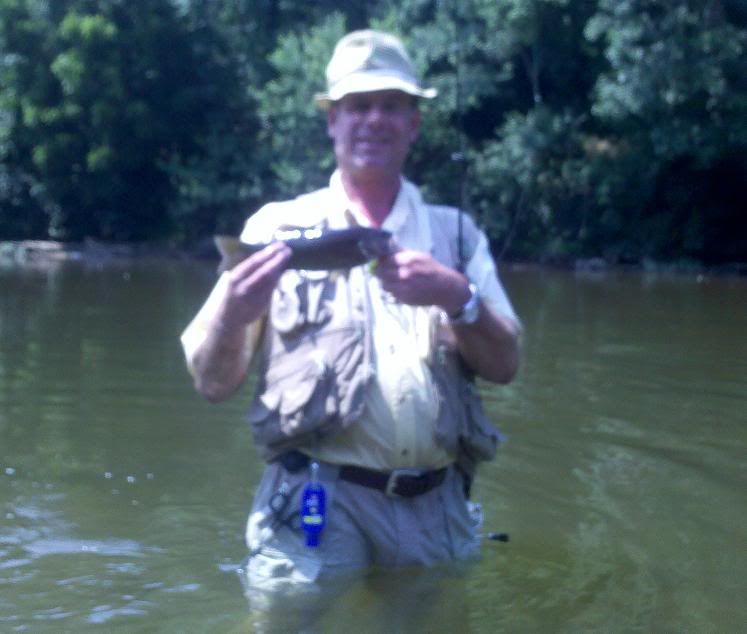
| Here's Rodger with a river pit bull and a big grin! |
But I'm happy with the results. I landed forty one smallmouth between ten and fifteen inches, two small largemouth bass, and fourteen red-breast pesky sunfish. Rodger caught a bunch of bass and sunnies as well, mostly on soft plastics but a couple on a small deep diving crankbait towards the end of the trip. I've had better days fishing this spot in the past, but looking back, I think that it was a decent day considering that I've been out of touch with the spot for many years now. I can't wait to get back.
 |
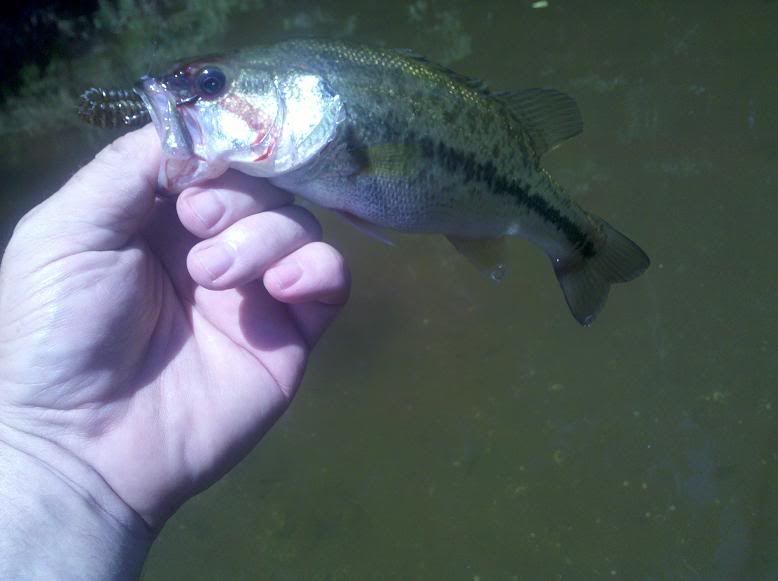
| Smallmouth bass dominate the fish populations in our upper Mid-Atlantic warmer water rivers, but now and then you will tie into largemouth bass. This is a little guy, but some of them can get quite large. They prefer slower water and woody cover while smallies prefer rocky river cover and moving water. |
Did I get in trouble with my wife? Maybe a little bit, but a short trip to the grocery store and bringing home a tasty dessert for dinner later that evening eased the tension dramatically. So, take it from me, when it's hot, get out of the air conditioning and wade for smallmouth bass. You won't regret it. Life is good!