By Guest Author Jim Cumming
No matter where you are in the country, December through March produces the coldest weather of the year. For sure, where I currently live in the Northeast, the “depths of winter” are colder and longer than in states to the South, often expanding to include much of November and April. Nonetheless, even the Mid-Atlantic region rarely escapes a prolonged cold snap that changes the game on small streams. The fish have taken their fall feedbags off and spring conditions are months away. I ice fish for much of the winter, but there are days when I change things up and I am drawn back to the small streams that captivate me for much of the year. For sure, winter open water outings rarely result in fast action. You will often fish hard for a few bites. At the same time, the solitude, crisp air, and beauty of the winter landscape will make your time on the frigid water pass all too quickly even if the fish aren’t cooperating. Hopefully, this article will give you a few ideas leading to the added bonus of a few fish brought to hand when Old Man Winter blurs the line between open water and ice.
No matter where you are in the country, December through March produces the coldest weather of the year. For sure, where I currently live in the Northeast, the “depths of winter” are colder and longer than in states to the South, often expanding to include much of November and April. Nonetheless, even the Mid-Atlantic region rarely escapes a prolonged cold snap that changes the game on small streams. The fish have taken their fall feedbags off and spring conditions are months away. I ice fish for much of the winter, but there are days when I change things up and I am drawn back to the small streams that captivate me for much of the year. For sure, winter open water outings rarely result in fast action. You will often fish hard for a few bites. At the same time, the solitude, crisp air, and beauty of the winter landscape will make your time on the frigid water pass all too quickly even if the fish aren’t cooperating. Hopefully, this article will give you a few ideas leading to the added bonus of a few fish brought to hand when Old Man Winter blurs the line between open water and ice.
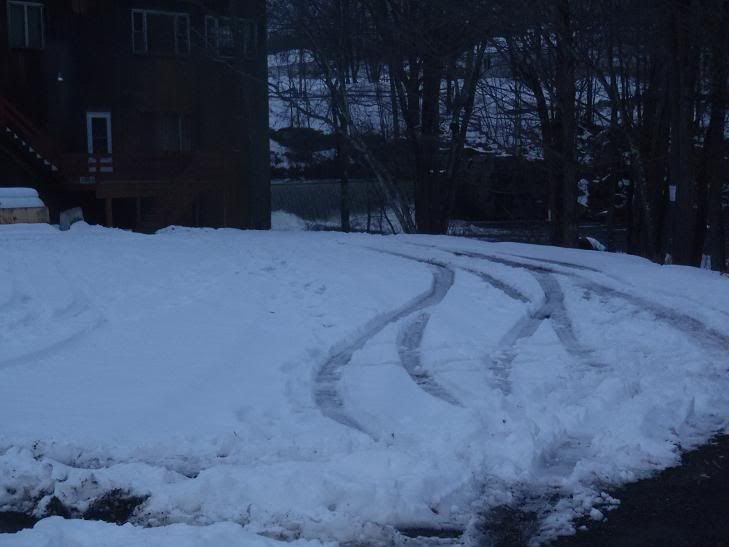 |
| Many times your tracks will be the only ones in the parking lot. You can often enjoy a nice winter bite to go along with the solitude. |
Many of the concepts covered in my “Small Stream Magic…..Going with the Flow” article in Fat Boy’s blog last month can be applied to your pursuit of fish during winter months. Fish in winter often behave like fish in high water conditions during warmer months. Rarely will you find them holding in swifter currents or shallow areas. The spots to focus on are the deeper, more placid sections of pools. I call these areas “soft water.” Scour areas behind larger boulders within pools can be particularly productive “spots within a spot” to target.
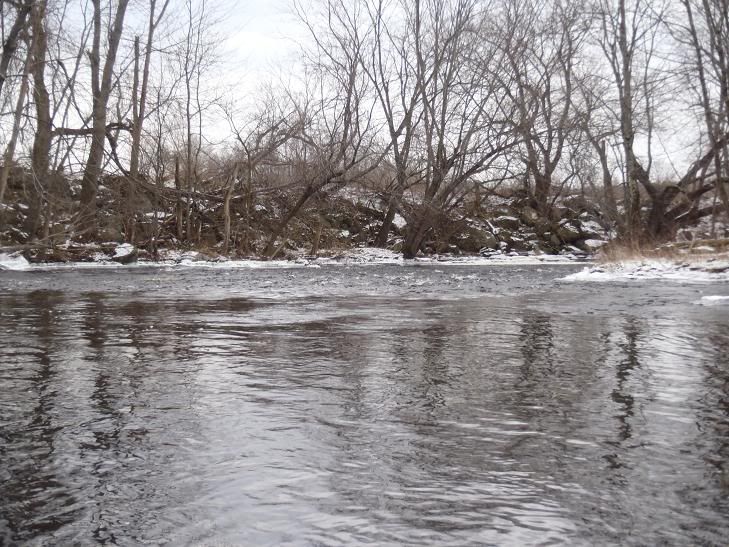 |
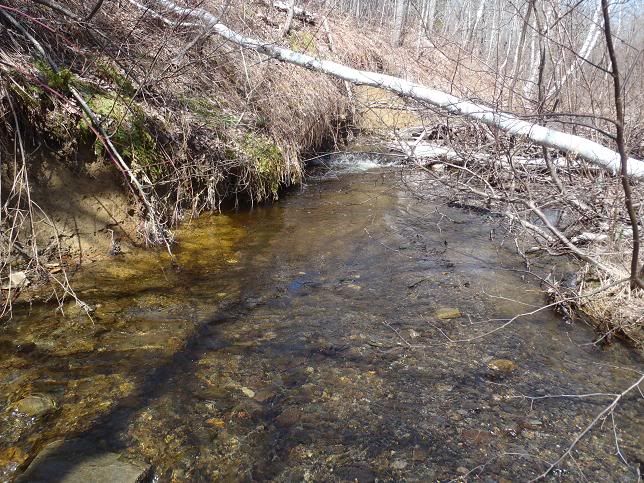
| This deep run with a moderate current is a prime holding area for winter trout. |
While these are prime spots, winter fish can be full of surprises. More than once, I’ve fought off the skunk or come up with a bonus fish by fishing the tail out areas of large pools. Such spots can be fairly shallow and have a strong current. One December outing with my buddy Warren comes to mind. We had pounded the previously mentioned “sweet spots” with nary a tap. Before packing it in, I decided to probe the tail out of a pool practically within sight of the parking area. I made my first cast across stream and allowed my crankbait to swing seductively as the current pulled it downstream and I slowly retrieved. To say that the twenty inch brown slammed the lure would be overly dramatic, but the sudden added weight and headshake were unmistakable. Well….sort of. Winter bites are often met with disbelief at first rather than excitement. I managed a hook set that was good enough and a weak, “Warren, fish,” was all I uttered to alert my buddy that the game was on. The war whoops would wait till that fine trout was in the net.
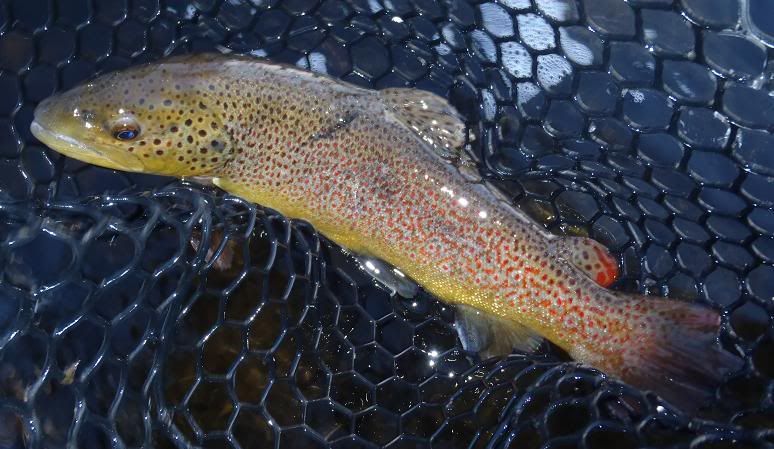 |
| This twenty inch brown trout grabbed a crankbait in 32 degree water in a pool tail out. |
With an idea of the in-stream spots to target for winter fish, let’s turn the focus to the prime times to pursue them. A concept that applies to winter fishing is that “all 32 degree water is not created equal.” I’ve had action packed days in ice water in December, while that same water temperature in April will find the same stream seemingly lifeless and find me tugging at my few remaining hairs as I search fruitlessly for answers. I liken this to the “inertia” principle. Just like an “object in motion tends to stay in motion”, a “fish on the feed tends to stay on the feed.” Fish in December and the first half of January will often remain in their fall feeding mode and hit aggressively before going into a period of relative lockjaw till the first real thaws of spring arrive. This is not to say that there aren’t bursts of feeding activity throughout the winter months, and there are ways to maximize your chances of being on the water for these windows of opportunity.
The low light periods of dawn and dusk that generate good action throughout much the year, are often unproductive during the winter. It is best to focus your winter angling around mid-day. My fishing log contains many entries such as “brown trout landed 11:15 AM”, “lost fish on at Noon” and so forth, with very few entries for success late in the day. The mid-day sun may not cause a noticeable uptick in degrees on my water thermometer, but a slight warm-up of a dark bottom area or boulders is apparently just enough to activate a few scud, stonefly larvae, or other feed to activate the predators if only for a brief time.
While a slight warm-up on a given day may generate a brief feeding period, an extended warming trend (especially with warm overnight low temperatures) can produce bursts of exceptionally fast action. Just as you look for “spots within spots” when prospecting a stream, there are also the “best times within prime times.” One such time is when a cold front or storm approaches as a warm spell is about to end. There is often an intense bite just as winter closes back in. Once a prolonged cold spell settles in (with overnight temperatures plunging into the teens or lower), the bite will often seemingly shut off until the next warming trend arrives and the cycle starts over.
A warm rain or some snow melt (enough for a slight bump in the flows, but not enough to blow the streams out) can trigger a bite and clear out ice that may have prevented you from fishing some prime winter fish-holding spots.
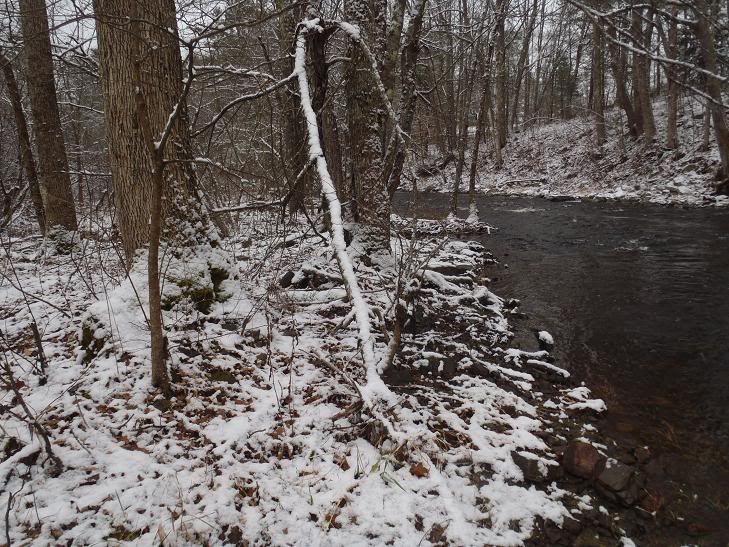 |
| Good winter timing. A warm spell raised the water level and cleared the stream of ice. The cold front that followed delivered a fresh dusting of snow, but also triggered a mini blitz. |
As I discussed in “Small Stream Magic….Going with the Flow” in Fat Boy’s blog last month, it pays dividends to locate spring seeps during low water conditions in summer. Don’t ignore their potential as fish magnets during the colder months as well. The springs continue to deliver ground water that remains at a relatively stable temperature when compared to surface water in the icy grip of winter, and can become a fish-holding area.
With the topics of holding water and prime times explored, let’s turn the discussion to what lures to throw. This is not to say that natural bait won’t work. In my area, on the streams that are legal to fish in winter, regulations allow for the use of artificial lures only. I’ll limit my discussion to the use of artificials. Intuitively, you would expect a slow approach with a lure or fly close to the bottom to be the way to go for winter fish. However, I’m amazed how often a fish in ice water will intercept a crankbait as if it was still October. In fact, a review of my records for open water fishing at water temperatures of 32 degrees or below shows that nearly sixty percent of the fish caught fell for Rapalas, Rebels, Yozuri pin minnows, and other crankbaits. For sure, I’m not burning the lures back on the retrieve...a “stop and go” or “hold in the current and dive” gets the most attention...but the effectiveness of crankbaits in the dead of winter is an eye opener. The key thing is to cover the water thoroughly. A slightly different drift, retrieve, or other variation can turn “fishless” into “fish on!”
To cover all the bases, I use what I call an “over and under approach.” The “over” refers to working a pool for “overactive” fish with a crankbait first, trying for a few quick bites. My fishing log also contains numerous entries like “fish hit on the first cast at Henry’s Pool.” I’ll often work through a series of pools with a crankbait before taking a lunch break and then working back over the same water with the “under” approach...working a pool with jig, Berkley trout worm, or something similar trying to trigger reluctant biters (what I call “underactive” fish). I usually do best by suspending the lure below a float at a depth where it just ticks off bottom occasionally as it drifts at the same speed as the current. I find that if the bite is really tough, a small marabou jig will out-produce tube jigs and other plastics. Whatever jig you use, keep it small. I carry a selection of colors in the 1/100th to 1/32nd ounce range. Experiment with colors…on some days, natural colors like olive, brown, or black are the ticket, while on other days pink, white, chartreuse, or other bright colors ring the dinner bell. Bites on the bobber and jig technique are often subtle...just a slight pause or jiggle of the bobber. Set the hook! Better to find a snag then to be left with that nagging, unanswered question, “Was that a fish?”
 |
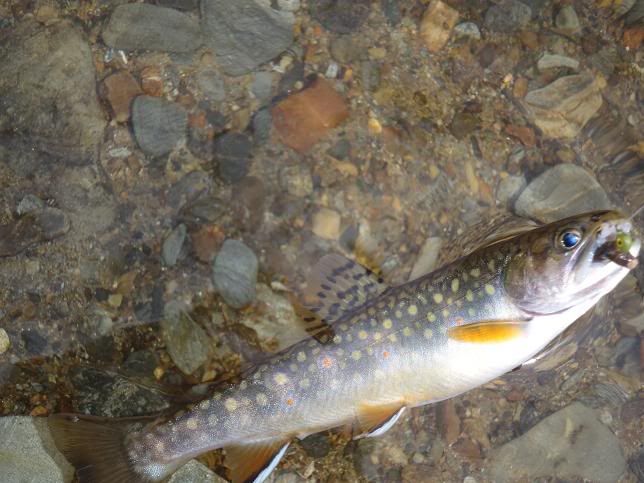
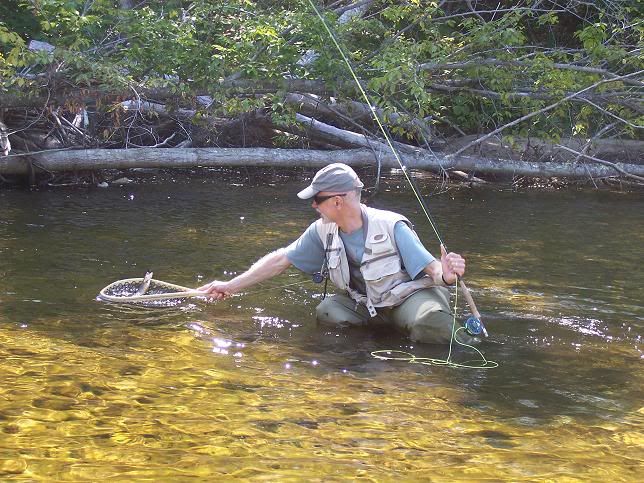
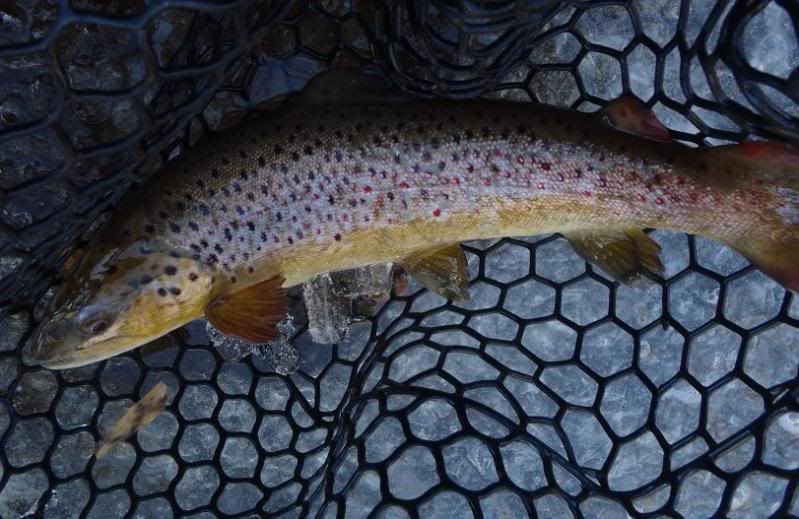
| It took a small tube jig suspended under a bobber to trigger this brown on an icy January afternoon. The fish was released, so it was kept submerged for the photo to avoid the tissue damage that could result from the freeze-up that can be seen in the upper part of the net. |
There was a saying back in my Coast Guard days when it came to heading out on an emergency call, “You have to go out, but you don’t have to come back.” Chasing winter fish doesn’t rise to the level of risk that comes with saving lives and property at sea. However, winter fishing does bring with it a set of hazards that are unique to the cold weather months. I feel it important to point some of these dangers out, so you do come back from your fishing adventures! I will not delve into cold weather clothing and hypothermia to any extent since I’m certain that most of Fat Boy’s readers are avid and well-equipped outdoors men and women. Instead, I will focus on physical hazards in the winter small stream environment that can lead to injury or worse.
There is often a fairly steep slope descending down a stream bank to the water. This can be hazardous at any time of the year, but it’s made even trickier by ice and snow. As you near the water’s edge, dropping water levels may have left a thin coating of ice on all surfaces. Within the stream, you often find shelf ice built out from the shore, moving ice in the flow, and even anchor ice adhered to the bottom in frigid waters. All can lead to a soaking and early ending outing at best if things go wrong (which they can in a hurry).
Twenty years ago, I took a chance on traversing a slope that had been slickened by a freezing rain storm. Even with cleats, I lost my footing and was forced to sacrifice my shoulder to avoid a potentially deadly plunge into a raging river thirty feet below. While I’ll never know for sure, this incident and injury likely planted the seeds for the failure of the rotator cuff in my casting arm years down the line.
Twenty years ago, I took a chance on traversing a slope that had been slickened by a freezing rain storm. Even with cleats, I lost my footing and was forced to sacrifice my shoulder to avoid a potentially deadly plunge into a raging river thirty feet below. While I’ll never know for sure, this incident and injury likely planted the seeds for the failure of the rotator cuff in my casting arm years down the line.
 |
| The author was able to safely get past shelf ice to hook this New Year's Eve trout... |
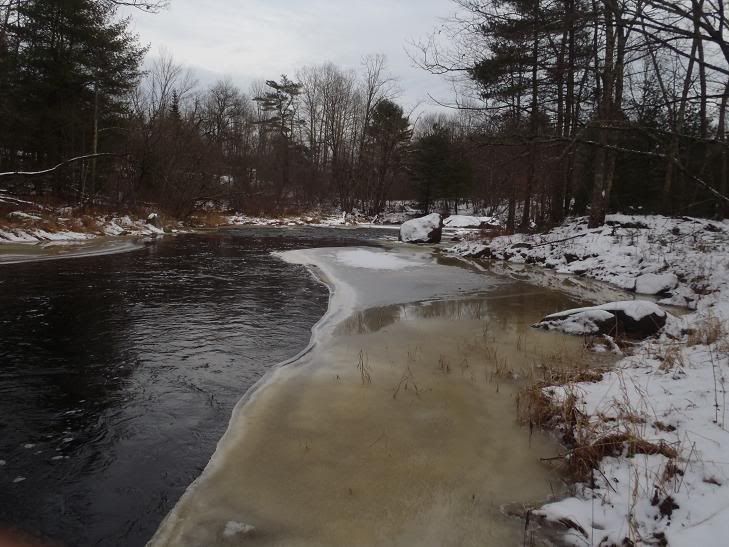 |
| ...But had to pass on fishing this productive run when weak shelf ice built out from the shore into about five feet of water - A sure prescription for a potentially deadly dip. |
My recommendations for winter small stream safety are:
- Wear cleats (Korkers, Stabilicers, etc.) or wading shoes with studded rubber soles.
- Avoid felt soled wading shoes. Even if they are legal where you are, they are prone to hazardous ice and snow build-up.
- Minimize wading, especially above your waist, and always where a wading belt.
- Fish with a buddy or at the very least give someone your itinerary.
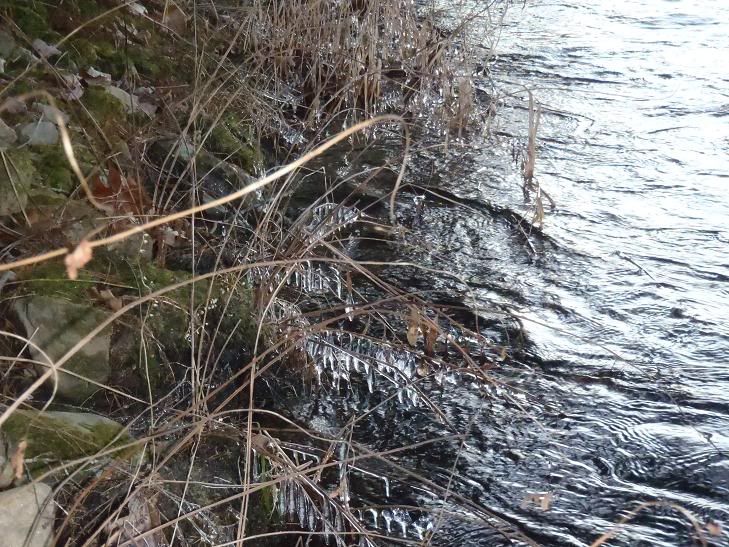 |
| Proper footwear and caution can get you safely around these "landmines"...shoreline moss and a glaze left behind by falling water levels along a swift run that drops off quickly to nearly six feet. |
I’ve presented a few thoughts that I hope will enhance your small stream angling when winter grips the landscape in your area. The fishing may not always be fast, but just getting out on a crisp, clear day is its own reward. And with persistence and a little luck, you will connect with a few of the battlers that call the ice water home.
 |
| January 10, 2012...everything came together. A warming trend, with favorable stream flows, and an imminent cold front created a window of opportunity for a burst of action. Within a few hours, the air temperature had dropped to ten degrees and that window closed. |
Blogger's Comment: Thanks Jim for the wonderful article. I'm sure that you've inspired some die hard anglers to get outside, fish, and possibly catch fish in conditions that they never dreamed that they could catch fish from, and perhaps offer relief from cabin fever. I look forward to your next article.