Showing posts with label sheepshead. Show all posts

Friday, June 23, 2017

CBBT Part 3 - Fish or Cut Bait?

Or rather, Fish or Cut Get Bait?
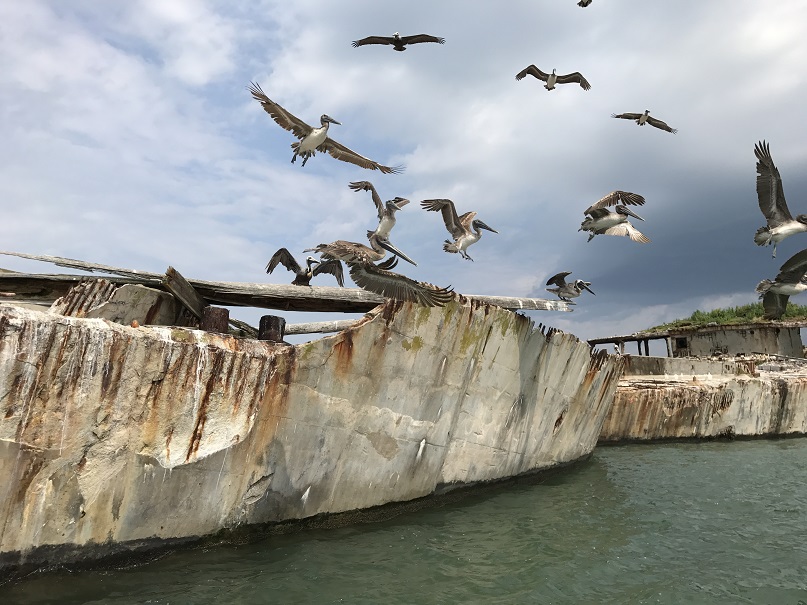
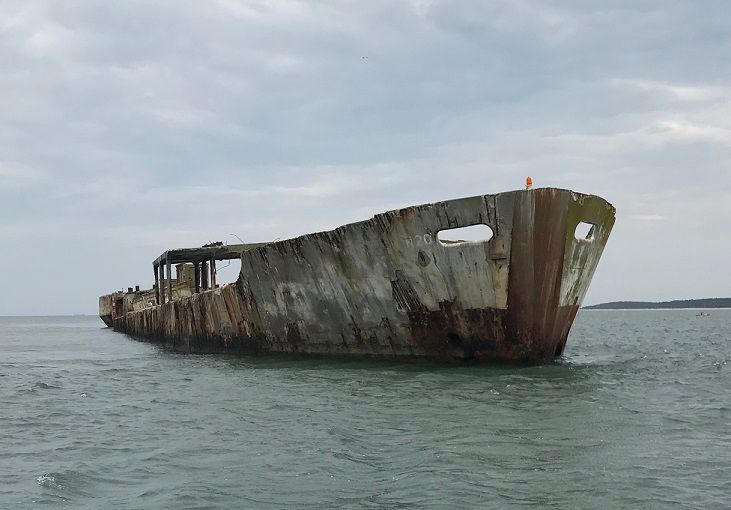
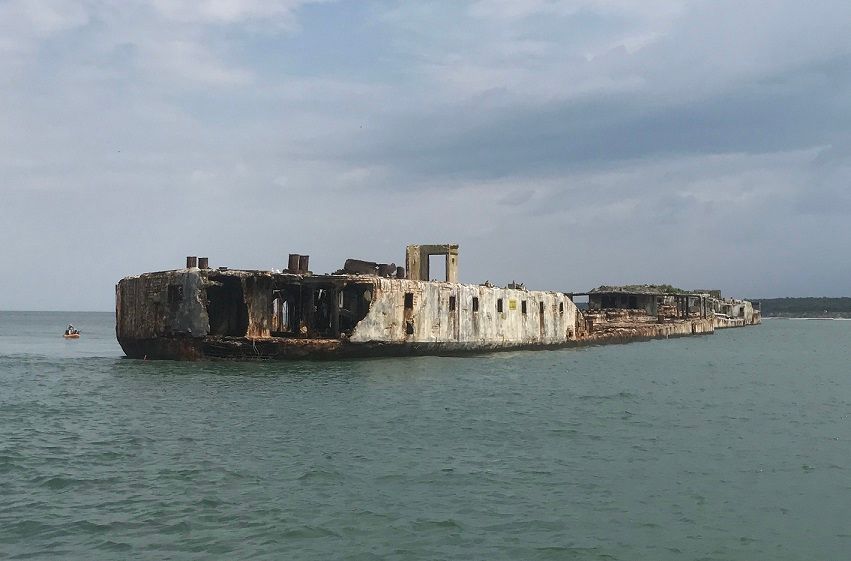
Several ships made of concrete were sunk to form a break water for the ramp at Kiptopeke State Park.  I'll touch on the history later.  These pelicans were all lined up waiting for me to take a picture, but I was too slow.  Actually, I caught them flying off and I think that the picture turned out even better!
The third day of our trip was slated to be a full day of fishing.  We woke up early, were well rested, and stoked to get out on the water.  The wind forecast was also good for the start of the day, while predictions for afternoon thunderstorms loomed.

We headed North into the Bay to set up baits for bull red drum and cobia, stopping at another spot where Captain Steve had success in prior years.  This spot was cool because it was where a shoal meets a channel edge.  Surely, big drum or cobia would prowl there.  In addition to the baits that I mentioned in my last post (cut bait, live eels, and blue crabs), we added clams to the mix in hopes of picking up a big black drum.  We heard reports that some folks had been successful taking bull red drum and black drum on clams the day before.

When we arrived at the spot, it was slack tide.  And, the current seemed to be moving in a direction that we weren't anticipating.  We weren't sure if it was the effect of wind or what was causing it.  But, we set up anyway.

The first bite came on the live eel rig.  The line was slack, but we forgot to put it in free spool.  An apparent rather large shark grabbed the eel and bit the leader off on the first run, causing the reel to double over and then slap back like a huge spring.  If someone was standing there, they might have had a black eye!

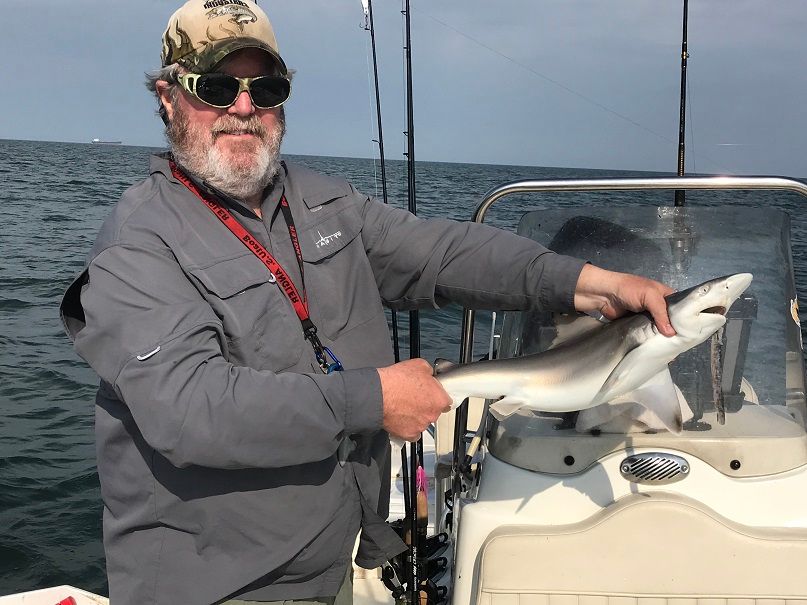
It didn't take long for another bite, this time on one of the spinning rods that dangled cut frozen bunker.  The rod doubled over while in the rod holder while line peeled off the reel.  Steve set the hook hard and the fight was on.  After a couple runs, Steve had a shark subdued at boat side and I netted it.
Steve with a small but feisty shark.  I think that this might be a small dusky shark based on the smaller dorsal fin and the position of it being further back.  If anyone knows for sure, please comment and let me know and I'll edit accordingly.  Thanks.
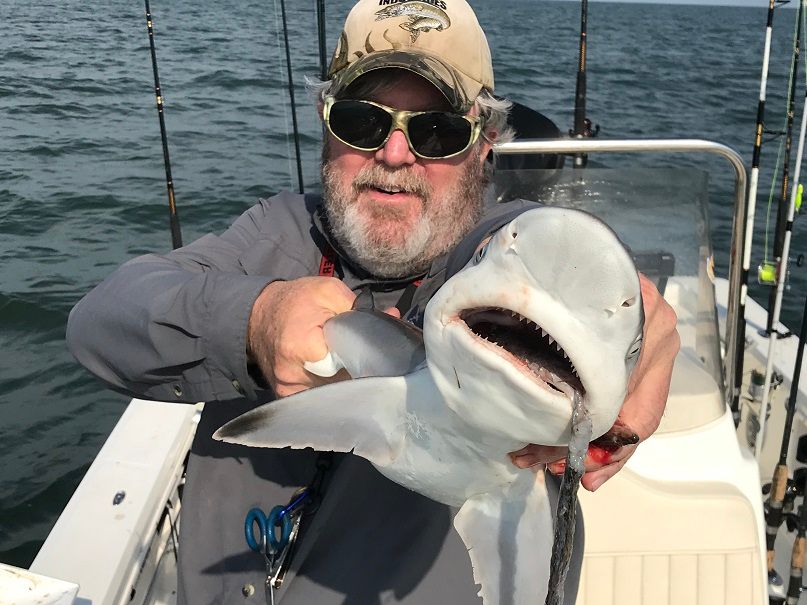
Within minutes of him releasing his shark, line peeled off of the the baitcasting rod and reel with the live eel.  This time, the reel was in free spool with the clicker on.  I engaged the reel and set the hook a couple times, and fought a small shark to the boat.
I suspect this may be a dusky shark too because the dorsal fin is pretty far back behind the pectoral fins.  I'd know if I could pull out a tooth, but I'd like to keep my fingers, thank you.  Anyone that knows, please feel free to comment and I'll edit accordingly. 
Here's the business end of that last shark.  
After the first two sharks, Steve wished that we had some live bait for our live bait rod.  I heard about a product called "Fishbites" while researching fishing reports for this trip, so I picked up a pack at the local tackle shop.  The reports were saying that the bloodworm flavor worked well on spot and croaker, which are ideal bait fish for both cobia and red fish.  I was a bit skeptical, I admit, but, anything is better than dealing with bloodworms, in my opinion.

So, I took Steve's light tackle bottom rig, pulled out a strip and cut two small pieces about an inch and a half long off of one of the strips, then threaded them on the hooks.  I dropped the rig over the side of the boat, not expecting much, and no sooner than the sinker hit the bottom did I have a bite.

I set the hook and brought in a couple baitfish, two at a time.  On the next drop, two more.  It was clear that Fishbites work well and can catch multiple fish.  To me, they seem like the perfect substitute if you don't like using blood worms.   I'll continue to test them out to see what species I can catch with them and follow up with a report in the future.
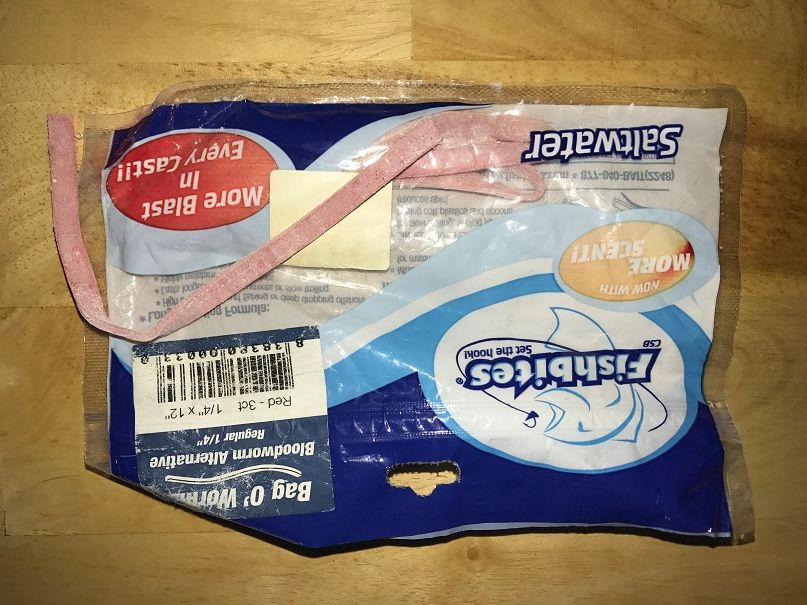
I was very happy to confirm the positive things that I read about Fishbites.  I've had success with Gulp in the past, but this works very well.  I look forward to using it in the future.  Be careful that you don't mistake them for bubble gum!
After a while, the Fishbites pieces turned gooey and all that was on the hook was the mesh that the Fishbites material were molded on to.  I just left it on the hook after I added more Fishbite chunks, and it had no negative effects on catching fish.  I simply cut them off once we were off the water and disposed of the mesh pieces properly.

So, the problem we ran into after that, and it was a good problem to have, was that just as I'd try to add live bait to the livewell to catch monster fish, a monster fish bit on one of the big game rods.  I had to scramble to reel up the baitfish rod and get it out of the way.  Sharks, bull reds and even more so, cobia, cause a ton of mayhem around the boat.  It's important to keep the boat deck clear of gear so you can fight the fish and clear lines quickly without getting hooked in the leg or something.  I guess the theme here is not really "Fish or Cut Bait", but rather, "Fish or Get Bait"?

These smaller sharks put up a good fight and will make a run or two, but nothing like the fight from that first night.  Still, it was fun catching three foot sharks.  They weren't our targeted species though.  We wanted big reds or cobia, and so far, no action from them.

We both caught several sharks and thought that this new spot was a good one.  Steve said that we have to go through the sharks and rays to get to the drum and cobia, that our arms and shoulders would get a good workout.  If your baits are attracting sharks, sooner or later, cobia and drum will show up.

Looking off to the West, we noticed a thunderstorm heading our way.  After checking the weather radar, it was a small but fierce looking storm, one that we could run away from and fish somewhere else.  Of course, it was the only storm at that time in the state of Virginia, and it was heading right toward us.  We had to give up this spot and outrun the storm en route to another fishing spot.

We successfully outran the storm and headed back toward the boat ramp to fish around the sunken cement ships.  As we looked back to the North afterwards, the storm pounded our previous spot.  Even as far away as we were, the lightning made me nervous even from that far away.

We decided to drift around the sunken cement ships that act as a breakwater for Kiptopeke State Park for flounder and anything else that would bite.  Both Steve and I put out our flounder rigs and I caught a nice keeper summer flounder on the first drift.  I rigged mine with a chartreuse Gulp mullet while Steve's tandem rig hooks were tipped with squid and the other with Gulp.
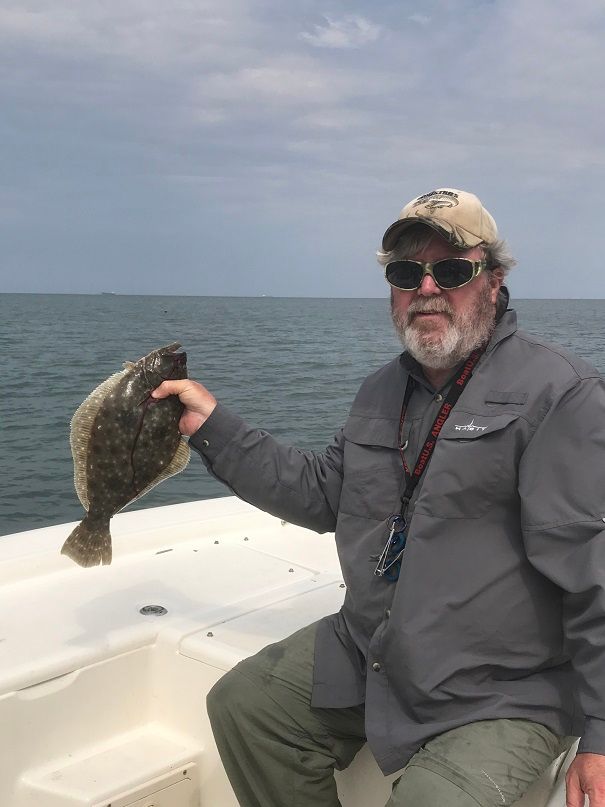
This was a nice keeper flounder, caught on our first drift, but turned out to be the only flounder of the day.
Nine cement ships were sunk a few years after World War II to serve as a breakwater for a long since gone ferry.  They once served as cargo or training vessels for the military, but now protect Kiptopeke State Park and the boat ramp from bad weather.  These ships provide fish holding cover for flounder, tautog, sea bass, and many other species.  You can feel the history in an eerie sort of way as you drift by them.
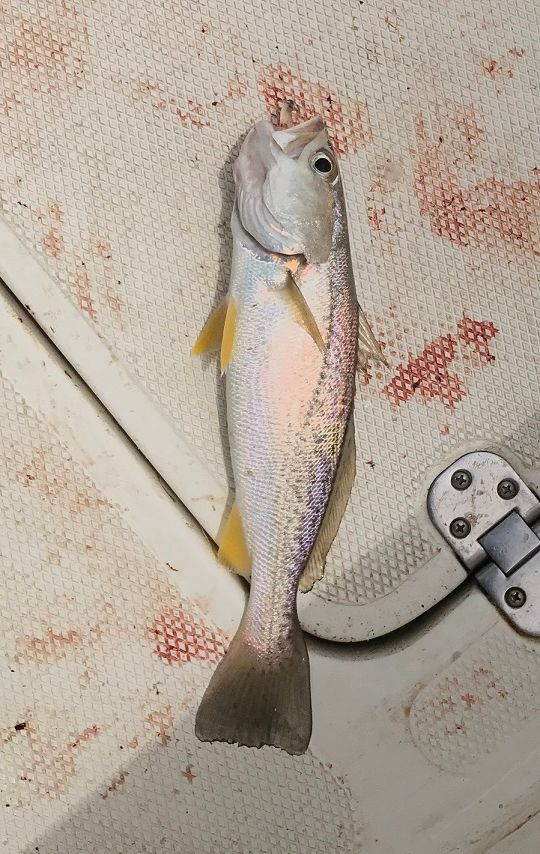
After four or five drifts with no further action, we concluded that the flounder fishing really hadn't turned on yet, so we headed to the bridge to fish the pilings again.  We fished those areas hard and caught all three species of kingfish as well as a bunch of undersized sea trout.  This time, I used two jigheads with Gulp mullet in tandem.  Eventually, like the day before, the sea trout bit the tails off of the Gulp baits, and they worked even better without the tails.
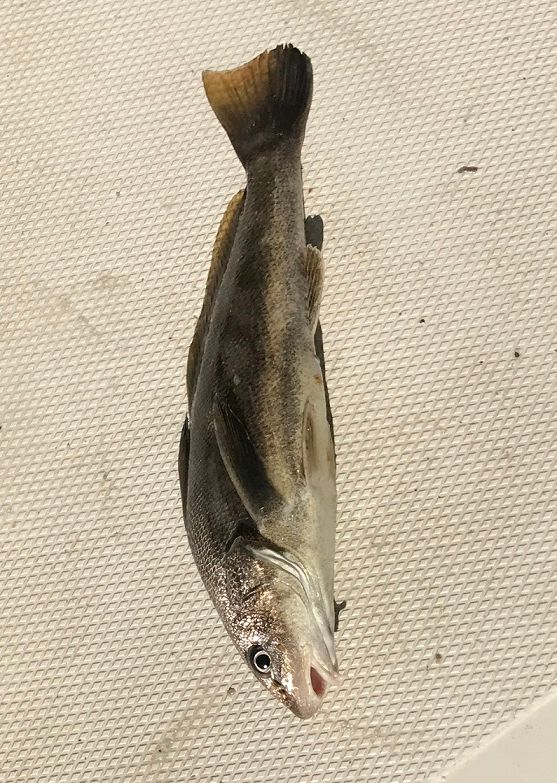
Small weakfish, or sea trout, like these dominated the jigging catch around the bridge pilings.
While we jigged, a school of snapper bluefish broke water, and birds dove all around us.  Of course, who can resist tossing a jig into a school of breaking fish?  We caught several bluefish until the baitfish school moved away along with the predators.  Several boats followed them, but we opted to jig the pilings.

After a while, we noticed other boats anchored up along he West side of the bridge.  One of them landed a small cobia and a couple stingrays.  We tried bottom fishing near the bridge but after an hour with no luck, we moved off again to fish other pilings.

Meanwhile, the area became very cloudy, temperatures dropped significantly, and the winds picked up.  We were both dressed for 80 degree temperatures and were both chilled to the bone.  Even though the fish still cooperated, we were shivered uncontrollably with no spare clothing on the boat.  I guess that shivering also puts more action on your lure while jigging, so maybe that kept them biting!

We both considered a move to another spot, but noticed the clouds out to the West looked ominous.  I checked the radar, and sure enough, a strong line of thunderstorms were moving fast to our area, with no place to run this time except off the water.  We didn't mind that we had to head back because we we felt cold anyway.

We arrived at the ramp and pulled the boat out just in time before the heavens opened up while lightning flashed in the distance West of us.  I don't mind fishing in rain, but no way do I want to be on the water with lightning around.  The weather service called for thunderstorms all evening, so we were done for the day.  We decided to work on a plan for the next and last day, grab a bite to eat, and get some rest so we could get an early start the next morning.

Stay tuned because in the next article, I'll disclose the events of the next and final day.

If you missed CBBT Part 1, please click here
If you missed CBBT Part 2, please click here
To read CBBT Part 4, click here

Wednesday, June 21, 2017

CBBT Part 2 - A Day for Jigging and Drifting

The second day of our trip started out much better from the weather standpoint.  The morning started off with bluebird skies even though the wind and waves were much more tolerable.  We decided to start off by drift fishing for flounder around the bridge islands and jig the pilings for whatever fish were willing to bite.  The goal was to catch a variety of species but still have a shot at a big drum or cobia, because they hang around the bridge structure too.

The North end of the Chesapeake Bay Bridge Tunnel where it connects to Fisherman's Island.
Captain Steve hooked me up with a flounder rig and I tipped it with a chartreuse Berkeley Gulp mullet.  Steve had a dual rig, one of the tails was tipped with a Gulp mullet and the other with a strip of squid.  We did several drifts around the fourth island without any luck.  We decided to cast and jig around the island for anything that was willing to bite.

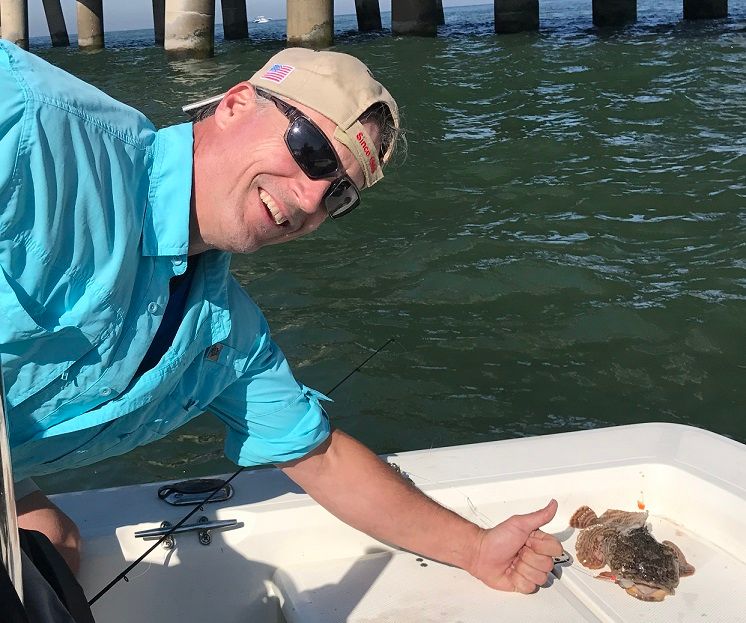
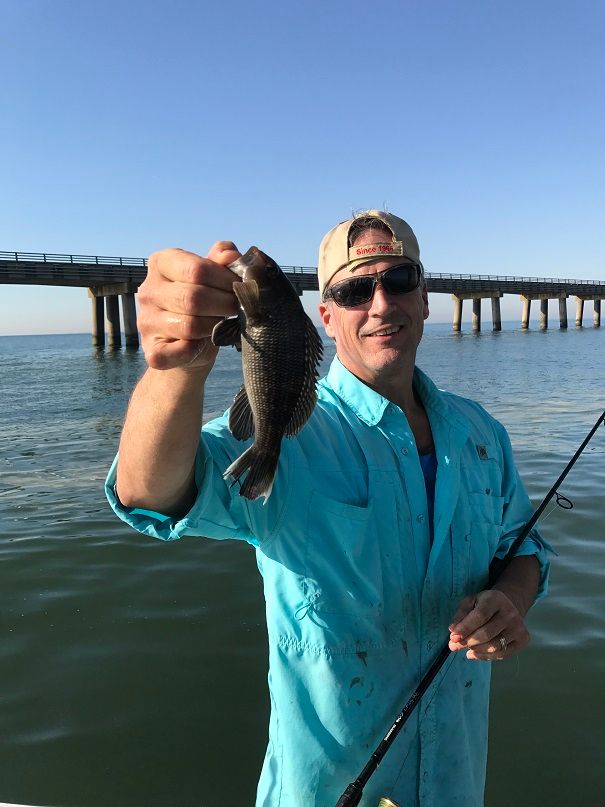
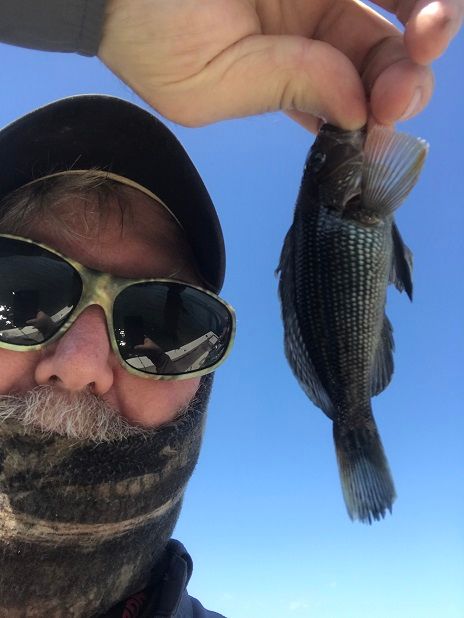
Steve had a bottom spreader rig ready to go and loaded it up with strips of squid, while I tied on a jig and Gulp mullet combo.  I had a few bites but the fish bit the tail off my lure, then I hung up on the rip rap.  He started off with a bang, catching four species of fish right off the bat.  His first four fish were an oyster toadfish, black sea bass, a pigfish, and a northern kingfish (not necessarily in that order).  Toadfish are ugly, nasty creatures, but his was the biggest one that I've seen in a long time.  Almost all of those fish were caught while I was tying on a new jig.

Steve with a big fat ugly nasty oyster toadfish!
His next catch was a small black sea bass.  These guys can get up to about nine pounds.
And a pigfish, pretty enough to put in an aquarium.
Then I finally hook into a monster sea bass, all of about four inches.  Another fish worthy of an aquarium!  We needed big fish.
We jigged around the island and caught some small sea bass.  My jig and Gulp combo was drawing attention, but from small fish that ripped the tail off.  So, I tipped the jig with squid and began hooking up on these bites.  But, this wasn't what we were after.

We moved on to other pilings.  I threw a Savage Gear Real Eel in hopes of a cobia bite at the pilings with no luck.  At each piling, after a few casts with the Real Eel, I jigged a Gulp mullet at anything that would bite.  I was hoping to catch a tautog, but no luck with them.  Meanwhile, Steve tossed a bottom rig with peeler crab as bait.  He scored a nice sheepshead that was about nine pounds or so on the peeler crab.

Steve caught this nice sheepshead on a peeler crab and saved it for the table.
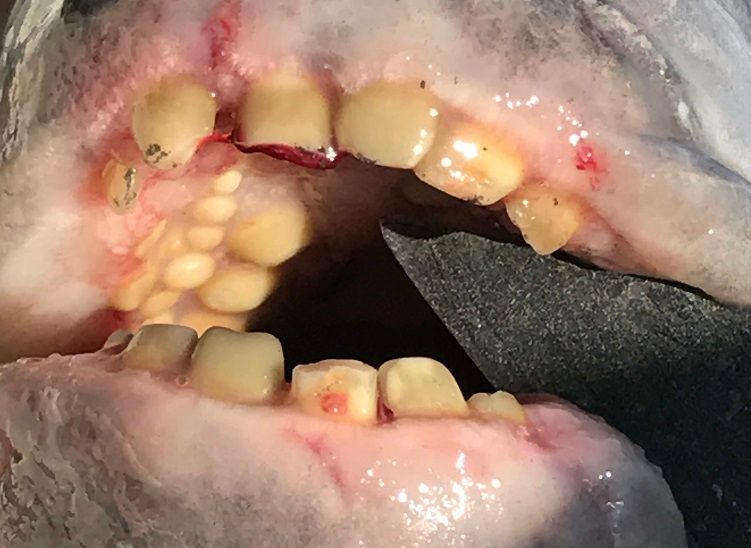
Sheepshead teeth are almost human like.  This guy could use a little brushing and flossing!  Notice the pharyngeal teeth on the roof of their mouth.  They're on the bottom jaw too, perfectly designed for crushing crabs, shrimp and shellfish.  
Meanwhile, I caught a bunch of undersized weakfish, or sea trout, one after another on my jig/Gulp mullet combo.  They'd bite off the tail, so I'd add a squid strip and kept on catching them.  They were pretty good at ripping the squid from the hooks, so I got lazy and decided to just toss in the jig/Gulp without the tail.  Guess what?  They hit it just as well, if not better!  I think that the tailless jig got to the bottom quicker to more fish.  Steve switched to his light tackle bottom rig and was catching them two at a time.

Steve caught weakfish and speckled trout on his bottom rig two at a time while I caught them just about every cast tossing a tailless Gulp mullet.
I caught a few new species for me on this trip, speckled trout (aka spotted sea trout), northern kingfish and southern kingfish.  I've caught weakfish (or sea trout) before, but never the speckle trout ones.  Unfortunately, I failed to get a picture of the speckled trout.  All of these fish bit all afternoon, giving me easily 100 fish for the day in the count.  It was quite fun.

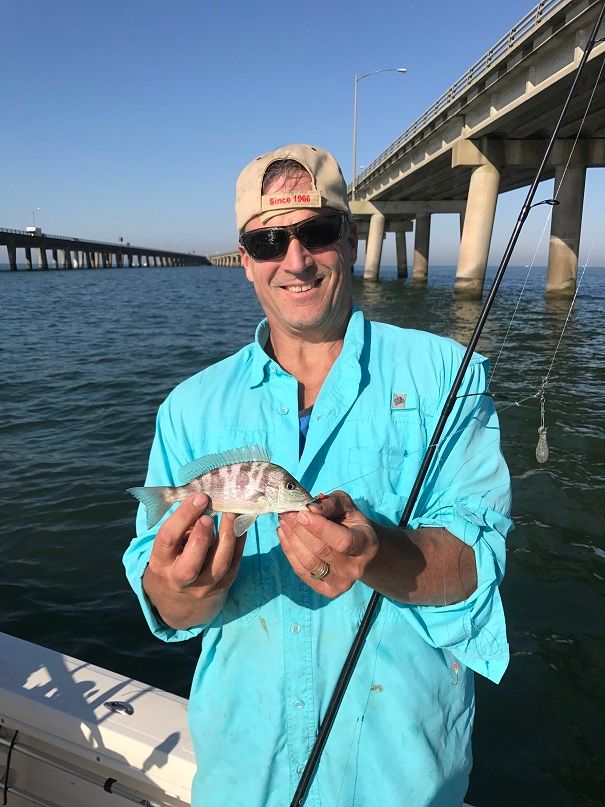
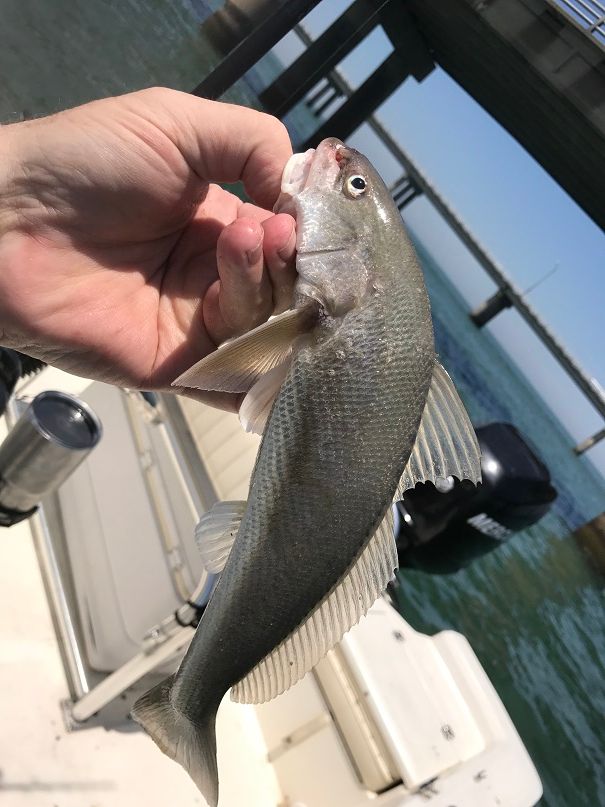
The northern kingfish was a new species for me in addition to the speckled sea trout.  You can distinguish these from southern kingfish by the black bars along the body, while the southern kingfish are bronze on the back, faint bars with a white belly.  To further confuse things, the gulf kingfish, pictured below, look like southern kingfish but lack the bars.  All three have a single barbel on their chin.
I think that this is the gulf kingfish.  I'm pretty sure that we also caught southern kingfish too, but I don't have pictures of them, but they look very similar to this fish.  Both species are new catches for me.  I advise against not lipping them as they have pretty small but sharp teeth that cut my thumb.  The cut wasn't bad, but enough sting to remind me not to do it again.  I learned the hard way.
I've since been reading up on how to catch "togs" because I didn't have any luck with them on this trip.  I wasn't far off by jigging for them, but live bait is probably going to be a necessity, using sand fleas, peeler crabs, Asian crabs, or green crabs (fiddler crabs).  Maybe next time.

Although we didn't catch any flounder while drifting, we still had a lot of fun jigging with bites almost every cast at one point.  We wound up both catching a ton of sea trout mixed with all three species of kingfish, and decided to spend the rest of the afternoon and evening trying for cobia and redfish.

We set up at Steve's first spot, where we'd caught the shark the night before.  Everything seemed right for that spot.  The tides were moving the right direction but not too strong.  The wind was finally not a factor.  We had fresh baits out there, including some of the fish that we caught jigging that can be used for bait.  However, the fish had other ideas.  We fished almost two hours without a bite and were going to make a spot change when thunderstorms started to move in.

We decided to head back to the ramp, take out, go get a nice dinner at a restaurant and perhaps a drink, and get a good night's sleep.  The plan was to get up early the next day and target the big fish early, then drift for flounder in the afternoon.

We caught a lot of fish, but the only keeper size fish all day was the sheepshead.  Steve couldn't believe that we didn't even pick up a shark or ray.  Maybe if the weather would have let us fish to the evening bite things would be different.  But not this time.

If you missed CBBT Part 1, please click here
To read CBBT Part 3, please click here