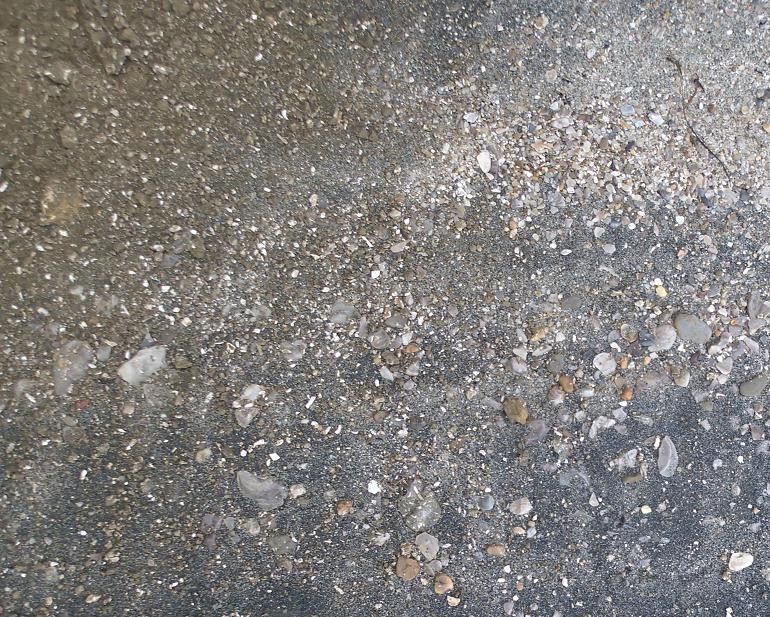
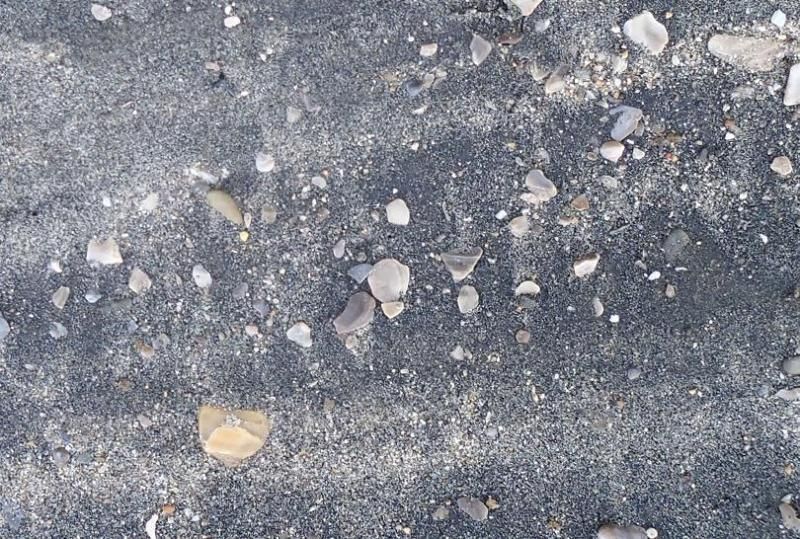
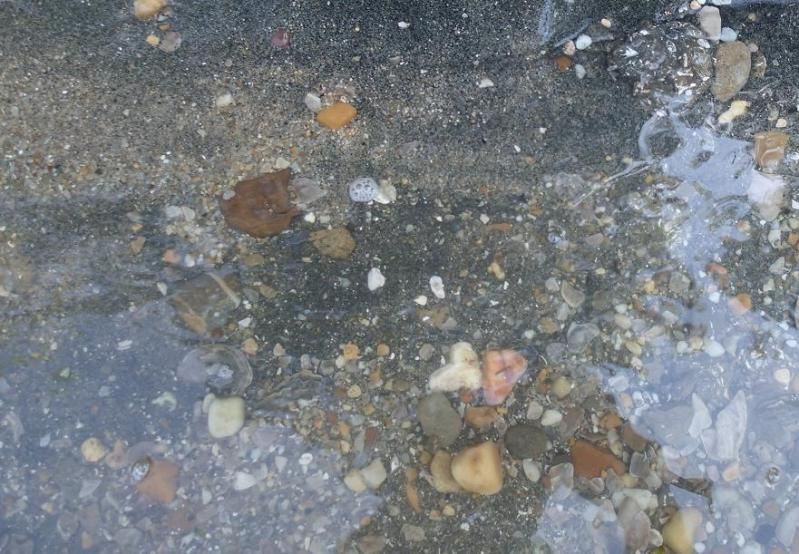
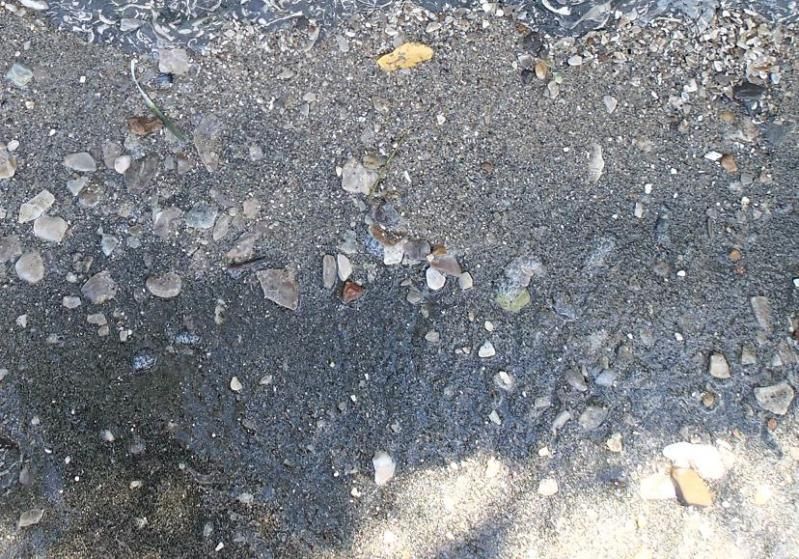
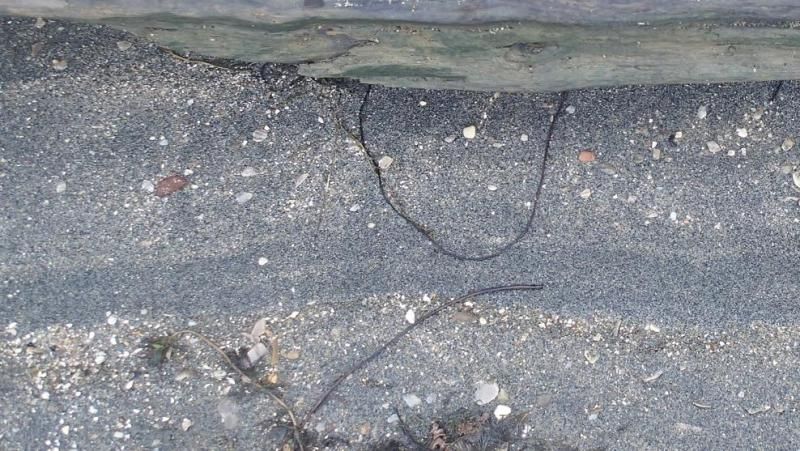
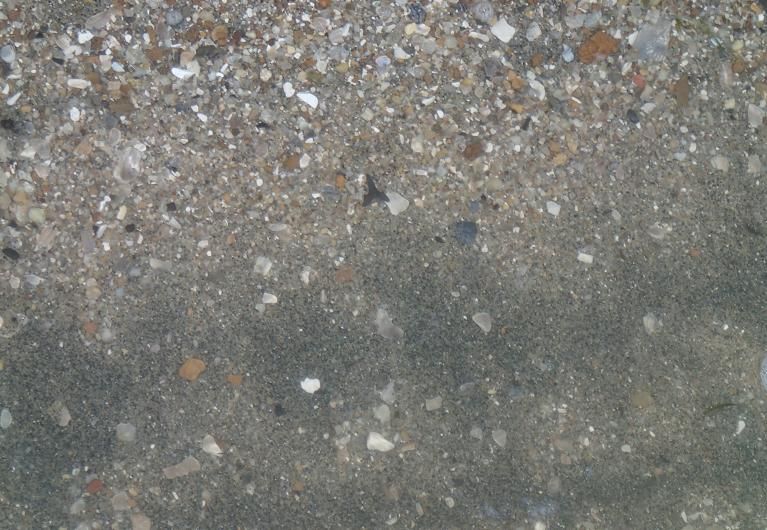
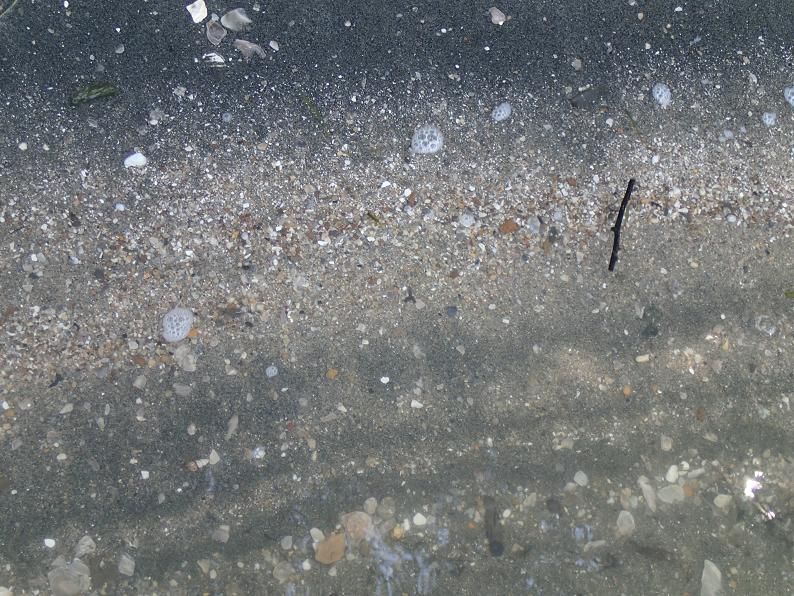
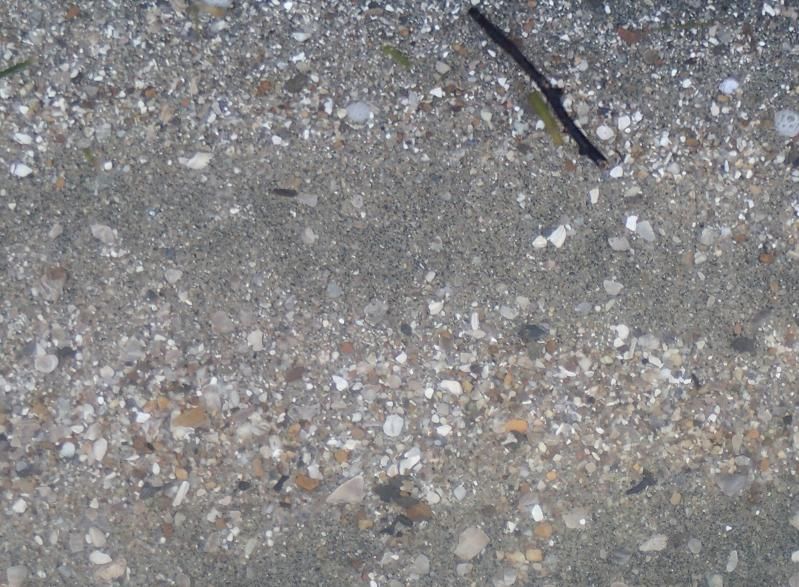
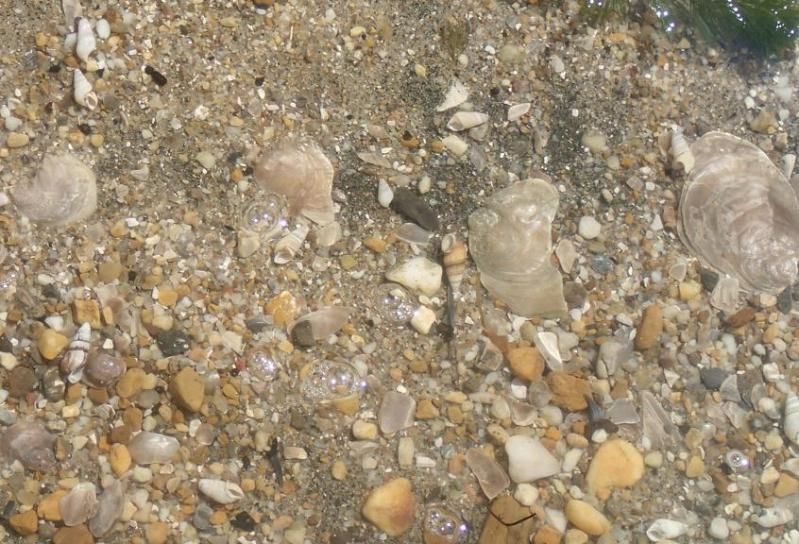
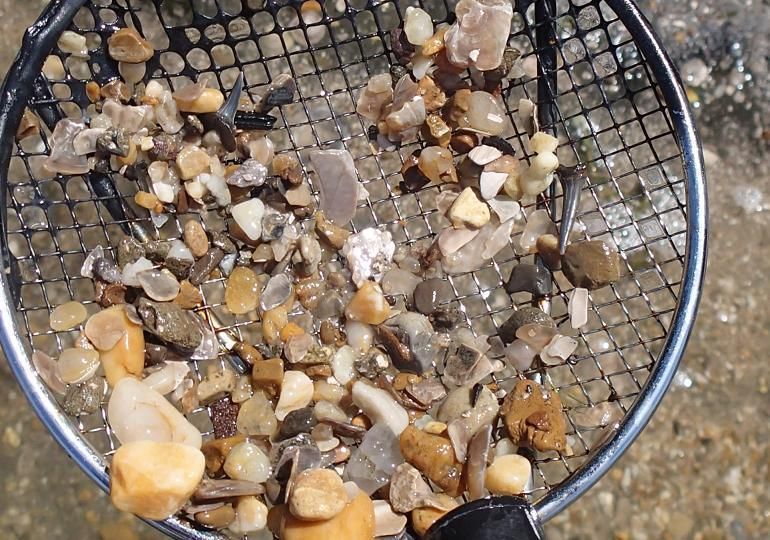
...or at least how I find them. There may be other ways to find shark teeth on the beach, and I'll touch on those briefly, but I'll focus mostly on my methods.
 |
| Although Myrtle Beach isn't a premier collecting location, it sure is fun finding shark teeth there while you're on vacation. This blog post hopefully will help you. |
First of all, let me state that there are more productive fossil hunting locations along the U.S. Eastern Coastal Plain, so this isn't a recommendation to collect there if you plan specifically hope to find the megalodon or great white shark tooth of your dreams, although large nice teeth are possible. However, if you are planning a vacation to Myrtle Beach, then finding shark teeth and other fossils are just another fun activity and well worth the effort. Even though I go to Myrtle Beach to vacation, any time that I'm fossil collecting, I may take it a bit more seriously than others.
Let's start off with the right tools for the job. The most important tool is... (drum roll inserted here) ...ready? Your eyes. That's right, your eyes. You need to discern the shapes and characteristics of shark teeth from the gazillions shell fragments that you may encounter on the beach. After that, additional tools are up to you.
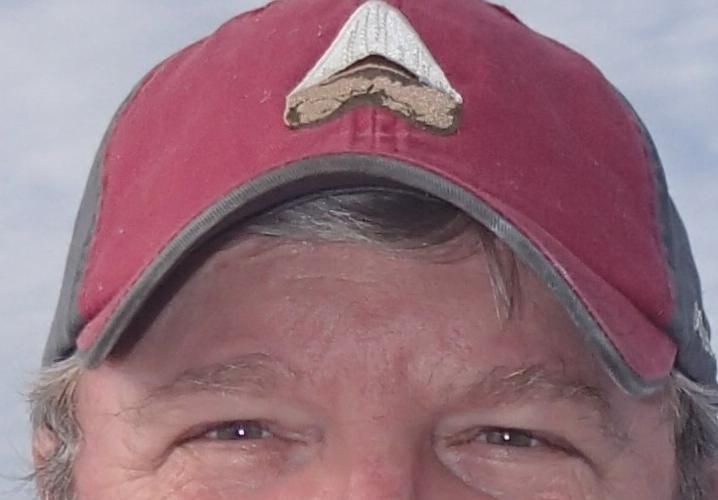 |
| The most important tool that you'll need are your peepers...learn what the teeth look like and their characteristics and you'll find them. There are other useful tools, but these are the best. |
 |
| OK, well some of us, like me, need a little help... |
Other than my eyes, my other tools and things that I carry with me consist of a tool to assist me in collecting that I refer to as my "pick up tool", some sort of container to keep your finds in, a fanny pack to carry essentials (water, cell phone, room key, camera, etc.), and comfortable footwear.
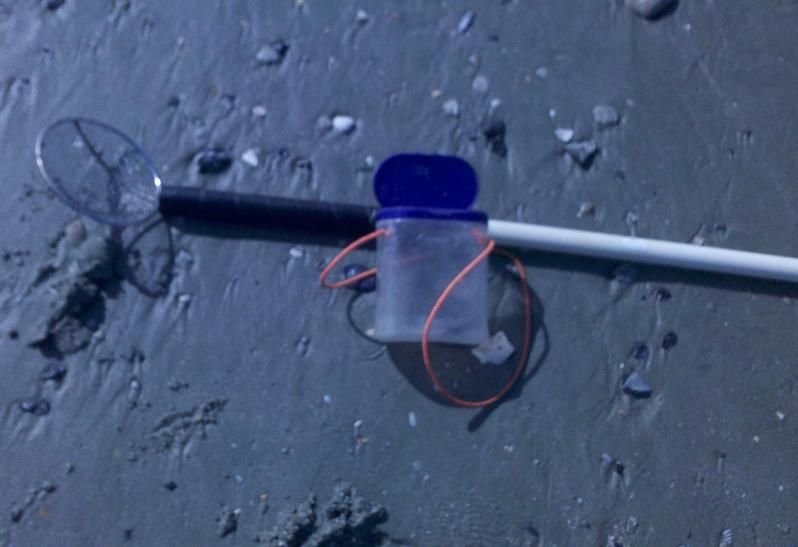 |
| My "pick up tool" consists of a frying skimmer that I purchased at Gander Mountain, some Gorilla tape, and PVC pipe cut to an appropriate length. My collecting container is an old mayo container with a large lid. It will easily hold large and small shark teeth. |
My "pick up tool" has one important function to me, to save my back. Bending over a thousand times in a day can really give an old codger like me a week long back ache or worse. This tool allows me to pick something up and bring it up to my eyes where I can see it. If the item is small, I simply pick up it along with the sand surrounding it. The tool allows me to also catch stuff in the surf much more quickly than if I had to launch after it with my hand because I carry the tool at beach level, like an extension of my arm and hand, at all times. Waves may still steal something from my grasp, but my odds of collecting something are increased dramatically while using the "pick up tool".
Also, regarding my collecting tool, or collecting in general here. I pick up just about anything that is different than a shell, or that I think is a fossil or shark tooth. I'd say that about ninety percent of what I pick up is not a shark tooth. Still, I keep checking. Every now and then, I pick up something that I don't think is a shark tooth, and it turns out to be one!
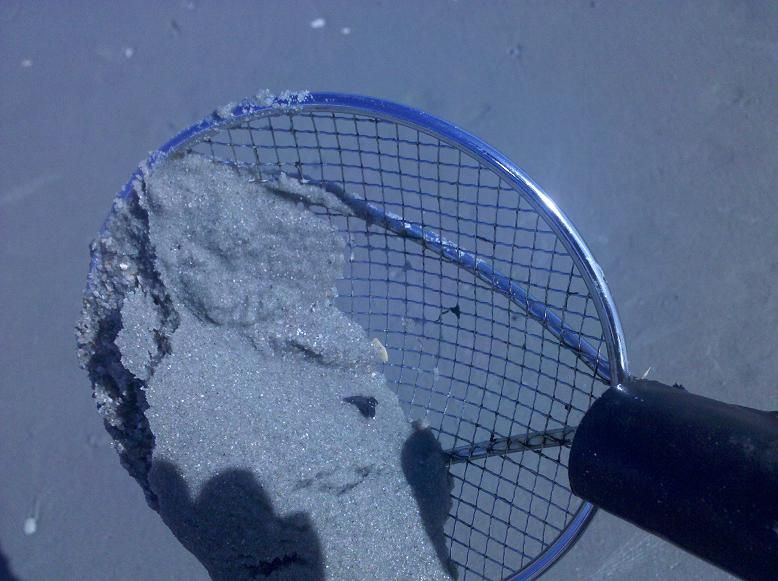 |
| When I see something that I think might be a shark tooth or something else of interest, I use my "pick up tool" to bring it closer to eye level and save my back from a future back ache. If it's a small object, I grab everything around it too. |
Well, you may ask, why not just go barefoot? After all, you're on the beach, right? My response would be, "True, and if you prefer that, go for it." But, I personally find that if the bottoms of my feet are protected from shells and other debris, then I can focus on finding the teeth rather than the bottoms of my dawgs getting sore. So, I either wear flats shoes (designed for fishing the flats) or Crocs. Both types of shoes can be worn easily in the water. The flats shoes keep sand and shells out, and allow me to walk on shells and rocks without cutting the bottoms of my feet, and also prevent blisters caused by sand.
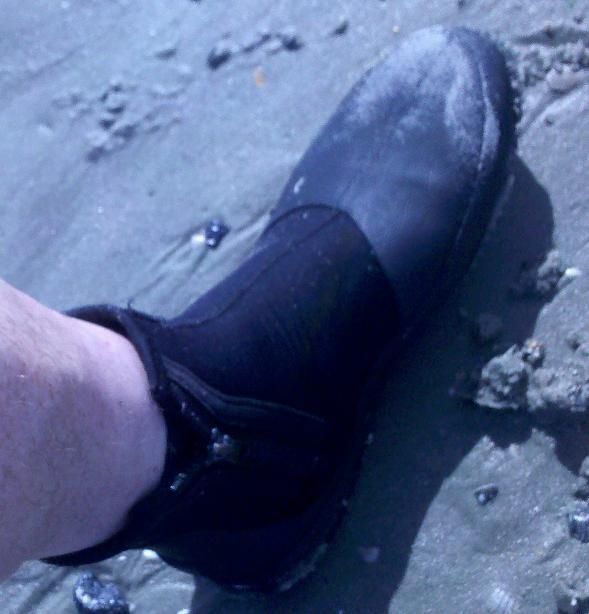 |
| Flats shoes, like these from Bass Pro Shops, protect the bottoms of my feet from getting cut by shells and other beach material. I may look goofy out there, but I'm comfortable, and when I'm comfortable, I can more easily focus on what I'm searching for. |
Crocs are OK, but I also wear socks to prevent blisters. The only problem with using them is that when collecting in the surf, shells find their way between your feet and the shoes, so you'll constantly be cleaning them out.
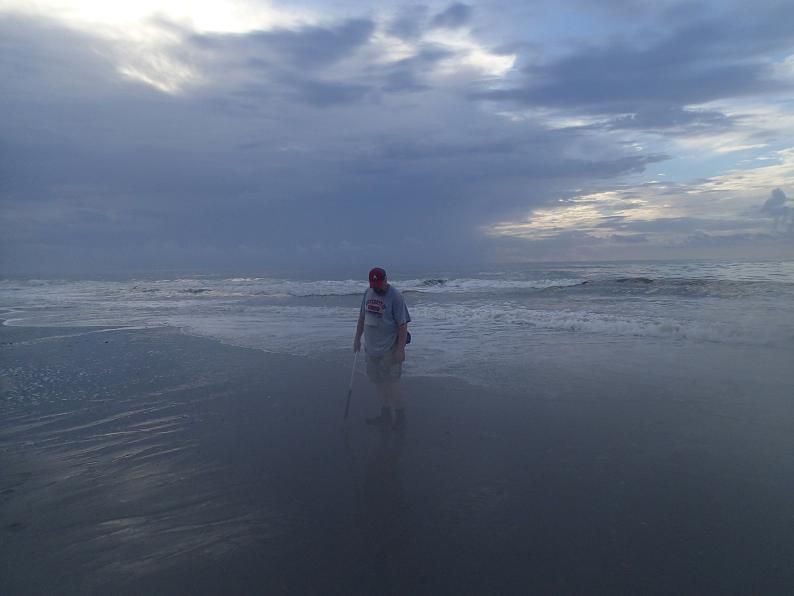 |
| Well, here's a fossil nerd if I ever saw one! I may look goofy, but my feet are comfortable and I have everything that I need to collect as long as my family permits me to do it. |
In the summer, it's hot out there, so make sure that you bring plenty of water along and wear sun screen if your skin is as fair as mine. I can't stress enough about how important having enough water available is while collecting. If you stress from the heat and sun, your concentration goes down, and when that happens, not only does your collecting suffer, but your health most likely will too. It can be dangerous out there if you aren't careful.
A few years ago, I left my resort hotel and walked quite a ways collecting. I had two bottles of water and it had to be well over a hundred degrees out there with no wind at all. I ran out of water half way on my return trip. Fortunately, I ran into my soon to be friend Carl from Northeast Pennsylvania.
Carl walked up to talk to me to ask about what I was up to, like so many people do each year. After explaining what I was doing and showing him my finds, he offered me an ice cold beverage. It was a Yuengling to be exact.
Now I'm not a big beer drinker, although I love the taste of a good beer now and then, drinking water is far better for you health wise to prevent heat stroke, but, let me tell you friends...that Yuengling was like heaven! Ice cold and hit the spot. It cooled me down instantly. And, fortunately, my walk back wasn't all that far. So, not only will you have fun collecting and possibly gain some attention, you'll make friends along the way by nice folks like Carl. I see him every year at the same spot during my vacation and he flags me down to say hi, offering me a Yuengling each time. I'm forever thankful to Carl for that ice cold beverage. Thanks Carl!!!!
As far as techniques go, I see other collectors sifting the shell beds or simply using their hands to sort through the beach material either by fanning the shell bed or digging a hole and allowing the sides to cave in exposing teeth. You may find other tools successful as well, like trowels, rakes, shovels, etc. They may all assist you in finding fossils on the beach as they might at other locations. I prefer a lot less work while I'm on vacation, so surface collecting for me is the ticket.
So next, you may ask, where would I find shark teeth at Myrtle Beach? My answer is, on the beach. I'm not saying that to be smart, but they're there, and they can be anywhere. I think that the odds of you finding shark teeth increase when you find shelly material on the beach as the teeth could be mixed in. But really, any wave can uncover one in the sand or amongst the shells. Or, the wind could expose a fossil well above the tide line, perhaps where someone sunbathed just hours earlier. Or, perhaps someone built a sand castle and the waves are destroying the fortress, exposing teeth and other shells exposed from someone's sand castle building efforts.
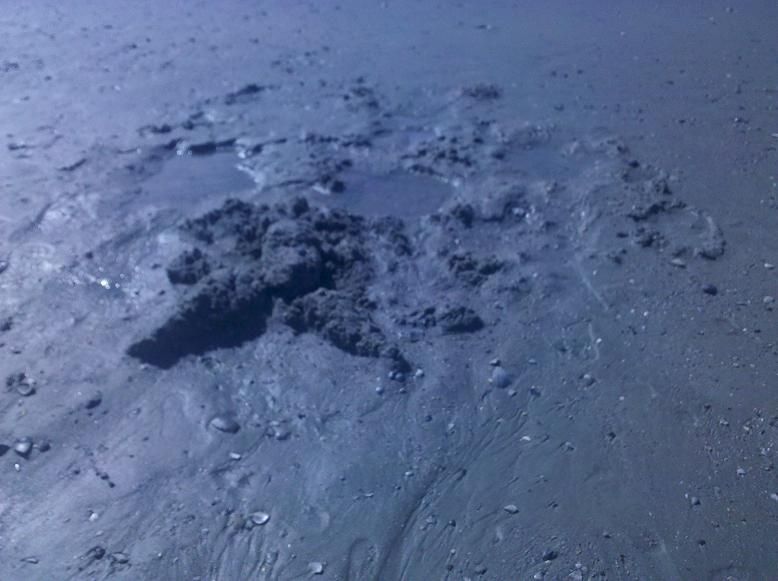 |
| Sand castle ruins may cause tears from the young folks who build them once they are destroyed by the mighty ocean, but fossil collectors may find tears of joy if the exposed fossils result in a good find! |
I guess what I'm saying is that, once you learn to identify teeth, you can find them just about anywhere on the beach. You'll find your favorite spots, probably from where you find the most success. But keep an open mind. Any place that you notice fossil material, whether it's old fossilized shells, porpoise or whale bone fragments, or internal molds of gastropods, you have a chance at finding fossilized shark teeth.
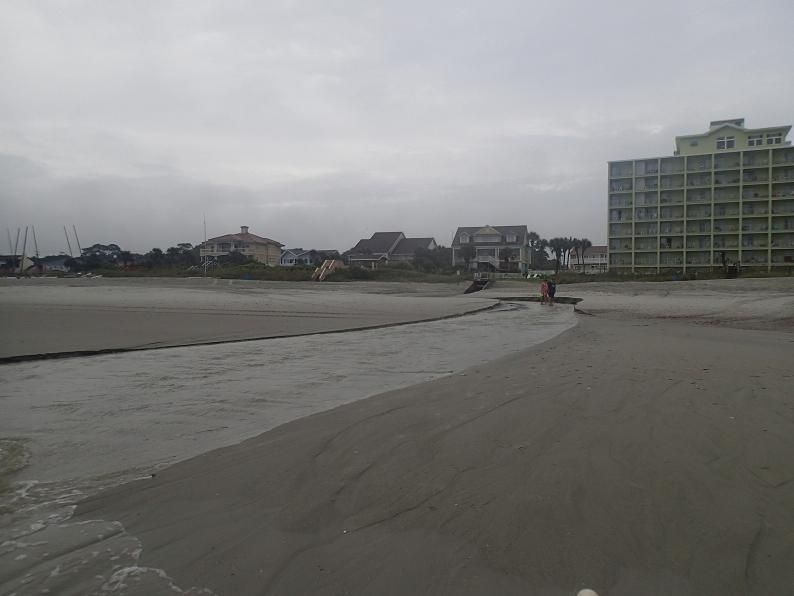 |
| Creek mouths, like this one, provide a constant source of erosion, moving sand and shells. Sometimes you can see the shark teeth just tumbling down to you. The trick is to catch them and not let them get buried or carried away by a wave (this is where my "pick up tool" comes in handy). Some storm drains don't flow much, but are worth checking after a thunderstorm. |
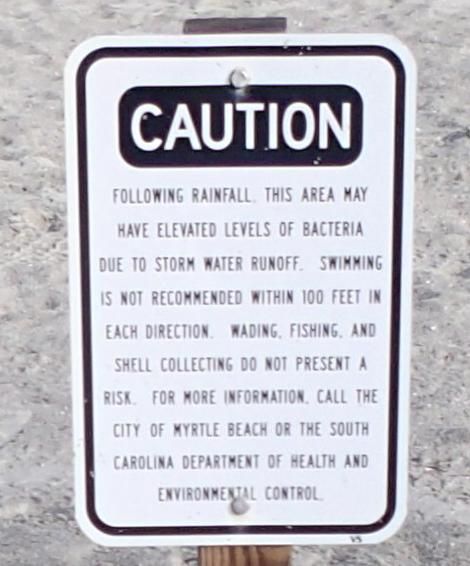 |
| This sign says it all about the creek mouths along the beach. It's OK to collect, but I wouldn't want any of this water in my eyes or mouth. I'd be careful about subjecting exposed sores or open wounds to this water as well. |
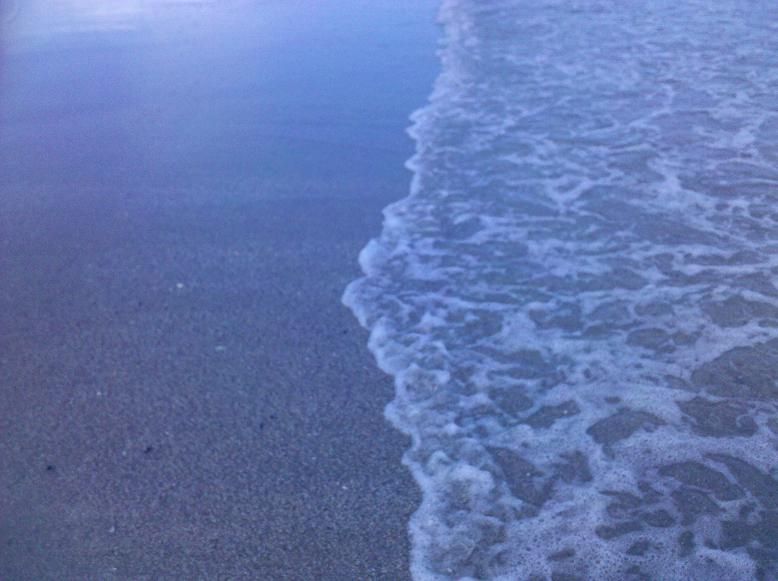 |
| One of the best places to find shark teeth is where the water meets the shoreline and washes shell material back and forth. The waves act like a massive sorting maching, moving material around constantly. Use it to your advantage, the waves can be your friend. My collecting tool helps me keep from losing larger teeth in the surf, and getting them much more quickly than bending over. |
A couple more tips about where to find shark teeth on the beach. First, larger teeth are usually found with larger shell fragments and other beach material. Tidal currents and waves can move large shark teeth, but they travel a bit less than lighter materials. The same is true with shells. So, it's more likely that larger shells and teeth would be found together. Disclaimer: not always though...it's not a golden rule. It's just an observation that seems to be true most of the time. That said, I've found larger teeth all by their lonesome laying right on the sand without even a shell fragment within yards of it.
Massive shell beds aren't easy to search, so take your time. You may find it easier to search where the waves have washed the material down, where shark teeth stand out more against the sand, making them easier to see. Once you become familiar with the shapes and other characteristics of shark teeth, you will be able to see them among the shells.
The shell beds always seem to be sorted with objects of similar size, and lay on the beach in zones. At low tide, you may wish to search all of the zones or simply follow one down the beach. How you approach this is simply up to you. Keep in mind that there is no way that you can cover the entire beach and find every tooth. It's just too massive. So, pick a spot and focus on that area.
At low tide, if the water isn't moving shell material, my approach is to follow a likely zone traveling slowly parallel to the surf until I find a tooth or some sort of indication that fossils are there. Once I find a tooth, I switch gears and move perpendicular to the surf, moving up toward the high tide line while searching with my eyes for teeth across zones. After I reach the high tide line, I move a bit in one direction to my right or left, and travel back down toward the water, slowly moving and sweeping my eyes across the shell material keeping and eye out for teeth. I basically work about a fifty or hundred yard stretch in a grid like manner this way. If you have trouble finding teeth, slow down.
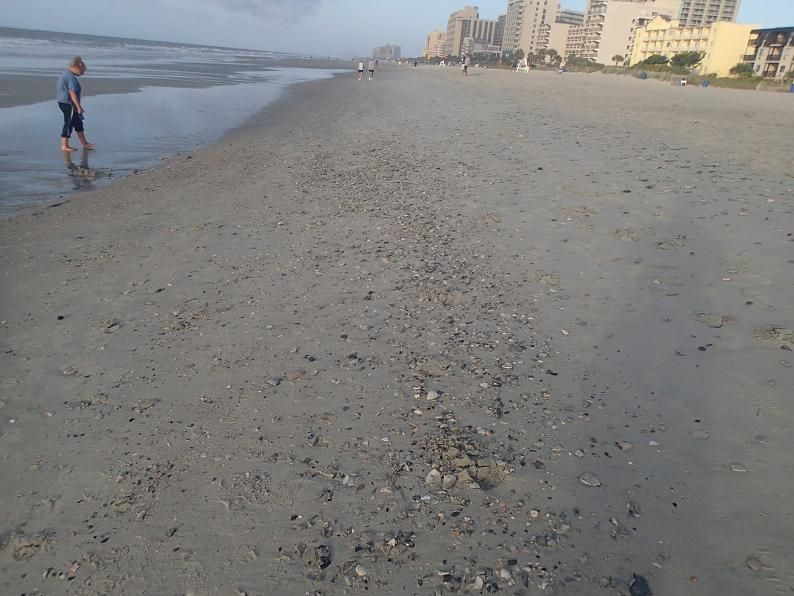 |
| Looking parallel to shore, you can see the various tidal zones, or shell deposits, that you may find shark teeth mixed in with the shells. Some people find a tooth, and search the zone in the same general path that they found the other tooth in. Others move back and forth, mixing their search up. I prefer to search across the zones (right to left, then left to right in this picture) and cover the entire section of beach that interests me. |
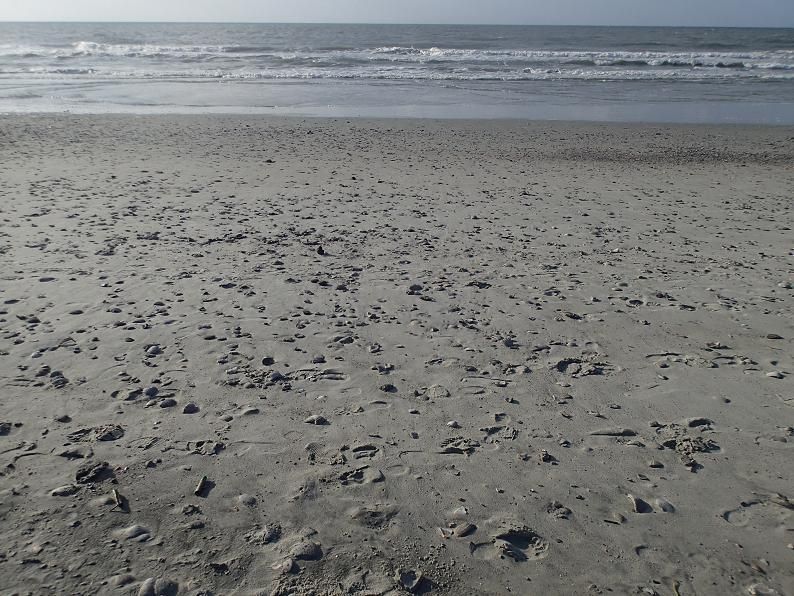 |
| Standing at the high tide area while looking toward the surf, you can easily see the various tidal deposit zones. I prefer to move across these zones, from the surf toward the high tide line, and then in the reverse direction. Move slowly and search back and forth with your eyes for signs of teeth. |
If the surf is washing shell material directly, I move slowly along the waters edge, watching intently as waves move beach material around, waiting for it to uncover my prize. When you see a tooth, or what may be a tooth, grab it quickly before the next wave attempts to sweep it away or bury it with sand.
Now that we've discussed where you might find teeth, let's take a look at some very basic anatomy of a shark tooth and the characteristics of fossilized shark teeth that will help you discern the teeth from the scads of shell fragments on the beach. I'm not going to post all of the different types or shapes in this post, but will do so in a future post. Instead, I'll point out things that will help you find teeth in general. First, all shark teeth that are whole and not broken have a root and a blade with a distinct cutting edge.
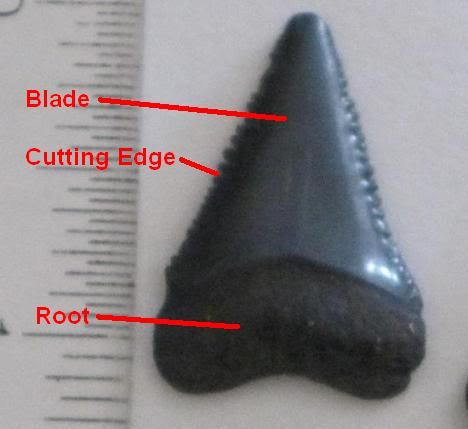 |
| This great white shark tooth that I found a year ago demonstrates what all shark teeth have in common, no matter the shape. Whole teeth all have roots, blades and cutting edges (along the entire length or only partially along the blade). |
The shark teeth that you may find at Myrtle Beach will most likely be fossilized and have some sort of coloration. Modern day teeth are pure white, and you can see them at the bottom of the shark tank at the Ripley's Aquarium. The fossilized teeth colors vary from grays, greens, browns, to almost pitch black. Some may be cream colored. The coloration depends on the minerals that leached into the tooth during the fossilization process, which may have occurred over millions of years. Most of the teeth at Myrtle Beach seem to be black, perhaps due to higher phosphate levels in the fossil layers.
Most of the teeth that you'll find will be broken, perhaps without the root, or only one lobe of the root. Most will be small, about a half inch or less in size. And most will be worn, although you may find a good many teeth that are in good shape. My tip for you is to pick them all up until you learn what a tooth is or what a tooth is not. If you can spot the small or broken teeth, then you'll be able to spot whole or large teeth, either buried or completely exposed.
Once you learn what is a tooth and what is not, you'll spot many more teeth. You'll achieve what my daughter and I refer to as getting "the eye". Just remember, teeth have cutting edges, shells do not. Teeth, even broken ones, are almost perfectly designed as teeth, shells are irregular and imperfectly formed (no offense meant to shell collectors, but from a shark tooth hunting perspective being that teeth are perfectly designed to cut while shells are not).
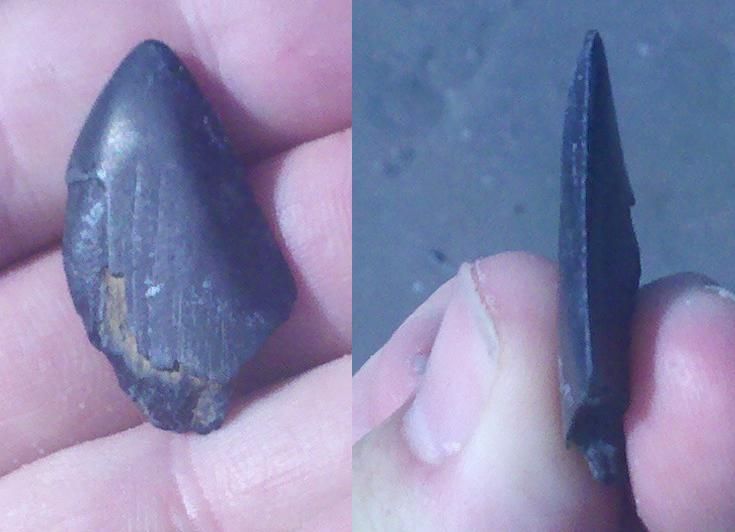 |
| This extremely worn great white tooth still exhibits the traits of a tooth. Notice the distinct cutting edge and regularity of the blade. Even broken teeth exhibit the near perfect "complexion" of a blade. |
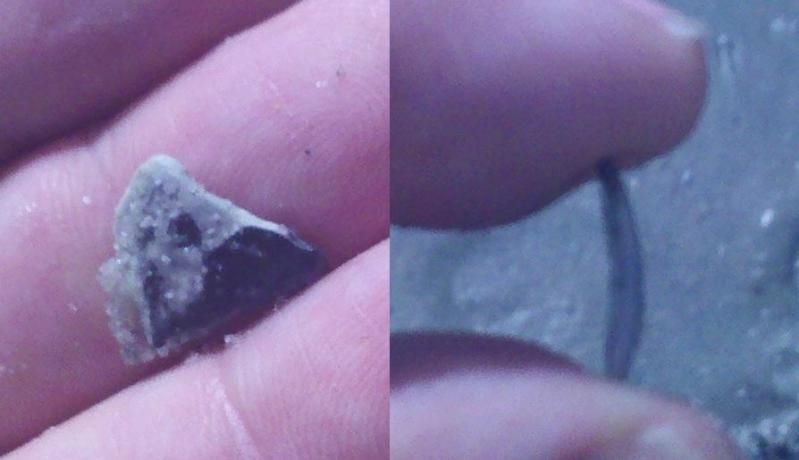 |
| Shells, on the other hand, may be shaped like a tooth overall, but don't have the cutting edge or the regularity of a blade. They, unlike shark teeth, are irregular or imperfect, often showing growth rings, wavy texture, or an irregular surface. This is NOT a tooth. Once you learn what a tooth is and what isn't, you'll have "the eye". |
Here's another tip. Forget about shells when tooth collecting. Focus on finding only teeth, at least until you gain more toothin' experience. If you try to find both simultaneously, you'll find less teeth and perhaps overlook a great find right under your eyes. There's nothing at all wrong about shell collecting, and if you do that just realize that it's tough to do both. At least, for me that's true. I basically ignore shells and search for fossils. So my advice is to do one, or the other.
Also, since the majority of teeth that you'll find will be black, focus on that color at first. Then, once you find a few shark teeth and begin to get the hang of it, pay more attention to the shapes and other characteristics than just the color. Shark teeth also tend to shine a bit more than shells, perhaps because the enamel on the teeth is so smooth, the reflective properties are a bit better than shells. Teeth that are wet tend to be a bit easier to see also.
Here are some pics before and after the find, to give you an idea of what you may be looking at.
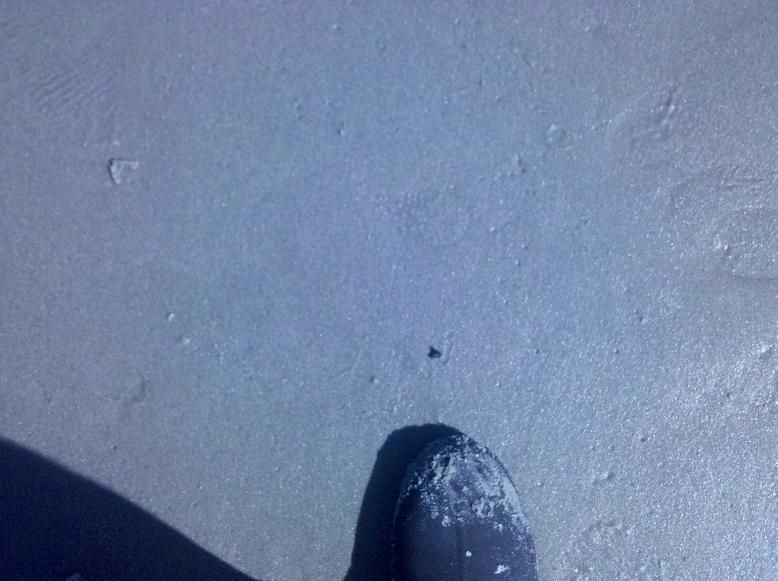 |
| Where's the tooth? When they lay on sand with nothing around them, they're pretty easy to spot. |
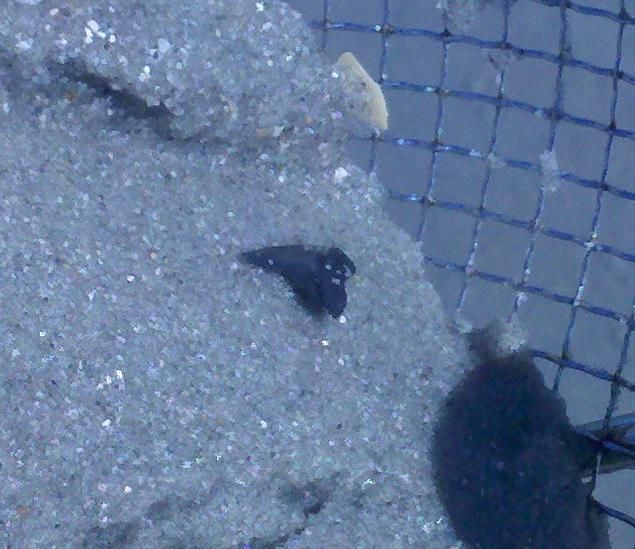 |
| This is a typical tooth. Small, maybe a bit broken, but still, a tooth. Learn to distinguish teeth from non-teeth, and you'll find the unbroken and larger teeth in the future. Get "the eye"! |
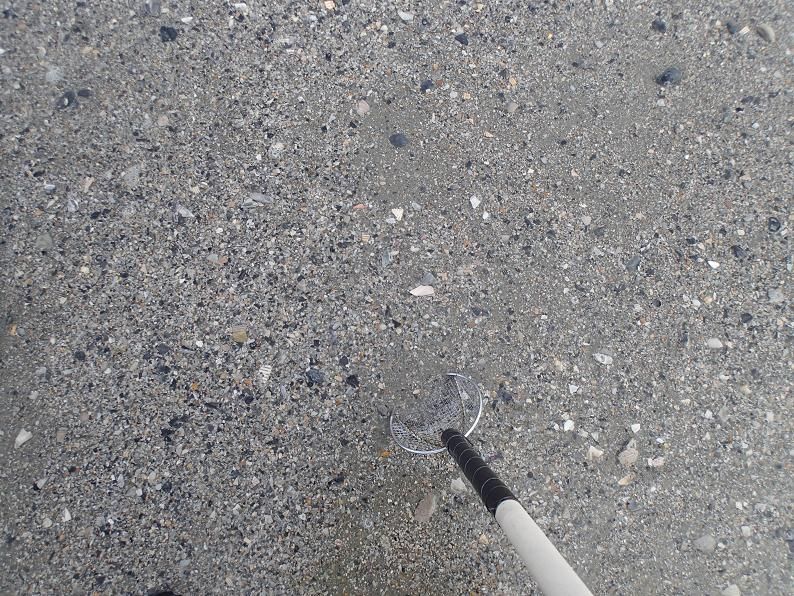 |
| Can you spot the tooth here? It's partially buried. |
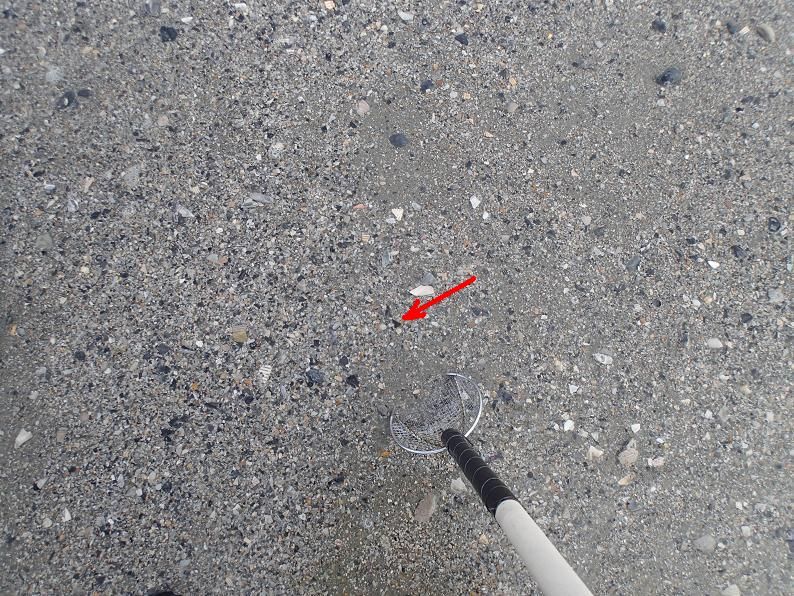 |
| Here it is! |
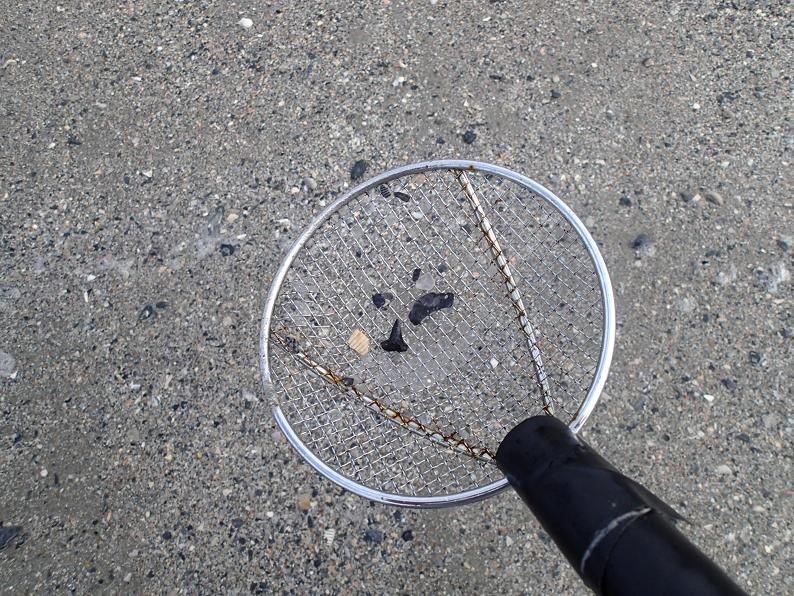 |
| Yep, it's a tooth. It looks like a bull shark or similar requiem shark lower tooth. |
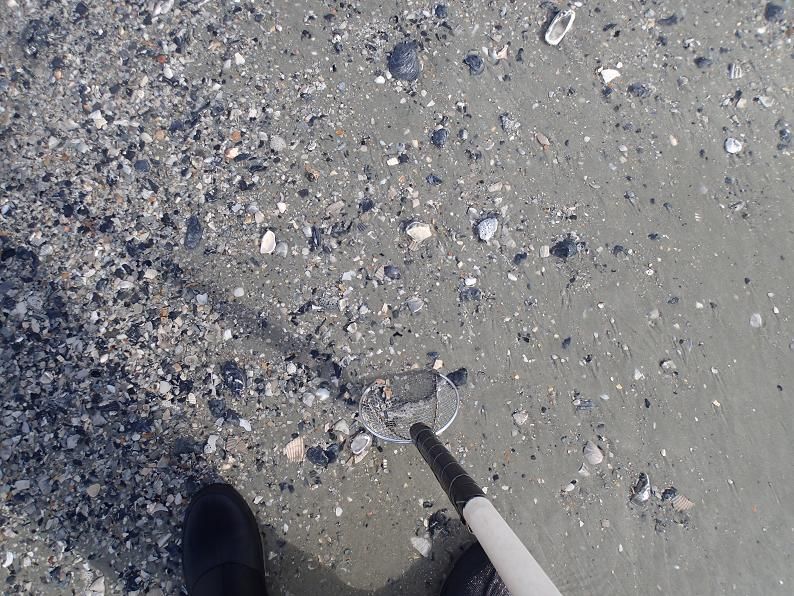 |
| This one is even harder to see. I've given you a hint though! |
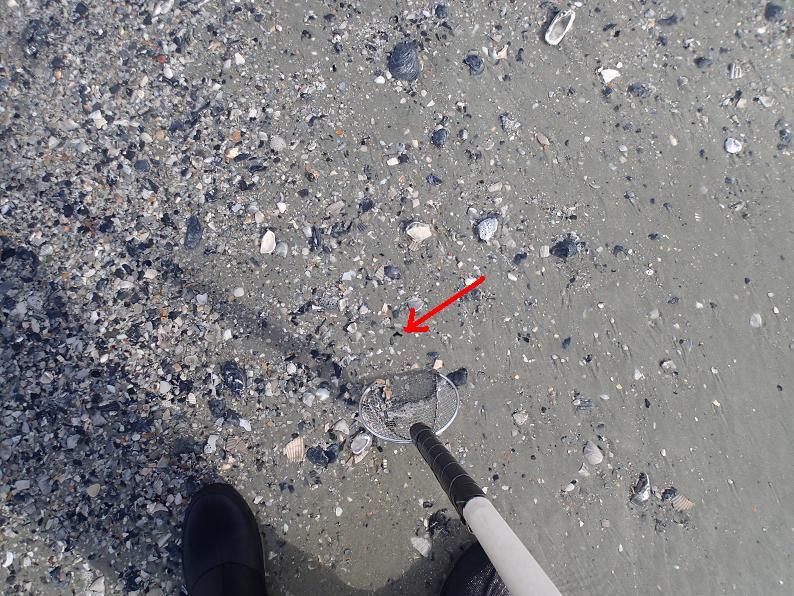 |
| Here it is! |
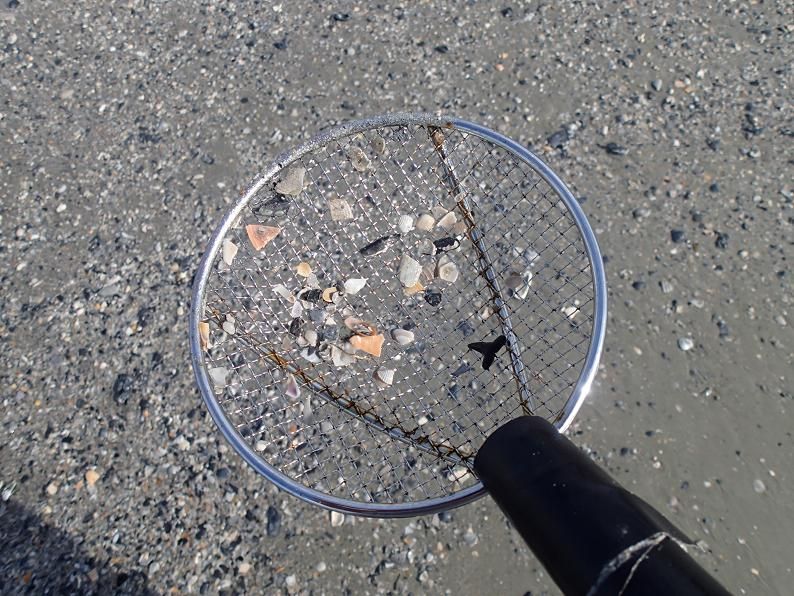 |
| It's another requiem shark lower tooth! Make sure that you check things out that are partially buried, they could be a shark tooth. |
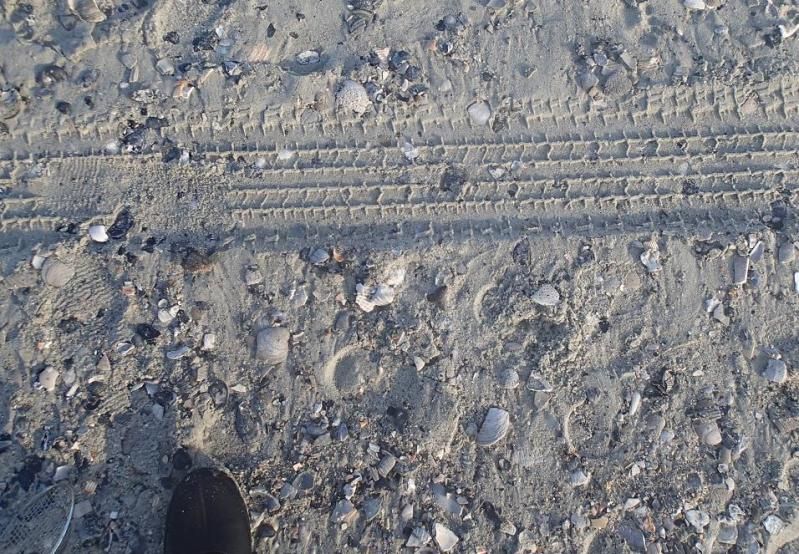 |
| There's a bigger tooth here. This, like many of the larger teeth, are higher up on the beach, perhaps because they are heavier, or perhaps because that beach material has yet to be eroded as much? Notice how close a vehicle came to pushing this tooth deep into the sand! |
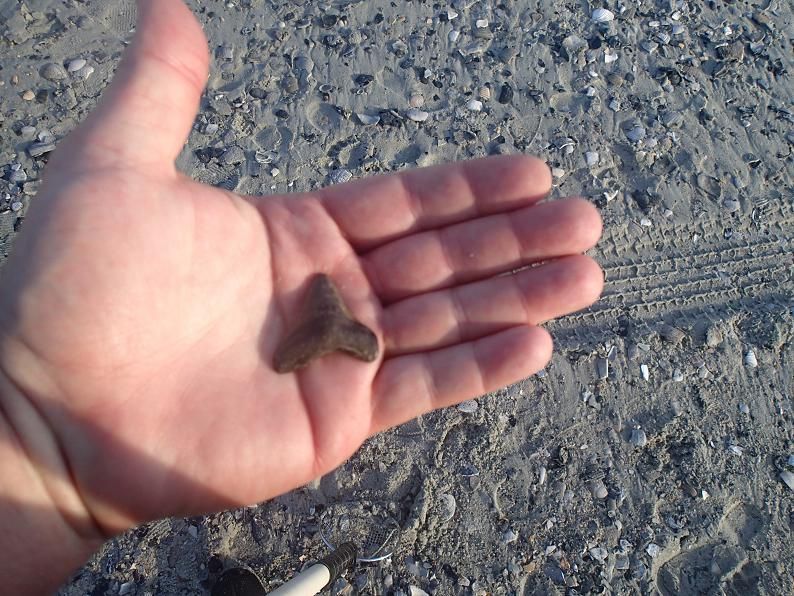 |
| It's a small worn megalodon, or a "meg", tooth! Meg teeth aren't common, but it's possible to find them at Myrtle Beach. Sometimes you'll find fragments that are difficult to recognize as teeth. |
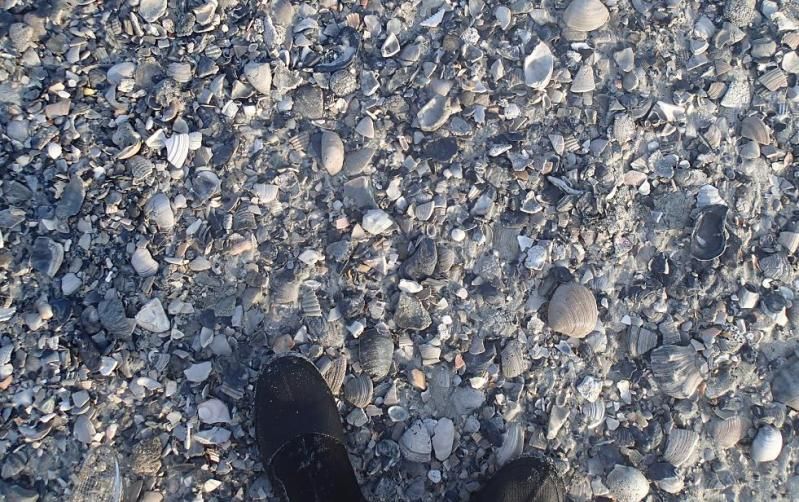 |
| There's a large tooth amongst the shells. Can you see it? |
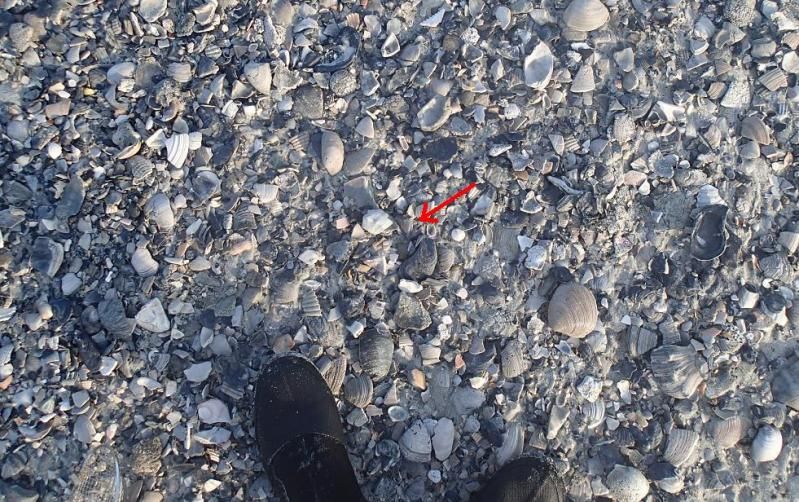 |
| This one is very difficult to see because it's not black as are many of the other fossils. The gray coloration blends closely with the colors of the shells. What set this one apart was the shine of the enamel and the general shape. |
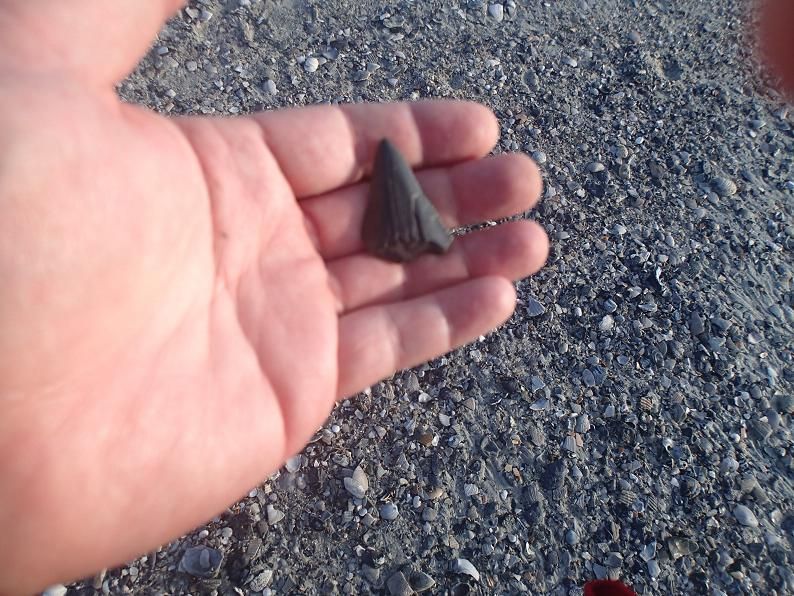 |
| It's a tooth from a great white shark. Too bad the root has been broken off. Still, this is a nice find at Myrtle Beach. |
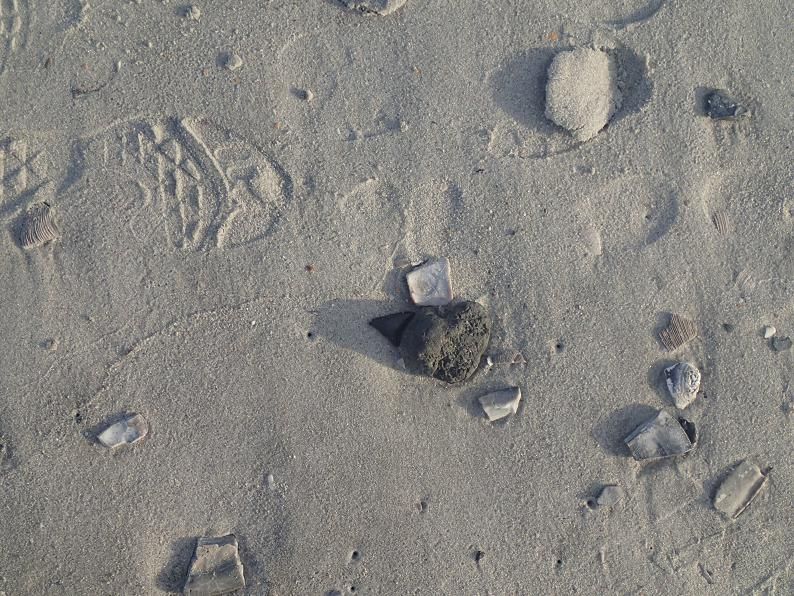 |
| Here's another tooth found high on the beach. A jogger or hiker stepped right over it! |
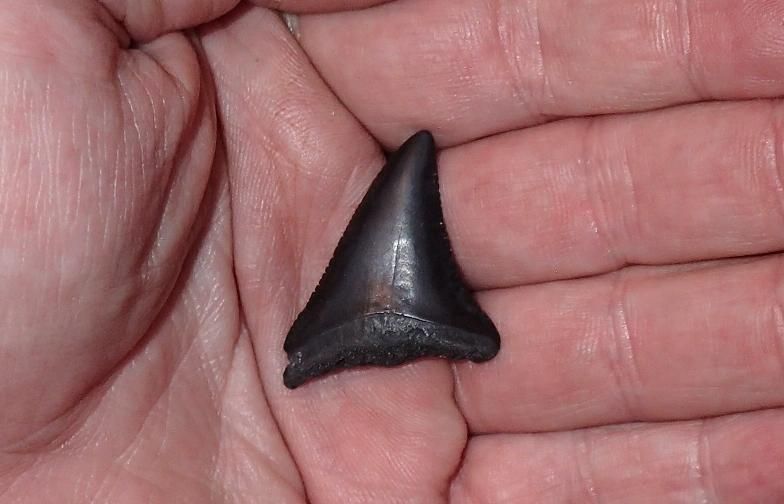 |
| Here's the tooth. This great white shark tooth is pitch black. It has a nice tip and almost all of the serrations, but the root has been partially broken off. Still, a great find! |
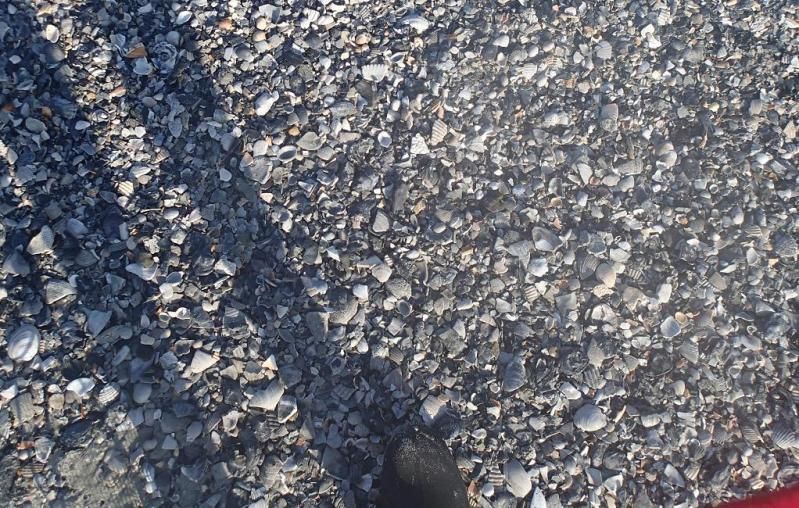 |
| There's a meg fragment amongst the shells in this picture. Can you spot it? |
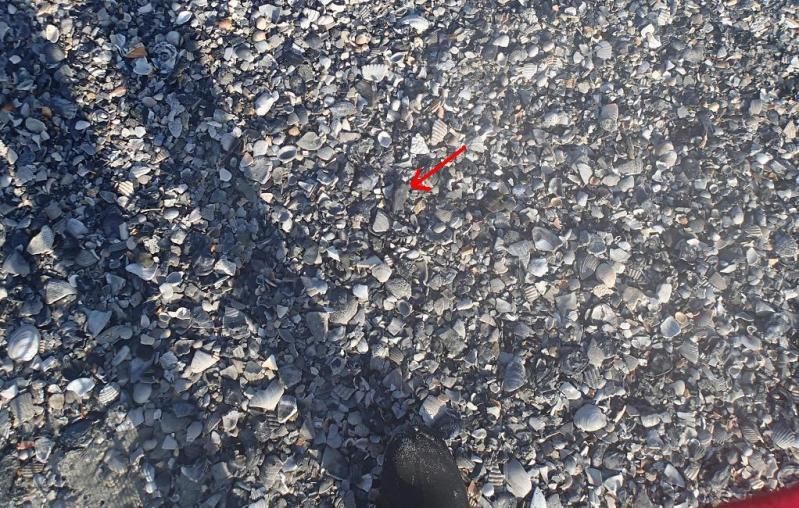 |
| The meg fragment looks like a rock. Several folks that I spoke to about this tooth mentioned that they'd toss it away not knowing that it was a shark tooth at all. |
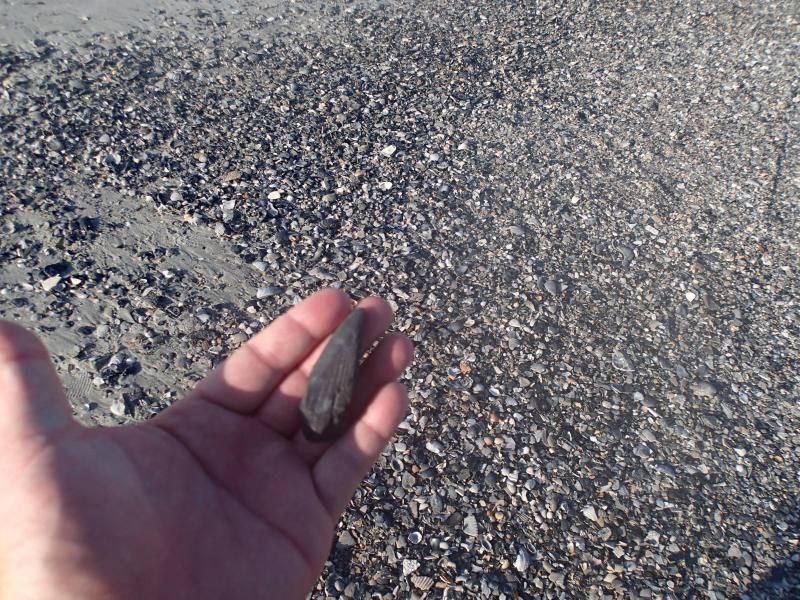 |
| It's only half, and missing the root, but this megalodon fragment gives me hope that some day I'll find a whole one in good shape at Myrtle Beach. It sure gives you an idea just how large these teeth can be. This shark may have been forty feet long or more. Megalodon became extinct more than two million years ago. |
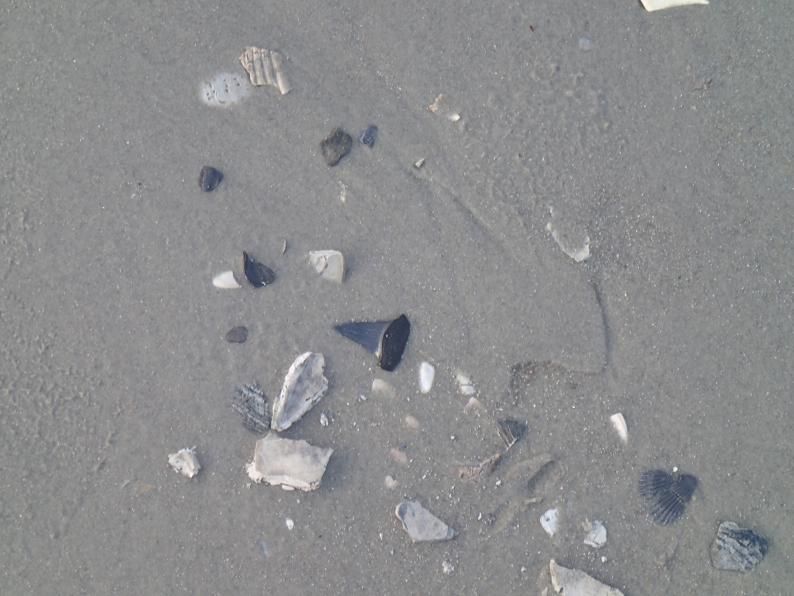 |
| I saved the best for last. Remember when I said that big teeth are found around big stuff? I guess you could say that it's true here too, but this tooth was pretty much in the open. It's my best great white tooth to date from Myrtle Beach. I was actually walking back to my hotel, not really looking for teeth but with my head habitually looking down when I spotted this tooth. I was stunned, but managed to snap a pic before jumping up and down. |
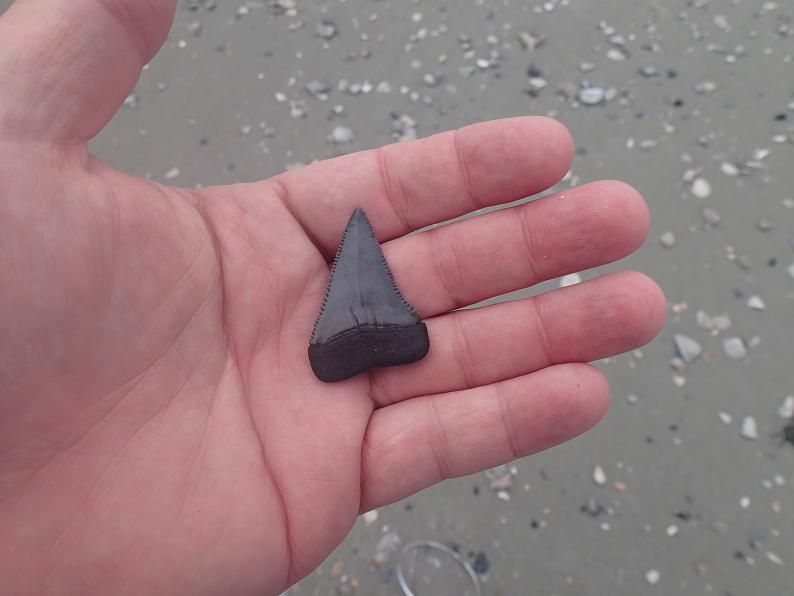 |
| Here's the labial view of that tooth. Labial view refers to the side of the tooth that faces away from the sharks mouth. If you see this as a shark approaches, you still have a chance to get away! |
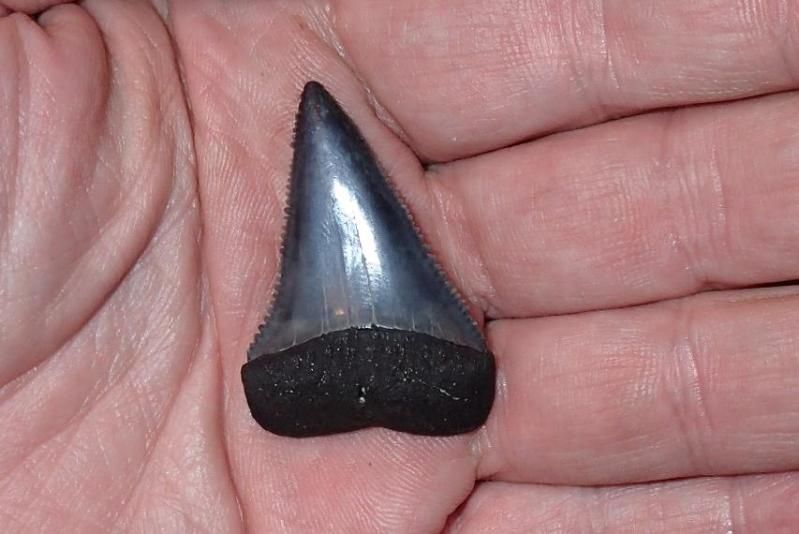 |
| This is the lingual (tongue) view of that great white tooth. If you see this side of the tooth, it's too late, you've already been consumed! This not only is one of the best great white shark teeth that I've ever found at Myrtle Beach, it's one of the best in my collection. The tip, root and all of the serrations except for one are intact. Almost perfect! But, it's perfect to me! |
You may be wondering why I pick up the small broken teeth, or the small whole teeth, as long as there are teeth like those great whites pictured above on the beach. I spoke earlier about getting "the eye", and spotting small teeth or even fragments of teeth keeps my eye sharp. Also, I tend to give away almost as many of the smaller teeth that I find to kids and/or parents on the beach, to help them find teeth. Giving them a tooth supplies them with an example of what to look for. And, I enjoy seeing the faces of kids light up when I give them a nice tooth. My daughter referred to me jokingly as the summer Santa of Myrtle Beach. All I can do is laugh at that idea.
But, when you think about it, maybe when I give teeth away, good collecting Karma will come my way. It does seem that when I give a tooth away, I find a replacement that is as good or better. So, when you become adept at finding shark teeth, keep that in mind. You'll pass on the hobby, make some friends on the beach, and bring a smile to someone's face, and in return, maybe you'll get some good toothin' karma!
Hopefully this info will help you find shark teeth at Myrtle Beach. If you've never collected them, it's a great way to spend some time with your family doing something fun on the beach. I've spent countless hours with my daughter looking for shark teeth at Myrtle Beach. She has the eagle eye for them for sure, and even though she's now an adult finding her way through her college life, I still treasure my quality time while vacationing with her at the Beach.
My next post will lay out the basic shapes and types of teeth and fossils that you'll find to help you identify what they are, so stay tuned.